


Sign up for the Today newsletter
Get everything you need to know to start your day, delivered right to your inbox every morning.

NEWYou can now listen to Fox News articles!
A beloved television personality who spent decades teaching viewers how to pick everything from the perfect pineapple to the juiciest tomatoes, drawing on lessons passed down from his Italian immigrant family, has died, according to reports.
Peter Napolitano, the New York–area TV personality known as “Produce Pete,” died Jan. 26 at the age of 80 at a hospital in Paramus, New Jersey, his son confirmed to The New York Times. A cause of death was not specified.
For more than 30 years, Napolitano appeared on WNBC’s “Weekend Today in New York,” delivering weekly segments built upon advice he learned from nearly a lifetime spent in the business.
SCIENTISTS DISCOVER ‘SUPERFOOD’ POTENTIAL IN OVERLOOKED VEGETABLE MOST AMERICANS CAN’T PREPARE
Born Feb. 23, 1945, in Englewood, New Jersey, Napolitano grew up immersed in the produce trade. His father, an Italian immigrant and one of 20 children, started the family business. Napolitano began selling fruits and vegetables door to door with his dad at just 5 years old, according to the Times.
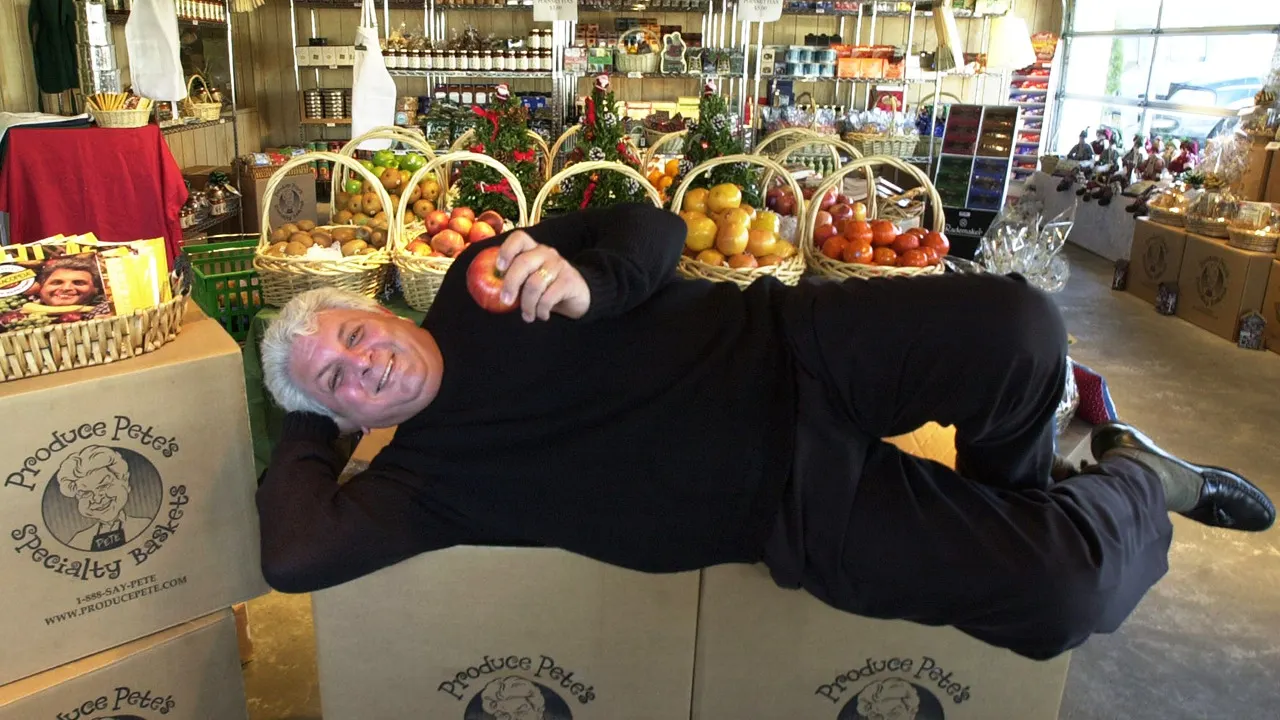
Peter Napolitano poses at his produce market in Bergenfield, N.J., in 2003. (Carmine Galasso/The Record/USA Today Network)
“I come from immigrant people,” Napolitano said during a 2025 appearance on the “Today” show. “My father came here from Italy. No education, no nothing. And then, you know, I got lucky 35 years ago when someone was in my store and put me on a local show.”
5 ‘GRANDMA-STYLE COOKING’ RECIPES MAKING A COMEBACK AS AMERICANS DITCH MODERN FOOD TRENDS
By the mid-1950s, the family was selling watermelons out of an empty lot in Bergenfield, New Jersey, before opening Napolitano’s Produce in 1959. Napolitano eventually took over the store in 1970 and ran it for decades, building it into a regional destination for fresh fruits and vegetables.
His television career began in 1989, when he was invited to discuss concerns about contaminated Chilean grapes on a local New York talk show. The appearance led to regular on-air segments and, eventually, his long-running role at WNBC starting in 1992, where he became known simply as “Produce Pete,” a moniker he proudly embraced, NBC 4 New York reported.
Napolitano emphasized simple rules for quality produce, advising viewers to choose fruits and vegetables that felt “heavy in the hand” and encouraging shoppers to embrace oddly shaped items, which he often said packed the most flavor. He told viewers to look for a deep golden color in pineapples as a sign of ripeness and taught them to lift pumpkins from the bottom, so the stems wouldn’t break.
Napolitano released his autobiography, “They Call Me Produce Pete,” in 2023. (Tanya Breen/USA Today Network)
Napolitano’s popularity extended well beyond local television. He was parodied on “The Daily Show”; praised by comedian Tina Fey — who once told him, “You’re my Beyoncé”; and even recognized by actor Harrison Ford, according to the Times.
CLICK HERE FOR MORE LIFESTYLE STORIES
He also wrote several books, including “Produce Pete’s Farmacopeia,” a guide to choosing and preparing fruits and vegetables, and an autobiography published in 2023.
Napolitano retired from running the family store in the late 1990s but continued working in the produce industry as a broker and buyer while maintaining his television presence.
TEST YOURSELF WITH OUR LATEST LIFESTYLE QUIZ
NBC 4 New York remembered Napolitano as a beloved member of its station family, highlighting not just his practical advice but also the personal stories he shared about his upbringing and family.
For generations of viewers, “Produce Pete” was a trusted voice on how to choose quality fruits and vegetables. (Tanya Breen/USA Today Network)
Napolitano is survived by his wife, Elizabeth “Bette” Napolitano; two children; seven grandchildren; and several siblings, according to reports.
CLICK HERE TO DOWNLOAD THE FOX NEWS APP
He famously signed off his segments with a message that also sums up his legacy: “If you eat right, you’re going to live right.”
Read the full article from Here

Powerball, Mega Millions jackpots: What to know in case you win
Here’s what to know in case you win the Powerball or Mega Millions jackpot.
Just the FAQs, USA TODAY
The Vermont Lottery offers several draw games for those willing to make a bet to win big.
Those who want to play can enter the MegaBucks and Lucky for Life games as well as the national Powerball and Mega Millions games. Vermont also partners with New Hampshire and Maine for the Tri-State Lottery, which includes the Mega Bucks, Gimme 5 as well as the Pick 3 and Pick 4.
Drawings are held at regular days and times, check the end of this story to see the schedule.
Here’s a look at July 13, 2026, results for each game:
05-25-36-40-48, Powerball: 03, Power Play: 2
Check Powerball payouts and previous drawings here.
06-25-29-34-36
Check Gimme 5 payouts and previous drawings here.
Day: 8-1-2
Evening: 5-1-3
Check Pick 3 payouts and previous drawings here.
Day: 9-9-7-9
Evening: 3-1-1-2
Check Pick 4 payouts and previous drawings here.
13-17-24-26-39, Megaball: 01
Check Megabucks Plus payouts and previous drawings here.
19-36-38-43-48, Bonus: 03
Check Millionaire for Life payouts and previous drawings here.
Feeling lucky? Explore the latest lottery news & results
For Vermont Lottery prizes up to $499, winners can claim their prize at any authorized Vermont Lottery retailer or at the Vermont Lottery Headquarters by presenting the signed winning ticket for validation. Prizes between $500 and $5,000 can be claimed at any M&T Bank location in Vermont during the Vermont Lottery Office’s business hours, which are 8a.m.-4p.m. Monday through Friday, except state holidays.
For prizes over $5,000, claims must be made in person at the Vermont Lottery headquarters. In addition to signing your ticket, you will need to bring a government-issued photo ID, and a completed claim form.
All prize claims must be submitted within one year of the drawing date. For more information on prize claims or to download a Vermont Lottery Claim Form, visit the Vermont Lottery’s FAQ page or contact their customer service line at (802) 479-5686.
Vermont Lottery Headquarters
1311 US Route 302, Suite 100
Barre, VT
05641
Vermont’s 2nd Chance lottery lets players enter eligible non-winning instant scratch tickets into a drawing to win cash and/or other prizes. Players must register through the state’s official Lottery website or app. The drawings are held quarterly or are part of an additional promotion, and are done at Pollard Banknote Limited in Winnipeg, MB, Canada.
This results page was generated automatically using information from TinBu and a template written and reviewed by a Vermont editor. You can send feedback using this form.

Local News
A Boston man is facing charges after he allegedly lunged at a Burger King employee, punched a customer, and then resisted arrest at a nearby MBTA station in East Boston, authorities announced Monday afternoon.
Patrick Donovan, 59, was charged July 1 with one count of assault and battery causing injury on an over 60 or disabled person, assault and battery, disorderly conduct, resisting arrest, assault, and vandalism, Suffolk District Attorney Kevin Hayden’s office said in a press release.
The charges stem from an incident shortly before 10 p.m. on June 30, when Boston police responded to a disturbance call from Burger King at 1 Maverick Square, Hayden’s office said.
A Burger King employee told officers that, after ordering his food and receiving it, Donovan yelled that he no longer wanted it and smacked a napkin holder off the counter. He then allegedly lunged at an employee and grabbed her by the arm, prosecutors said.
Donovan subsequently shoved a customer from behind and allegedly punched him in the face three times while calling him racial slurs, the DA’s office said.
Emergency medical services evaluated the customer for “visible lacerations to the forehead,” but the victim declined additional treatment, authorities said.
Donovan fled the restaurant following the assaults, and officers tracked him to the nearby MBTA Maverick Station, prosecutors said.
“While officers tried to detain Donovan inside the station, he swung at them with a closed fist but did not make contact,” Hayden’s office said, noting that Donovan made racial slurs towards the officers. “Donovan was placed into custody after a brief struggle.”
During his arraignment in the East Boston division of the Boston Municipal Court, Donovan pleaded not guilty and was released on personal recognizance. Court records show he was also ordered to stay away from Maverick Square and Burger King.
He is scheduled to return to court Aug. 7 for a pre-trial hearing, prosecutors said.
Officers obtained security footage of both assaults. Authorities said the incident remains under investigation and could result in further charges.
“Our workers deserve to be safe in their workplaces and our consumers deserve to be safe in their shopping or dining places, without exception,” Hayden said in a statement. “Beyond that, none of our citizens or first responders should be subjected to racial slurs. These appalling words have no place in Suffolk County or anywhere else in our society.”
Attorney information for Donovan was not immediately available Monday afternoon.
Get everything you need to know to start your day, delivered right to your inbox every morning.

SD Lottery Powerball, Lotto America winning numbers for July 13, 2026
TN Lottery Powerball, Lotto America winning numbers for July 13, 2026


What comes after North Texas’ final World Cup match?


Why Trump’s push to shrink two national monuments is sparking a new fight
VT Lottery Powerball, Gimme 5 results for July 13, 2026


Pete Eshelman appointed to Virginia Tourism Authority by Gov. Spanberger

US Air Force helicopter makes precautionary landing in Washington


Wisconsin Lottery Powerball, Pick 3 results for July 13, 2026

