
Connect with us

Pennsylvania

Pa. 3rd Congressional District candidates want to abolish, not reform, ICE

Published

on

Pa. 3rd Congressional District candidates want to abolish, not reform, ICE


Experience vs. ‘innovation’

The five Democrats present agreed on most policy prescriptions and mostly competed on the question of who was best qualified to take the district’s interests to Washington, D.C.

Street and Cephas repeatedly pointed to their legislative experience, arguing that time spent navigating Harrisburg’s power dynamics has prepared them to deliver results in Congress. Street cited his role passing bipartisan legislation in a Republican-controlled Senate, saying every bill he advanced required “understanding the legislative process to get things done.”

State Sen. Sharif Street speaks at a forum in Center City for candidates running for Pennsylvania’s 3rd Congressional District. (Carmen Russell-Sluchansky/WHYY)

Cephas emphasized her record as Philadelphia Delegation Chair, noting that she had already “gotten bills to the governor’s desk” and framed experience as essential in a moment of political instability.

Advertisement

“It’s not about just talking about big ideas, it’s about delivering,” she said.

By contrast, Stanford and McConnie-Saad leaned into outsider narratives, arguing that the system itself is broken. Stanford described herself as “not part of the system” and pointed to her leadership during the COVID-19 pandemic, founding the Black Doctors Consortium to get vaccines to underserved communities, as proof she could act decisively.

“It was not my responsibility. You did not elect me to do it,” she said. “You did elect some of the people here, and I filled the gap. And in times like these, we need innovation.”

Ala Stanford speaks
Dr. Ala Stanford speaks at a forum in Center City for candidates running for Pennsylvania’s 3rd Congressional District. (Carmen Russell-Sluchansky/WHYY)

McConnie-Saad similarly argued that Philadelphia has been “voting for the same sort of politician over and over again with less and less to show for it,” presenting his background in federal policy and urban affairs as a break from traditional political pathways.

“This was the poorest big city in the country when I was growing up. It’s 2026. It’s still the poorest big city in the country after Houston,” he said. “And it’s not because things are getting better here. It’s because things are that bad in Houston.”

Advertisement
Pablo McConnie-Saad speaks
Pablo McConnie-Saad speaks at a forum in Center City for candidates running for Pennsylvania’s 3rd Congressional District. (Carmen Russell-Sluchansky/WHYY)

Affordability, health care and SEPTA

When asked to identify the most pressing issues facing Center City residents, candidates largely converged around affordability, health care and transportation.

Cephas pointed to the recent expiration of enhanced Affordable Care Act tax credits, noting that “we’ve seen 80,000 people in one month alone drop their health care as a direct result.”

Morgan Cephus speaks
State Rep. Morgan Cephus speaks at a forum in Center City for candidates running for Pennsylvania’s 3rd Congressional District. (Carmen Russell-Sluchansky/WHYY)

Street echoed that concern, saying that restoring the credits would help stabilize premiums across the state and pointed to his role in creating Pennie, the commonwealth’s online health insurance marketplace.

“I certainly, as a congressman, will fight for restoring those federal tax credits that we used to create Pennie,” he said.

Oxman, a physician at Jefferson Health, connected health outcomes to general affordability issues.

Advertisement

“You cannot be healthy if you don’t have a job that pays a living wage,” he said. “You cannot be healthy or your kids can’t be healthy if their school is overcrowded and underfunded. And you certainly cannot be healthy if you are kicked off your health insurance or you can’t afford to buy your medications.”

Dave Oxman speaks
Dr. Dave Oxman speaks at a forum in Center City for candidates running for Pennsylvania’s 3rd Congressional District. (Carmen Russell-Sluchansky/WHYY)

Housing affordability emerged as another major area of agreement. Candidates cited a shortage of affordable units and the growing influence of real estate investment firms in the housing market.

Cephas said Philadelphia is “70,000 affordable housing units short to meet the demand” and warned that thousands of federally subsidized units could soon expire. “We want to ensure that Philadelphians can afford Philadelphia,” she said.

Oxman framed the issue as economic and moral.

“There are people tonight who are choosing between buying their groceries, paying for their medications or paying for their rent,” he said, adding that “the largest growing segment of the homeless population is children.”

Advertisement

McConnie-Saad argued that private equity firms are “manufacturing an increase in cost of housing” and called for federal action to increase supply and ensure new units remain affordable.

Several candidates also stressed the importance of federal investment in SEPTA.

“We need to make sure that the federal government does its part to deal with the deferred maintenance that SEPTA has,” Street said, calling for a transit system that is “solvent” and affordable.

Cephas agreed but added she would like to see it “free and accessible to every single person across the city of Philadelphia” by stopping the system from being “nickeled and dimed.”

Schnell criticized SEPTA’s reliability, citing recent delays and cancellations.

Advertisement

“I think we were up to like 70%, if not more, of these delays going on,” he said, arguing for reforms modeled on European rail systems with more frequent and predictable service.

Alex Schnell speaks
Alex Schnell speaks at a forum in Center City for candidates running for Pennsylvania’s 3rd Congressional District. (Carmen Russell-Sluchansky/WHYY)

Street added gun violence as another issue that he would prioritize in Congress.

“I walk past people every day who deal with gun violence,” he said. “Some days I have to tell my wife not to come home right now because it’s not safe. I have prioritized making sure that we do whatever we can to stop gun violence in a way that I think is a little different than others.”

ICE and Gaza

Some of the sharpest discussion of the evening came during exchanges on ICE and the war in Gaza and related protests. Democrats in Washington, D.C., have been calling for reforming ICE as they negotiate a federal budget with Republicans, but all of the Democrats at the forum said ICE should simply be “abolished.”

Street said the agency’s culture was beyond reform.

Advertisement

“The culture of ICE has been corrupted at a level where it’s not redeemable,” he said. “We should not have an agency that has been corrupted with neo-Nazis.”

Stanford called ICE a “paramilitary force” and said its funding comes at the expense of basic services.

“It’s taking money away from our schools and away from our infrastructure and away from our health care so we can terrorize cities,” she said.

McConnie-Saad noted that ICE was created after 9/11 and argued there was “no reason to maintain an agency that was created for part of the weaponization of the federal government.”

Oxman recounted watching the video of the shooting of Renee Good, a protester who was killed by an ICE officer in Minneapolis.

Advertisement

“I don’t like the idea of a federal shutdown any more than anyone else does, but if this is not an issue we’re standing up for, I really don’t know what is,” he said.

Schnell said ICE had “gone way too far” and violated constitutional protections, but stopped short of supporting abolition.

“I wouldn’t go as far as actually abolishing them,” he said, instead calling for reforms that would narrow the agency’s focus to serious crimes.

Candidates were also asked about protests related to the war in Gaza, including a recent demonstration in Center City that some Jewish organizations said crossed into incitement. Street and some other Democratic Party lawmakers denounced the rally as “pro-Hamas,” referencing the Palestinian militant group that has been the de facto governing authority in Gaza for nearly two decades.

“As an American Muslim, I feel compelled to say that Hamas is a terrorist organization and should be condemned — not glorified,” Street said in a post on social media.

Advertisement

“We got to stand up against this hate so we don’t have violence right here where we live,” he said at the forum, referencing antisemitic attacks in Pennsylvania.

Oxman thanked Street for publicly condemning violence, but also denounced the sustained assault on Gaza.

“Oct. 7 was the worst massacre of Jews since the Holocaust,” Oxman said. “At the same time, there is nothing complex about calling out the horror that is happening in Gaza, the indiscriminate killing of civilians and food being used as a weapon of war.”

Stanford said she opposed violence and dehumanization on all sides.

“I believe that the Israeli people have a right to live with freedom and dignity and safety, and I believe that the Palestinian people have a right to live with freedom and dignity and safety,” she said.

Advertisement

Campaign finance and corporate influence

Campaign finance emerged as one of the clearer dividing lines among the candidates, particularly among the Democrats.

Oxman and McConnie-Saad both emphasized that they do not accept money from corporate political action committees, arguing that such contributions distort representation.

“You cannot represent the people of this district if you’re also trying to represent health insurance PACs, gaming industry PACs, nursing home networks,” Oxman said, possibly in a veiled attack on Stanford’s campaign. Her donors include the PAC for Select Medical Corp., a Mechanicsburg firm that owns rehab hospitals and physical therapy clinics.

McConnie-Saad echoed that view, saying he had rejected both corporate PAC and American Israel Public Affairs Committee, or AIPAC, donations.

“I don’t believe in being influenced by those forces,” he said, arguing that corporate interests have contributed to rising housing costs and economic stagnation in Philadelphia.

Advertisement

Cephas later aligned herself with that position, pledging during the forum to reject corporate PAC money as well.

Street pushed back on the idea that accepting limited corporate PAC donations necessarily compromises independence.

“I’ve not taken any pledges on rejecting corporate PAC money,” he said, adding that “almost all my money has come locally.”

He noted that individual contribution limits cap donations at $5,000 and argued that wealthier candidates who self-fund may wield disproportionate influence of their own.

“It’s easy if you spent your life making a lot of money and you can put your own money in the race to say, ‘I’m not taking corporate money,’” Street said, likely a reference to Stanford and Oxman, who both “loaned” substantial sums to their campaigns.

Advertisement

“I’ve lived my life in North Philly on a public servant salary,” Street added.


Source link

Pennsylvania

Here’s what’s in — and not in — Pennsylvania’s $50.8 billion state budget

Published

on

Here’s what’s in — and not in — Pennsylvania’s .8 billion state budget


HARRISBURG — Pennsylvania’s new $50.8 billion state budget was sprawled across more than 600 pages of legislation and signed into law on Sunday. New data center regulations, new education funding, and more were approved in the wide-ranging spending package.

But some of the most pressing issues facing the General Assembly were noticeably absent from the final deal, as Gov. Josh Shapiro and lawmakers in the split legislature were unable to reach a compromise — or didn’t want to touch the contentious issues until after they are up for election in November, sidelining some of Shapiro’s top budget priorities.

Here’s a look at what’s in — and what was left out — of the 2026-27 Pennsylvania state budget.

» READ MORE: Pa. lawmakers and Gov. Josh Shapiro have approved a $50.8 billion state budget, delaying action on key issues

Advertisement

Pennsylvania took another jump toward filling a multibillion-dollar funding gap between wealthy and poor school districts, after a court found that the state’s old system of funding education was unconstitutional. Since 2024, when the state first implemented new adequacy and tax equity formulas in efforts to fill the state’s $4.5 billion “adequacy gap,” lawmakers have put nearly $1.9 billion toward funding lower-income districts, with plans to fill it by 2032.

“It keeps our promise to our school districts,” said State Rep. Jordan Harris (D., Philadelphia), who serves on the powerful appropriations committee responsible for allocating state dollars, in remarks on the House floor Sunday.

The latest installment of adequacy and tax equity payments — $565 million — will largely go to low-income districts that already have high property taxes. The School District of Philadelphia, Pennsylvania’s largest school district and the only one in the state that is unable to raise its own revenue, will get $136 million of that funding increase.

Shapiro proposed generating new revenue streams to help the state fix its multibillion-dollar structural deficit in his last four budget addresses. But the ways he wants to raise that cash have been met with resistance by Senate Republicans, who argue they aren’t policies that will improve the state’s economic standing — or can’t reach agreement within their caucus on how to address the issues.

Shapiro this year didn’t get the hefty minimum wage increase he asked for, raising the hourly minimum from $7.25 to $15 — and counting on the higher wage for $80 million in higher income tax revenues. Nor was he able to get the split General Assembly, where Democrats control the House and Republicans lead the Senate, to approve adult-use cannabis, which his office estimated would bring in $729.4 million in its first year, largely through licensing. (House Democrats have approved plans for a minimum wage increase and recreational marijuana legalization, but the Senate has not voted on the bills.)

Advertisement

» READ MORE: Could recreational marijuana really bring $1.3 billion in revenue to Pa. over five years? Here’s how other states are faring.

Screen shows skill games and cannabis regulation and reform as Gov. Josh Shapiro makes his annual budget proposal in the state House chamber in Harrisburg Tuesday, Feb. 3, 2026.Read moreTom Gralish / Staff Photographer

Shapiro, in his February budget proposal, also called on the General Assembly to regulate and tax skill games at the same rate as casinos, a move which he has estimated could generate nearly $800 million in revenue in its first year. But any regulation of skill games — slot-machine lookalikes that the state Supreme Court ruled last month are a form of gambling — was left out of the budget.

Lawmakers still have until October to decide whether skill games will be taxed and regulated, part of a grace period in the high court’s ruling. Otherwise, they will become illegal gambling machines found in many corner stores, gas stations, and bars. The issue has been the target of more than $8 million in lobbying and $9 million in campaign spending in Harrisburg, mostly funded by one company.

» READ MORE: How ‘skill games’ exploded across Pennsylvania — and sparked a multimillion-dollar political fight
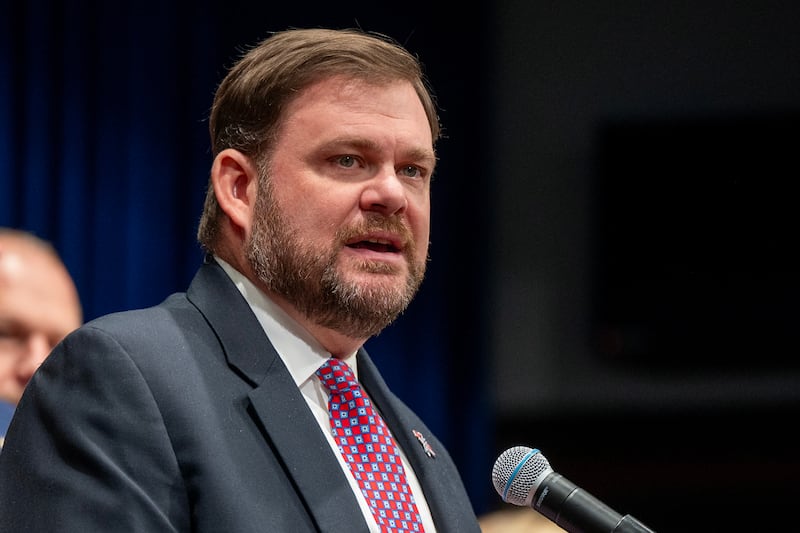
State Senate Majority Leader Joe Pittman (R., Indiana) during a press conference at the Capitol in Harrisburg Feb. 3, 2026.
State Senate Majority Leader Joe Pittman (R., Indiana) during a press conference at the Capitol in Harrisburg Feb. 3, 2026.Read moreTom Gralish / Staff Photographer

“We can act within the 120 days, we can act after the 120 days,” Senate Majority Leader Joe Pittman (R., Indiana) said on Sunday. “But the choice is now quite simple. These machines are illegal, and in less than 120 days, they will be leaving the marketplace.”

Data centers — which are seeing a boom in Pennsylvania as artificial intelligence usage increases and communities are pushing back on where they are being built — will be required to submit information about their energy and water usage.

Advertisement

Beginning next summer, data centers in the state with a peak energy demand greater than 10 megawatts will be required to submit information annually to the Department of Environmental Protection.

Outlined as part of this year’s fiscal code, those reports will be publicly-accessible. Data centers that do not submit information about their resource usage will be fined $10,000 a day.
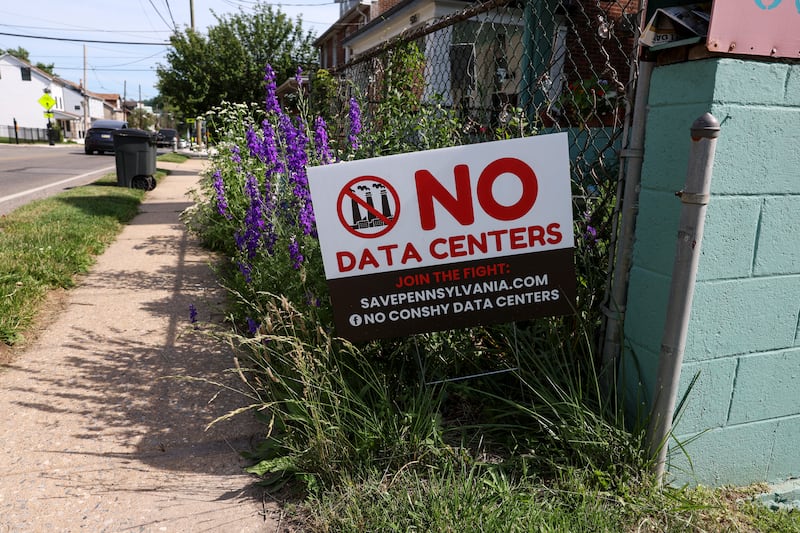
A yard sign protests the proposed data center on New Elm Street near the Closed Cleveland-Cliffs steel mill photographed on Thursday, June 4, 2026 in Conshohocken, Pa.
A yard sign protests the proposed data center on New Elm Street near the Closed Cleveland-Cliffs steel mill photographed on Thursday, June 4, 2026 in Conshohocken, Pa.Read moreMonica Herndon / Staff Photographer

A data center regulation bill, which would have limited state benefits for data center developers and was championed by Shapiro, was not included in the final budget deal. The governor called for limiting a sales and use tax exemption and expediting permitting to projects that comply with a set of transparency and environmental standards.

And several other data center regulation efforts that have received bipartisan support in recent weeks were also absent from the final spending package.

That included efforts to repeal the existing sales tax exemption afforded to data center developers and attempts to enact a local or statewide moratorium on new data center development.

Both chambers passed language repealing the tax exemption and advanced differing bills to freeze development. One Democratic-sponsored bill would have given municipalities the option to implement a 180-day moratorium on new centers. The other, a Republican-sponsored measure, would allow for local moratoriums up to 18 months.

Advertisement

“Compromise” was the word of the day around the Pennsylvania Capitol on Sunday, when the legislature swiftly passed the more than 600-page budget deal hashed out behind closed doors between Shapiro, Pittman, and House Majority Leader Matt Bradford (D., Montgomery) and passed with bipartisan support in both chambers.

The legislative leaders and Shapiro emphasized that they didn’t get exactly what they wanted in the budget, as a symptom of dealing with divided government. And leaders were proud to have reached the deal less than two weeks after their July 1 deadline, rather than the nearly five months that it took to hash out an agreement last year.
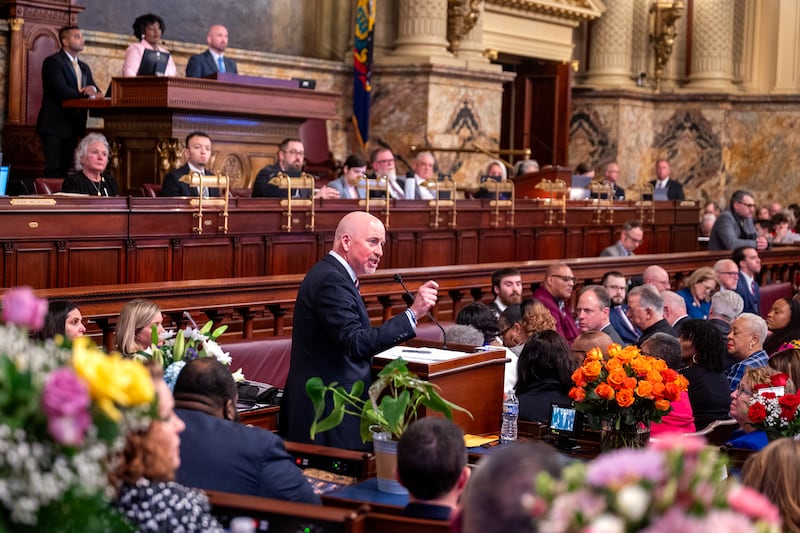
House Majority Leader Matt Bradford (D., Montgomery) speaks on Tuesday, Jan. 7, 2025.
House Majority Leader Matt Bradford (D., Montgomery) speaks on Tuesday, Jan. 7, 2025.Read moreTom Gralish / Staff Photographer

Lawmakers also agreed to work over the weekend to hurriedly approve the budget deal, with members of the Senate coming in on Saturday night to begin advancing parts of the budget deal and the House joining them Sunday afternoon. By 6:15 p.m. on Sunday, Shapiro had signed it.

Among the inspirations for the weekend of productivity: Making it to the MLB All-Star Game in Philadelphia, Bradford said, for which he has tickets.

Leaders returned to some old accounting maneuvers to address the state’s multibillion-dollar structural deficit and avoid pulling from the state’s emergency savings account.

They spent down unused and underused dedicated funds, and rolled some of the state’s Medicaid payments totaling $1.3 billion to the next fiscal year, a move lawmakers typically resorted to before the state saw an influx of federal dollars during the COVID pandemic.

Advertisement

Without those delayed payments, the state budget would total closer to $52.1 billion, and several GOP members criticized the total as being disingenuous.

More than 80,000 retired public-sector employees will receive a cost-of-living adjustment to their pensions, something advocates have sought for years.

» READ MORE: More than 80,000 Pa. retired teachers, police officers, and firefighters will get a pension bump — some for the first time in decades

Public school teachers and other state employees who retired before July 1, 2002 will receive a tiered monthly payment based on the date of their retirement. Similarly, police officers and firefighters who retired more than five years ago will receive monthly payments ranging from $50 to $300 dollars, depending on how long they have been retired.

Lawmakers from both parties had called for the cost-of-living increase.

Advertisement

Legislators also agreed to close a loophole that allowed online sellers to avoid paying Philadelphia’s local 2% sales tax on purchases made in the city.

Mayor Cherelle L. Parker had asked the General Assembly to close it as part of her own city budget pitch in a move estimated to bring an additional $1.5 million to Philadelphia.
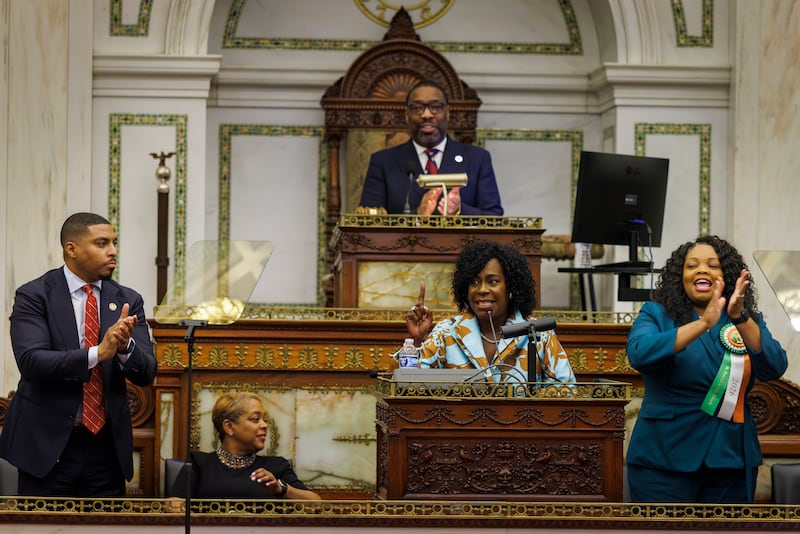
Philadelphia Mayor Cherelle L. Parker is cheered by members of Philadelphia City Council at conclusion of her budget address, Thursday, March 12, 2026.
Philadelphia Mayor Cherelle L. Parker is cheered by members of Philadelphia City Council at conclusion of her budget address, Thursday, March 12, 2026.Read moreAlejandro A. Alvarez / Staff Photographer

Twenty-nine states have bell-to-bell cell phone bans. This year, Pennsylvania will not join them, despite the passage of two separate phone ban bills — one in each chamber of the legislature.

In: Mandatory recess for students K-5

Recess is now law in Pennsylvania.

Another education policy change championed by Shapiro, a mandatory, 30-minute recess for students in grades kindergarten through fifth was established in this year’s budget as a way to improve learning outcomes.

Advertisement

Several Pennsylvania funding issues that have gone years without being addressed were left out of the latest budget, some with more pressing deadlines than others.

Lawmakers did not address a need for mass transit funding — which led to last year’s bitter budget stalemate among legislators — but are expected to identify a long-term funding stream for the transit agencies next year when a two-year fail-safe runs out.

» READ MORE: Public transit is in trouble all across Pennsylvania, including in GOP districts
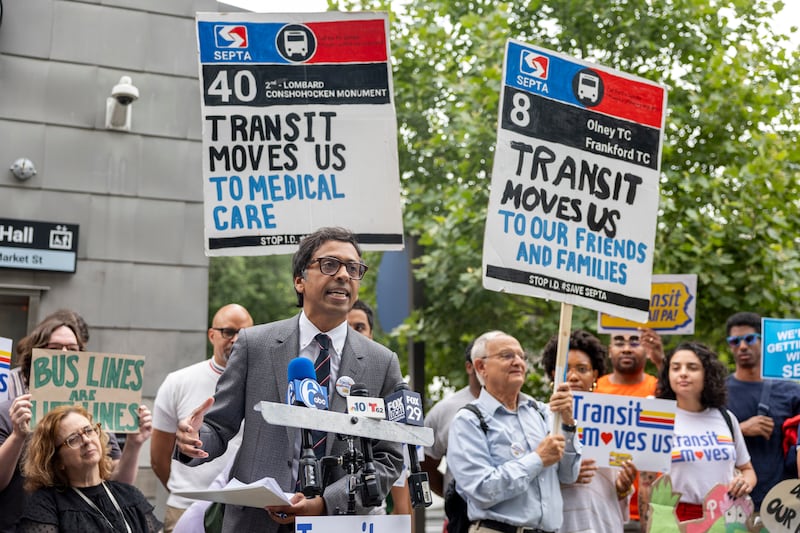
Senator Nikil Saval, speaks at a press conference calling for more SEPTA funding from the state at Independence Hall in Philadelphia, Pa., on Friday, June 26, 2026.
Senator Nikil Saval, speaks at a press conference calling for more SEPTA funding from the state at Independence Hall in Philadelphia, Pa., on Friday, June 26, 2026.Read moreTyger Williams / Staff Photographer

Other local governments and service providers said their needs are more urgent.

The County Commissioners Association of Pennsylvania released an urgent plea after the state budget was signed that counties still have not received the critical mental health funding they need, or a surcharge increase used to fund 911 call systems. Home-health service providers also continued their calls for increased state funding they say is needed, as the industry faces serious staffing issues due to low state reimbursement rates.

» READ MORE: Pennsylvania’s home care industry is in crisis, with low pay and unfilled shifts driving it toward collapse

Advertisement

Rape crisis centers got a much-needed funding increase, doubling how much the centers receive from $12 million to just over $24 million.

Philadelphia’s only rape crisis center had to lay off its employees and rely on volunteer work during last year’s monthslong state budget impasse.

Republican and Democratic lawmakers championed the organizations in this budget, making the largest single-year increase for the critical services in state history, according to the Pennsylvania Coalition to Advance Respect.

“Today marks a turning point for survivors and rape crisis centers across Pennsylvania,” said Joyce Lukima, the organization’s coalition director, in a news release.

Ethan Young is an intern with the Pennsylvania Legislative Correspondents’ Association.

Advertisement


Source link

Continue Reading

Pennsylvania

Governor Josh Shapiro signs overdue Pennsylvania state budget with bipartisan support

Published

on

Governor Josh Shapiro signs overdue Pennsylvania state budget with bipartisan support


HARRISBURG, Pa. (WPVI) — Pennsylvania Governor Josh Shapiro signed the state’s overdue 2026-2027 budget on Sunday.

The $50.8 billion spending plan was passed by state lawmakers with bipartisan support.

It is smaller than Shapiro’s initial $53 billion plan proposed back in February.

“We managed, as the math indicates, to find compromise without compromising our core values,” said Shapiro. “If you go back and look at the goals we all set together way back in 2023 – funding our schools, making our communities safer, growing our economy….four years later, this budget reflects those continued priorities.”

Advertisement

Lawmakers say this spending plan expands workforce development initiatives, devotes significant new funding for basic education, and increases funding for special education and early intervention services.

Copyright © 2026 WPVI-TV. All Rights Reserved.


Source link

Continue Reading

Pennsylvania

Gov. Shapiro signs $50.8B Pa. budget with focus on education, public safety

Published

on

Gov. Shapiro signs .8B Pa. budget with focus on education, public safety


PENNSYLVANIA (WFMZ-TV) — Governor Josh Shapiro signed Pennsylvania’s $50.8 billion budget into law Sunday.

The largest part– $11.8 billion funding education. It also funds four more State Police classes. The budget comes with an additional $10 million for career and technical education.

“If you go back and look at the goals we all set together way back in 2023– funding our schools, making our communities safer, growing our economy, and four years later this budget reflects those continued priorities,” said Governor Shapiro.

Advertisement

Republican State Senator Jarrett Coleman said he voted against the budget.

“The issue with the budget is that this wasn’t a really honest budget. This was pretty deceptive,” said Senator Coleman.

One thing in particular he said he is against– delays in $2.6 billion in Medicaid payments to managed care providers to the next fiscal year.

“So, that’s disappointing and I don’t really care to play that game. I think Pennsylvanians deserve to have an honest conversation and make no mistake; tax payers will ultimately pay the price for this charade,” said Senator Coleman.

Democratic State Rep. Mike Schlossberg said he is happy with this budget.

Advertisement

“I think by and large it was an extremely solid product,” said Representative Schlossberg.

This marks the fifth year in a row the budget was not passed by the June 30th deadline. The signing of this one comes months ahead of when last year’s budget was approved.

“I think some lessons were learned. I think everybody realized we cannot do last year, we cannot do again what we did last year and also candidly election coming up in a few months, nobody wants to leave it hanging out there,” said Representative Schlossberg.


Source link

Advertisement
Continue Reading
Advertisement

Trending
