Northeast
On this day in history, August 3, 2004, Statue of Liberty welcomes visitors for first time since 9/11

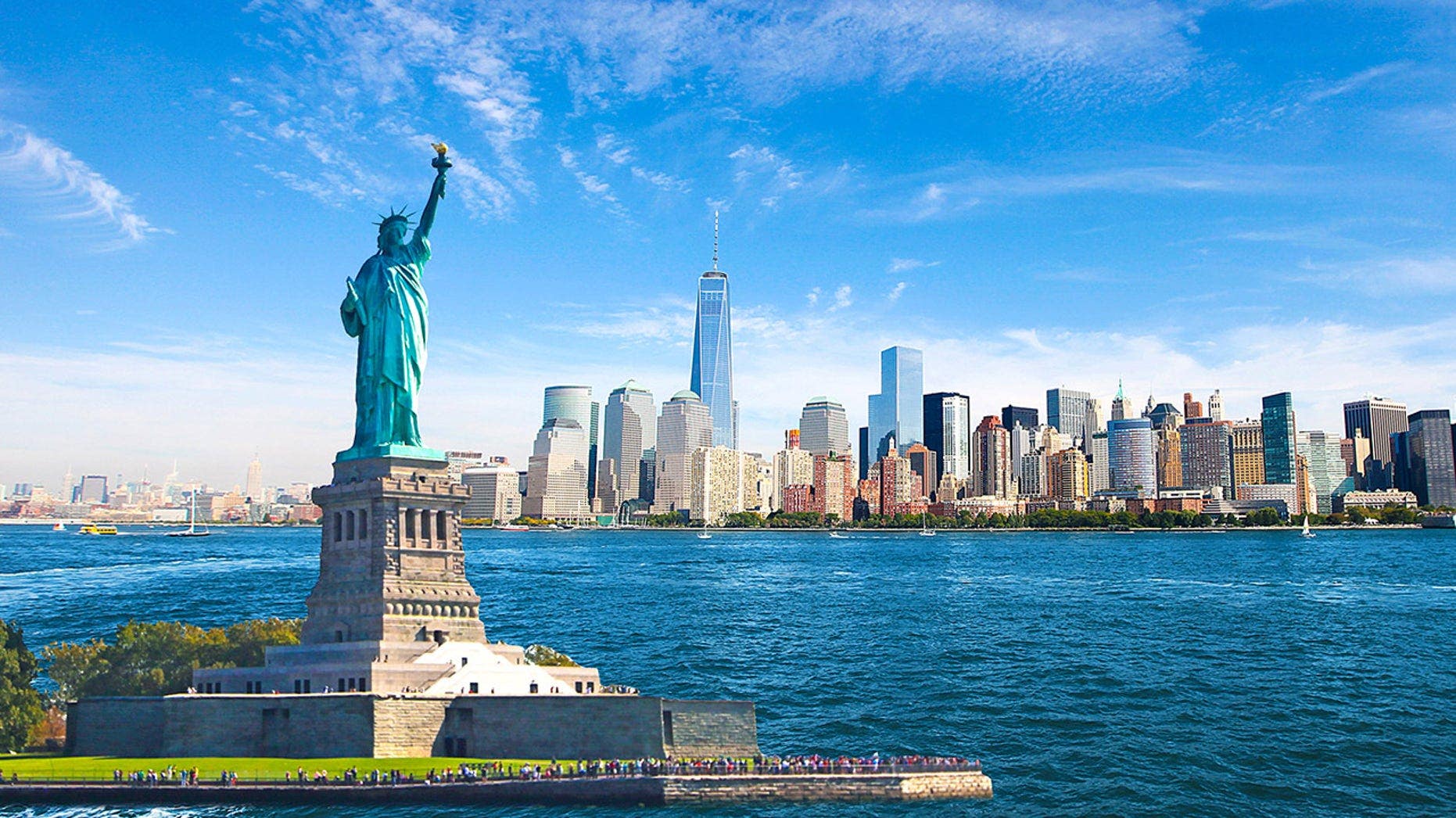
The Statue of Liberty, perhaps the most celebrated symbol of American ideals and exceptionalism, reopened after the 9/11 attacks on this day in history, August 3, 2004.
The globally recognized landmark had been closed to the public for nearly three years following the destruction of the nearby World Trade Center on Sept. 11, 2001.
Lady Liberty stood stoically watching over the horror in Lower Manhattan that day, little more than a mile across New York Harbor.
ON THIS DAY IN HISTORY, AUG. 2, 1943, JFK SAVES PT-109 CREW AFTER COLLISION WITH JAPANESE DESTROYER
“This beacon of hope and liberty is once again open to the public, sending a reassuring message to the world that freedom is alive in New York and shining brighter than ever before,” said then-Gov. George Pataki, as he reopened the Statue of Liberty along with Michael Bloomberg, NYC’s then-mayor, plus the Secretary of the Interior Gale Norton, other officials and members of the public.
The celebration featured pomp and circumstance, including a performance of “You’re a Grand Old Flag” and the national anthem by a military choir.
ICONIC 9/11 PHOTOS AND THE PHOTOGRAPHERS WHO SHOT THEM: HERE ARE THEIR STORIES
But the event also came amid concerns about terror attacks that loomed over the nation long after 9/11. New York City, nearby Newark, N.J. and Washington, D.C., all faced terror threats in the days before the reopening ceremony.
Thick smoke billows into the sky from the area behind the Statue of Liberty, lower left, where the World Trade Center was, on Sept. 11, 2001. (AP Photo/Daniel Hulshizer)
“I think it shows the world that liberty cannot be intimidated,” Craig Manson, assistant interior secretary, said before the festivities.
“I think it’s significant that despite the raising of the alert levels, we are still going ahead with the reopening.”
STATUE OF LIBERTY’S ‘LITTLE SISTER’ ARRIVES IN UNITED STATES FROM FRANCE IN TIME FOR FOURTH OF JULY
The Statue of Liberty, a gift from the people of France, opened to the public in 1886. French sculptor Frederic Bartholdi conceived of it; he visited the United States in 1871 after serving his nation in the Franco-Prussian War.
Lady Liberty’s interior metal framework was fabricated by Gustave Eiffel, who immediately afterward began building the iconic tower in Paris that bears his name.
The Statue of Liberty has stood proudly in New York Harbor since 1886. It attracts about 3.5 million visitors per year, but has been closed for extended periods several times in its history. (Kerry J. Byrne/Fox News Digital)
The Statue of Liberty has been shuttered for various reasons through its history.
It was closed for two years from 1984 to 1986 for extensive restoration work before its centennial celebration.
STATUE OF LIBERTY RESTRICTS TOURS AMID ‘OVERCROWDING’ CONCERNS
The scaffolding around the Statue of Liberty became a pop-culture symbol of the 1980s that appeared in everything from movies to music videos.
The National Historic Landmark closed for eight months after Superstorm Sandy in Oct. 2012, before reopening on July 4, 2013.
The Statue of Liberty closed again to the public for four months at the start of the COVID-19 outbreak in March 2020, before a phased period of reopening began in July.
An amazing view of the Statue of Liberty, the skyline and One World Trade Center. (iStock)
Visitors could access the statue’s famous torch for the first 30 years of its existence.
For more Lifestyle articles, visit foxnews.com/lifestyle
But public access to the torch ended following the deadly “Black Tom explosion” of July 30, 1916.
The Statue of Liberty’s torch was among the structures damaged by explosion fragments.
As the U.S. contemplated entry into World War I, German spies sabotaged a barge in New York Harbor filled with an estimated 2 million pounds of arms and munitions destined for Allies in Europe.
The horrific explosion could be felt as far away as Philadelphia.
Remarkably, it killed only four people, but it caused an estimated $500 million in damage in New Jersey and New York City.
The Statue of Liberty’s torch was among the structures damaged by explosion fragments.
It has been open only to National Park Service officials in the 106 years since the Black Tom attack.
Read the full article from Here


NEWYou can now listen to Fox News articles!
A Baltimore man faces first-degree murder and multiple armed robbery charges after authorities say he carried out a nine-day crime spree that left a convenience store clerk dead.
Baltimore police said 52-year-old Brian Burrows was arrested in connection with a commercial armed robbery and the fatal shooting of Khaled Saleh Mohamed Alshariki on Feb. 13.
Court records show Burrows has been charged in three separate cases stemming from incidents on Feb. 6, Feb. 13 and Feb. 15. In total, he faces 21 charges, including one count of first-degree murder, three counts each of armed robbery, first-degree assault, use of a firearm in a violent crime and handgun on person.
He also faces two counts each of robbery and second-degree assault, along with charges including reckless endangerment, theft and discharging a firearm.
Brian Burrows faces first-degree murder charges, among numerous others, after police say a nine-day robbery spree left a convenience store clerk dead. (Baltimore City Police)
According to police, officers responded to reports of a shooting around 9:30 a.m. on Feb. 13 and found a 36-year-old man suffering from a gunshot wound to the torso. The victim, later identified as Alshariki, was transported to a nearby hospital where he died.
FOX45 News in Baltimore reported it obtained charging documents in the cases, which state surveillance footage captured a suspect approaching Alshariki as he worked behind the counter, pulling out a gun, demanding money and firing a fatal shot.
Court records show investigators used facial recognition technology to identify Burrows as a possible match.
COLORADO REPEAT OFFENDER FREED FROM JAIL LESS THAN TWO WEEKS BEFORE ALLEGEDLY KILLING MOTHER OF THREE: REPORT
A Baltimore man faces first-degree murder and 20 other charges. (Getty Images)
Two days later, another armed robbery was reported at Family Grocery and Tobacco, about a half mile north of the Broadway store.
Police said witness statements and surveillance footage helped identify Burrows, and investigators allege the video evidence also linked him to the fatal shooting.
BALTIMORE RESIDENTS REJECT NARRATIVE FROM CITY LEADERS ABOUT VIOLENT CRIME DROPPING: ‘NOT GOING LOW’
Burrows was arrested Feb. 19 after detectives executed a warrant. (iStock)
Burrows was arrested Feb. 19 after detectives executed a warrant at a home in Linden Heights. He was taken to an intake facility and charged.
Court records also show Burrows had an outstanding probation violation warrant issued in September 2025 in a prior armed robbery case. In that case, he was sentenced to 20 years in prison, with 13 years suspended, and placed on supervised probation before his release.
CLICK HERE TO DOWNLOAD THE FOX NEWS APP
Burrows remains held without bond as prosecutors pursue the murder and robbery charges, while the probation violation from his prior armed robbery case remains pending.
Related Article

Read the full article from Here

FORT MYERS, Fla. — Johan Oviedo’s first outing of the spring last week didn’t go great, as the right-hander walked three over 1 2/3 innings in a performance manager Alex Cora described as “erratic.”
His second outing on Monday went much better.
Oviedo was dominant in Monday’s 7-6 win over the Toronto Blue Jays in Dunedin, striking out four over three scoreless innings while holding Toronto to two hits and no walks. He was also highly efficient, throwing 25 of his 31 pitches for strikes while drawing five whiffs.
After allowing a leadoff single to George Springer out of the gate, Oviedo got a strikeout and a double play to quickly get out of the first. He followed that by pitching around a harmless one-out single in the second before sending the Blue Jays down 1-2-3 to finish his outing in the third.
Viewed as the likely top candidate to earn Boston’s No. 5 rotation spot heading into camp, Oviedo clearly helped out his cause with the brilliant showing. He will be in line to make his next start on Saturday.
Gonzales smokes one
Justin Gonzales, a hulking 6-foot-7 outfielder and Boston’s No. 6 prospect according to MLB Pipeline’s latest rankings, made the trip up to Dunedin with the big league club and showed off his power in breathtaking fashion.
In the top of the ninth inning the 19-year-old scorched a single that was measured at 117.3 mph off the bat. According to MLB researcher Sarah Langs’ Daily Statcast leaders, that is the second hardest exit velocity recorded by any player so far this spring. The only ball hit harder was Kansas City Royals’ slugger Jac Caglianone’s 120.2 mph double on Feb. 26.
Franklin Arias, a 20-year-old infielder and Boston’s consensus No. 2 prospect, also made the trip and got the start at shortstop. He went 0 for 3 with two strikeouts at the plate but helped turn a double play to end the bottom of the first.
Big day for Gasper
Monday’s lineup consisted largely of players who are likely to start the season in the minor leagues, but even with that being the case, Mickey Gasper made a strong impression.
The Red Sox catcher and utility player led the offense by going 2 for 3 with a home run and three RBI. Gasper had an RBI single in the top of the third and followed that by crushing a two-run home run with two outs in the top of the fifth.
Nathan Hickey (1 for 2) also had a two-run home run to put the Red Sox ahead for good in the top of the eighth, Allan Castro (2 for 3, stolen base) hit a game-tying solo shot in the sixth, Max Ferguson (1 for 2, walk) had an RBI double and Braiden Ward went 2 for 3 with a stolen base.
Watson struggles
Ryan Watson, a Rule 5 pick looking to make the Red Sox roster as a rookie, had a tough outing on Monday. The right-hander allowed four runs over 2/3 of an inning on one hit, two walks and a hit by pitch.
Watson led off the inning with a lineout before allowing a single, hit by pitch and a walk to load the bases. He then drew a run-scoring groundout before walking another batter to reload the bases. At that point manager Alex Cora lifted the rookie and all three inherited runners came around to score when minor leaguer Patrick Halligan allowed a grand slam to Blue Jays third baseman Addison Barger.
Coming up next
The Red Sox will host Team Puerto Rico in an exhibition at JetBlue Park on Tuesday night ahead of the World Baseball Classic. Left-hander Jake Bennett will get the start for the Red Sox, and Zack Kelly, Tyler Uberstine, Tyler Samaniego and Vinny Nittoli are all scheduled to pitch for Boston too. First pitch is scheduled for 6:05 p.m. and the game will be broadcast on NESN+, NESN 360 and WEEI 93.7 FM.

In the early 1960s, the peregrine falcon population declined so sharply that the raptors weren’t even nesting in Pennsylvania. But now, the National Aviary says a record number have been counted in Allegheny County.
The National Aviary says six peregrine falcons were recorded in the county during the annual Audubon Christmas Bird Count. The nation’s longest-running citizen science project collects data on bird populations for ornithologists, the aviary says. It also plays a role in guiding conservation action, like what was needed to bring peregrine falcons back from the brink of extinction.
Because of the use of DDT, peregrine falcons were no longer nesting in the state of Pennsylvania by the early 1960s, the aviary said. But after the harmful pesticide, which negatively affects reproduction rates in birds, was banned in 1972, conservation efforts have helped the peregrine falcon rebound. It was removed from the federal endangered species list in 1999 and Pennsylvania’s list in 2021.
The record number of peregrine falcons in Allegheny County is thanks in part to the nest on top of Pitt’s Cathedral of Learning in Oakland. For the past two years, biologists with the Pennsylvania Game Commission have banded chicks born in the nest. Three were banded last year, and two the year before that.
People can watch Carla and Ecco raise their family in the nest on a livestream camera run by the National Aviary. Carla laid her first egg of the breeding season on March 16 last year, so the aviary says the start of another season isn’t too far away.

Punch the monkey, viral star, experiences dramatic breakthrough among zoo mates

NBA player calls for Hawks to cancel their ‘Magic City’ strip club promotional night out of respect for women

Why the Microsoft 365 Copilot bug matters for data security
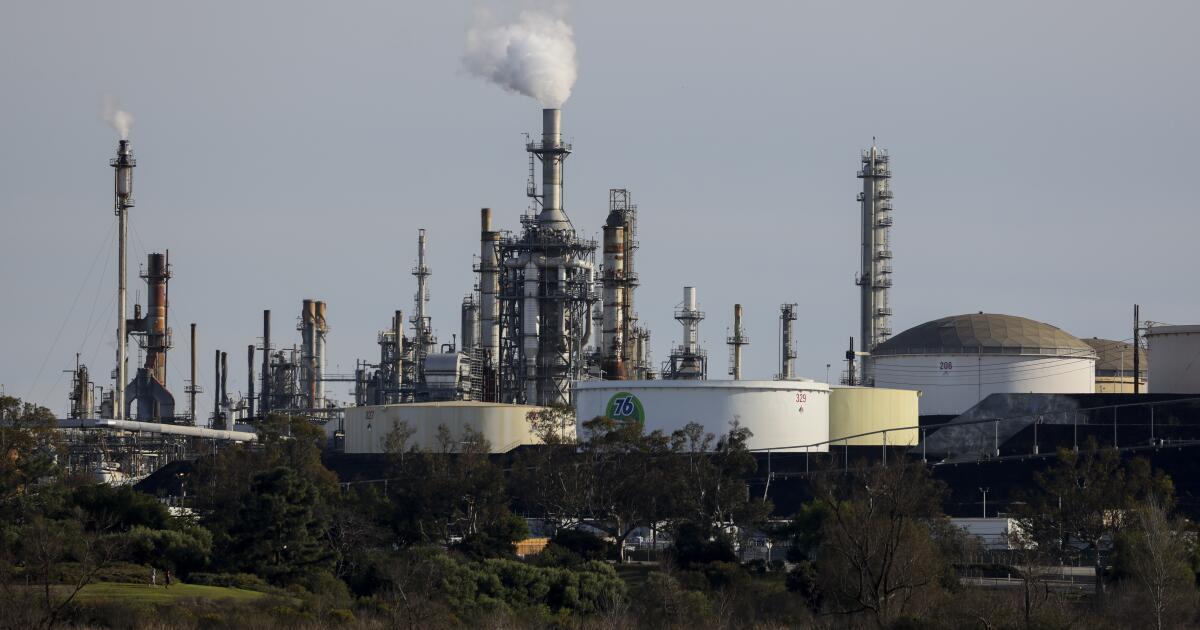
California gas is pricey already. The Iran war could cost you even more
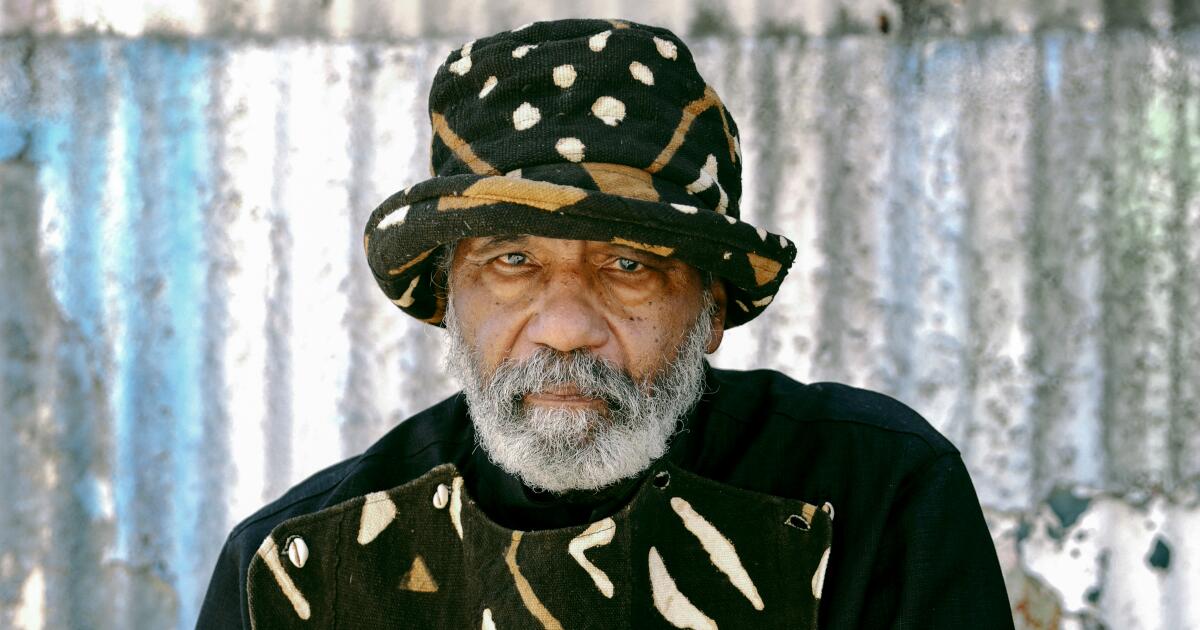
Ulysses Jenkins, Los Angeles artist and pioneer of Black experimental video, dies at 79

Florida High School Football Rankings: Top 25 teams – Oct. 21

Cleary's 21 help Le Moyne down Central Connecticut State 69-64 in OT

How old is Bo Nix? What to know about Oregon quarterback ahead of 2024 NFL Draft

99th annual Pony Swim held in Virginia

Indiana Members Credit Union announced as new anchor tenant at Bottleworks District

Unexpected birth brings hope to near-extinct Amazon tribe

Supreme Court blocks redrawing of New York congressional map, dealing a win for GOP

Map: Earthquake Shakes Central California

Gas prices could jump as Middle East tensions threaten global oil supply

Pakistan calls troops, orders 3-day curfew as 24 killed in pro-Iran rallies
-

 World5 days ago
Exclusive: DeepSeek withholds latest AI model from US chipmakers including Nvidia, sources say
-

 Massachusetts5 days ago
Mother and daughter injured in Taunton house explosion
-

 Denver, CO5 days ago
10 acres charred, 5 injured in Thornton grass fire, evacuation orders lifted
-

 Louisiana1 week ago
Wildfire near Gum Swamp Road in Livingston Parish now under control; more than 200 acres burned
-

 Technology1 week ago
YouTube TV billing scam emails are hitting inboxes
-

 Politics1 week ago
OpenAI didn’t contact police despite employees flagging mass shooter’s concerning chatbot interactions: REPORT
-

 Technology1 week ago
Stellantis is in a crisis of its own making
-

 News1 week ago
World reacts as US top court limits Trump’s tariff powers