Northeast
NYC bans Brooklyn Bridge vendors after mayor says holiday season 'turned dangerous'

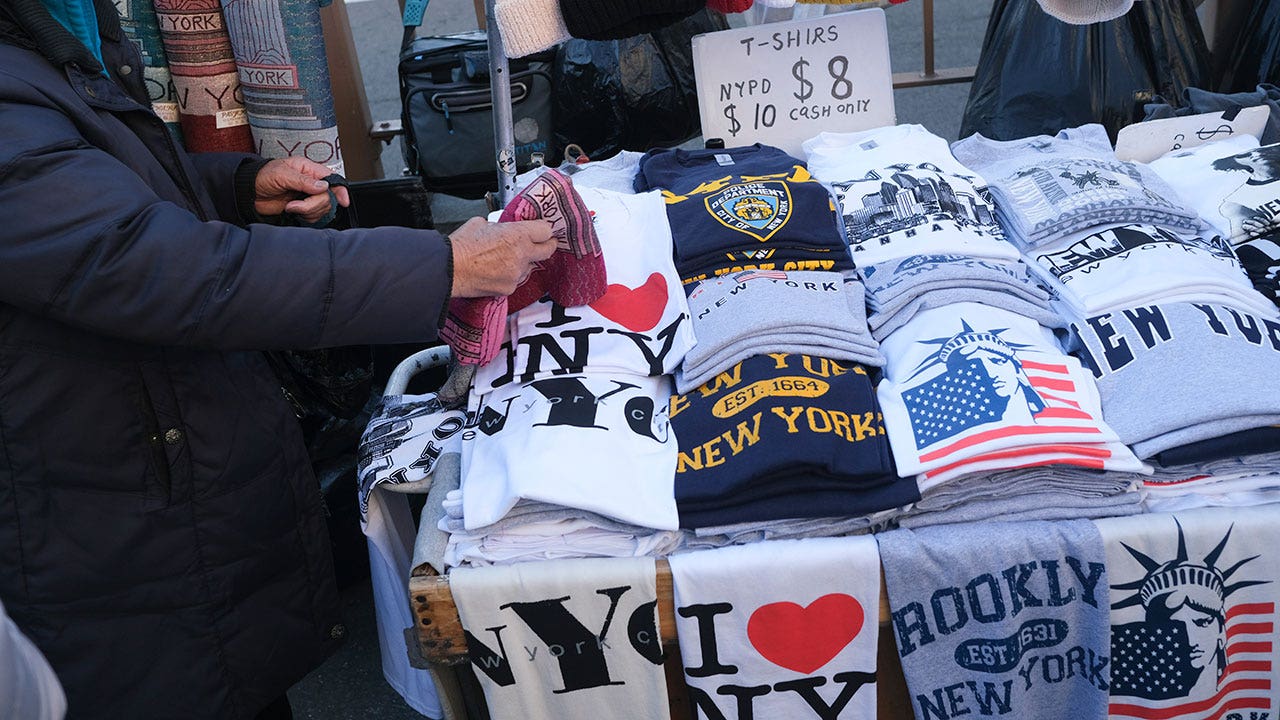
- Vendors on the Brooklyn Bridge are set to be banned from selling souvenirs as of Wednesday to alleviate overcrowding on the pedestrian walkway.
- The decision, implemented by New York City Mayor Eric Adams, comes after holiday season crowds led to dangerous situations, he says.
- The ban will apply to all city bridges, but the Brooklyn Bridge in particular faces issues due to a high number of vendors.
Visitors to New York City hoping to take home a souvenir from the Brooklyn Bridge will now have to settle for a photograph, as vendors are about to be banned from the iconic span.
The new rule, which goes into effect Wednesday, aims to ease overcrowding on the bridge’s heavily trafficked pedestrian walkway, where dozens of trinket sellers currently compete for space with tourists and city commuters.
As crowds flocked to the bridge over the holiday season, the situation turned dangerous, according to New York City Mayor Eric Adams. He pointed to videos that showed pedestrians leaping from the elevated walkway onto a bike lane several feet below in order to bypass a human traffic jam.
FIRST BATCH OF MIGRANTS ARRIVES IN BROOKLYN, DISGUSTED, READY TO LEAVE
“It’s not only a sanitary issue, it’s a public safety issue,” Adams said on Tuesday. “People would’ve trampled over each other. We need order in this city. That is one of our major landmarks.”
Vendors on the Brooklyn Bridge display their wares in New York, on Jan. 2, 2024. New York City will ban vendors from the Brooklyn Bridge starting on Jan. 3, 2024. The move is intended to ease overcrowding on the East River crossing, where dozens of souvenir sellers currently compete for space with tourists and city commuters. (AP Photo/Seth Wenig)
The new rules will apply to all of the city’s bridges — though none have close to as many vendors as the 140-year-old Brooklyn Bridge, which is often lined with tables offering phone cases, knock-off Yankees caps, novelty license plates and more.
Those who sell items on the bridge acknowledge that vendors have proliferated in recent years, driven by relaxed enforcement during the coronavirus pandemic and the availability of low-priced merchandise. A decision two years ago to relocate cyclists to a lane of the roadway also freed up space for stalls.
In the middle span of the bridge, entrepreneurs have now set up nearly a dozen rotating selfie platforms where tourists can pay to take panoramic photos.
MAYOR’S OFFICE AVOIDS SAYING WHETHER IT BACKS NONCITIZENS VOTING AFTER WARNING MIGRANT CRISIS WILL DESTROY NYC
MD Rahman, who has sold hot dogs and pretzels out of a cart on the bridge for 15 years, said he understands the need to crack down on the illicit vendors. But he criticized the city’s plan as overly broad, since it also applies to veteran sellers, like himself, who hold mobile vending licenses.
“The problem is the illegal and unlicensed people selling things up there,” Rahman said, pointing to the newer group of vendors in the middle of the bridge. “To punish everyone, it’s crazy. I don’t know what is going to happen to my family now.”
In recent days, police officers have posted flyers in multiple languages across the bridge, telling vendors they will have to leave. But some had doubts about whether the city would actually follow through on the plan.
“Maybe I come back in a few weeks,” said Qiu Lan Liu, a vendor selling hats and T-shirts, many of them featuring the New York Police Department’s insignia, NYPD. “I’ll see what other people do.”
ADAMS GOES ON LATIN AMERICA TOUR TO DISSUADE MIGRANTS FROM GOING TO NYC, YET SAYS ‘BORDERS SHOULD REMAIN OPEN’
As news spread of the coming ban, some tourists said they were taking advantage of the low-priced souvenirs while they were still available. Ana Souza, an Oklahoma resident, proudly held an “I Love New York” tote she’d found for just $10, a fraction of the price she’d seen at brick-and-mortar shops.
Jenny Acuchi was visiting New York from Oakland, California. “It’s a little crowded, but not as much as I expected,” she said. “The thing that makes it crowded is that everyone is taking photos.”
Among the supporters of the new rules were some disability rights advocates, who said the ban would immediately improve access for wheelchair users. In a statement, the city’s transportation chief Ydanis Rodriguez celebrated the improvements to an attraction he dubbed “America’s Eiffel Tower.”
Rashawn Prince, who uses the bridge to sells copies of his self-published book, “How to Roll a Blunt for Dummies!” said he was unmoved by the comparison.
“I’ve been to the Eiffel Tower,” Prince said. “There’s vendors there, too.”
Read the full article from Here


Switching to more energy efficient appliances
Appliances are the largest source of electricity usage, said Simi Hoque, a professor at Drexel’s department of civil, architectural and environmental engineering. The refrigerator is the most energy-hungry of them all, but you can’t turn it off. Hoque said switching to more energy-efficient appliances will save money, but only if the current models have reached the end of their life.
“If your water heater or your washing machine or your dishwasher or refrigerator have reached their end of life, then it would be important to try to make sure that you find an appliance that is an Energy Star- certified appliance,” Hoque said. “You’re not going to be able to recoup the cost of a new appliance if you haven’t reached the end of life of your existing appliance.”
One exception may be an old window unit air conditioner, Hoque said.
“Those things live for a really long time, but they become extremely inefficient over time,” Hoque said. “And so if you have an old window air conditioning unit, even if it’s not at its end of life, it may be worthwhile to look and see if it’s possible to buy a newer window air conditioning unit to install. I would actually buy a small one because generally those are pretty good. If you put a fan to move air around, the air conditioner can work towards reducing the humidity inside the space, and then the fan can just kind of move the dried cooler air around, and that is enough for comfort on a hot day.”
Hoque also encourages signing up for time-of-use pricing, which allows customers with smart meters to pay lower rates if they use appliances like dishwashers and dryers during offpeak hours.
Home energy audit/weatherization
A home energy audit can help pinpoint areas where expensive heat and cooling are escaping from your residence. Weatherizing your home by sealing drafty windows and doors can make a difference. The Environmental Protection Agency estimates that adding insulation to attics and crawl spaces can save up to 17% on heating and cooling costs.
Hoque said one of the most important parts of weatherization is making sure to insulate the top part of the house beneath the roof. And in a rowhome, it’s helpful to have a white- or silver-coated roof.
“This is more about being sure that you’re insulating the most vulnerable part of your building in the summertime to avoid overheating, and that’s the roof,” Hoque said.
Pennsylvania provides free energy audits and weatherization to those who make 200% or less of the federal poverty level. And some utilities offer services that will assess where you could save.
Shopping for alternative electricity suppliers
Pennsylvania’s deregulated electricity market means that while utilities have a monopoly on distribution in specific territories, ratepayers can still shop for alternative suppliers. Electric bills are generally split in half between the energy supply costs and the distribution costs of sending it through power lines. Utilities make their profit on distribution, and simply pass on the supply charges.
Choosing default service means going with the same provider for both supply and distribution, for example PECO or PPL Electric Utilities. This is the simplest option and one that consumer advocates recommend because the utilities are required to shop for a good price. The alternative suppliers, however, often have varying rates and cancellation fees.
Still, Lancaster County resident Bruce Blom said he’s been shopping for years through the Public Utility Commission’s PAPowerSwitch and saves about $80 to $100 a year. The process is known as “price to compare” where ratepayers can see the different rates and compare them to their default service provider.
“It’s pretty easy,” Blom said. “I always only look for a fixed rate and ones with no penalty for cancellation. And for anything for three months to a year. For the last two years, your best deals are only three months of a fixed rate.”
The key is to put reminders in your calendar when the fixed rate ends so you can make sure you’re not facing surprise rate hikes, Blom added.
“Frankly, I don’t care if they have some kind of reward,” he said. “Okay, fine, if they want to give me something, fine. But you got to keep checking because rates go up fairly rapidly.”
Blom had high praise for the PAPowerSwitch website, saying it was very user friendly.
“It’s the best thing I can do,” Blom said. “That’s the only control I have other than, of course, my own personal control of usage in my house.”

It’s New England’s largest indoor public garden and this spring it’ll once again be teeming with fairies.
The Fairy Garden Days return to the Roger Williams Park Botanical Garden this April with hundreds of handmade fairy houses hidden throughout the Garden’s four greenhouses, plus special events and activities planned for kids every day.
Running from April 11-26, 2026, it’s a great day trip during school’s upcoming April vacation or a wonderful weekend adventure to enjoy an early taste of spring.
What Is Fairy Garden Days in Rhode Island?
This annual event has been one of my favorites since my daughters were babies—and we still go back every year.
READ MORE: Explore These Ten Botanical Gardens Across the SouthCoast
Artists young and old create elaborate fairy gardens depicting fanciful houses, entire schools or even relaxing health spas (cause fairies need a massage now and then too!). You never know what you’ll see or where you’ll find the gardens throughout the grounds.
Nancy Hall/Townsquare Media
What Kids Can Do at Fairy Garden Days
Though if your young ones lose interest in the fairy gardens before you do, there are plenty of activities around the greenhouses too. Kids can get hands on at the texture table, create their own wand, pen letters to the fairies or write out wishes, which get released every Thursdays.
Don’t Miss These Outdoor Garden Attractions
Outside the greenhouses are a Japanese-style trail to wander, a rose maze to make your way through and an outdoor play area where the kids can let their imaginations run wild.
Meet the Goats Behind the Garden’s Cleanup Crew
Definitely don’t forget to stop by the goat house between greenhouses 1 and 2 to say hi to the three Nigerian Dwarf goats calling the Botanical Garden home. These three are an invasive plant removal team, helping to naturally rid the Garden grounds of unwanted plants.
The goats will also celebrate their 9th birthdays during Fairy Garden Days, with a special celebration planned for them on Sunday, April 12 from 1:30 – 3 p.m. Just one of the many special events planned throughout the Fairy Garden Days from April 11-26.
Special Events Happening During Fairy Garden Days
Various fairy visits and story times are planned over the two-week event, with face painting each Tuesday and Saturday and bubble shows every Friday. There will also be an animal encounter with Roger Williams Park Zoo on April 11, Greenhouse Jazz on Sunday, April 19, and a performance from the Toe Jam Puppet Band on closing day, April 26.
READ MORE: Learn More About the SouthCoast’s Beloved Toe Jam Puppet Band
With the incredibly snowy winter Southern New England has been through, we’re probably all looking forward to finally seeing the start of spring. You can get a jump on flower season by stepping inside the Roger Williams Botanical Garden this April for the return of Fairy Garden Days.
10 Beautiful Botanical Gardens Across the SouthCoast
When the season is right, there are several spectacular gardens around the SouthCoast that are blooming with rows and rows of beautiful flowers. Here are some of the most popular places to tiptoe through the tulips and so much more.
Gallery Credit: Nancy Hall
See Inside Gorgeous Gardens Hidden Away in Little Compton
For nearly 50 years the grounds of Sakonnet Garden have been growing in what might be the most private garden along the coast.
On certain days, at certain times you can make a reservation to walk among the hundreds of flowers and plants growing in hidden “rooms” on the grounds, or take a sneak peek right now.
Gallery Credit: Nancy Hall
Explore Peaceful Gardens and Towering Cliffs at Immersive Monet
Claude Monet created thousands of works of art over his decades as an artist. He traveled through Europe capturing gardens ,waterways, cathedrals and more. Now you can walk through the world Monet did and experience his artwork in a whole new way at Immersive Monet coming to Boston.
Here’s a taste of the artwork you could be surrounding yourself in.
Gallery Credit: Nancy Hall

Ivy Mix knew only small-town life growing up in Vermont. In 2003, she decided that needed to change.
“I realized the world was a very big place,” she said recently. “I thought I might want to go someplace and see something.”
She left for Guatemala to volunteer and teach photography in an orphanage. She hung out daily in a nearby bar, enjoying the environment at least as much as the imbibements. When she realized she couldn’t pay off the tab she had racked up, Mix started pouring drinks to offset her debts.
A celebrated bartending career began.
The Tunbridge native is a semifinalist in the Outstanding Professional in Cocktail Service category of the James Beard Awards, the top honors in the American food-and-drink industry. The nod recognizes her work at Whoopsie Daisy, the bar she co-owns in Brooklyn. The author and five-time nominee hopes this is the moment she can finally call herself a James Beard winner.
The 20 bartenders in her category include Kate Wise, who grew up in Stowe and works at Juniper at Hotel Vermont in Burlington. Wise said she’s stunned she’s in the same category with a woman she saw give a cocktail-making demonstration years ago at Waterworks Food + Drink in Winooski, the sort of event celebrity bartenders do.
“She is so talented,” Wise said of Mix, who has owned two successful bars.
Catching on to the cocktail boom
Mix spoke with the Burlington Free Press while driving from New York City to Tunbridge. She splits her time living in Brooklyn and her hometown.
“Tunbridge when I was growing up was small and really rural,” Mix said. “It’s still rural, but it was before the demise of the dairy industry.”
Mix and her twin sister, Tess, are the daughters of glass blower Robin Mix and Susan Dollenmaier, founder of the Vermont-based textile company Anichini. They lived off a dirt road with only one house nearby. Mix attended a Waldorf school and then Chelsea High School and became obsessed with horseback riding.
“I horseback rode all the time,” she said. “Before I went to college that’s what I thought I was going to do. Olympic riding was my goal.”
She stayed in Vermont to study philosophy and fine art at Bennington College. While in college she spent time in Guatemala, sowing the seeds of her bartending career.
Mix graduated from Bennington in 2008. She sold her horse and thought she’d become a professor. The economic collapse that year changed her plans. She lived in New York, worked for free at art galleries and hated it. Mix began working at cocktail bars just as that trend was catching on.
“I was like, ‘OK, this is cool,’” she said. “The cocktail revolution was really booming.”
Shining a spotlight on female mixologists
The cocktail revolution, though, felt like it had little room for women.
Mix said the speakeasy “meme” was big then, which meant men in moustaches, arm garters and suspenders. She and friend Lynnette Marrero in 2011 started Speed Rack, which as the movement’s website explains has “been able to shine a spotlight on female mixologists thriving behind bars around the country; and while they are at it, raise money for breast cancer research, education and prevention.”
That’s when her career really took off. She was named one of Food & Wine magazine’s most innovative women in 2015 and honored by Wine Enthusiast as Mixologist of the Year in 2016.
The first time she was up for a James Beard Award was two years later. Her bar, Layenda, was up for the Outstanding Bar Program category. (It would also be a semifinalist in 2019 and last year before closing.) She scored a second Beard nod in 2025 as a media-award nominee for her book “A Quick Drink: The Speed Rack Guide to Winning Cocktails for Any Mood.”
She co-owns the Brooklyn wine shop Fiasco! Wine + Spirits and runs Whoopsie Daisy with Piper Kristensen and Conor McKee. Mix said she used to play Little League baseball against Kristensen, who’s from Strafford.
‘I want to go to the big shebang’
Mix said Vermont helped shape her career because of the sense of community it inspires.
“I can make a good cocktail, but if you’re not having a good time and you don’t feel welcome, it’s not going to taste good,” she said.
The small-town tendency to take good care of people “has really infiltrated my sense of hospitality,” Mix said.
She would love to finally win a James Beard Award after her string of nominations. She said she’s been lucky to have “a mountain of accolades” that she’s proud of. But the Beard honors are different.
“Accolades — it’s such a funny world. Do they matter? Yes. Do they dramatically help your business? Absolutely,” Mix said.
“For me to get a medal around my neck, that’s the one I really want to get,” she said of the James Beard Award. “It kind of puts you on a whole different playing field.”
Finalists will be announced March 31. Winners will be revealed June 15 in a ceremony in Chicago.
“I want to go to the big shebang,” Mix said.
If you go
WHAT: Whoopsie Daisy bar
WHEN: 5-11 p.m. Monday-Thursday; 5 p.m.-midnight Friday; 3 p.m.-midnight Saturday; 3-11 p.m. Sunday
WHERE: 225 Rogers Ave., Brooklyn
INFORMATION: (347) 365-4193, whoopsiedaisybk.com
Contact Brent Hallenbeck at bhallenbeck@burlingtonfreepress.com.

North Dakota punches ticket to 23rd Frozen Four in SF

Ohio EPA funding emergency generator projects to keep water moving

Oklahoma high school slowpitch softball: Top storylines, players to watch in 2026 season
Oregon Lottery Pick 4 results for March 29

What you can do to lower your electric bill in Pennsylvania

Florida High School Football Rankings: Top 25 teams – Oct. 21

How old is Bo Nix? What to know about Oregon quarterback ahead of 2024 NFL Draft

Cleary's 21 help Le Moyne down Central Connecticut State 69-64 in OT

99th annual Pony Swim held in Virginia

Indiana Members Credit Union announced as new anchor tenant at Bottleworks District

Video: Iran to Allow More Oil Ships Through Strait of Hormuz, Trump Says

Dem senator warns deportation could let Virginia woman’s illegal immigrant killer ‘escape accountability’

Newsletter: G7 ministers to hold talks on war’s economic fallout

ICE officers could remain at airports after TSA workers are paid

Scathing report claims nation’s oldest labor union ‘betrayed’ MAGA members through ‘shocking’ spending
-

 Sports1 week ago
IOC addresses execution of 19-year-old Iranian wrestler Saleh Mohammadi
-

 Miami, FL4 days ago
Jannik Sinner’s Girlfriend Laila Hasanovic Stuns in Ab-Revealing Post Amid Miami Open
-

 New Mexico1 week ago
Clovis shooting leaves one dead, four injured
-

 Politics1 week ago
Schumer gambit fails as DHS shutdown hits 36 days and airport lines grow
-

 Tennessee7 days ago
Tennessee Police Investigating Alleged Assault Involving ‘Reacher’ Star Alan Ritchson
-

 Minneapolis, MN4 days ago
Boy who shielded classmate during school shooting receives Medal of Honor
-

 Science1 week ago
Record Heat Meets a Major Snow Drought Across the West
-

 Technology1 week ago
YouTube job scam text: How to spot it fast