New York
New York’s BQE Is Falling Apart. The City Can’t Agree on How to Fix It.


The triple cantilever runs along the edge of Brooklyn Heights, a wealthy and politically connected neighborhood. It stands as a symbol of resistance to Robert Moses, the power broker who rammed highways through communities.
When Mr. Moses tried that approach here in the 1940s, Brooklyn Heights residents pushed back, and Mr. Moses rerouted the Brooklyn-Queens Expressway around them.
At the top sits the Brooklyn Heights Promenade, a cherished landmark with skyline views where generations of New Yorkers have come for their first date.
Below, two levels of traffic jut out like drawers pulled from a dresser. The highway is the main artery between Brooklyn and Queens, and it is part of Interstate 278, the only road that connects New York’s five boroughs.
The cantilever, which opened in 1954, was designed to be used for 50 years. The risks only go up as it continues to deteriorate year after year, even as its life span has been extended with interim measures. While city officials and transportation engineers say imminent collapse is not a threat, other catastrophes could still strike, like concrete falling off and hitting vehicles.
Since 2018, two New York City mayors — Bill de Blasio and Eric Adams — have announced that they would fix this vital artery. But both administrations were unprepared for the ferocious community opposition to their ideas on how to proceed. Both struggled to build any consensus at all as local residents countered with their own ideas. The endless back and forth led to more delays and inertia.
The standoff over the B.Q.E. has become, more broadly, a symbol of the power that local communities wield over critical infrastructure projects around the nation.
Though community opposition is hardly new, it is thriving today as residents have become more nimble and sophisticated at influencing projects, or halting them entirely. They strategize about just who to target with their ads and protests, assemble technical experts and consultants to argue on their behalf, and extend their reach with email blasts, online petitions and social media.
In Los Angeles, a plan to widen the 710 Freeway, one of the nation’s busiest freight corridors, was canceled in 2022 amid community opposition. A major street improvement project in Detroit was paused last summer, in part over the public’s concerns about its design, while state officials took another approach. And a Buffalo project championed by New York Gov. Kathy Hochul to reconnect communities divided by a highway stalled recently after a state court ruled in favor of critics.
This community pushback is often characterized as NIMBYism — the “not in my backyard” impediment to change — but the reality is more nuanced. Many Brooklyn residents say they are not against improving the B.Q.E., and, in fact, are fighting for a better future with less traffic and more space for people.
But now, time is running out for the triple cantilever.
A highway in decay
The cantilever structure anchors a 1.5-mile stretch from Atlantic Avenue to Sands Street that is owned by the city. The rest of the 16-mile highway belongs to the state.
Even before the latest effort, state transportation officials had sought to rehabilitate the cantilever section in 2006. They dropped the project in 2011, citing fiscal concerns and other priorities. That left the problem to the city.
The triple cantilever was increasingly flagged for potential safety hazards, said Bojidar Yanev, a former city transportation official who oversaw inspections from 1989 to 2018. “The structure was unraveling,” he said.
Since at least 1996, the city has fastened metal mesh sheets to the underside of the roadway, particularly below joints, as a stop-gap measure to hold crumbling concrete in place and prevent accidents.
The growing areas protected by the mesh sheets became the most visible sign of the triple cantilever’s decay. It was not easy to inspect the internal structure, which was enclosed in concrete like a catacomb, Dr. Yanev said.
Inspectors cut openings into the walls of the cantilever in 2016, finding that water and road salt had penetrated the structure at the joints. This caused the steel rebars in the concrete to corrode and expand, forcing chunks of concrete to fall off. Without major structural intervention, this degradation progressively weakens the triple cantilever’s strength.
In September, Times reporters captured video of the undersides of the triple cantilever to understand the structure’s current state.
Analysis of the footage revealed hundreds of steel mesh sheets placed along the structure’s undersides, including at the cantilever’s deteriorated joints, to hold the concrete in place.
City officials say the triple cantilever is safe until at least 2029, with current protective measures. They closely monitor the structure and have taken steps to stabilize it, including making repairs and installing sensors to ticket overweight trucks. After that time, the city may have to further restrict traffic to reduce weight on the cantilever.
First wave of ideas
Mayor de Blasio’s administration presented two options in 2018 to rebuild the cantilever, touching off the fiercest battle over the B.Q.E. since it was built.
Polly Trottenberg, then the city transportation commissioner, told residents in Brooklyn at the time that “none of the options are going to be very lovable, and that’s the challenge we face.”
One option would rebuild the highway lane by lane and reroute traffic around the construction. The more controversial proposal, favored by the city, would erect a temporary six-lane highway over the promenade while the lower decks were rebuilt.
Both options would mean losing access to the promenade for years, but the temporary highway would also bring traffic, noise and pollution right to the doors of Brooklyn Heights.
City’s idea: Temporary highway
Furious residents rallied to save the promenade. They raised tens of thousands of dollars to fund their campaign, hired public relations and lobbying consultants, and started a petition that garnered more than 70,000 signatures.
Of course, the promenade itself was born from an earlier fight with Mr. Moses. In 1942, the Brooklyn Eagle newspaper learned that a new highway could cut through the neighborhood and warned: “Plan for Express Highway Through Heights Is Shocking.”
Residents demanded that it be pushed toward the industrial waterfront and suggested building a “double-decker highway” to take up a smaller footprint, and a roof to cover the noise and fumes — which became the promenade.
Mr. Moses later wrote that “the two shelves of the cantilevers carrying commercial traffic and the overhanging cantilever roof for the promenade and park were designed for the greatest benefit to the Heights.”
This time, many Brooklyn residents, as well as architects and urban planners, looked to places like San Francisco, Seattle and Rochester, N.Y., that have torn down or repurposed highways to reconnect neighbors and create more housing, parks and transit.
Two alternatives to the city’s ideas illustrate how Brooklyn residents see this as an opportunity to make radical changes that would benefit their neighborhoods and the city.
Mark R. Baker, a lawyer, businessman and parks activist, proposed in 2019 to move all the traffic to street level and enclose it in a ventilated tunnel. The cantilever would become a three-level park, called the “Tri-Line,” similar to Manhattan’s High Line.
“We had to protect the promenade, which is one of the most spectacular open spaces in New York City or the world, really,” Mr. Baker said.
Alternative idea: The ‘Tri-Line’
Roy Sloane, a graphic artist and advertising executive, advocated for his earlier idea from 2010 for a tunnel, which would help divert traffic away from the cantilever section.
The “Cross Downtown Brooklyn Tunnel” — which would become the new alignment for Interstate 278 — would alleviate the traffic and pollution that spills off the B.Q.E. onto streets in the area. The triple cantilever could then be rehabilitated for cars and light trucks going between neighborhoods, and, with less traffic, nearby sections of the highway could also be turned into boulevards.
“Through traffic is the issue for the residential neighborhoods that are parallel to the B.Q.E.,” Mr. Sloane said.
Alternative idea: The tunnel
Other notable concepts included one by Bjarke Ingels Group to transform the triple cantilever into “BQ-Park,” a grander version of Mr. Baker’s Tri-Line. The City Council, working with Arup, an engineering firm, floated an idea to demolish the triple cantilever and replace it with a three-mile bypass tunnel.
After hearing from residents, Scott Stringer, then the city comptroller in 2019, jumped in with a proposal to limit the cantilever to trucks, while adding bus and bike lanes and a park.
City officials promised to consider all these ideas. Mr. de Blasio, a former Brooklyn councilman with deep ties to the borough, convened a panel of experts to study the B.Q.E.
The panel reported in January 2020 that the cantilever was in worse shape than believed and called for safety measures, including removing two of the six traffic lanes to reduce vehicle weight.
Carlo A. Scissura, who led the panel, said the city was not ready to choose among the various concepts without more comprehensive engineering studies. “It would have just been like, ‘Oh, this looks beautiful, let’s just do it,’ ” he said.
When the coronavirus gripped New York in March 2020, resources shifted to the health crisis, and the momentum to fix the B.Q.E. was lost.
Shortly before leaving office, Mr. de Blasio said the city would postpone a permanent solution and instead spend more than $500 million to shore up the B.Q.E. for 20 years.
Second wave of ideas
After Mr. Adams became mayor in 2022, he decided the B.Q.E. could no longer wait. He hoped to tap into federal infrastructure funds unlocked by the Biden administration and start construction within five years.
Mr. Adams had opposed the city’s temporary highway idea in 2019 as Brooklyn borough president. And his new administration presented three new concepts — “The Stoop,” “The Terraces” and “The Lookout” — that shifted the focus to open space.
The Stoop grew out of community interest in BQ-Park, the idea proposed by Bjarke Ingels Group in 2019. City officials hired the firm to help pressure test BQ-Park, only to find that it could not be built because of infrastructure constraints. The Stoop was developed as an alternative concept, but was later shelved amid criticism from residents about the design.
City’s idea: The Stoop
Vishaan Chakrabarti, an architect and urbanist, said that many of the visions for the B.Q.E. did not fully consider engineering and cost constraints. “Communities get enamoured with ideas that aren’t viable, and then they start thinking worse of the ideas that are viable,” he said.
City officials said the B.Q.E. was an important economic artery, and that without it, trucks would jam nearby streets. They tried to strike a balance between a safe, modern highway and quality-of-life concerns, they said.
Since 2022, they have held 30 public meetings about the B.Q.E. In response to feedback, they committed to a plan that would not impact the promenade or Brooklyn Bridge Park, or require taking private property. They helped secure a $5.6 million federal grant to improve neighborhoods along the state-owned sections.
Still, many Brooklyn residents complained about a lack of transparency. They said many of their questions were not fully answered and their suggestions went nowhere.
As public discussion evolved over the years, three broad groups of stakeholders emerged: neighbors, dreamers and pragmatists.
The neighbors saw an opportunity to improve public transit and to reduce the impact of traffic on their health, safety and climate. The dreamers went further and envisioned tearing down the highway for more housing, businesses and parks, and shifting to more sustainable ways to move people and freight. The pragmatists focused on maintaining a vital traffic corridor that would still be needed in the future and fixing a cantilever that had become a safety hazard as soon as possible.
A leading voice of the neighbors was Lara Birnback, the executive director of the Brooklyn Heights Association, who said the city should develop “a more holistic, forward-thinking solution.” The association, which is part of the Brooklyn-Queens Expressway-Environmental Justice Coalition, has called for a corridorwide plan.
“Our perspective at this point is, let’s not spend billions and billions of dollars cementing the status quo, no pun intended, by shoring up the cantilever for 100 years,” Ms. Birnback said.
In the dreamer camp was the Institute for Public Architecture, which highlighted the harmful legacy of the B.Q.E. through community meetings, an oral history project and a documentary by Adam Paul Susaneck, an urban planner. The dreamers asked: What would a future without the B.Q.E. look like?
Antonio Reynoso, the Brooklyn borough president, said he saw a future with more freight moving on the waterways and less reliance on polluting highways like the B.Q.E. He told city transportation officials that he would like them to explore the option of tearing down the cantilever. But he said that option was never presented in community meetings.
Pragmatists like Samuel I. Schwartz, a former chief engineer for the city Transportation Department who established a transportation research program at Hunter College, urged city officials to immediately fix the cantilever and leave amenities like parks to be added later. He pointed to the Williamsburg Bridge as a cautionary lesson. In April 1988, it was shut down for more than a month after decades of neglect, causing widespread chaos.
“There should be urgency,” he said, “because something is going to happen if nothing is done.”
Third wave of ideas
Many New York projects have run into opposition, like the $10 billion plan to replace the Port Authority Bus Terminal that was substantially revised last year with community input. “Community opposition is a way of life,” Mr. Schwartz said. “It doesn’t mean we stop.”
But the B.Q.E. has often seemed adrift, without a strong champion at the helm to build consensus. Communities have a right to speak out, and “the job of government is to hear the voices and then whittle it down into something that works,” Mr. Stringer said.
Brooklyn Councilman Lincoln Restler said the Adams administration has seemed more interested in checking a box than really collaborating with the community. Any plan for the B.Q.E., he added, faces multiple layers of government review and approvals and will require community support to move forward. “We’ve got a long way to go,” he said.
In 2024, the Adams administration presented another concept for the B.Q.E. — the city’s third attempt — this time emphasizing an engineering solution: a two-level, stacked highway that would be supported on both sides.
City’s idea: Stacked highway
Marc Wouters, an architect and urban planner, countered with yet another idea. In 2019, he had partnered with the Brooklyn Heights Association on a plan to protect the promenade. Since then, he has spent thousands of hours working on his own to take field measurements, build 3-D models and test engineering scenarios.
The result is the “Streamline” plan, which would be quicker to build, cost less than other options, and have minimal impact on the promenade and surrounding area, Mr. Wouters said. It would move all traffic to an expanded bottom deck and repurpose the upper deck for bike lanes and a park.
“I’m hoping that it advances because it does seem to check a lot of boxes off for the community,” he said.
Alternative idea: Streamline plan
Last month, Mayor Adams urged Transportation Secretary Sean Duffy to start the environmental review process for the B.Q.E., which would consider a range of plans and allow construction to begin in 2029. “After a fix for the B.Q.E. languished for decades, the Adams administration advanced this project further than ever before to build a safe, resilient highway,” said Anna Correa, a spokeswoman for Mr. Adams, this week.
But a new mayor, Zohran Mamdani, will take over in January and may have his own ideas. Mr. Mamdani knows that protecting the safety and stability of the B.Q.E. is “an urgent priority for the city,” said his spokeswoman, Dora Pekec. “After years of patchwork fixes that have only offered temporary fixes, the Mamdani administration will work to deliver a permanent solution for the city-owned sections of the B.Q.E. that both meets community needs and preserves this essential transportation corridor,” she said.
That will not be a quick or easy process. Big hurdles remain, including how to pay for the project. It was passed over for federal funding in 2024 and could cost up to $5 billion, depending on the plan chosen.
“I think the B.Q.E. has just bedeviled and frustrated everybody who’s ever driven on it, looked at it, and worked on it — it’s like a curse,” Ms. Birnback said.
Note: The ideas illustrated in the story are schematic interpretations by The New York Times, based on the original proposals.
Video at the top of this article by Todd Heisler. Additional work by Nico Chilla.



new video loaded: We Analyzed the Deadly Crash at LaGuardia

By Lazaro Gamio, Coleman Lowndes and James Surdam
March 27, 2026

“I just thought, please don’t let this be how my life ends. I’m not ready to die. When we landed, it was a very rough landing. Like we landed and the plane jolted back up, and that caught a lot of passengers off guard. Everyone kind of like, ‘What’s going on?’ And then you hear the pilot braking, and it was like just this grinding sound.” “Everybody was shocked everywhere. There was — there’s people screaming. The plane just veered off course. I mean, it was just — it all happened so quickly, but it all felt just like a very dire situation.” “Oh, God. Oh my goodness. That’s crazy.” “People were bleeding from their nose, cuts and scrapes. I saw black eyes, all different types of facial contusions, bruising and bleeding. I was sitting by the exit door, and I opened the exit door. There was a sense of camaraderie amongst the survivors. Nobody was pushing, shoving, ‘I got to get out first.’” “The plane actually tipped back as we were leaving, as people were getting off the plane. That was when the nose kind of fell off the front of the plane, and the whole plane kind of went up to what we’d seen in all the pictures of the plane’s nose in the air.” And there was no slide when we got out. A lot of us were jumping off of the airplane wing to get down. And when I got out and I saw that the front of the plane, how destroyed it was, I just was — I was in shock.” “It was only really when I was outside of the plane, looking back at the plane, and I had seen what had happened to the cockpit, and then just like this sense of dread overcame me, where I was just like, wow, a lot of people might have just been pretty badly hurt.” “I’m grateful to the pilots who were so courageous and brave, and acted swiftly, and they saved our lives. And if it wasn’t for them, I wouldn’t be able to come home to my family. I’m forever indebted to them. They’re my heroes.”

new video loaded: Passenger Jet and Fire Truck Crash at LaGuardia Airport, Leaving 2 Dead

By Axel Boada and Monika Cvorak
March 23, 2026

North Dakota punches ticket to 23rd Frozen Four in SF

Ohio EPA funding emergency generator projects to keep water moving

Oklahoma high school slowpitch softball: Top storylines, players to watch in 2026 season
Oregon Lottery Pick 4 results for March 29

What you can do to lower your electric bill in Pennsylvania

Florida High School Football Rankings: Top 25 teams – Oct. 21

How old is Bo Nix? What to know about Oregon quarterback ahead of 2024 NFL Draft

Cleary's 21 help Le Moyne down Central Connecticut State 69-64 in OT

99th annual Pony Swim held in Virginia

Indiana Members Credit Union announced as new anchor tenant at Bottleworks District

Video: Iran to Allow More Oil Ships Through Strait of Hormuz, Trump Says

Dem senator warns deportation could let Virginia woman’s illegal immigrant killer ‘escape accountability’

Newsletter: G7 ministers to hold talks on war’s economic fallout
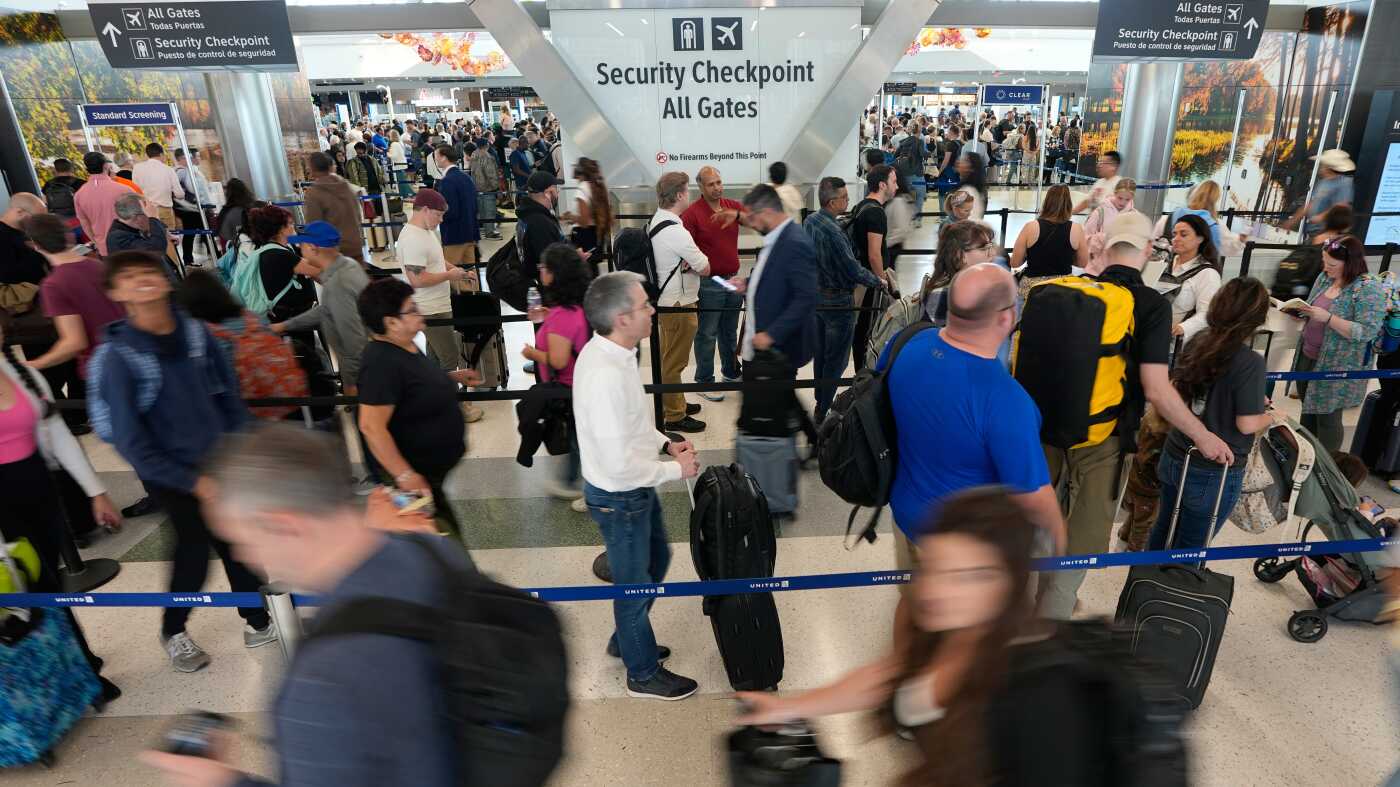
ICE officers could remain at airports after TSA workers are paid

Scathing report claims nation’s oldest labor union ‘betrayed’ MAGA members through ‘shocking’ spending
-

 Sports1 week ago
IOC addresses execution of 19-year-old Iranian wrestler Saleh Mohammadi
-

 Miami, FL4 days ago
Jannik Sinner’s Girlfriend Laila Hasanovic Stuns in Ab-Revealing Post Amid Miami Open
-

 New Mexico1 week ago
Clovis shooting leaves one dead, four injured
-

 Politics1 week ago
Schumer gambit fails as DHS shutdown hits 36 days and airport lines grow
-

 Tennessee7 days ago
Tennessee Police Investigating Alleged Assault Involving ‘Reacher’ Star Alan Ritchson
-

 Minneapolis, MN4 days ago
Boy who shielded classmate during school shooting receives Medal of Honor
-

 Science1 week ago
Record Heat Meets a Major Snow Drought Across the West
-

 Technology1 week ago
YouTube job scam text: How to spot it fast