Northeast
Mamdani plan pours millions into ‘racial equity’ offices and six-figure diversity jobs, cuts 5,000 NYPD jobs

NEWYou can now listen to Fox News articles!
Even as City Hall describes parts of its spending plan as “actions of last resort,” Mayor Zohran Mamdani is steering millions into an expanding “racial equity” bureaucracy and six-figure diversity positions.
To finance the $127 billion agenda, the plan carries steep trade-offs — higher taxes on wealthy residents and corporations, a potential 9.5% property tax increase if state lawmakers decline to act and a 5,000-officer reduction in the New York City Police Department’s ranks.
Mamdani’s budget is far from inconsequential. In a city of nearly 9 million people that represents the center of global finance, his sweeping progressive agenda isn’t just a local policy shift. It’s a high-stakes experiment that could reshape the nation’s largest economy.
FROM FREE BUSES TO CITY-OWNED GROCERY STORES, HERE ARE MAMDANI’S KEY ECONOMIC PROMISES
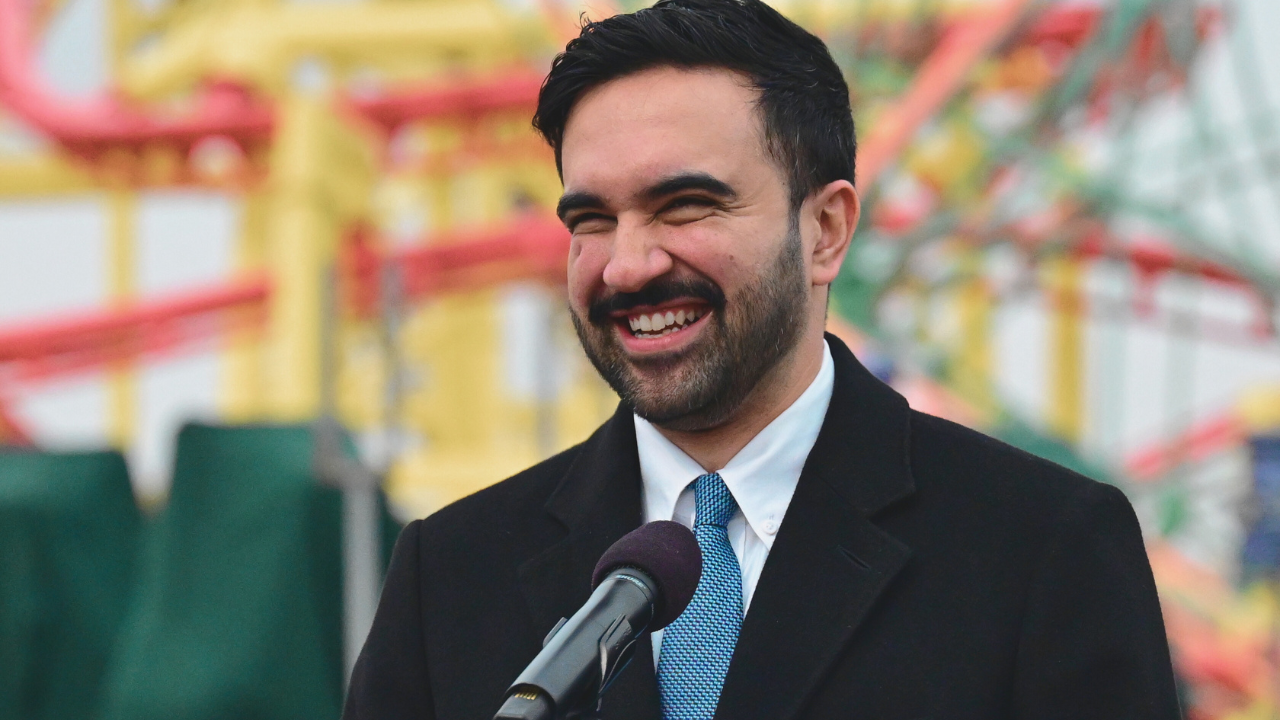
New York City Mayor Zohran Mamdani placed affordability at the center of his campaign to run America’s largest city. (Adam Gray/Bloomberg/Getty Images)
Under Mamdani’s plan, the city’s Office of Racial Equity would receive $5.6 million annually, while the Commission on Racial Equity would be allocated $4.6 million, a combined total of $10.2 million. The new figure represents roughly a $3 million increase — or about a 42% jump — from the approximately $7.2 million allocated last year.
Together, the allocations support a growing racial equity apparatus within City Hall. The Office of Racial Equity, which employs a staff of 38, serves as the administration’s operational arm, coordinating and implementing racial equity policies across agencies.
The Commission on Racial Equity, made up of 16 paid roles, functions as a separate advisory and analytical body, conducting research, developing recommendations and providing oversight related to racial equity policy.
Beyond the $10.2 million allocated to the Office and Commission on Racial Equity, the budget also funds several high-level diversity positions across city agencies.
MAMDANI PROPOSES RAISING NYC PROPERTY TAXES IF STATE DOESN’T APPROVE TAX HIKE ON WEALTHY
In front of a painting of Alexander Hamilton, Mayor Zohran Mamdani speaks to reporters about the city’s finances during a news conference in New York Tuesday, Feb. 17, 2026. (Seth Wenig/AP Photo)
The Department of Education budgets more than $260,000 for a chief diversity officer. Meanwhile, at the fire department, three civilian chief diversity inclusion officer positions are funded at just over $301,000 in combined salaries, along with nearly $230,000 in associated overtime, bringing the civilian unit’s total to about $531,000.
The FDNY also funds a separate uniformed chief diversity inclusion officer position at just over $118,000, pushing the department’s total diversity leadership allocation to roughly $649,000.
CLICK HERE TO DOWNLOAD THE FOX NEWS APP
Under Mamdani’s budget plan, the city will cut 5,000 police officer roles. (Michael Nagle/Bloomberg via Getty Images)
Additionally, the city will funnel more than $835,000 for the Commission on Gender Equity, an advisory body solely dedicated to analyzing legislation and developing public positions on gender-based equality.
Mamdani’s office did not immediately respond to Fox News Digital’s request for comment.
Read the full article from Here



Editor’s Note: This is an excerpt from WBUR’s Saturday morning newsletter, The Weekender. If you like what you read and want it in your inbox, sign up here.
Antique hunters from far and wide are about to descend on a little town in Massachusetts for the return of the Brimfield Antique Flea Market.
Brimfield — a western Massachusetts town of less than 4,000 — has hosted New England’s largest outdoor antiques market for more than 60 years. And the upcoming July 14-19 run marks the second of the market’s three yearly runs. The event boasts “thousands” of vendors and attracts more shoppers than organizers can even count, according to Lori Faxon, owner of the Brimfield Antiques Center.
“For those three weeks, we pretty much overtake the town,” Faxon told me.
Over the course of the six-day stretch, there will be more than 20 different antique shows set up on fields in the town for customers to peruse. “Different fields can have more than 400 dealers. Some will have fewer than that. It varies from show to show,” Faxon said. (Faxon is also the owner of two of those field shows: Dealer’s Choice, which is open one day only, and Midway Antiques, which is open for the length of Brimfield’s run.)
As the years have gone on, it’s not just antique housewares and furniture on display. Vintage clothing and jewelry have become hot commodities at the flea market among the younger crowd, Faxon added.
In other words, there are a lot of hidden treasures to discover. But the search can be daunting if you’re a first-time visitor. So I chatted with Faxon to get a few insider tips on navigating the expansive offerings at Brimfield and how to make the most out of your time:
Editor’s note: This conversation has been lightly edited for clarity.
Hanna Ali: Vendors are scattered, usually, over different fields. Where should a visitor start?
Lori Faxon: “When you come to town, it’s important to know where you’re parking because it’s like a mile-long strip. There’s going to be parking signs everywhere you go. You can park at the [First Congregational Church] for $20. As you go in [to Brimfield] you might find other spots that are charging $10, $15. From Wednesday through Sunday, we offer $5 parking at the Dealer’s Choice. So if people’s budgets are tight, that’s always a good option for them. You might want to park your car more on the west end, because a lot of stuff’s going on on that end of town at the beginning of the week, and maybe on the east end later in the week.”
HA: Are there admission fees?
LF: “So some of the shows do charge admission, but generally they only charge admission either their first day or the first few hours they’re open. And there’s plenty of fields every day that are open that don’t charge at all. But if you want to be a part of that excitement of getting onto the field the moment it opens on a paid admission field, then you pay your $5 or $10 admission. It varies between fields. But if your budget’s tight, you don’t have to do that.”
HA: Do you think it’s really worth it to come as early as possible?
LF: “ It depends on why you’re there. We run the Dealer’s Choice and that field, although we do have a retail crowd, it’s on opening day of Brimfield. And the reason it’s so popular is because sometimes those antique dealers will [come to] my show on Tuesday and they may do another show later in the week.
“Say, for example, you’re a camera dealer. And I am a furniture dealer, and I went in and I bought a house full of furniture, and in the back corner there was a box of old cameras. And the guy says, ‘Do you mind just getting rid of those?’ So I say, ‘All right, I’ll take those.’ So when I set up at the show, I’m basically a furniture dealer, but I’ll throw that box of cameras out for 25 bucks. Well, unbeknownst to me, there’s a $2,000 camera in that box. Well, the first camera guy that spots it, he just made himself a cool about 2,000 bucks. And that’s why they’re willing to pay that extra money to go in early — because they want to get to it before someone else does.”
HA: In that case, is it worth it for the average retail shopper to come early?
LF: “If you have specific things in mind and you’re able to come earlier, it’s the better thing to do because you’ll get a better selection. I don’t want to say it’s picked over, because some of the dealers bring out new merchandise throughout the week, but it dwindles as the week goes on and it’s to your advantage to come early. Also, it’s less crowded.”
HA: Are there any food vendors you’d suggest?
LF: ”There’s a ton of food to be had there. Every field has multiple offerings in the food department. We have a woman that’s from Worcester, her name’s Teri, she’s been on my field for years, and she sells the best grilled cheese sandwiches you’ve ever had in your life. They’re to die for. And people come to Brimfield just to eat her grilled cheese sandwich.
“But you know, once again, if the budget’s tight, they can pack a lunch, go back to their car, and enjoy a meal there. They can bring their own drinks and snacks or whatever. But if they have a few extra dollars, there are so many food options to choose from. It’s great.”
HA: Is there anything else people can or should bring?
LF: “Especially in the summer, I tell people to bring drinks, stay hydrated, because we do have issues, especially with the elderly, the heat gets to them a little bit.
“And to wear good walking shoes. These are actual fields, so you don’t want to be wearing your flip-flops. This is a good day to put on a good pair of sneakers, and sometimes there’s a little bit of mud if it’s rained the day before. And also — because I don’t know that there’s anywhere in town that sells sunscreen — bring your sunscreen with you.”
HA: If you’ve got a whole day versus a few hours, or you’re staying in the area for the whole week, what would you recommend doing?
LF: “I would say it really doesn’t matter. Like, deep down, it’s wherever you end up, wherever you park your car, just you basically start hoofing it in one direction. When you reach the end, you turn around, you start in the other direction. If you have a few hours, then you’ll just see what you see. And if you’re there for the whole week, you’ll see more of it. You don’t want to rush it because there’s so much there to see — you could spend a whole day in one booth.”
P.S. — Before you hit the road for Brimfield, check out these tips from two Boston vintage store owners on what sorts of labels and quality markers to keep an eye out for as you search for secondhand treasure.

Two transgender girls who were the first to challenge President Donald Trump’s executive order, “Keeping Men Out of Women’s Sports,” have withdrawn their lawsuit in New Hampshire based on a recent U.S. Supreme Court ruling that upheld state bans on transgender athletes in girls’ sports and their own personal hardships, their lawyer said.
“This case was always about two courageous young girls who simply wanted the same opportunities as their peers to participate in school life,” their lawyer, Chris Erchull of GLAD Law, said in a statement Thursday. “Their willingness to stand up to extraordinary hostility made clear the human cost of laws that target transgender youth.”
The teenagers, Parker Tirrell and Iris Turmelle, took on Trump’s executive order last year, amending their 2024 complaint against New Hampshire’s law on banning transgender girls from school sports. A federal judge had granted a court order allowing them to play as the case proceeded.
For Tirrell, it meant being able to keep playing on her high school girls’ soccer team. For Turmelle, it was having a chance to try out for different sports.
Both sides agreed to pause the case and wait for a ruling from the Supreme Court as it considered similar state laws barring transgender girls and women from playing on school and college athletic teams in Idaho and West Virginia. Last month, the court upheld the laws. It also said that barring transgender girls and women doesn’t run afoul of the federal law known as Title IX, which prohibits sex discrimination in education.
Several key rulings came out of the U.S. Supreme Court on Tuesday, including a block on the president’s executive order ending birthright citizenship.
One teen and her family decided to move from New Hampshire
Turmelle and her family moved out of New Hampshire last summer following proposed legislation against transgender people. One measure signed into law by Republican Gov. Kelly Ayotte last year prohibits medical professionals from providing puberty blockers and hormone replacement therapy to new transgender patients under age 18.
“Though there may be a carve-out for people already receiving gender-affirming care, that is way too close a call for us to risk staying,” Turmelle’s mother, Amy Manzetti, wrote in an op-ed piece at the time. “Other New Hampshire laws also seek to erase her.”
Most Republican-controlled states in the past five years have adopted laws or policies limiting gender-affirming care for transgender minors and limiting which school bathrooms transgender people can use, as well as sports restrictions. The Williams Institute at UCLA estimates that about 3% of youth ages 13 to 17 identify as transgender.
“The challenges with relocation are significant and burdensome — this includes having to find new employment, buying and selling homes, packing and moving possessions, integrating kids with a new school system, losing access to longstanding family and friends, and potential loss of income,” Corinne Goodwin, the executive director of Eastern PA Trans Equality Project in Pennsylvania, said in an email.
The Supreme Court ruled 6-3 against two transgender students who sued to overturn their states’ bans against playing on girls’ and women’s teams.
“But these families do so because they love their kids and know that supporting them with the care and opportunities they need is critical to their long-term success and happiness.”
The other teen gave up playing soccer at high school
Tirrell, 17, began her junior year last fall on the girls’ junior varsity soccer team. Things were fine at first, and each time she scored a goal, she got a round of ice cream from her parents. But a few weeks into the season, she decided to stop playing.
“With all of the political stuff going on, soccer wasn’t just about the game anymore,” her mother, Sara Tirrell, told The Associated Press in an interview.
It became more about preparing for the possibility of conflict.
“Were there any local Facebook groups where they were sort of agitating about potential protests and how do we prepare, and what are we walking into, and we never kind of knew,” she said. “We were on a lot of pins and needles, especially after the previous season.”
She was referring to a controversy at an away game where two dads from an opposing team were banned from school grounds for wearing pink wristbands marked “XX” to represent female chromosomes. They sued the school district and a judge ruled against them. They have appealed their case.
Last fall, there was an increased presence of school administrators at the games and bus drivers pulled in closer to the field so the students weren’t in the parking lot, she said.
“Parker didn’t talk about it a lot, but I think she could see that stress for everybody — for her, for her teammates, for her coaches,” Sara Tirrell said. “She felt kind of bad about pulling them all into that circus again. And so she ultimately said, ‘This isn’t fun anymore and I don’t want to do it.’”
Parker’s father described the atmosphere as “palpable tension.”
Even playing on her own turf, “there would typically be a couple of police officers at the home games where there weren’t previously,” Zach Tirrell said.
In the past, Parker also played soccer in a recreation league and could still do so.
“But I think it all kind of still sort of weighs on her,” her mother said. “It’s the same group of kids that she plays with who, honestly, have been very supportive and love to have her on the team and have expressed that to her many times over. But I think she still has that worry in her brain around, ‘What are other people going to say and do if I show up at a game?’”
Parker’s parents hope she’ll return to playing soccer some day. In the meantime, “she plans to be around and use her voice to continue standing up to discrimination,” her mother said. “In some ways she’s had to grow up a lot faster than some of her peers.”
Associated Press reporter Geoff Mulvihill in Haddonfield, New Jersey, contributed to this article.
Two students challenging New Hampshire’s ban on transgender athletes on girls sports teams will also fight President Donald Trump’s executive order, “Keeping Men Out of Women’s Sports,” after a judge approved their request Wednesday.
It’s believed to be the first time that the constitutionality of the executive order signed by Trump last week is being challenged in court, according to Boston-based GLBTQ Legal Advocates & Defenders, also known as GLAD Law, one of the groups representing the teens.
“The systematic targeting of transgender people across American institutions is chilling, but targeting young people in schools, denying them support and essential opportunities during their most vulnerable years, is especially cruel,” said Chris Erchull, a GLAD attorney.
Last fall, a federal judge in New Hampshire ruled that the two students can try out for and play on girls school sports teams while the teens challenge the state ban.
A federal judge in New Hampshire ruled that two trans student athletes are temporarily allowed to play girls sports while their case plays out in court.
The families of Parker Tirrell, 15, and Iris Turmelle, 14, sued in August, seeking to overturn the Fairness in Women’s Sports Act that former Republican Gov. Chris Sununu signed into law in July.
Tirrell is a 10th-grade student who plays on her high school soccer team and Turmelle is a ninth-grade student who plans to try out for tennis in the spring.
“I love playing soccer and we had a great season last fall,” Tirrell said in a statement. “I just want to go to school like other kids and keep playing the game I love.”
Trump’s order last week gives federal agencies wide latitude to ensure entities that receive federal funding abide by Title IX in alignment with the Trump administration’s view, which interprets “sex” as the gender someone was assigned at birth.
GLAD and ACLU of New Hampshire asked the judge for permission to add Trump, the U.S. Department of Justice, Attorney General Pamela Bondi, the U.S. Department of Education and acting Secretary Denise Carter as defendants.
An email seeking comment was sent to the White House Press Office.
In a brief order, U.S. District Judge Landya McCafferty said she “finds good cause” for the lawyers to amend the lawsuit.
The lawyers say Trump’s executive order, along with parts of a Jan. 20 executive order that forbids federal money from being used to “promote gender ideology,” subjects the teens and all transgender girls to discrimination in violation of federal equal protection guarantees and their rights under Title IX.
The lawyers also say the executive orders unlawfully subject the teens’ schools to the threat of losing federal funding for allowing them to play sports.
New Jersey
NJ Legislators Are Considering a Bill That Could Ban Tesla Robotaxis Due to Their Tech Choice

New Jersey lawmakers are deliberating on a law that would create a three-year autonomous vehicle pilot program in the state, but Tesla might be banned from participating altogether over a technical choice made by the Texas-based carmaker for its self-driving vehicles.
The bill, officially known as S1677, would establish autonomous vehicle testing requirements with the New Jersey Department of Transportation (DOT) and the New Jersey Motor Vehicle Commission. One of these proposed requirements is that autonomous vehicle operators use camera-based technology and two additional forms of sensor tech, such as lidar or radar. Of course, Tesla’s autonomous vehicle technology is purely camera-based, meaning the brand could be banned from testing in New Jersey.
The text of the bill is fairly straightforward, requiring prospective autonomous operators to submit a “law enforcement interaction plan” and detail redundant safety systems, crash-avoidance technology, and data recording capabilities. The specific language that would ban Tesla’s system requires autonomous operators to “be equipped with crash-avoidance systems, including a camera system and two distinct sensing modalities that are capable of detecting and tracking obstacles in the event of failure of the camera system.” The bill also favors keeping traditional steering wheel and pedal controls available. While initial testing would be completed with human safety operators, the bill would allow fully autonomous operation once certain metrics, such as 50,000 crash-free miles, are met.
The decision to require both camera- and sensor-based technology is not a coincidence, according to The Verge. “This is not anti-Tesla. I’m pro-New Jersey safety,” Democratic state senator Andrew Zwicker, the bill’s primary sponsor and a physicist by trade, said to The Verge. “At this point, I don’t think the evidence is sufficient that a single sensor with software can handle situations that humans can.”
Tesla is, unsurprisingly, upset about this development, and the company is fighting back. The automaker’s public policy platform, Engage Tesla, features a call to action for Tesla owners to contact members of the New Jersey Legislature to oppose the bill, with the plea claiming the autonomous vehicle testing program is the opposite of progress, and saying that Tesla would be legally barred from testing in the Garden State. Statistics about roadway death rates in New Jersey and denying freedom of movement for elderly populations are also included.

“Rather than prioritizing real safety outcomes and performance, the bill specifically bans Tesla from the New Jersey market,” the site reads. “Every arbitrary roadblock is a delay for the people who need this life-changing technology most. Legislation that bans Tesla’s proven AV technology from the market is not caution — it’s anti-competitive favoritism that will cause New Jersey to fall behind while other states move forward.”
The bill, introduced on January 16, is currently under consideration by the New Jersey Senate Budget and Appropriations Committee. The bill’s language closely mirrors talking points from the nonprofit SAVE-US, which is lobbying for stronger oversight of autonomous vehicle testing. New Jersey is not the only state pondering additional autonomous testing regulation; New York legislators are working on similar legislation. Just yesterday, federal safety regulators called out autonomous vehicle operators like Waymo for interfering with first responders.

A New York transplant hailing from the Pacific Northwest, Emmet White has a passion for anything that goes: cars, bicycles, planes, and motorcycles. After learning to ride at 17, Emmet worked in the motorcycle industry before joining Autoweek in 2022 and Road & Track in 2024. The woes of alternate side parking have kept his fleet moderate, with a 2014 Volkswagen Jetta GLI and a BMW 318i E30 street parked in his Queens community.
-

 Michigan3 minutes ago
Harmful algal blooms reported on 2 large West Michigan lakes
-

 Massachusetts6 minutes ago
Insider tips for navigating the Brimfield Antique Flea Market
-

 Minnesota11 minutes ago
Northwest Minnesota Foundation awarded $200,000 for child care economic development
-

 Mississippi18 minutes ago
Family of Mississippi teen Nolan Wells demand investigation into son’s death
-

 Missouri20 minutes ago
SEMA sets info sessions for FEMA Public Assistance for late-April storms
-

 Montana26 minutes ago
8 Most Welcoming Towns In Montana’s Countryside
-

 Nebraska33 minutes ago
Nebraska abortions rose nearly 8% in 2025, mostly due to influx of Iowa patients
-
 Nevada36 minutes ago
Murder suspect from Montana takes own life when surrounded by police in Nevada

