New York
Critics Fault ‘Aggressive’ N.Y.P.D. Response to Pro-Palestinian Rally


Violent confrontations at a pro-Palestinian rally in Bay Ridge, Brooklyn, on Saturday reflected what some local officials and protest organizers called an unexpectedly aggressive Police Department response, with officers flooding the neighborhood and using force against protesters.
At the rally, which drew hundreds of demonstrators, at least two officers wearing the white shirts of commanders were filmed punching three protesters who were prone in the middle of a crosswalk. One officer had pinned a man to the ground and repeatedly punched him in the ribs, a 50-second video clip shows. Another officer punched the left side of a man’s face as he held his head to the asphalt.
The police arrested around 40 people who were “unlawfully blocking roadways,” Kaz Daughtry, the department’s deputy commissioner of operations, said on social media on Sunday.
Mr. Daughtry shared drone footage of one person who climbed on a city bus, “putting himself and others in danger.” The Police Department, he wrote, “proudly protects everyone’s right to protest, but lawlessness will never be tolerated.”
Neither Mr. Daughtry nor the police commented on the use of force by officers. A spokeswoman for Mayor Eric Adams did not immediately respond to a request for comment about the police response. The Police Department’s patrol guide states that officers must use “only the reasonable force necessary to gain control or custody of a subject.”
Bay Ridge has a significant Arab American population and hosts demonstrations in mid-May every year to commemorate what Palestinians call the Nakba, or “catastrophe” — when hundreds of thousands of Palestinians fled or were forced from their homes during the war that led to Israel’s founding in 1948.
Andrew Gounardes, a state senator and a Democrat who represents the area, said local politicians had been in touch with the commanding officer of the 68th police precinct before the preplanned protest and said there had been no indication that there would be such a heavy police response. He called the videos he saw of the events “deeply concerning.”
“It certainly seems like the police came ready for a much more aggressive and a much more confrontational demonstration than perhaps they had gotten,” he added.
Justin Brannan, a Democrat who is the city councilman for the area, said the protest was smaller than last year’s but that officers had come from all over the city to police it. He said their approach appeared to be directed by 1 Police Plaza, the department headquarters in Manhattan.
“These were not our local cops. Clearly, there was a zero-tolerance edict sent down from 1PP, which escalated everything and made it worse,” Mr. Brannan said.
“I’m still waiting on information and details about the arrests that were made,” he added, “but from my vantage point, the response appeared pre-emptive, retaliatory and cumulatively aggressive.”
The Republican state assemblyman whose district includes parts of Bay Ridge, Alec Brook-Krasny, had a different perspective. He said an investigation would determine whether the officers’ actions were warranted, but he said some protesters were “breaking the law” by refusing to clear the street.
“I think that those bad apples are really hurting the ability of the other people to express their opinions,” Mr. Brook-Krasny said.
Some local residents supported the police and said they were tired of the protests’ disruptive impact. “Enough is enough,” said Peter Cheris, 52, a 40-year resident of Bay Ridge, who said he had viewed the videos of the protest. “If you’re going to break the law, you deserve it,” he said.
Donna Lieberman, the executive director of the New York Civil Liberties Union, singled out the presence of the Police Department’s Strategic Response Group, a unit that is sometimes deployed to protests and has been the subject of several lawsuits brought by the civil liberties union and other groups.
The police unit’s handling of the demonstration “was a violation of New Yorkers’ right to speak out and risks chilling political expression,” Ms. Lieberman said in a statement. “N.Y.C.L.U. protest monitors witnessed violent arrests, protester injuries, and even arrests of credentialed members of the press.”
She added: “The continual pattern of N.Y.P.D. aggression against pro-Palestine demonstrators raises important questions about the city’s disparate treatment of speakers based on their message.”
Abdullah Akl, an organizer with Within Our Lifetime, the pro-Palestinian group that organized the protests, said the response took organizers aback, particularly for a demonstration that occurs every year in Bay Ridge and is known to be frequented by families with children.
“It was really an unusual and unprecedented response,” Mr. Akl said.
He said he witnessed two men being pushed to the ground. One of them can be seen in a video with blood streaming down the side of his face. Nerdeen Kiswani, chair of Within Our Lifetime, said three protesters — including the two who can be seen being punched — were treated for their injuries at hospitals.
The Police Department has arrested hundreds of demonstrators since street protests began shortly after the Hamas attack on Israel on Oct. 7 and Israel’s subsequent invasion of Gaza. The protests have been largely peaceful, with few injuries or violent clashes.
In a turning point, on April 30 officers cleared Hamilton Hall at Columbia University, which had been occupied by protesters for 17 hours. Many officers showed restraint during the arrests, though a handful were filmed pushing and dragging students as they removed them from the building.
On Sunday, Ms. Lieberman said police response to the protests in Bay Ridge underscored the importance of implementing the terms of a $512,000 settlement the civil liberties union and the Legal Aid Society reached with the city this month. The settlement set new terms for how the Police Department manages protests, creating a tiered system that dictates how many officers can be sent to demonstrations and limits the use of the Strategic Response Group. It will take years to put into practice.
The settlement is one of several that stemmed from the George Floyd racial justice protests in 2020. Last year, the city agreed to pay $13.7 million to settle a class-action lawsuit that claimed unlawful police tactics had violated the rights of demonstrators in Manhattan and Brooklyn. In March, the city agreed to pay $21,500 to each of roughly 300 people who attended another Black Lives Matter protest in 2020 in the Bronx. Those people were penned in by the police, then charged at or beaten with batons, according to a legal settlement.
Andy Newman and Camille Baker contributed reporting.


Welcome to Day 2 of the Metropolitan Diary challenge, part of our celebration of the column’s 50th anniversary. On Day 1, we gave you tips for identifying your New York City story. Today, we’ll help you write it. (Missed Day 1? It’s not too late to start.)
What makes for a good Diary? It’s simply a good story that happens to be set in, and capture, the essential New York-ness of the city. While this isn’t a full writing course, we do have guidance on the kinds of elements that the submissions we publish include. They typically have: a beginning, middle and end; sharp details; catchy dialogue; a bit of surprise; some humor, warmth or emotion. But there is no formula, so flouting these loose rules can be worthwhile.
Don’t worry if you don’t think of yourself as a “writer.” Focus on being a “storyteller.” Pretend you are telling your story to the person who’d most appreciate it, using whatever conversational language or pacing that would hold their attention. Do it out loud if you want, maybe give that person a call and tell them your story (or tell it to them again). Then write it down.
That’s the big picture. For more tips, read on.
Here is an example of a published Diary that we (and readers) really liked, and a few thoughts on why that may help crystallize yours.
Unacceptable
Dear Diary:
I went to a new bagel store in Brooklyn Heights1 with my son.
When it was my turn to order, I asked for a cinnamon raisin bagel with whitefish salad and a slice of red onion.2
The man behind the counter looked up at me.
“I’m sorry,” he said. “I can’t do that.”3
— Richie Powers
One of this item’s best qualities is that it is short and snappy. Only 53 words! Although we will use stories of up to 300 words, many don’t need to be that long and the column doesn’t work if we don’t have a mix of long, medium and short, so we are always looking for stuff like this. Here’s another one!

At Attention
Dear Diary:
It was December 1967. I had just finished basic training at Fort Dix in New Jersey and was traveling to Boston in uniform. For reasons I no longer recall, I stopped in New York City on the way.1
Walking on the Upper East Side2 in a snowstorm, I spied another man in a uniform. He was older, and his cap bore the familiar gold band that identified him as an officer.
I rendered a snappy salute. It was not returned. 3The uniform was unfamiliar, so I guessed he was a foreign officer. Military courtesy still required me to salute.
A little farther down the street, I encountered another officer and offered another salute that went unacknowledged.4 His uniform was strange to me as well.
The third time it happened, the man I saluted ignored me while holding the door for a couple 5on their way into a large apartment building.
I realized I had been saluting doormen.6
— Stephen Salisbury
To get your storytelling muscles going, think through or jot down the answers to some of these questions.
Let’s start with setting the scene.
- When and where in the city did this happen? Is this place well-known?
- Was there anything particular about that point in your life that’s relevant?
- What did you see, hear, smell? Was there something notable about the weather?
Now, let’s move to the middle, the meat of the story.
- Did you have an exchange with someone?
- What details are important to how events unfolded, especially in setting up the ending?
And now, the end.
- What’s the resolution? Is there a punchline?
- Does the story end with a sense of shared humanity or some other warm feeling that lingers? You don’t need to name it. A good description will often allow readers to feel it too.
- Why has this experience stayed with you?
- Lines like “and that’s why I love New York” are almost always unnecessary.
That’s it. Keep your story simple and use the kind of plain language you use in conversation. You are sketching a moment in time. The details are important. Let them move the story along. Have fun and good luck.
Once you’re done, read through what you’ve got. What details are less important and can be left out? (Remember, there is a strict 300-word limit.)
Write your Metropolitan Diary however you like, on paper, on your phone or wherever! When you’re happy with what you’ve written, put your diary entry into the box below, fill out your information and submit it. You might just hear from me about including it in a future column.
This is the official submission form, so make sure to double-check your work before hitting submit.
That’s it! Submit your Metropolitan Diary.
By transmitting your submission, you grant The New York Times Company a perpetual, royalty-free license to use the submission in any medium. They may be edited, and may be republished and adapted in all media. You may reprint your story elsewhere after it appears in The Times.

65.
In or about and between December 2023 and April 2024, both dates being approximate and inclusive, within the Eastern District of New York and elsewhere, the defendants MALIK BEASLEY, also known as “Beas,” “Bease,” “MB” and “5,” WILLIAM BROWN, also known as “Willo,” EDWARD DAVIS, also known as “Ed,” “ED” and “E Davis,” ROBERT GORODETSKY, also known as “Rob,” ERNESTO PLASCENCIA, also known as “Ernie,” “Erny,” “Ernie P” and “Erny P,” and PAOLO ZAMORANO, also known as “PZ,”
together with others, did knowingly and intentionally conspire:
(a)
to conduct one or more financial transactions in and affecting
interstate commerce, which transactions in fact involved the proceeds of specified unlawful activity, to wit: (i) wire fraud, in violation of Title 18, United States Code, Section 1343 and (ii) sports bribery, in violation of Title 18, United States Code, Section 224, knowing that the property involved in the transactions represented the proceeds of some form of unlawful activity, and with the intent to promote the carrying on of the specified unlawful activity, contrary to Title 18, United States Code, Section 1956(a)(1)(A)(i);
(b)
to conduct one or more financial transactions in and affecting interstate commerce, which transactions in fact involved the proceeds of some form of unlawful activity, to wit: (i) wire fraud, in violation of Title 18, United States Code, Section 1343 and (ii) sports bribery, in violation of Title 18, United States Code, Section 224, knowing that the property involved in the transactions represented the proceeds of some form of unlawful activity, and knowing that the transactions were designed in whole and in part to conceal and disguise the
19

How can people possibly afford to live in one of the most expensive cities on the planet? It’s a question New Yorkers hear a lot, often delivered with a mix of awe, pity and confusion.
We surveyed hundreds of New Yorkers about how they spend, splurge and save. We found that many people — rich, poor or somewhere in between — live life as a series of small calculations that add up to one big question: What makes living in New York worth it?
Weixun Hu enjoys what might sound like the ultimate professional perk. New Yorkers pay some of the country’s highest taxes on their income, more than $12,000 on average per person between state and local governments. But Mr. Hu’s income tax this year? $0.
That’s because Mr. Hu, 32, who was born in Guangzhou, China, conducts social development research at an international organization, where most employees are exempt from national income taxes or reimbursed for the cost. His gross and net income are one in the same; he earns roughly $110,000 after his insurance and pension contributions.
Mr. Hu became one of New York City’s 3.1 million foreign-born residents nearly three years ago, after reassignment from a post in Bangkok in the summer of 2023. But he quickly ran into a hurdle: finding an apartment with no credit history, no tax returns and no one to co-sign a lease.
“It sounds very cool that you don’t pay taxes,” Mr. Hu said. “It also creates a lot of problems.”
He discovered that many of his co-workers landed in a handful of pricey residential developments including Stuyvesant Town. Yet renting there felt worlds apart from Thailand’s capital city, where a luxury studio in a high-rise condo with a rooftop infinity pool and premium gym might run $600 per month.
So he found a studio in Long Island City, Queens, where he has in-unit laundry and falls asleep to the sound of waves hitting the shore near Hunters Point South. His employer subsidizes $700 of his $3,900 rent, and utilities and internet cost about $150 monthly.
“It’s much better value compared to renting in Manhattan,” he said.
Saving for Tomorrow
A good deal of young adults in New York City don’t know how to drive, and expect to remain renters for most of their lives. Not Mr. Hu.
He puts away $2,000 or so a month into a high-yield savings account, aspiring to buy a car. His sights are set on a Mazda CX-5. But he expects he’ll need to pay upfront in cash, another consequence of lacking a credit or tax history — and it’ll take about three more years to build up enough.
Eventually, he wants to own a home. “I know most people in New York City don’t care,” he said. “But for me, it’s very important.”
Mr. Hu also supports his parents in their retirement, sending about $3,000 every three months. As their only child, he feels both a sense of guilt for living about 8,000 miles from home — and an obligation to pay them back for their sacrifices.
“People will say, ‘Oh, you’re single. You don’t have a wife. You don’t have kids,’” he said. “‘So all your money is yours.’”
“And I’m like, ‘Excuse me, my parents are still alive.’”
In other ways, though, Mr. Hu fits the profile of an everyday bachelor: He rarely cooks meals at home. “My oven is basically storage space.”
Rather, he searches for affordable deals on Too Good To Go, a popular app where restaurants sell excess food at a discounted price. His No. 1 spot is Chinese Musician in Greenpoint, which offers a three-course meal for $9.
Sometimes, Mr. Hu does the $16 tonkotsu ramen at Nishida Sho-ten on 49th Street for lunch, an $8 lamb over rice meal for dinner from the halal truck in front of Bellevue Hospital or a hot dog for $3.25 from Gray’s Papaya. He’ll swing by the Dollar General in Astoria to stock up on his favorite drink, Coca-Cola Orange Cream.
And he saves up for an upscale dining experience every couple of months. He recently feasted at the Michelin-starred chef Daniel Boulud’s steakhouse, La Tête d’Or, where he spent roughly $300 and ordered what he called the standout filet mignon.
The Lions Over the Knicks
For any sports buff, it’s an incredible time to live in New York City.
But for Mr. Hu, ticket prices to see the Knicks play at Madison Square Garden felt “a little bit off-putting” — and that was even before their championship run. So he started religiously following basketball at Columbia, going to games that often run $10 to $12 on the Morningside Heights campus.
Yankees games, where a 400-level seat might run $45, are a no; he opts to watch the Columbia Lions up close at Robertson Field in Inwood without charge.
He is willing to spend up to about $300 on some singular sports showdowns. He can still recall how Kylian Mbappé flew down the field at MetLife Stadium during a Real Madrid match against Borussia Dortmund last summer.
Typically, though, he elects for low- or no-cost events like this spring’s edition of the Madison Avenue Gallery Walk.
And he regularly joins free lectures at the Asia Society, where he has a complimentary membership through his employer, and at local universities like N.Y.U., where he’s met the minds behind two of his favorite video games, The Elder Scrolls and Monument Valley.
A Sense of Wanderlust
Ever since Mr. Hu can recall, he’s felt a magnetic pull to experience the world. And few things embody such a yearning as aviation.
He sometimes goes to Canarsie to watch planes land at Kennedy International Airport, studying the way pilots pull up the nose of their aircrafts and slow the descent before touching down. He’s even found others who share his passion on walks in the neighborhood.
And traveling draws him even closer to his hobby.
He spent $4,400 on a trip to Guangzhou last June to fly for the first time in an Airbus A380, the only full-length double-deck aircraft in the world. Qatar Airways is one of the few airlines that still has an active fleet — so Mr. Hu arranged his trip by way of Doha.
“Some people treat it as bragging,” he said. “But no, it’s just to admire such an incredible machine that’s very rare to be seen these days.”
“It’s a weird, niche hobby, but I’m happy spending my money on it.”
As a young man living in his seventh country — after Belgium, China, Italy, Poland, Thailand and the United Kingdom — he appreciates that as “a foreigner in this city, you don’t have to worry about whether you stand out.”
He’s relished exploring from Crown Heights to Jackson Heights, taking the train to a random stop and popping into bodegas to chat up the owners. He considers Staten Island — and its Chinese Scholar’s Garden in Snug Harbor where adult admission costs $5 — to be a hidden gem.
And when he boarded the U.S.S. Bataan during a past Fleet Week, he felt obliged to tell a Marine that he was Chinese. “He said: ‘Oh, no worries at all. Everybody can be an American’.”
“To be honest, I still don’t think it’s a value option for the money,” Mr. Hu said of New York City. “But there’s something so unique, and I think it’s that inclusiveness.”
“You don’t need to go to the world,” he said. “The world comes to you.”
We are talking to New Yorkers about how they spend, splurge and save.
-
 Business6 minutes ago
Comcast is spinning off NBCUniversal media and entertainment assets
-
 Entertainment11 minutes ago
Alannah Keyser is latest fired ‘Love Island USA’ contestant to apologize for using a racist slur
-

 Lifestyle18 minutes ago
Chanel’s Bruno Pavlovsky on Reengineering an Iconic Brand
-
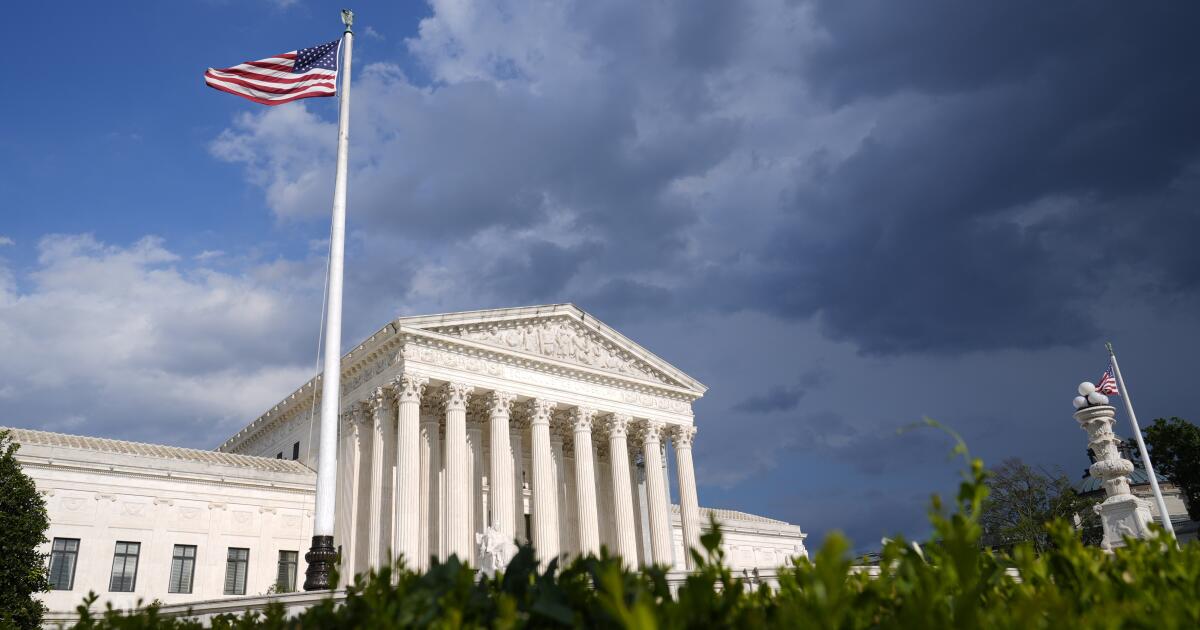 Politics21 minutes ago
Supreme Court limits police use of cellphone data to find crime suspects
-
 Sports33 minutes ago
Teoscar Hernández returns, and Dodgers unleash 17-hit barrage in win over Athletics
-

 World41 minutes ago
DR Congo says 1,307 Ebola cases confirmed, including 377 deaths
-
 News1 hour ago
Michigan governor threatens to pull troops from D.C. if used for Trump task force
-

 New York2 hours ago
Metropolitan Diary Challenge Day 2: How to Write Your N.Y. Story

