Northeast
New York City mayor's aide now cooperating with federal corruption probe: report
One month after the FBI announced it was looking into international flights New York Democratic Mayor Eric Adams took on Turkish Airlines, a top City Hall aide is reportedly now cooperating with the probe.
Rana Abbasova, whom the New York Times described as the mayor’s former liaison to New York City’s Turkish community, is cooperating with federal agents, according to the outlet. The investigation is centered on whether Adams’ 2021 campaign conspired with the Turkish government and others to funnel money into its coffers.
The multipronged FBI investigation partially focuses on Turkish Airlines upgrades received by Adams. In November 2023, agents raided the home of former Turkish Airlines executive and Adams mayoral transition team member Cenk Öcal. Federal agents also seized some of Adams’ phones and an iPad in November.
Abbasova’s cooperation reportedly began a few weeks after the FBI raided her home in early November.
FBI PROBES NYC MAYOR ADAMS RECEIVED UPGRADED TURKISH AIRLINES TICKETS IN EXCHANGE FOR FAVORS: REPORT
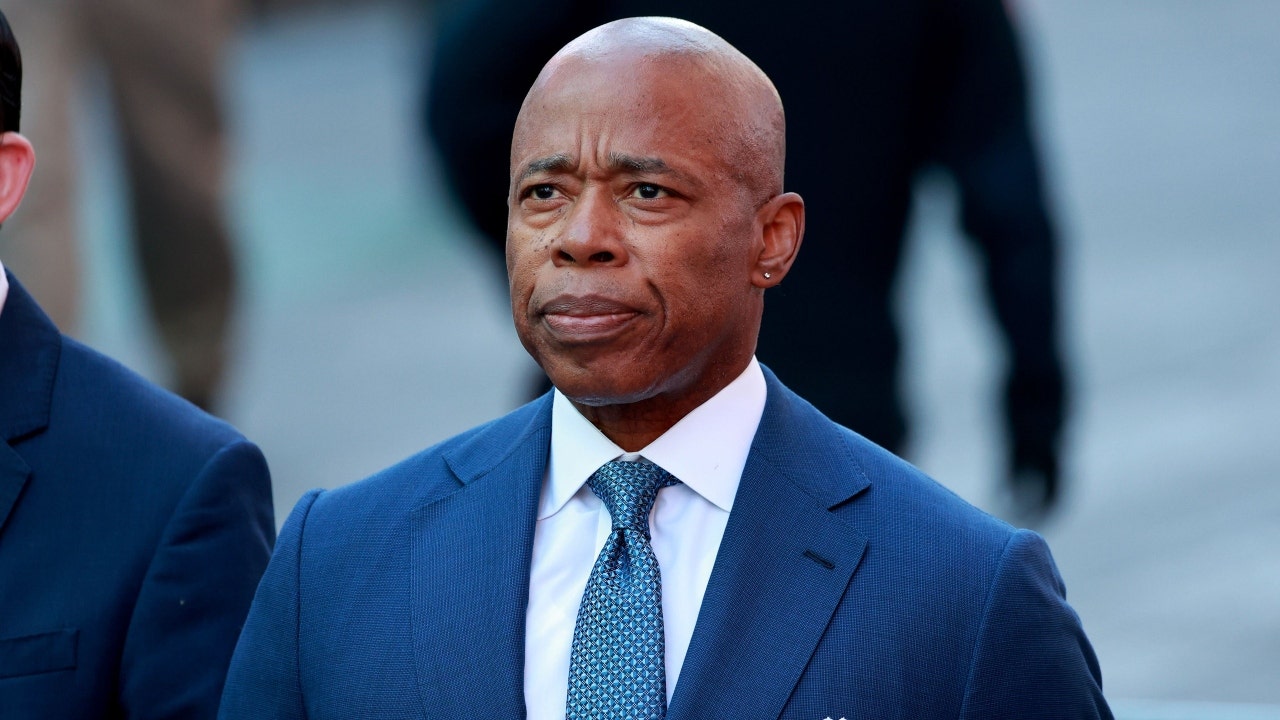
Democratic New York Mayor Eric Adams (Luiz C. Ribeiro/New York Daily News/Tribune News Service via Getty Images)
In its initial reporting of the probe, Fox News Digital reached out to the mayor’s office and was told that as Brooklyn Borough president, Adams regularly disclosed official travel to Turkey. The representative for Adams, attorney Brendan McGuire, in April denied the former NYPD detective ever received improper upgrades or engaged in inappropriate behavior in exchange for upgrades.
In a statement obtained by the Times on Monday, McGuire called news of Abbasova’s cooperation “not a new or meaningful development.”
Abbasova, an Azerbaijani native, worked with Adams while he was in his borough office as well, but has since risen to a top post in the city’s office for international affairs.
ADAMS OFFICE LASHES OUT AT FBI EMPLOYEE WHO MIGHT HAVE ‘IMPROPERLY LEAKED DETAILS’ OF CORRUPTION PROBE
She accompanied Adams on two trips to Turkey and was in the loop on some of the mayor’s correspondence with the government in Ankara.
Abbasova, however, has not been accused of any wrongdoing. One aspect of the investigation of Adams reported by the Times involved allegations the city pressured FDNY officials to ignore safety concerns and approve a new Turkish consulate.
In January, Adams’ campaign compliance attorney confirmed to Fox News Digital that the mayor’s legal defense fund raised more than $650,000 since its formation two months prior.
Reacting to the report in a statement provided to Fox News Digital, City Hall Chief Counsel Lisa Zornberg said in November: “The mayor and our team are continuing to work with investigators and cooperate. We hope that investigators will continue to cooperate with us and reprimand any federal officer who has improperly leaked details about this investigation as such conduct could prejudice the public and undermines the integrity of our law enforcement process.“
Fox News Digital’s Sarah Rumpf-Whitten, Danielle Wallace and Maria Paronich contributed to this report.
Read the full article from Here
Maine
York and Kittery resolve ‘border war’ dating back centuries
Maine’s two oldest towns, Kittery and York, have resolved a centuries-old dispute over their borders.
The issue dates back to the 1600s but reemerged a few years ago after a land developer purchased a parcel of land along Route 1 that straddles the boundary between the two towns.
York officials contended the border was a straight line, while Kittery argued that the divide meandered eastward from neighboring Eliot to Brave Boat Harbor on the coast.
The dispute between the two towns remained friendly — with residents of both towns making tongue-in-cheek references to a “border war” — until 2022, when York filed a lawsuit against Kittery in an effort to redraw the border. But the lawsuit was soon dismissed by a York County judge.
Now, over three and a half years later, the two towns have reached an agreement on a new boundary that the Maine Legislature is expected to officially approve in 2026.
The revised boundary was drawn up after a 2024 survey, the cost of which was split by both towns.
The proposed agreement follows roughly the same border both towns had been using, save for an added 4 acres of land designated for tree growth that will officially shift from York to Kittery.
York Town Manager Peter Thompson said officials are thrilled to have finally reached an agreement.
“ People that have been at this a lot longer than I have are very happy that this is kind of the last piece,” he said.
Kittery Town Council Chair Judy Spiller likewise said she is pleased to put the dispute to bed.
“It was our belief that we could sit down and sort this out,” she said. “Finally, the Select Board agreed with us that we should get the land surveyed, and then based on the results of the survey, we would ask the state Legislature to approve the new boundary line.”
The dispute initially arose in 2020 after a survey paid for by the developer indicated the true border was actually 333 feet south of the border both towns had been observing for much of their history.
York officials said a straight-line border had been established in 1652. Kittery disagreed and argued that the process to change the border would be an expensive and complicated one that could affect several families and businesses.
In 2020, Spiller defended the boundary line the towns had been following in a letter to the York Selectboard.
“In any event, the Town of Kittery will vigorously protect and defend her borders against any and all claims now, or in the future,” she wrote.
While any boundary change would not have altered property ownership, some officials feared it could prompt major changes to affected residents’ taxes and where they would send their children to school.
But the final agreement will have limited impact, officials from both towns said.
The 4 acres that are changing hands are wooded wetlands that won’t be developed.
And Thompson said the taxes for the affected property owners will only increase by a dollar or two.
Considering Kittery and York’s friendly histories with each other, Thompson said he’s glad the neighbors have finally put an end to the dispute.
“ The people of Kittery were great to work with,” he said. “Once we got over the initial rough patch there, it’s been fantastic.”
Massachusetts
The challenges and joys of being a Christmas tree farmer in Massachusetts
Local News
Christmas tree season is short, intense, and years in the making.
Christmas tree farmers across Massachusetts had their own kind of Black Friday this year. On Nov. 28, Governor Maura Healey dubbed the day “Green Friday,” a push to kick off the holiday season while spotlighting the state’s Christmas tree and nursery industries.
While shoppers elsewhere woke before dawn to map out traffic-free routes, scour deals, and stack lawn chairs in car trunks to claim a place in line, farmers were already in the thick of a different kind of rush — one that had been years in the making.
The Christmas tree season, after all, begins long before the holidays arrive. For Meagan MacNeill, the new co-owner of River Wind Tree Farm in Lancaster, this year marked her very first season in the business. And as it turned out, she was unprepared, she said.
Customers began gathering at 9 a.m., an hour before opening, eager to flood the fields and begin their search for the perfect tree. It was all-hands on deck for the MacNeills; Meagan assembled both her immediate and extended family to help out.
The season began and closed in a flash. They sold out of cut-your-own trees the very next day, on Saturday, Nov. 29, and of pre-cut trees two weekends later.
The one word Meagan used to describe the season? “Insanity,” she said without missing a beat.
“I think it’s a new Olympic sport, getting the biggest and best Christmas tree,” she added with a laugh.
The challenges
The MacNeills are one of 459 Christmas tree farms across the state, which operate on nearly 3,000 acres of land and contribute more than $4.5 million to the local economy every year.
Like MacNeill, many farmers sold out of trees quicker this year than in years past (particularly since before the pandemic), according to David Morin, the communications liaison and former president of the Massachusetts Christmas Tree Association. He also owns Arrowhead Acres in Uxbridge, a Christmas tree farm and wedding venue.
Pre-pandemic, he was open for four weekends: Thanksgiving weekend, plus the three following it. He doubled his sales in 2020 during the pandemic. Now, he’s struggling to meet demand with a lower inventory.
“I was lucky to make it through two weekends. I actually shut down early on the second weekend because I didn’t have enough trees,” he said.
It’s not just that individual farms are struggling to meet demand, but that the number of farms nationally are dwindling. Between 2002 and 2022, the number of farms growing Christmas trees fell by nearly 30%, down from more than 13,600 to about 10,000, according to the American Farm Bureau Federation, an agricultural organization.
Why are there fewer farms? Illan Kessler, who operates North Pole Xmas Trees, a wholesale grower in Colebrook, New Hampshire and choose-and-cut Noel’s Tree Farm in Litchfield, attributed the decline to farmers aging out of the industry. This, coupled with a lack of interest from the next generation to continue the business, means fewer farms.
“They get older, and then no one takes over, so there’s less and less tree farms,” he said.
It takes between seven and 10 years to grow a Christmas tree. Farmers are competing not just with national chains like Home Depot or Walmart — which “are super-influencers when it comes to price,” Kessler said — but also with artificial Christmas tree suppliers.
“The artificial Christmas tree companies make so much revenue that they have a marketing budget that eclipses — at a magnitude of thousands-to-one — what real Christmas tree growers have to promote and market their own products,” Kessler added.
Prices of trees have gone up this year compared to last too, driven by inflation and tariffs along with a dwindling labor force and increasing costs of seedlings and machinery, Kessler and Morin said.
Morin likened being a Christmas tree farmer to a “love-hate” relationship.
“The week after you’ve sold the trees, you’re in love with them. But for the other 11 months of the year, if it isn’t gypsy moths or caterpillars or one kind of a bug or another, or lack of rain or too much rain, it’s a constant hassle,” he said.
But despite it all, they wouldn’t give it up for the world.
“It’s like a Hallmark movie,” said Kessler. “We love selling Christmas trees, and we are super grateful to be in this business. I feel so blessed. I love what I do,” he added.
Joy to the world
Meagan and Steven MacNeill had dreamed of owning a Christmas tree farm in Vermont when they were newlyweds, but life got in the way. Before becoming farmers, Meagan worked as a school counselor, and Steven worked as a pharmacist — a job he still holds full time, she said.
“I knew, for me in particular, the traditional kind of 9-to-5 job didn’t feel right,” she said. She started working at a garden center and volunteering at an alpaca farm in Harvard on Sundays to satisfy the itch to be outdoors working in nature. Her husband later joined her at the alpaca farm, and it became their Sunday morning tradition for almost two years.
The couple bought River Wind Tree Farm in June from the Wareck family, fulfilling their two-decades-old dream to be Christmas tree farmers.
But it wasn’t the fairy tale they had dreamed it to be. From learning to identify the farm’s many tree varieties — including exotic Christmas trees such as Nordmann fir, Korean balsam, and noble fir — to navigating drought and pest pressures, the experience was as much a challenge as it was a labor of love for the MacNeill family.
“The way the season looked was kind of a crapshoot because we had no idea what we were doing,” Meagan laughed. “It’s been a big learning curve for us. We still have a ton to learn.”
The MacNeills plan on adding alpacas to the farm next year, and are getting creative on keeping revenue flowing outside of the Christmas tree season by holding photoshoots at the farm.
Despite the arduous work, whirlwind season, years of preparation, and fierce competition, Meagan is grateful to be in the industry — and she’s not looking back.
For many Christmas tree farmers, herself included, the pull is hard to define. It’s rooted in community, tradition, and the simple joy of bringing people together for the holidays.
“It’s the joy of people coming to pick out their Christmas tree, and even having my family be a part of it,” Meagan said. “People coming out and just connecting to the land for a little while, or being with their family, and having these traditions that are not centered around electronics, but just being present. It’s so special.”
The Queue: holiday streaming edition
New Hampshire
N.H. city’s refusal to fly ‘Save Women’s Sports’ and ‘An Appeal to Heaven’ flags is unconstitutional, appeals court rules – The Boston Globe
A federal appeals court has ruled officials in Nashua, N.H., engaged in unconstitutional viewpoint discrimination when they denied requests to fly certain politically charged flags, while allowing others, on the city’s “citizen flag pole.”
Bethany and Stephen Scaer, whose requests to hoist banners with the slogans “Save Women’s Sports” and “An Appeal to Heaven” were rejected, teamed up with the Institute for Free Speech and filed a lawsuit in 2024 alleging their First Amendment rights were violated.
The trial court in New Hampshire initially concluded the Scaers hadn’t demonstrated a likelihood that their case would succeed, since the flags approved for display at City Hall constitute government speech. But three judges on the First Circuit Court of Appeals reversed that decision Monday, finding that the flagpole in question had actually been a venue for private speech all along.
The case relates to one Boston lost in 2022, when the US Supreme Court ruled unanimously that the city had unconstitutionally rejected an application to fly a Christian flag.
Even though Nashua sought to clarify its policy in response to that 2022 precedent, the city’s process for deciding which flags from the general public would be allowed still didn’t convert private speech into government speech, according to the First Circuit ruling.
“Nashua was doing no more than simply approving that private speech with which it agreed,” Judge Sandra L. Lynch wrote in the ruling, joined by judges Gustavo A. Gelpí and Jeffrey R. Howard.
In a statement, Beth Scaer said the ruling offers a sense of vindication.
“No one should have to face government censorship for expressing their beliefs,” she said. “We’re thrilled with this victory for free speech rights throughout New England.”
Nathan Ristuccia, an attorney with the Institute for Free Speech who argued the case on appeal, said his team is delighted by the ruling.
“As the First Circuit recognized, governments cannot get away with censorship by labeling that censorship ‘government speech,’” Ristuccia said.
Before the lawsuit was filed, Nashua Mayor James W. Donchess said the city declined to fly the “Save Women’s Sports” flag because officials interpreted it as implying transgender people should face discrimination.
The Scaers, who regularly demonstrate against gender-affirming medical interventions for minors and against inclusion of transgender athletes in women’s and girls’ sports, rejected the notion that their messaging is transphobic.
As for the “Appeal to Heaven” flag, which features a pine tree, Donchess said city officials want to avoid endorsing the additional meaning it has taken on in recent years.
The banner emerged during the American Revolution, with a nod to the Pine Tree Riot in New Hampshire, an act of American resistance that preceded the Boston Tea Party. More recently, the flag has also been used by Christian nationalists, including some who carried it to the US Capitol on Jan. 6, 2021, when a violent mob delayed the certification of President Trump’s 2020 electoral defeat.
In her application to raise the “Appeal to Heaven” flag, Beth Scaer said she wanted to honor the soldiers from Nashua who fought and died at the Battle of Bunker Hill in 1775. She and her husband said their request has nothing to do with the Capitol riot.
Nashua has also declined to fly several other flags since the 2022 policy update, including a “pro-life” flag and a Palestinian flag, according to the lawsuit.
Nashua’s attorney, Steven A. Bolton, said on Tuesday that the city has not yet determined whether to file an appeal. He noted that the appellate ruling calls for the trial court to grant interim declaratory relief while the case proceeds.
Bolton said the city has stopped inviting community members to fly their own flags.
“A new policy was adopted more than a year ago, and we no longer use the term ‘citizen’s flag pole,’” he said. “We no longer accept applications from other parties to fly flags on any of the poles on the City Hall grounds.”
Steven Porter can be reached at steven.porter@globe.com. Follow him @reporterporter.
-
Iowa1 week agoAddy Brown motivated to step up in Audi Crooks’ absence vs. UNI
-
Maine1 week agoElementary-aged student killed in school bus crash in southern Maine
-
Maryland1 week agoFrigid temperatures to start the week in Maryland
-
New Mexico7 days agoFamily clarifies why they believe missing New Mexico man is dead
-
South Dakota1 week agoNature: Snow in South Dakota
-
Detroit, MI1 week ago‘Love being a pedo’: Metro Detroit doctor, attorney, therapist accused in web of child porn chats
-
Health1 week ago‘Aggressive’ new flu variant sweeps globe as doctors warn of severe symptoms
-
Maine7 days agoFamily in Maine host food pantry for deer | Hand Off