New Hampshire
NH regulators reject Unitil plan to shift some costs to community power customers


New Hampshire energy regulators have rejected a proposal from Unitil to charge all customers in their area for the additional costs incurred by their own electricity supply programs, instead of just the customers enrolled in those programs.
State officials, community power advocates, and commercial suppliers had opposed that plan, saying it would harm competition in the energy industry and could violate state law.
The Community Power Coalition of New Hampshire called the rejection a “significant victory for consumers, municipalities, and the competitive energy market.” The change could have raised prices for their customers, who rely on utility companies to deliver power but get their actual supply of electricity through their town or county.
Unitil, one of the state’s three main utility companies, made the proposal after the Public Utilities Commission directed the company to submit a filing with a position on how reconciliation charges should be managed.
But what is a reconciliation charge? And why does it matter? Let’s break it down.
When you get an electricity bill, you’re paying a rate that your utility company estimates will cover their costs for buying you that electricity.
But in New Hampshire, rates are set twice a year, and in that time period things can change. So rates also include reconciliations from the previous time period – added charges if the company underestimated costs, or reimbursements if the company overestimated.
Those reconciliation charges show up on the bills of people who use that electricity: utility “default supply” customers. That doesn’t include those enrolled in community power, who are charged for their electricity supply through their town or county’s program. And it also doesn’t include anyone using a competitive energy supplier.
Two changes have shifted the dynamics of utility rates in recent months and put reconciliation charges front and center.
First, more and more customers are moving to community power programs, leaving utilities with fewer people using their default service. Sixty-four municipalities and four counties are enrolled in community power programs with the Community Power Coalition of New Hampshire, with other communities using contractors like Standard Power.
And second, New Hampshire state regulators have directed the state’s investor-owned utilities – Unitil, Eversource and Liberty – to use a new process for buying power. Instead of locking in prices for six months, they’re now expected to buy some power from a shorter-term “spot market.”
That introduces more uncertainty to utility costs, said New Hampshire’s consumer advocate Don Kreis, and exposes customers to more risk.
That makes the question of reconciliation charges more pressing. Who should foot the bill if a heat wave or a cold snap makes prices skyrocket in the middle of a rate period, and the cost of electricity is much higher than what a utility predicted?
That’s where this decision comes in. Unitil asked regulators to approve a plan to collect those costs from everybody they deliver power to, even people buying their electricity from other suppliers. The company argued that was an equitable solution. Their default service is considered a last resort for customers who may not wish to join an alternative supplier – a “safety net” of sorts.
Additionally, Unitil said, the increasing popularity of community power programs has caused their own programs to take a major hit. That means, the company says, that customers using the “safety net” electricity supply are paying higher rates to reconcile underestimated costs.
Unitil proposed adding reconciliation costs to a part of the electric bill everyone pays, including people who have their power delivered by Unitil but provided through a different supplier.
In the order regulators issued this week, the Public Utilities Commission directs Unitil to keep collecting reconciliation costs only from customers signed up for their utility’s default energy supply.
But, the commission left the question somewhat open, saying they may explore changes to reconciliations in the future. Other utilities have similar questions still pending with the commission.



Are you ready for your mornings reimagined?
Hi! I’m Garret Doll (like Ken, but less hair and not as handsome), and I’m teaming up with Katie Killourhy for 97.5 WOKQ’s new morning show, Garret & Katie in the Morning!
You ready to join us?
So, Who Is Garret Doll?
I’ve learned something about myself… I don’t like clutter. Unless it’s my clutter. Then it’s not clutter, it’s a system.
That’s probably a pretty accurate starting point for who I am. A little self-aware, a little stubborn, and definitely someone who knows what he likes. I like tacos, steak tips and lobster rolls. (Fun fact: I’ve never had a lobster roll until moving here.)
How It All Started
This whole radio thing started for me when I was 15. My mom helped me land a job at a radio station in my hometown (cause she worked there), and I fell in love with radio. I’ve never left this career.
I’ve spent my entire adult life doing this job, and I still feel like I lucked into the best job in the world. No two days are the same. One minute you’re talking about life, the next you’re playing your favorite songs, then suddenly you’re out in the community meeting people who feel like friends you’ve known forever.
Most of my career took me to places like Denver, Charleston, and Richmond. Now, somehow, it’s brought me here to New Hampshire.
Honestly, I look at it like a “this is exactly where I’m supposed to be” moment. It’s a new start on life, so to speak. You will learn more about that as we get to know each other and you listen to the show on 97.5 WOKQ.
Why WOKQ Matters to Me
WOKQ is one of those stations you hear about in radio. It’s got history. It’s got heart. And it’s built around a community that actually cares about local connection and country music throughout New England.
That matters to me.
I don’t want to just “be on the radio.” I want to be part of what’s happening here. The towns, the events, the random conversations at a bar, the places you tell your friends they have to check out.
That’s the fun part of all of this.
What I’m All About
I’m a pretty simple dude:
I’m the guy who would give you the shirt off my back
Glass half full (even when it probably shouldn’t be)
Always smiling
Authentic… sometimes too authentic
And yeah, there are definitely moments where I say something before thinking it all the way through.
So if you ever hear me and think, “Did he really just say that?” There’s a decent chance the answer is yes.
Some Quick Hits About Me
Coffee order: Americano
Drink Order: Old Fashioned or just a good local beer
Favorite food: Tacos (not even close)
Guilty pleasure show: The Big Bang Theory
Pet peeve: Close talkers… and people who are late
Random fact: I once got a tattoo of Dopey from the Seven Dwarfs because a girl I was dating wanted one. We got them together. (Don’t worry, it’s been covered up by a microphone and a rose… and I haven’t heard from her in about 20 years)
Let’s Do This Together
I’m new to town, which means I could really use your help.
Where’s your go-to spot when you just want to get outside? Best place to hike? Kayak? Local bar? Just disappear for a few hours?
READ MORE: Hidden Gems in New Hampshire: 5 Secret Places Worth Discovering
Drop me your favorites, because if there’s one thing I know, it’s that the best recommendations don’t come from Google… they come from you! The ones who actually live it.
And I’m ready to start exploring and getting to know you. So make sure to tune in to Garret & Katie in the Morning! See you there.
BankNH Pavilion: Summer Show Lineup, 2026
Gallery Credit: Sarah Sullivan

HUDSON, N.H. — An animal cruelty investigation led to the arrest of two former tenants who police say left three cats behind in the apartment they were evicted from.
The Hudson Police Department said officers responded to 19 Oliver Drive on Nov. 25 after the town’s animal control officer received a report that multiple cats had been left behind in an apartment previously occupied by Faith Byers, 48, and Kevin Greene, 57.
The pair had reportedly been evicted a week earlier, on Nov. 18.
Police said that attempts to reach Byers and Greene by phone were unsuccessful, and the property owner later confirmed that the two had moved out without taking the cats or arranging for their care.
With the owner’s permission, police entered the apartment and found three cats alone inside the unoccupied residence.
Police said they determined the cats had been left unattended for several days in conditions lacking adequate airflow, sunlight, litter and consistent access to food or water. Police added that no care plan had been made for the animals, and neither former tenant indicated any intention to return for them.
The animals were safely removed and transported to the Animal Rescue League of New Hampshire in Bedford, where they are now receiving care.
Arrest warrants were issued for Byers and Greene, who are each charged with one count of cruelty to animals, a Class A misdemeanor. They were arrested on Friday and released on personal recognizance bail.
They are scheduled to appear in 9th Circuit Court Nashua District Division at 1 p.m. April 28.
Follow Aaron Curtis on X @aselahcurtis, or on Bluesky @aaronscurtis.bsky.social.

Foreign ministers from Pakistan, Saudi Arabia, Turkey and Egypt will meet in Islamabad today in an attempt to come up with a plan to de-escalate the Iran war.
The meeting comes as several thousand more U.S. troops arrived in the region and after another group got involved in the expanding conflict: Yemen’s Houthis.
The Iran-backed Houthis launched missiles towards Israel, and there’s concern their involvement could threaten another vital global shipping lane in the Red Sea.
Here are more updates on day 30 of the Iran war.
Diplomacy Push in Pakistan
The four foreign ministers from regional powers will meet in Islamabad today and Monday for a push towards diplomacy to end the war.
In a statement ahead of the meeting, the Egyptian government said: “Discussions are expected to focus on recent developments related to regional military escalation and ongoing diplomatic efforts to contain tensions and promote de-escalation.”
“The talks come amid heightened concerns about regional stability, with participating countries seeking to coordinate their stances and support political solutions to emerging crises,” it added.
Whether whatever consensus the countries known as “the quad” come up with will be accepted by the US, Israel, and Iran is another question.
Pakistan has emerged as a possible peace-broker in the conflict, passing messages between the U.S. and Tehran. Foreign Minister Ishaq Dar said Saturday that “dialogue, diplomacy, and such confidence-building measures are the only way forward.”
Dar also welcomed the fact Iran has agreed to allow 20 Pakistan-flagged ships – or two a day – through the Strait of Hormuz.
Houthis enter war
Iranian-backed Houthi militants in Yemen launched the first missile they have fired since the war began toward Israel on Saturday. Israel’s military successfully intercepted it but the Houthis’ attack opens another front in a war that has now moved into its second month.
Up until Saturday’s missile launch the Houthis had stayed out of this war. But a Houthi spokesman said attacks will continue until “the aggression on all resistance fronts stops.”
Pakistan Ministry of Foreign Affairs / AP
/
AP
The Yemen-based rebels were active during Israel’s war in Gaza, firing on cargo ships in the Red Sea and disrupting global commercial traffic.
With Iran essentially blockading the Strait of Hormuz, driving up global oil prices, there are concerns that if the Houthis start attacking ships in the Red Sea again global shipping will be even more disrupted.
Iran also hit multiple sites around Tel Aviv and Jerusalem Saturday and Israel’s military says Iran is increasingly using cluster bombs.
Designed to detonate at high altitude the munition disperses dozens of smaller bombs that are more challenging for Israel’s multi-layered air defense system to intercept and can cause damage over a wider area.
Dozens of countries have signed onto a cluster munitions treaty banning the weapons – except Iran, Israel and the U.S.
Iran threatens U.S. universities in region
Iranian authorities and residents say more airstrikes hit them overnight. Social media videos from across Iran showed strikes hitting all over the country.
Israel’s military said it had completed what it called a wide-scale wave of strikes targeting weapons production and storage sites.
Iran claims U.S.-Israeli strikes hit a Tehran university over the weekend and Iran’s Revolutionary Guard Corps threatened American university campuses in the Middle East in retaliation.
“We advise all employees, professors, and students of American universities in the region and residents of their surrounding areas” to stay a kilometer away from campuses, the statement, carried by Iranian media, said.
Several US universities have campuses in the Gulf, including New York University in the United Arab Emirates and Texas A&M University, among others, in Qatar.
Meanwhile, Iran continues to fire drones and missiles at Gulf countries, with Kuwait saying it was intercepting missile and drone attacks early Sunday. Saudi Arabia said it intercepted and destroyed ten drones.
Iran also claimed it had attacked two major aluminium sites in Bahrain and the United Arab Emirates (UAE). Emirates Global Aluminium confirmed an Iranian attack wounded several and caused significant damage to its plant.
U.S. Troops injured, more arrive
At least 15 U.S. service members were wounded Friday in an Iranian strike on a Saudi air base that hosts American troops, according to the Associated Press, including at least five in serious condition. The missile and drone strikes targeted Saudi Arabia’s Prince Sultan air base, located outside the capital Riyadh.

Iran has targeted U.S. service members at bases throughout the region since the war began a month ago, in retaliation for the U.S. attacks and seeking to drive troops out of the region. Overall, the Pentagon has put the U.S. casualty toll at 13 killed and more than 300 injured.
On Saturday, troops from the Japan-based 31st Marine Expeditionary Unit, made up of around 3,500 sailors and Marines, arrived in the Middle East, according to U.S. Central Command.
The U.S. military will not say where and how they might be deployed. Thousands more soldiers from the U.S. military’s 82nd Airborne Division are also expected to be deployed.
Journalists killed in Lebanon
Three Lebanese journalists covering the Israeli invasion of the country’s south were killed in an Israeli airstrike in Jezzine.

One of them worked for a TV channel affiliated with Hezbollah and Israel accuses him of being a militant rather than a journalist – but has not provided evidence. The journalist Israel says it targeted was Ali Shaeb, a veteran TV correspondent and household name in Lebanon. After killing him, Israel’s military issued a statement accusing him of exposing the locations of Israeli troops.
The other two journalists killed were siblings, TV correspondent Fatima Ftouni and her cameraman brother, Mohammed Ftouni. Afterward their father appeared on TV, saying he was proud of his children.
All three had been covering Israel’s invasion of southern Lebanon.
Lebanese officials called the attack a flagrant violation of international law, and said they’re complaining to the UN Security Council. Hundreds of fellow journalists marched at a protest vigil in Lebanon’s capital.
The three journalists were among at least 47 people killed Saturday in Israeli attacks, according to Lebanese health officials.
Nine of those killed were paramedics, which the head of the World Health Organization called “a tragedy,” noting health workers are protected under international law.

Israel has intensified its attacks across Lebanon, mostly in the South, where Israeli ground troops are moving northward to try to oust Hezbollah militants.
Another Israeli soldier was also killed in Lebanon, with Prime Minister Benjamin Netanyahu expressing his condolences on X over the weekend.
Developments in Syria, Iraq
The war is spreading to more parts of the Middle East. On Sunday, Syria said it had intercepted a drone strike from Iraq targeting a U.S. military base. Pro-Iran Iraqi groups have claimed responsibility for some attacks on US interests.
Separately, the Syrian and UAE governments condemned an attack targeting the residence of the Kurdish region’s president Nechirvan Barzani.
French President Emmanuel Macron also condemned the attack saying: “The sovereignty of Iraq, and of Kurdistan within it, is essential to regional stability. Everything must be done to prevent Iraq from being drawn into the ongoing escalation.”
On Sunday, the Israeli army said it had launched its “first” attack into Lebanon from Syria.
Jane Arraf in Amman, Emily Feng in Van, Turkey, Lauren Frayer in Jezzine, Lebanon, Carrie Khan in Tel Aviv, and Kate Bartlett in Johannesburg contributed to this report.
Copyright 2026 NPR

A New Homelessness Strategy is Sweeping California – edhat

Colorado’s Biggest Priorities After Losing Bangot Dak

Food workers at CT service plazas secure landmark union contract

Man’s body discovered off Route 40 in New Castle, Delaware

Florida man ‘purposely walked’ onto tracks before being hit by train

Florida High School Football Rankings: Top 25 teams – Oct. 21

How old is Bo Nix? What to know about Oregon quarterback ahead of 2024 NFL Draft

Cleary's 21 help Le Moyne down Central Connecticut State 69-64 in OT

99th annual Pony Swim held in Virginia

Indiana Members Credit Union announced as new anchor tenant at Bottleworks District

Video: Iran to Allow More Oil Ships Through Strait of Hormuz, Trump Says

Dem senator warns deportation could let Virginia woman’s illegal immigrant killer ‘escape accountability’

Newsletter: G7 ministers to hold talks on war’s economic fallout
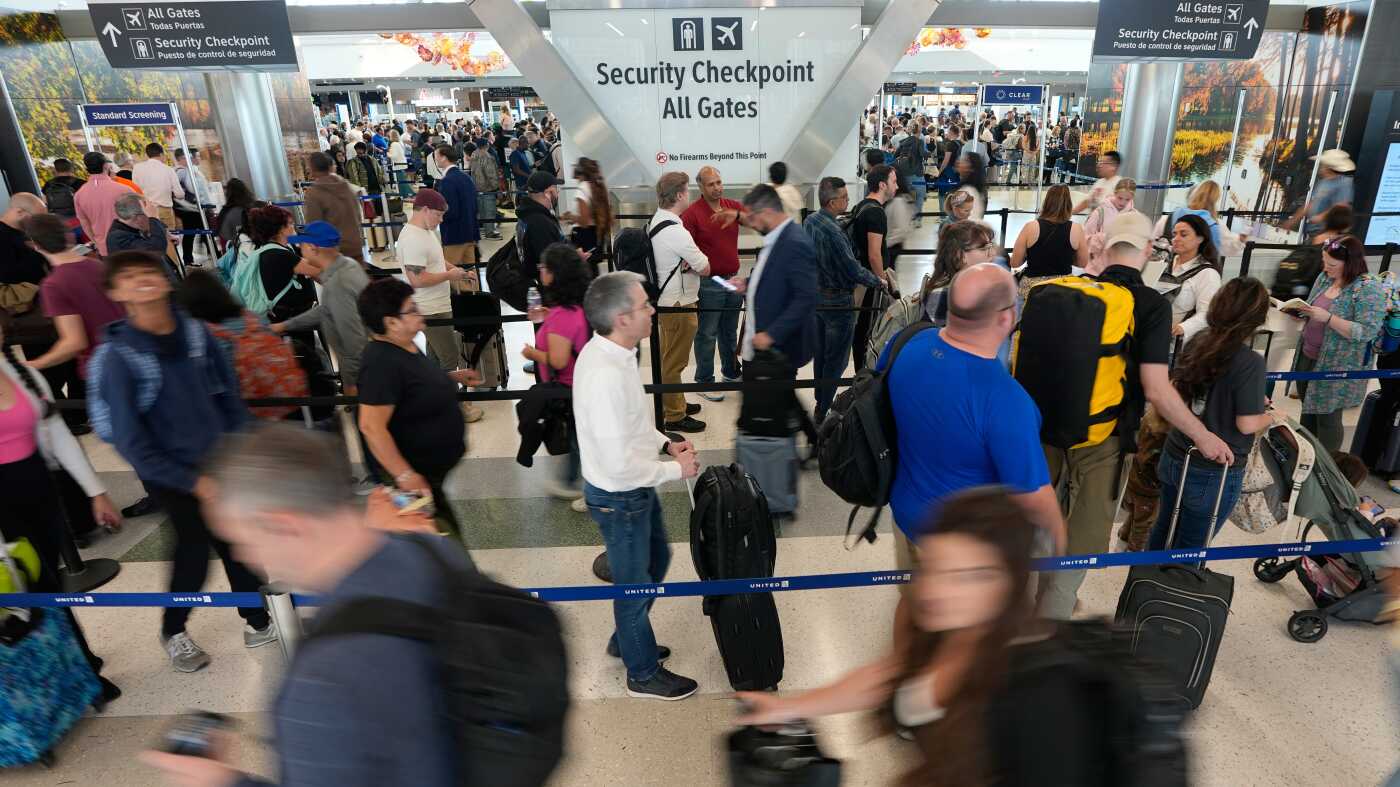
ICE officers could remain at airports after TSA workers are paid

Scathing report claims nation’s oldest labor union ‘betrayed’ MAGA members through ‘shocking’ spending
-

 Sports1 week ago
IOC addresses execution of 19-year-old Iranian wrestler Saleh Mohammadi
-

 Miami, FL4 days ago
Jannik Sinner’s Girlfriend Laila Hasanovic Stuns in Ab-Revealing Post Amid Miami Open
-

 New Mexico1 week ago
Clovis shooting leaves one dead, four injured
-

 Politics1 week ago
Schumer gambit fails as DHS shutdown hits 36 days and airport lines grow
-

 Tennessee7 days ago
Tennessee Police Investigating Alleged Assault Involving ‘Reacher’ Star Alan Ritchson
-

 Minneapolis, MN4 days ago
Boy who shielded classmate during school shooting receives Medal of Honor
-

 Science1 week ago
Record Heat Meets a Major Snow Drought Across the West
-

 Politics1 week ago
Trump gives Iran 48-hour ultimatum to reopen Strait of Hormuz or face strikes on power plants