Sign up for the Today newsletter
Get everything you need to know to start your day, delivered right to your inbox every morning.

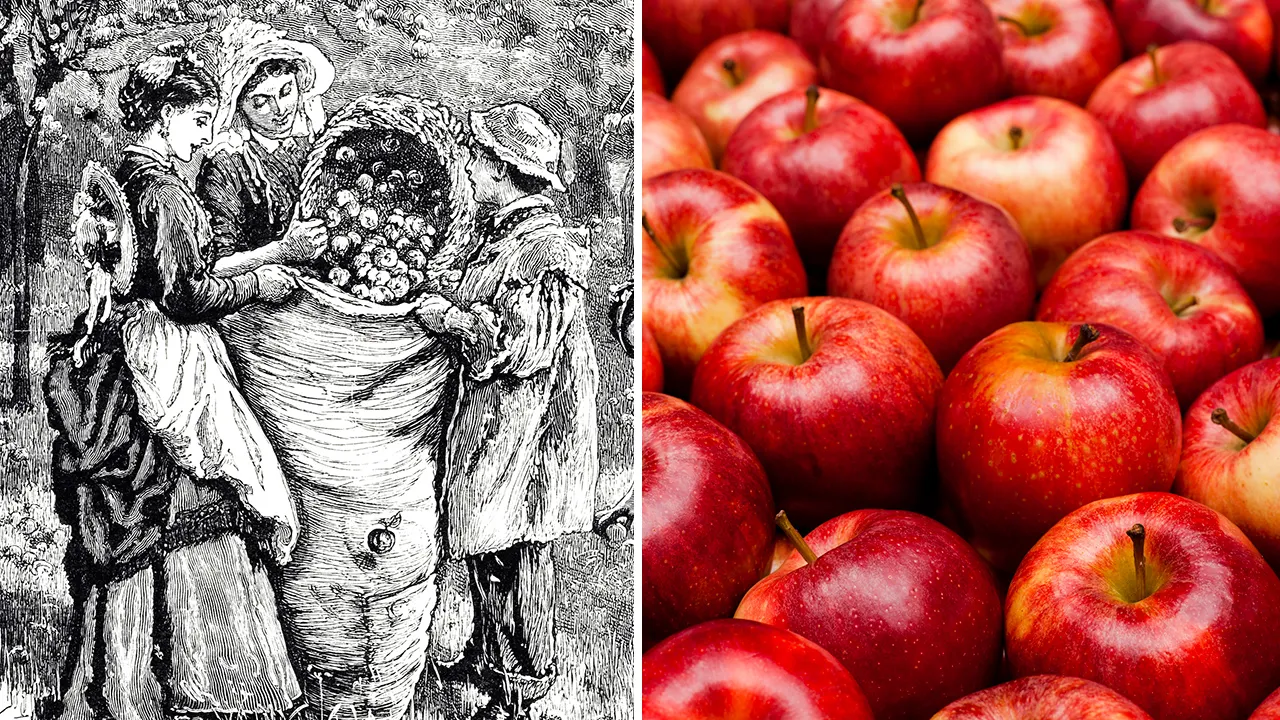
This fall, tip your basket to William Blaxton when you pluck a plump apple from a tree, bob for apples on Halloween or cherish your grandmother’s amazing apple pie on Thanksgiving.
Reverend Blaxton, among other claims to fame, planted the first seeds that would fuel a pioneering nation and give apples an image of all-American wholesomeness.
A bookish and eccentric loner, the early English settler nurtured what historians believe were the first apple orchards in what’s now the U.S. in present-day Boston in the 1620s. His name Blaxton is often modernized as Blackstone.
A true pioneer, he settled Boston five years before the Puritans — and Rhode Island a year before Roger Williams.
MEET THE AMERICAN WHO COOKED UP FROZEN FOODS: ADVENTURER AND INNOVATOR CLARENCE BIRDSEYE
“There may be historical characters who did more than he did for apples in America, but he was certainly the first — and at least the first known — to bring this exotic crop to our shores,” said John Bunker, an American apple expert, grower and author.
“That’s a pretty awesome legacy,” added the New England apple enthusiast, who spoke to Fox News Digital while “tracking down ancient trees” in the woods of rural Maine.
On the left, an engraving depicts fruit pickers collecting apples for cider, dated 19th century. On the right, gorgeous red apples. (Getty Images; iStock)
Our national heritage is flavored with references to the sweet, juicy fruit. America’s biggest city is called the Big Apple. Wholesome institutions are as “American as apple pie.” Johnny Appleseed created an American legend spreading the gospel and the apple across the heartland.
Yet the fruit is native to Central Asia, likely Kazakhstan.
APPLES QUIZ! HOW MUCH DO YOU KNOW ABOUT THIS DELICIOUS FRUIT?
It had reached Europe at least by the time of Ancient Greece and Rome.
Apples arrived in the Americas only after the explorations of Christopher Columbus sparked the greatest period of food fusion and cultural integration in world history.
“I looked to have dwelt with my orchards and my books in undisturbed solitude.”
The people of the New World, in addition to apples, soon savored Old World foods such as rice, onions and coffee. Europeans, Asians and Africans discovered Western Hemisphere flavors such as corn, potatoes and tomatoes.
Julius Caesar never tasted tomato sauce, as one observer noted of the Roman diet before the Genoa-born Columbus landed in America.
Apples in an orchard at Cider Hill Farm in Amesbury, Massachusetts, on Sept. 7, 2020. (Craig F. Walker/The Boston Globe via Getty Images)
The restless Blaxton moved often and typically lived alone, though he married at age 64. By age 65, he had a son, John.
He apparently preferred the acquaintance of his apple trees and his books to the company of people.
“I looked to have dwelt with my orchards and my books in undisturbed solitude,” reads a memorial to him today in Cumberland, Rhode Island, near the Blackstone River.
William Blaxton is believed to have been born on March 5, 1595, in Lincolnshire, England to John and Agnes (Hawley) Blaxton.
Edwin Whitefield, Homes of our Forefathers in Boston, Old England, and Boston, New England. A drawing conjectured to be of William Blaxton’s home. (Boston: Damrell & Upham, 1889) (Public Domain)
His mother died when he was boy.
He was ordained by the Church of England in 1621, then lost his father the following year.
Left on his own as a young man, and with news of English settlements in Jamestown and Plymouth trickling back to Britain, Blaxton set off for the New World as chaplain aboard the ship “Katherine.”
MEET THE AMERICAN WHO INVENTED THE DONUT
“William brought with him to the New World a large collection of books, approximately 186 in various languages,” wrote Nathaniel Brewster Blackstone in a biography of the settler and his descendants.
Blaxton arrived in Wessagusset, in what is now Weymouth, Massachusetts, just south of Boston in 1623. It was an ill-fated settlement.
Captain Richard Gorges, who led the expedition, hastily returned to England.
A person takes a photo of a blooming tree on Boston Common in Boston on April 27, 2022. William Blaxton planted America’s first apple orchard along what is now Boston Common. It became America’s first public park in 1634, just before Blaxton left for Rhode Island. (David L. Ryan/The Boston Globe via Getty Images)
Blaxton stayed behind and ventured a few miles north to the Shawmut Peninsula, the site of present-day downtown Boston, in 1625.
The Puritans, led by John Winthrop, arrived five years later.
“For several years before Winthrop came in 1630, William Blaxton constituted the entire population of this peninsula … to which attached the name of Boston,” the Bostonian Society claimed in an 1860 presentation.
“He was kind of an eccentric,” Russell Steven Powell, executive director of the New England Apple Association, told Fox News Digital. Powell has written two books about the fruit, “America’s Apple” and “Apples of New England.”
Colorized illustration (after a wood engraving circa 1854) of English Puritan and founder of the Massachusetts Bay Colony John Winthrop (circa 1588-1649). (Science Source/Photo Researchers History/Getty Images)
There are several accounts, he said, of Blaxton “riding a bull through the streets, throwing flowers and apples to his friends.”
The staid Puritan reformers and the oddball Anglican minister did not hit it off.
So, for the third time in 12 years, Blaxton (or Blackstone) started a new life on his own.
AMERICA THE BEAUTIFUL: 50 MUST-SEE LANDMARKS THAT TELL OUR NATIONAL STORY
“Because of theological and territorial disagreements with his new neighbors, Blackstone moved west in 1635 to enjoy the solitude and tranquility of a place he called ‘Study Hill’ in the Lonsdale section of Cumberland, on the east bank of the river that now bears his name,” writes the Rhode Island Heritage Hall of Fame.
For several years before Winthrop came in 1630, William Blaxton constituted the entire population of Boston.
“This move gave him the unique distinction of being present-day Rhode Island’s first permanent English settler.”
Blaxton spent his days in Boston planting roots before uprooting his own.
“When Governor Winthrop found William in 1630, he had had ample time to have built his home, plant his orchard, and was living quite comfortably,” reported Brewster Blackstone in his biography.
Illustration of Johnny Appleseed making a speech, circa 1820. A legendary figure in American history, he spread apples and goodwill through the Midwest. (Fotosearch/Getty Images)
“As for the apple seeds he used to develop his orchards, it is probable that he was foresighted enough to retrieve and save every apple core (which naturally contains seeds) he could find, or otherwise come by,” said the same source.
“Certainly most ships were stocked with apples along with other foodstuffs, therefore, it is doubtful that he brought them with him in 1623 because this kind of living was most likely not his original intention. He would have probably only brought with him his ministerial necessities.”
Apple experts say the earliest known American varieties likely descended from Blackstone’s Boston fruit trees.
Blaxton’s first orchard was planted at the corner of what’s now Beacon and Spruce streets, in the heart of Boston, between Beacon Hill and Boston Common.
That’s according to Amy Traverso, Yankee Magazine food editor and author of “The Apple Lover’s Cookbook,” who shared that with Fox News Digital.
Illustration of pioneers crossing the plains by Henry Bryan Hall, Jr. after Felix Octavius Carr Darley. (© CORBIS/Corbis via Getty Images)
“I love to imagine Beacon Hill covered with all those apple trees,” she said.
Blackstone planted his apple orchards from seed, according to all reports, while controlled varietals are grown by grafting.
So the types of apples he grew is unknown. But apple experts say the earliest known American varieties likely descended from Blackstone’s Boston fruit trees.
Lowell Johnson of Apple Jack Orchard in Delano, Minnesota, gave Children of Tomorrow Daycare of Waconia a tour of his apple orchard. (Bruce Bisping/Star Tribune via Getty Images)
The Roxbury russet, named for a Boston neighborhood, is the earliest known American apple variety, and is traced to 1635, the year Blaxton left for Rhode Island.
Heirloom apples — Rhode Island greening and yellow sweeting — also likely came from his first orchards.
“Apples teach us what it means to be alive and joyful on earth.” — Apple expert and author John Bunker
The Roxbury russet is an “excellent old cider apple, a fine keeper and good for eating fresh out of hand,” writes Trees of Antiquity.
Added the website New England Apples, “Its crisp and spicy sweet-tart flesh is as good for fresh-eating as it is for making a fine cider … It keeps well in storage.”
A quote attributed to William Blaxton (Blackstone) at a memorial park in his honor in Cumberland, Rhode Island. “I looked to have dwelt with my orchards and my books in undisturbed solitude,” it reads. (Visit Rhode Island)
Apples could be also be dried, baked, distilled into vinegar — or, most commonly in colonial times — fermented into cider.
They proved perfect food for the pioneers who were spreading across the continent.
They also gave the Europeans who arrived in America, and eventually the Americans who settled new homes across the continent, a much-needed reminder of home.
William Blackstone died on May 26, 1675, in Cumberland, the Rhode Island town he first settled in 1635.
The name Blackstone remains common throughout Massachusetts and Rhode Island.
A monument to William Blackstone in Cumberland, Rhode Island. He was the first European settler of both Boston, Massachusetts, and the state of Rhode Island. He died in Cumberland in 1675. (Visit Rhode Island)
The land he sold to the Puritans became Boston Common, founded in 1634, just before he left the Shawmut Peninsula.
It is the oldest public park in America today. It predates Central Park in New York City, for example, by 224 years.
Boston has a downtown Blackstone Street, a Blackstone Grill and a Blackstone Elementary School.
Apples quickly became a symbol of American bounty.
The Blackstone River, which meanders through both Massachusetts and Rhode Island, is named for him. It became a critical power provider in the early days of the Industrial Revolution.
The Blackstone River National Historical Park was created under President Obama in 2015.
Rhode Island features numerous memorials, including a William Blackstone Memorial Park in Cumberland.
The city of Pawtucket, an old mill town on the Blackstone River, introduced a monument to Blackstone in 2021. It features him reading a book upon a bull, reflecting one of the tales of his eccentricity.
Fall color reflections at the Blackstone River in Whitinsville, Massachusetts. (Essdras M Suarez/The Boston Globe via Getty Images)
Apples quickly became a symbol of American bounty.
When British troops invaded Brooklyn during the American Revolution in 1776, the British were stunned by the splendor of the orchards.
To read more stories in this unique “Meet the American Who…” series from Fox News Digital, click here
The redcoats “regaled themselves with the fine apples, which hung everywhere upon the trees in great abundance,” wrote author David McCullough in “1776,” an epic work of history.
Bunker, the Maine apple expert, said apples symbolize the breadth of the American experience, born overseas but rooting themselves deeply in the soil of the New World.
“Apples are just like us,” the apple romantic said. “They come in many colors, many sizes and many shapes. They are well rooted, just like we all want to be. They are collaborative, communicative — and they gift us with beautiful fruit.”
For more Lifestyle articles, visit www.foxnews.com/lifestyle
Apples, he also said, “teach us what it means to be alive and joyful on earth.”
Read the full article from Here


Health
Massachusetts health officials have confirmed the state’s first two measles cases of the year, a school-aged child and a Greater Boston adult.
The Department of Public Health announced the cases Friday, marking the first report of measles in Massachusetts since 2024.
According to health officials, the adult who was diagnosed returned home recently from abroad and had an “uncertain vaccination history.” While infectious, the person visited several locations where others were likely exposed to the virus, and health officials said they are working to identify and notify anyone affected
The child, meanwhile, is a Massachusetts resident who was exposed to the virus and diagnosed with measles out-of-state, where they remain during the infectious period. Health officials said the child does not appear to have exposed anyone in Massachusetts to measles.
The two Massachusetts cases come as the U.S. battles a large national measles outbreak, which has seen 1,136 confirmed cases nationwide so far in 2026, according to the Centers for Disease Control and Prevention.
“Our first two measles cases in 2026 demonstrate the impact that the measles outbreaks, nationally and internationally, can have here at home,” Massachusetts Public Health Commissioner Robbie Goldstein said Friday. “Fortunately, thanks to high vaccination rates, the risk to most Massachusetts residents remains low.”
Measles is a highly contagious disease that spreads through the air when an infected person sneezes, coughs, or talks. The virus can linger in the air for up to two hours and may even spread through tissues or cups used by someone who has it, according to the DPH.
Early symptoms occur 10 days to two weeks after exposure and may resemble a cold or cough, usually with a fever, health officials warned. A rash develops two to four days after the initial symptoms, appearing first on the head and shifting downward.
According to the DPH, complications occur in about 30% of infected measles patients, ranging from immune suppression to pneumonia, diarrhea, and encephalitis — a potentially life-threatening inflammation of the brain.
“Measles is the most contagious respiratory virus and can cause life-threatening illness,” Goldstein said. “These cases are a reminder of the need for health care providers and local health departments to remain vigilant for cases so that appropriate public health measures can be rapidly employed to prevent spread in the state. This is also a reminder that getting vaccinated is the best way for people to protect themselves from this disease.”
According to the DPH, people who have had measles, or who have been vaccinated against measles, are considered immune. State health officials offer the following guidance for the Measles-Mumps-Rubella (MMR) vaccine:

Get everything you need to know to start your day, delivered right to your inbox every morning.

It’s a scheme made famous by a nearly 30-year-old episode of the sitcom Seinfeld.
Hoping to earn a quick buck, two characters load a mail truck full of soda bottles and beer cans purchased with a redeemable 5-cent deposit in New York, before traveling to Michigan, where they can be recycled for 10 cents apiece. With few thousand cans, they calculate, the trip will earn a decent profit. In the end, the plan fell apart.
But after Connecticut raised the value of its own bottle deposits to 10 cents in 2024, officials say, they were caught off guard by a flood of such fraudulent returns coming in from out of state. Redemption rates have reached 97%, and some beverage distributors have reported millions of dollars in losses as a result of having to pay out for excess returns of their products.
On Thursday, state lawmakers passed an emergency bill to crack down on illegal returns by increasing fines, requiring redemption centers to keep track of bulk drop-offs and allowing local police to go after out-of-state violators.
“I’m heartbroken,” said House Speaker Matt Ritter, D-Hartford, who supported the effort to increase deposits to 10 cents and expand the number of items eligible for redemption. “I spent a lot of political capital to get the bottle bill passed in 2021, and never in a million years did I think that New York, New Jersey and Rhode Island residents would return so many bottles.”
The legislation, Senate Bill 299, would increase fines for violating the bottle bill law from $50 to $500 on a first offense. For third and subsequent offenses, the penalty would increase from $250 to $2,000 and misdemeanor punishable by up to one year in prison.
In addition, it requires redemption centers to be licensed by the state’s Department of Energy and Environmental Protection (previously, those businesses were only required to register with DEEP). As a condition of their license, redemption centers must keep records of anyone seeking to redeem more than 1,000 bottles and cans in a single day.
Anyone not affiliated with a qualified nonprofit would be prohibited from redeeming more than 4,000 bottles a day, down from the previous limit of 5,000.
The bill also seeks to pressure some larger redemption centers into adopting automated scanning technologies, such as reverse vending machines, by temporarily lowering the handling fee that is paid on each beverage container processed by those centers.
The bill easily passed the Senate on Wednesday and the House on Thursday on its way to Gov. Ned Lamont.
While the bill drew bipartisan support, Republicans described it as a temporary fix to a growing problem.
House Minority Leader Vincent Candelora, R-North Branford, called the switch to 10-cent deposits an “unmitigated disaster” and said he believed out-of-state redemption centers were offloading much of their inventory within Connecticut.
“The sheer quantity that is being redeemed in the state of Connecticut, this isn’t two people putting cans into a post office truck,” Candelora said. “This is far more organized than that.”
The impact of those excess returns is felt mostly by the state’s wholesale beverage distributors, who initiate the redemption process by collecting an additional 10 cents on every eligible bottle and can they sell to supermarkets, liquor stores and other retailers within Connecticut. The distributors are required to pay that money back — plus a handling fee — once the containers are returned to the store or a redemption center.
According to the state’s Department of Revenue Services, nearly 12% of wholesalers reported having to pay out more redemptions than they collected in deposits in 2025. Those losses totaled $11.3 million.
Peter Gallo, the vice president of Star Distributors in West Haven, said his company’s losses alone have totaled more than $2 million since the increase on deposits went into effect two years ago. As time goes on, he said, the deficit has only grown.
“We’re hoping we can get something fixed here, because it’s a tough pill to be holding on to debt that we should get paid for,” Gallo said.
Still, officials say they have no way of tracking precisely how many of the roughly 2 billion containers that were redeemed in the state last year were illegally brought in from other states. That’s because most products lack any kind of identifiable marking indicating where they were sold.
“There’s no way to tell right now. That’s one of the core issues here,” said state Rep. John-Michael Parker, D-Madison, who co-chairs the legislature’s Environment Committee.
Parker said the issue could be solved if product labels were printed with a specific barcode or other feature that would be unique to Connecticut. Such a solution, for now, has faced technological challenges and pushback from the beverage industry, he said.
Not everyone involved in the handling, sorting and redemption of bottles is happy about the upcoming changes — or the process by which they were approved.
Francis Bartolomeo, the owner of a Fran’s Cans and Bart’s Bottles in Watertown, said he was only made aware of the legislation on Monday from a fellow redemption center owner. Since then, he said, he’s been contacting his legislators to oppose the bill and was frustrated by the lack of a public hearing.
“I know other people are as flabbergasted as I am because they don’t know where it comes out of,” Bartolomeo said “It’s a one sided affair, really.”
Bartolomeo said one of his biggest concerns with the bill is the $2,500 annual licensing fee that it would place on redemption centers. While he agreed that out-of-state redemptions are a problem, he said it should be up to the state to improve enforcement.
“We’re cleaning up the mess, and we’re going to end up being penalized,” Bartolomeo said. “Get rid of it and go back to 5 cents if it’s that big of a hindrance, but don’t penalize the redemption centers for what you imposed.”
Lynn Little of New Milford Redemption Center supports the increased penalties but believes the solution ultimately lies with better labeling by the distributors. She is also frustrated by the volume caps after the state initially gave grants to residents looking to open their own bottle redemption businesses.
“They’re taking a volume business, because any business where you make 3 cents per unit (the average handling fee) is a volume business, and limiting the volume we can take in, you’re crushing small businesses,” Little said.
Ritter said that he opposed a move back to the 5-cent deposit, which he noted was increased to encourage recycling. However, he said the current situation has become politically untenable and puts the state at risk of a lawsuit from distributors.
“We’re getting to a point where we’re going to lose the bottle bill,” Ritter said. “If we got sued in court, I think we’d lose.”





Exclusive: DeepSeek withholds latest AI model from US chipmakers including Nvidia, sources say


Mother and daughter injured in Taunton house explosion


2026 MHSA Montana Wrestling State Championship Brackets And Results – FloWrestling


Wildfires rage in Oklahoma as thousands urged to evacuate a small city


Wildfire near Gum Swamp Road in Livingston Parish now under control; more than 200 acres burned


10 acres charred, 5 injured in Thornton grass fire, evacuation orders lifted


YouTube TV billing scam emails are hitting inboxes


Stellantis is in a crisis of its own making
