Massachusetts
Should Massachusetts switch to statewide ranked choice voting? – The Boston Globe


In 2018, when I entered a multiperson primary, several people asked: “Why are you running when there’s already a woman in the race?” That question has been posed countless times to nontraditional candidates for office. It is also a prime example of identity-based vote-splitting concerns; avoiding this is one of many reasons why Massachusetts should adopt statewide ranked choice voting, or RCV.
RCV empowers voters, enhances candidate ballot access, and improves democracy by allowing voters to rank their favored candidates in a particular race. The first candidate to break 50 percent plus one vote wins. If no candidate earns that majority in the first round of counting, the last-place candidate is eliminated and their votes redistributed to voters’ second choices. This digital process repeats until a candidate breaks the simple majority threshold.
RCV’s redistribution process alleviates vote-splitting concerns based on candidates’ identities, political ideologies, or other reasons because it avoids voting power dilution. Currently, nontraditional candidates are dissuaded from running against each other out of fear that each will reduce anyone’s chances of winning. RCV, however, encourages diverse candidates to run and generates more reflective representation in elected office. Thus, RCV also empowers voters to vote for their favored candidate(s) because so-called throw-away votes no longer exist.
Additionally, RCV makes campaigning more respectful and less rancorous. In New York City’s first RCV municipal election, “ranked choice [had] an unusual effect on some New Yorkers: They were civil,” the New York Times reported.
RCV is simple for voters to use. Voters in more than half the states in the nation already use it in races ranging from local government to presidential elections, including several Massachusetts communities.
Finally, RCV ensures that candidates win elections by a true majority. Under our existing system, a stark number of candidates win multiperson primaries with less than half the vote.
RCV yields many benefits, including ensuring election by majority vote, reducing systemic barriers to entry, avoiding vote-splitting concerns, generating more diversity both on the ballot and in elected office, and more positive campaigning. We already have the technological capabilities to make the switch. Massachusetts should adopt statewide RCV.
NO
Paul Diego Craney
Massachusetts Fiscal Alliance

While proponents of Ranked Choice Voting claim it will “improve” our elections and deliver more “fair” results, the reality of the system in practice could not be further from the truth.
In California, where RCV already existed, Democratic Governor Gavin Newsom vetoed an RCV proposal, noting it “has often led to voter confusion and the promise that ranked choice voting leads to greater democracy is not necessarily fulfilled.”
RCV proponents claim it selects a candidate with the most support from the voters. In actuality, it only determines a winner by eliminating votes from those who do not select the two candidates last standing.
Unless a voter can correctly guess which two candidates will survive the last round of RCV, that voter’s vote is discarded. If this sounds confusing, it’s because it is.
RCV proponents also falsely claim it results in less negative campaigning, but negative campaigning has remained prominent in all places where the RCV is in use, merely shifting to Super PACs and outside organizations. Candidates should freely debate the issues and be unafraid of contrasting with other candidates. With RCV, negative campaigning will continue in a more convoluted way, candidates will feel even less encouraged to provide a contrast, and voters will get even less information than they do now.
RCV ballots force voters to guess the candidates who will remain standing in multiple voting rounds and cast their votes in the dark. If they guess wrong and vote for eliminated candidates, their ballots are discarded and not counted in the final vote. Winners get a false majority of remaining ballots, not a true majority of all the voters voting in the election.
In 2020, Massachusetts voters overwhelmingly opposed a ballot question to allow for RCV. Despite support from the state’s top Democrats, including Senators Elizabeth Warren and Edward Markey, voters in nearly 80 percent of the state’s cities and towns rejected the ballot question. The proponents spent nearly $10 million while the opponents spent less than $10,000.
If RCV proponents can’t get voters behind their idea with a 1,000 to 1 spending disparity, perhaps it’s time for them to consider the problem may lay with the idea itself.
Linda Greenstein can be reached at greensteinlm@gmail.com.



Keeping open records in the dark is costing taxpayers in Massachusetts
As Sunshine Week comes to a close this week, government officials across the country will once again talk about transparency and accountability. In Massachusetts, however, a series of recent transparency failures shows just how far we have to go here in the Bay State.
For years, watchdog groups, journalists, and ordinary citizens have warned that Massachusetts has one of the weakest public records systems in the country. Deadlines are ignored. Fees are inflated. Enforcement is weak. And when state or local officials would rather keep information hidden, the burden too often falls on private citizens to drag those records into the light.
This is hardly a partisan critique.
On this point, even groups that rarely agree politically can see the same problem. Journalists have been forced to sue for access. Citizens have waited months or years for information that should have been produced promptly. Transparency should not be a left or right wing issue, it should be the bare minimum in a functioning democracy.
The recent examples are hard to ignore. One police department demanded $1.8 million for license-plate-reader records before that fee was later reduced. In Lexington, a school employee was caught discussing whether production costs could be inflated in hopes that a requester would give up. In Somerville, public officials spent years fighting over parking-permit data.
And then there is the state’s climate litigation against Exxon Mobil.
Massachusetts sued Exxon for allegedly misleading the public about climate change. Whatever one thinks of that lawsuit, the state put honesty, disclosure, and accountability at the center of its case. Yet when Exxon sought records related to Massachusetts’ own climate regulations and enforcement, officials resisted disclosure and triggered a separate legal battle over access to those documents.
What surfaced from that fight was incredibly troubling.
A regulation adopted under Massachusetts climate law requires state agencies with large vehicle fleets to track emissions and submit annual compliance reports. Those reports were supposed to begin in 2019. But according to sworn testimony from state environmental officials, not a single agency has submitted them. None. Regulators also acknowledged they had not conducted inspections or taken enforcement actions to verify compliance.
So, while Massachusetts was accusing Exxon of climate deception, the state was also fighting a records request that exposed its own failure to comply with one of its own climate rules.
That hypocrisy should concern everyone.
These reporting requirements exist to measure whether the state is actually doing what it says it is doing. If agencies are not filing required reports, and regulators are not enforcing the rule, then the public has every right to ask whether Massachusetts is serious about the climate commitments it promotes so aggressively.
Taxpayers also have every right to ask how much public money is being spent to keep that failure hidden.
That was the focus of Massachusetts Fiscal Alliance’s recent letter to Energy and Environmental Affairs Secretary Rebecca Tepper. According to state spending records, since last April, EEA paid a Boston law firm over $534,000, which includes $417,620 from “Climate Adaptation and Preparedness” funds and over $117,000 from funds labeled as “Environmental Affairs Administration.” When underlying payment records were requested, both DEP and the Comptroller reportedly said they had no responsive records.
Ironically, the money spent defending the state’s failure to comply with open records laws could have gone toward actual climate compliance or easing the burden on ratepayers and taxpayers. Instead, it appears to have been simply wasted on lawyers to allegedly cover up the state’s non-compliance on its own climate mandates.
That concern is even more urgent because the Healey administration recently estimated that their climate agenda could cost an eye-popping $130 billion by 2050, while an independent study by the Fiscal Alliance Foundation estimated the cost to be over $400B for the state. While Massachusetts clearly cannot afford more burdensome regulations that will drive businesses out of the state, if taxpayers are being asked to shoulder massive new climate costs the public should at least be able to trust that the laws already on the books are being followed.
Massachusetts officials are often quick to demand transparency from corporations and the Trump administration. But transparency cannot be a one-way demand.
Our elected leaders at Beacon Hill must hold themselves to the same standard they impose on the public. It is the foundation of public trust and a problem that Massachusetts has ignored for far too long.
Paul Diego Craney is the Executive Director of Massachusetts Fiscal Alliance
Massachusetts
Gas prices in Massachusetts surge 12 cents since Monday, drivers look for ways to save

Gas prices continue to rise in Massachusetts and commuters are working out ways to cut back on spending.
AAA said that the average price of gasoline in the U.S. is nearing $4 a gallon, up $1.30 since the war in Iran began. The average price in Massachusetts sits at $3.67, up 12 cents from Monday.
“It’s been climbing pretty steadily day after day,” AAA spokesperson Mark Schieldrop said.
Leslie Welch from Framingham said she tries to find a shorter route to work every day to save money.
“Of course, I am worried about them going up; in fact, I am thinking of getting a different vehicle,” Welch said. “It impacts it quite a bit. Trying to think of being able to work from home for a couple of days.”
But some drivers said there is no way for them to cut down on gas.
“Costing more to make deliveries, and I am not making more, so hopefully it will start going down soon,” courier Eric Howland said.
“Yes, I’ve been concerned, it already changes how I spend. I’d say I fill up once every other week,” said John Curtis, who uses diesel fuel. Curtis has been trying to drive even less to save at the pump.
AAA said that commuters should shop around for the lowest price at gas stations and make an effort to head to the lowest in their area.
“The service stations are also feeling the pinch a little bit. They get a lot of heat for raising those prices, but the cost of fuel that they are buying from their suppliers has skyrocketed as well,” Schieldrop said.
Should the gas tax be suspended?
WBZ-TV’s Jon Keller spoke with Governor Maura Healey on Friday and asked whether or not the gas tax should be suspended amid the ongoing spike in price.
The governor said, “I just don’t think it’s going to get us very far right now in the overall picture.”
The gas tax in Massachusetts is 24 cents for every gallon. The federal tax is 18 cents per gallon.
Massachusetts
Maura Healey looks to cut $15M to Massachusetts jail diversion program: ‘Utterly ridiculous’

Massachusetts police chiefs are in familiar territory as they fight for funding for a mental health program that seeks to divert individuals in crisis from arrest, as Gov. Maura Healey looks to slash roughly $15 million from the initiative.
The Massachusetts Chiefs of Police Association is leading the call for Beacon Hill lawmakers to restore full funding for the so-called jail and arrest diversion program in the governor’s budget proposal for next fiscal year.
Healey has requested $63.4 billion for next year’s budget, a proposal that would raise current spending by 3.8% but lower funding for jail diversion programs from $19.1 million to $4 million.
A spokesperson for the state Department of Mental Health says the proposed allotment matches funding levels from before the pandemic, when the state did not have one-time federal American Rescue Plan Act dollars.
Michael Bradley, who leads the Chiefs of Police Association, looks at jail diversion programs as an effective collaboration between law enforcement and behavioral health providers that helps de-escalate mental health crises through specialized training and clinical partnerships.
More than 150 clinicians are embedded in police departments serving over 250 communities across the state, Bradley highlighted in a letter to lawmakers earlier this month.
Bradley provided numbers from the Department of Mental Health that showed the state’s $17.2 million investment in the program in Fiscal Year ’25 “supported more than 29,000 documented crisis interventions, diverted over 3,300 individuals from arrest, and prevented more than 6,500 emergency department visits.”
Overall, the program helped save the state an “estimated $42.8 million” that fiscal year, Bradley stated.
Under Healey’s $4 million request, Bradley fears the program would suffer from limited training capacity and fewer available clinicians and diversion options across Massachusetts.
“The need for crisis response will not diminish,” Bradley stated in his letter to lawmakers. “Instead, the burden will shift back to patrol officers without adequate clinical support, leading to increased emergency department utilization, unnecessary arrests, greater correctional involvement, and higher long-term state costs.”
Police chiefs had to fight for funding for the program last year, when Healey looked to restore spending on the initiative to pre-pandemic levels.
In response to a LinkedIn post that Bradley made highlighting this year’s proposed spending reduction, Mansfield Police Chief Ron Sellon commented, “It’s utterly ridiculous that we have to fight for this over and over.”
At the local level, the Watertown Police Department deployed 401 co-response interventions in 2025, diverting 30 individuals from arrest and 129 individuals from “unnecessary hospitalizations,” according to a department Facebook post in February.
Those diversions led to a total cost savings of $497,322, the department added.
The Department of Mental Health has highlighted that the program received a $15.1M expansion through the legislative budget process. A spokesperson added that it is “encouraged” to see more police departments participating in the program.
“The Department of Mental Health is committed to working with law enforcement to help make sure people in need of mental health or substance use treatment get the care they need as an alternative to incarceration,” the spokesperson told the Herald Friday evening.

Review: After more than a decade, Lisa Kudrow and ‘The Comeback’ make a timely, final return

New details: Universal Studios’ ‘Fast & Furious’ coaster is almost ready to ride

Commentary: California can have both easy voting and quicker election results. Here’s how.

As mosquitoes go year-round in L.A., a promising fix hits a snag

Boys’ basketball player of the year: Maxi Adams of Sierra Canyon

Florida High School Football Rankings: Top 25 teams – Oct. 21

How old is Bo Nix? What to know about Oregon quarterback ahead of 2024 NFL Draft

Cleary's 21 help Le Moyne down Central Connecticut State 69-64 in OT

99th annual Pony Swim held in Virginia

Indiana Members Credit Union announced as new anchor tenant at Bottleworks District

‘Risk of escalation is extremely high as Iran shows it can retaliate’

Immigration agents deploying to airports under border czar as TSA staffing falls short | CNN Politics

Video: Former F.B.I. Director Robert Mueller Dies at 81

Trump gives Iran 48-hour ultimatum to reopen Strait of Hormuz or face strikes on power plants

Macron pushes tougher EU digital action ahead of key votes
-

 Detroit, MI4 days ago
Drummer Brian Pastoria, longtime Detroit music advocate, dies at 68
-

 Oklahoma1 week ago
Family rallies around Oklahoma father after head-on crash
-

 Nebraska1 week ago
Wildfire forces immediate evacuation order for Farnam residents
-

 Georgia6 days ago
How ICE plans for a detention warehouse pushed a Georgia town to fight back | CNN Politics
-

 Alaska1 week ago
Police looking for man considered ‘armed and dangerous’
-
 Science1 week ago
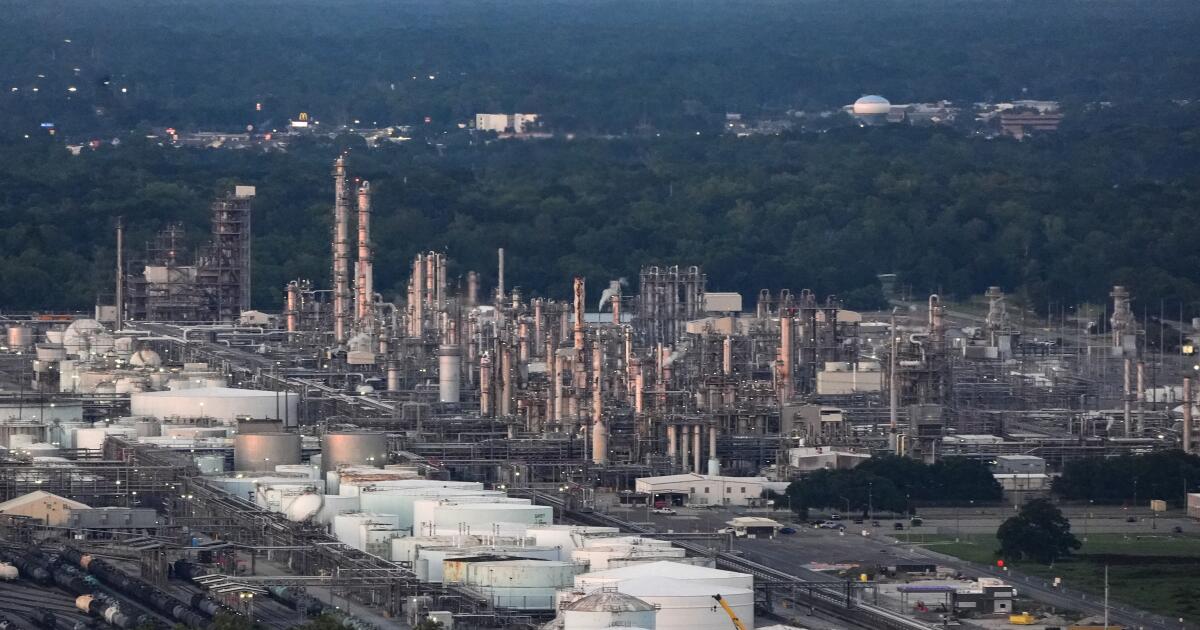
Federal EPA moves to roll back recent limits on ethylene oxide, a carcinogen
-
 Science1 week ago
H5N1 bird flu spreads to sea otters and sea lions along San Mateo coast, wildlife experts say
-

 Movie Reviews3 days ago
‘Youth’ Twitter review: Ken Karunaas impresses audiences; Suraj Venjaramoodu adds charm; music wins praise | – The Times of India