Massachusetts
At Massachusetts stores, the demise of the penny is adding up to one big headache – The Boston Globe


With little government guidance on how to lawfully undertake the transition, and loath to give up even a few cents by rounding transactions down to the nearest nickel, Maloney is instead trying to kick the coin jar down the road.
“We’re sort of hoarding,” said Maloney, who has run Julio’s since 2000, “so that we don’t have to deal with this problem.”
It’s a problem playing out in cash registers across Massachusetts and the country as the realities of a penniless future begin to present themselves.
When Canada phased out its one-cent coin a little more than a decade ago, it offered retailers and consumers a clear path forward, suggesting that cash transactions be rounded up or down to the nearest nickel — $1.61 and $1.62 become $1.60, while $1.63 and $1.64 become $1.65 — with sales tax applied before rounding. In Massachusetts, retailers say they have been given little such direction from the federal or state government, bringing about a patchwork of solutions as stores try to navigate the changing tides of change on their own.
“I didn’t really think it was going to cause much of an issue, but then it started causing an issue,” said Sara-Ann Turner, a cashier at Warren Hardware in the South End. The shop has begun rounding transactions to the nearest five-cent increment when customers don’t have exact change, which has left some shoppers feeling nickel-and-dimed when the sum comes down in the store’s favor.
The penny remains legal tender, with billions of the coin still in circulation — many likely sitting in jacket pockets, under couch cushions, and between sidewalk cracks. But the lack of fresh ones shipping out of the US Mint means that cash transactions will soon have to sidestep the one-cent coin. And even in an increasingly cashless economy, that’s no simple endeavor.
In a recent survey conducted by the Retailers Association of Massachusetts, 65 percent of members said they planned to take Canada’s recommended approach and round cash transactions up or down to the nearest nickel. The other 35 percent said they would always round down in the customer’s favor, a policy Dunkin’ has recommended for its franchisees. (The survey did not give respondents the option to say they would always round up.)

But any rounding policy stores choose risks running afoul of a tangle of bureaucratic regulations, said Jon Hurst, president of the Retailers Association of Massachusetts. Consider, for instance, a Massachusetts law that prohibits surcharges on customers who use credit cards over cash, or the federal statute that mandates food stamp customers be charged the same as those using cash.
“The sellers just need some guidance, number one, and number two, some protection,” Hurst said.
In a letter in early December, Massachusetts Senator Elizabeth Warren and California Representative Maxine Waters sought answers from the heads of the Treasury Department, the Federal Reserve, and the US Mint, writing that the absence of guidance could “risk worsening inconsistencies in customer transactions, uncertainty in pricing approaches, legal compliance, tax calculations, and more.”
Late last month, the Treasury Department published a frequently-asked-questions webpage that pointed to the technique of rounding to the nearest nickel but ultimately passed the buck to states, which it said “will approach this issue differently based on unique considerations.”
Both chambers of Congress have introduced bipartisan federal legislation, called the Common Cents Act, that would codify for US businesses the same rounding practices as Canada recommended, but progress for the bills appears to have stalled.

And while states including Georgia and Utah have come out with basic guidelines for retailers — leaving rounding decisions up to individual merchants but clarifying that sales tax should be applied before rounding — Massachusetts has yet to do the same.
In a statement, a Massachusetts Department of Revenue spokesperson said the office is “considering what if any guidance is needed.”
The Massachusetts attorney general’s office said any legal changes to retailers’ practices would have to come from lawmakers.
“It’s more involved than any of us thought it would be on the first glance,” said state Representative Tackey Chan, who is looking into the penny issue.
Merchants may soon get some temporary relief, thanks to the Federal Reserve, which distributes coins to banks. This week, all seven of the Federal Reserve bank distribution sites in the Boston district will once again accept deposits of pennies from banks, a move the Fed said it made “to better support the circulation of pennies for commercial activity.” This may eventually allow banks to order the coins again, which could then allow supply to trickle down to retailers.
Amid all the unknowns, Julio’s isn’t the only one trying to put off the inevitable. In November, the supermarkets Price Chopper and Market 32 held a promotion in which customers could bring in pennies and receive double their value in a gift card to the grocers. The event amassed roughly 20 million pennies, or $200,000, according to director of customer service Michele McKeever — about $11,900 of which came from the chains’ 14 Massachusetts stores.

“We were hoping that we could buy some time and get legislation passed to give us clear direction,” McKeever said.
For stores that have already begun their own rounding policies, there can be growing pains as they explain the new system to clientele. Turner, the Warren Hardware cashier, said she dealt with one customer who grew particularly upset at being shortchanged.
“‘I work hard for these two pennies,’” Turner recalled the customer saying.
Andrea Pendergast, co-owner of the Cape Cod Package Store Fine Wine & Spirits in Centerville, is also worried about inadvertently driving away business.
“We end all of our pricing with nine,” she said, a common consumer psychology trick known as charm pricing. Rounding up to the next dollar, she knows, would “look, psychologically, from a customer standpoint, like maybe the prices are going up.”
While some retailers are concerned about the effects of rounding policies on their profits, research from the Federal Reserve Bank of Richmond last year estimated that rounding to the nearest nickel would end up costing shoppers, not retailers, about $6 million annually. This was because, the researchers found, prices tended to end on digits that would round up.
Nevertheless, Maloney, the Julio’s Liquors owner, worries about the potential hit to his bottom line once his penny-pinching days run out. Choosing to always round down could cost him the equivalent of a part-time employee’s pay.
“I know everybody’s going to say, ‘It’s just pennies,’” he said. “I go, ‘Yes, but pennies add up.’”

Dana Gerber can be reached at dana.gerber@globe.com. Follow her @danagerber6.



Several chains and local shops are marking the July 19 holiday with giveaways, rewards offers and limited-time discounts. Some offers require an app or loyalty account, and participation may vary by location.
Here are some deals for National Ice Cream Day in Massachusetts:
New City Microcreamery: The Massachusetts scoop shop is giving away a $25 gift card for National Ice Cream Day. To enter, customers must like the giveaway post, comment with a favorite New City flavor and follow the shop on Facebook and Instagram. You can find the post here.

Following similar legislature in his native Vermont, singer-songwriter supports “The Great Divide Act” combating speculative tickets, resale fees, and more
Noah Kahan has thrown his support behind a new Massachusetts bill aimed at capping ticket resale prices.
Like other states in recent weeks — including Washington, D.C. just a day earlier — Massachusetts Governor Maura Healey has announced “An Act Relative to Closing the Great Divide between Ticket Prices and Affordability” — or “The Great Divide Act,” named in part after Kahan’s latest LP — a bill that would limit ticket resales prices, bar speculative tiket sales, and cut down on some ticket fees.
Kahan, who previously backed a similar bill in his native Vermont and is fresh off four sold-out shows at Boston’s Fenway Stadium, appeared via video at Healey’s press conference Thursday.
“I heard about what you’re announcing today and I just wanted to let you know how excited I am about it,” Kahan said. “The artist community and fans will greatly benefit from limiting ticket scalping and the sales of speculative tickets. I love my fans and want to protect them however I can. Artists alone could not tackle the market manipulation of secondary resellers. So, thank you so much for making this a priority in Massachusetts.”
Under the proposed Great Divide Act, concert tickets on the secondary market would be capped at 110 percent of their original face value, and secondary ticket sites would similarly only be allowed to take a 10 percent cut of resold tickets.
In the aftermath of the World Cup games at Gillette Stadium, where “speculative tickets” — or sellers offering tickets they don’t actually have — resulted in hundreds of people getting turned away from the soccer games, the Great Divide Act will also aim at prohibiting the practice. “Far too many Massachusetts residents have experienced the pain of being excited to buy tickets to see their favorite singer or sports team, only to realize that resale prices and fees have driven up the cost to outrageous levels,” Healey said Thursday.

SPRINGFIELD, Mass. (WWLP) – Springfield bankruptcy attorney Andrea M. O’Connor has been named to the 2026 Massachusetts Super Lawyers list.
According to the firm, Andrea M. O’Connor of Shatz, Schwartz and Fentin, P.C., has been named to the 2026 Massachusetts Super Lawyers list in the Bankruptcy: Consumer practice area, marking the fourth consecutive year she has received the recognition.
O’Connor’s practice draws on experience representing both debtors and creditors, serving as a Chapter 7 trustee and clerking for the U.S. Bankruptcy Court for the District of Massachusetts. The firm said she develops legal strategies tailored to her clients’ individual needs and goals.
O’Connor graduated magna cum laude from Western New England University School of Law, where she served as editor-in-chief of the Western New England Law Review. She is admitted to practice law in Massachusetts and Connecticut, as well as before the U.S. District Courts for Massachusetts and Connecticut, the U.S. Court of Appeals for the First Circuit, and the U.S. Court of Appeals for the Second Circuit.
Beyond her legal practice, O’Connor serves as chair of the Bankruptcy Section of the Hampden County Bar Association and is co-chair of both the Western Massachusetts Bankruptcy Conference and the MCLE Bankruptcy Conference. She also serves on committees for the U.S. Bankruptcy Court for the District of Massachusetts.
Before earning placement on the Massachusetts Super Lawyers list from 2023 through 2026, O’Connor was recognized as a Super Lawyers Rising Star each year from 2019 through 2022.
Super Lawyers is a peer-reviewed attorney rating service that recognizes lawyers in more than 70 practice areas. The organization says its selection process includes attorney nominations, independent research and peer evaluations.
Local News Headlines
WWLP-22News, an NBC affiliate, began broadcasting in March 1953 to provide local news, network, syndicated, and local programming to western Massachusetts. Download the 22News Plus app on your TV to watch live-streaming newscasts and video on demand.
-
 Politics6 minutes ago
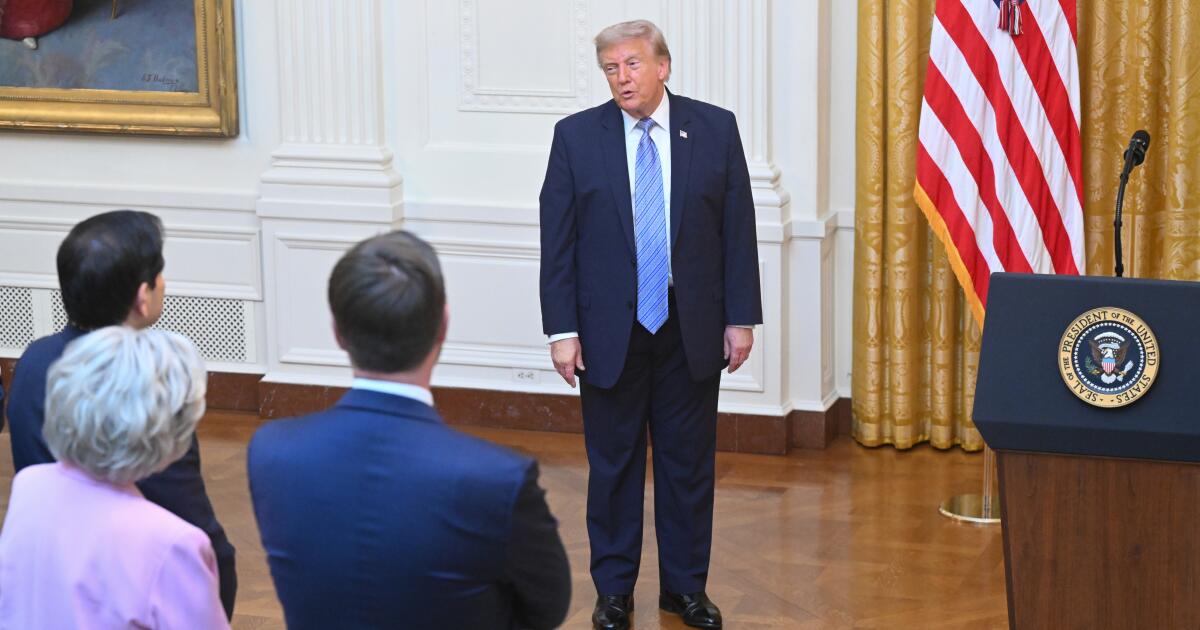
Trump escalates election attacks, threatens California over voter data
-
 Science12 minutes ago
Rudolph Marcus, Caltech chemist who won Nobel Prize, dies at 102
-
 Sports18 minutes ago
Commentary: With Will Smith out indefinitely, Dodgers need to trade for a catcher
-

 World30 minutes ago
Mandela Day: What his legacy means in today’s South Africa
-
 News60 minutes ago
ICE shared Medicaid data it wasn’t supposed to have with Palantir
-

 Los Angeles, Ca3 hours ago
‘Moana’ is a triumph for Pacific Islander representation on the big screen
-

 Detroit, MI3 hours ago
Five shot during funeral at Detroit church
-

 San Francisco, CA3 hours ago
San Francisco Giants Announce Intriguing Roster Move Ahead of Mariners Series

