


Sign up for the Today newsletter
Get everything you need to know to start your day, delivered right to your inbox every morning.

NEWYou can now listen to Fox News articles!
The Episcopal Diocese of Maryland says it wants to “build up Black communities” through reparations grants aimed at addressing what it calls “systemic racism.”
The Diocese will begin accepting applications Wednesday for its fifth round of reparations grants. It wants to “build up Black communities” and help “to repair the breach caused by systemic racism in Maryland,” according to a statement on its website.
Recipients of the grants this year could be awarded between $25,000 and $50,000 based on a “competitive points system.”
“The purpose of the reparations grants is not to benefit the institutional Church, but to help repair the lack of resources in communities of color in need and to repair our relationships with these communities,” the Diocese said.
DEMOCRATIC GOVERNOR FACES PUSHBACK FROM LYNCHING RESEARCH COMMISSION OVER REPARATIONS STANCE
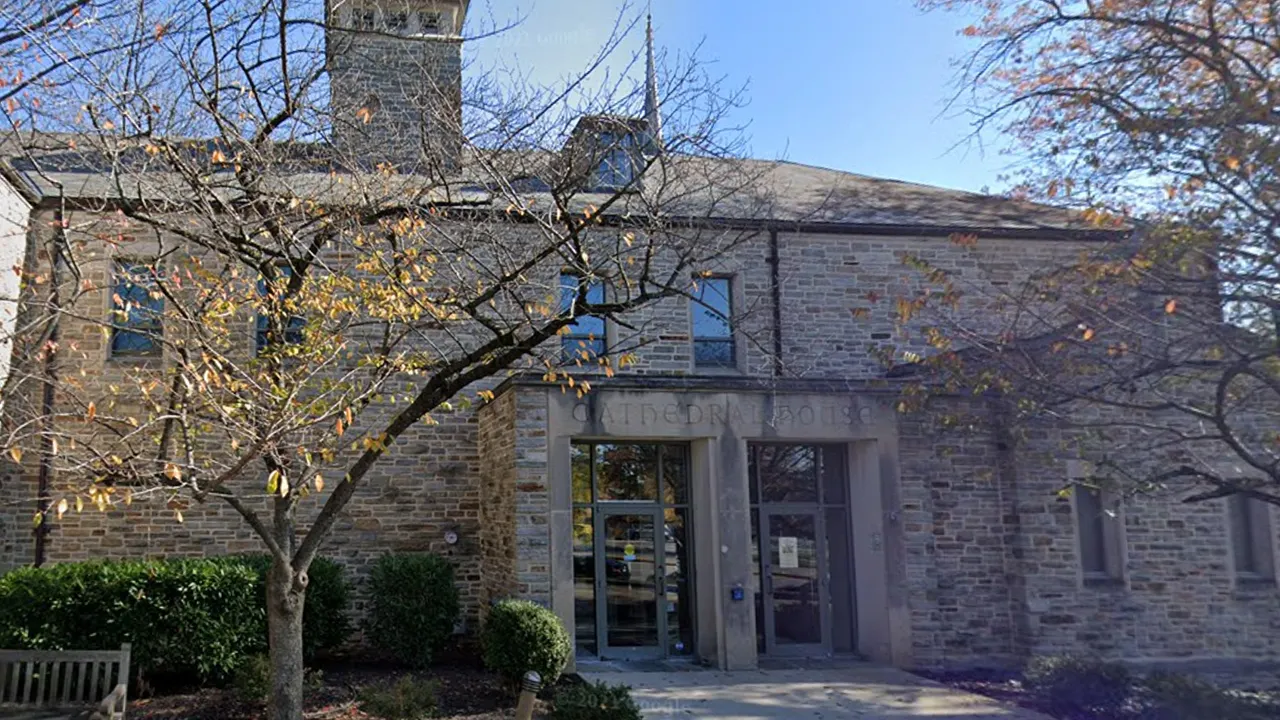
The Episcopal Diocese of Maryland wants to issue reparations to Black Maryland residents due to “systemic racism” and will begin accepting applications for its fifth round of reparations grants. (Google Maps)
According to the Diocese’s website, the grants are open to organizations within its region, which includes central, southern and western Maryland — encompassing Allegany County and the City of Baltimore.
The Diocese oversees 10 counties across western, central and southern Maryland, along with 100 congregations and 23 schools.
The Diocese also seeks to support startups less than 3 years old whose mission aligns with its goals, noting that at least one grant will go to a new organization.
The reparations resolution passed Sept. 12, 2020, during the 236th Convention of the Episcopal Diocese of Maryland, establishing a $1 million seed fund for reparations.
MARYLAND GENERAL ASSEMBLY CALLED OUT FOR OVERRIDING GOVERNOR’S VETO ON ‘FOOLISH’ REPARATIONS COMMISSION
The Maryland Reparations Commission was established last month, overcoming Gov. Wes Moore’s veto, which stemmed from his opposition to pursue studies of the past and rather take action on current issues. (Getty Images)
“Our diocese is taking next steps to infuse money into programs that are building up Black communities and helping to repair the breach caused by systemic racism in Maryland and in the United States,” the Diocese said.
The Episcopal Diocese of Maryland did not immediately respond to Fox News Digital’s request for comment.
The Diocese’s commitment to reparations comes amid Maryland’s broader effort to explore the issue. The Maryland Lynching Truth and Reconciliation Commission, created in 2019, released its final report last month, and it was described as the first state-sponsored initiative in the U.S. to investigate, document and “reckon with the history of racial terror lynching within its own borders.”
MARYLAND GOVERNOR DECLARES TIME OF REPARATIONS STUDIES IS OVER, URGES ACTION TO SERVE MINORITY COMMUNITIES
The Diocese’s commitment to reparations comes amid the state of Maryland’s effort to explore the issue. The Maryland Lynching Truth and Reconciliation Commission released its final report last month after being established in 2019. (Ozan Kose/AFP via Getty Images)
Among its 84 recommendations, the commission urged state leaders to atone for racial violence through cash payments, recommending $100,000 per descendant of lynching victims.
The Maryland Reparations Commission was created last month after lawmakers overrode Gov. Wes Moore’s veto. The governor said he opposed additional historical studies and instead wanted to focus on immediate solutions.
The commission will appoint 23 members to assess local, state and federal policies from the Reconstruction and the Jim Crow eras.
Similar to the Maryland Lynching Truth and Reconciliation Commission, the Maryland Reparations Commission will recommend reparations ranging from cash compensation to a statement of apology.
Read the full article from Here


Local News
A Boston man is facing charges after he allegedly lunged at a Burger King employee, punched a customer, and then resisted arrest at a nearby MBTA station in East Boston, authorities announced Monday afternoon.
Patrick Donovan, 59, was charged July 1 with one count of assault and battery causing injury on an over 60 or disabled person, assault and battery, disorderly conduct, resisting arrest, assault, and vandalism, Suffolk District Attorney Kevin Hayden’s office said in a press release.
The charges stem from an incident shortly before 10 p.m. on June 30, when Boston police responded to a disturbance call from Burger King at 1 Maverick Square, Hayden’s office said.
A Burger King employee told officers that, after ordering his food and receiving it, Donovan yelled that he no longer wanted it and smacked a napkin holder off the counter. He then allegedly lunged at an employee and grabbed her by the arm, prosecutors said.
Donovan subsequently shoved a customer from behind and allegedly punched him in the face three times while calling him racial slurs, the DA’s office said.
Emergency medical services evaluated the customer for “visible lacerations to the forehead,” but the victim declined additional treatment, authorities said.
Donovan fled the restaurant following the assaults, and officers tracked him to the nearby MBTA Maverick Station, prosecutors said.
“While officers tried to detain Donovan inside the station, he swung at them with a closed fist but did not make contact,” Hayden’s office said, noting that Donovan made racial slurs towards the officers. “Donovan was placed into custody after a brief struggle.”
During his arraignment in the East Boston division of the Boston Municipal Court, Donovan pleaded not guilty and was released on personal recognizance. Court records show he was also ordered to stay away from Maverick Square and Burger King.
He is scheduled to return to court Aug. 7 for a pre-trial hearing, prosecutors said.
Officers obtained security footage of both assaults. Authorities said the incident remains under investigation and could result in further charges.
“Our workers deserve to be safe in their workplaces and our consumers deserve to be safe in their shopping or dining places, without exception,” Hayden said in a statement. “Beyond that, none of our citizens or first responders should be subjected to racial slurs. These appalling words have no place in Suffolk County or anywhere else in our society.”
Attorney information for Donovan was not immediately available Monday afternoon.
Get everything you need to know to start your day, delivered right to your inbox every morning.


A hit HBO documentary series is looking to Connecticut for stories to feature in its second season.
The show “Neighbors” follows on-going neighbor disputes across the country. The goal of the show is to help neighbors reach a resolution, according to the show’s casting director and executive producer Harleigh Shaw.
“Each story we explore, we spend extensive time with neighbors on both sides to really understand the full context beyond the disputes,” Shaw said.
Producers wanted to share stories in the second season that were based in states that weren’t featured earlier this year in the first season, including Connecticut, Shaw said.
“A lot of the things that we’re most interested in are things that may seem small, but become a bigger issue between the neighbors,” Shaw said. “Anything from disagreements over gardening practices to property lines to noise to dock issues, if it’s a waterfront property. A whole myriad of things. We’re really open to anything.”
However, the show does avoid situations that are violent or dangerous.
Residents from Connecticut looking to participate should be open to third party conflict resolution, according to Shaw.
“Some of the ways that we did that were through mediation,” Shaw said. “That’s a huge one. But there are other things in terms of resources we’d be open to help the neighbors to like help work through the issues.”
Filming will take place throughout the summer and is expected to be completed by the end of September.
The show’s production team is located in New York City and Los Angeles.
“Connecticut has always been really interesting because it’s just a short trip away, and we’re just curious to explore the types of neighbor dynamics that are going on there,” Shaw said.
Connecticut residents who are interested in being on “Neighbors,” can apply at helloneighbortv.com and are encouraged to submit information about themselves as well as their neighbor dispute.
“The neighbor disputes are the entry point for this show, but we’re always also just very interested in inspiring amazing people doing cool stuff,” Shaw said.
“Neighbors” premiered in February and was quickly renewed. The show averages about 3 million viewers per episode.
The show features stories that make viewers laugh and cringe, according to HBO Programming’s Executive Vice President Nina Rosenstein.
“At a time when even the smallest disagreements can spiral out of control, ‘Neighbors’ feels both hilariously absurd and surprisingly relatable,” Rosenstein said. “What makes the show special isn’t just the stories and people they find, but the empathy and humanity they bring to each episode.”

US Air Force helicopter makes precautionary landing in Washington


Wisconsin Lottery Powerball, Pick 3 results for July 13, 2026


West Virginia Wildlife Center’s popular ‘Rendezvous’ celebration returns this month


July 13 recap: Wyoming news you may have missed today


Why Early Legal Action Matters After a Cryptocurrency Investment Scam


Goldman Sachs Sets $1 Trillion M&A Record


HFA Submits Comments to USTR Regarding Trade Policy – Health & Fitness Association


‘Fruit Gathering’ Review: A Factory Worker Falls for Her Female Colleague in a Delicate Burmese Debut

