Maine
Maine girls track star calls Laurel Libby a 'hateful' bully


A freshman high school track star is pushing back against state Rep. Laurel Libby’s campaign against transgender athletes.
In a letter published by the Portland Press Herald, Anelise Feldman, who attends Yarmouth High School, defended Soren Stark-Chessa, a transgender athlete who recently took first place in both the 1600- and 800-meter events.
Feldman placed second in the 1600, clocking a personal best of 6:16.32, she wrote. It was enough to earn her varsity status at Yarmouth High. Stark-Chessa finished 5:57.27 in the 1600 and 2:43.31 in the 800, just a second ahead of her next closest competitor.
“The fact that someone else finished in front of me didn’t diminish the happiness I felt after finishing that race. I don’t feel like first place was taken from me. Instead, I feel like a happy day was turned ugly by a bully who is using children to make political points,” Feldman wrote in the letter to the editor.
Stark-Chessa, a junior at Maine Coast Waldorf School in Freeport, testified last week before a legislative committee hearing a slate of bills concerning transgender athletes.
In an interview on Fox News last week, Libby lamented Stark-Chessa’s performance at the track meet earlier this month, accusing her of “pushing many, many of our young women out of the way in their ascent to the podium.”
But Feldman pushed back against Libby, saying that personal improvement is valued as much as the place where athletes finish. She wrote that athletics are the highlight of many students’ time in high school.
“No one was harmed by Soren’s participation in the girls’ track meet, but we are all harmed by the hateful rhetoric of bullies, like Rep. Libby, who want to take sports away from some kids just because of who they are,” Feldman wrote in the Press Herald letter.
In February, Libby took to social media to lament the performance of a different transgender athlete who had won a girls indoor track title. That post thrust Maine into the crosshairs of President Donald Trump, who threatened to withhold federal funding from the state over the inclusion of transgender athletes in girls’ and women’s sports, saying that violates an executive order he signed that month.
The day after Trump singled out Maine at a Republican governors’ event in Washington, he crossed paths with Gov. Janet Mills at an event at the White House. In a heated exchange, Trump pressed Mills on the state’s policy toward transgender athletes and the governor told the president that she would “see you in court.”
State law, specifically the Maine Human Rights Act, prohibits discrimination in education, employment, housing and more on the basis of race, color, sex, sexual orientation, gender identity, religion, disability, ancestry or national origin.
There are no transgender athletes competing on any University of Maine System sports team. At the high school level, only two transgender athletes are competing during the current school year.
For the 2023-2024 school year, about 45,000 students participated in high school sports in Maine, according to the National Federation of State High School Associations. (That does count students who participated in two or more sports multiple times.)
Between 2013 and 2021, the Maine Principals’ Association, which oversees scholastic sports for 151 public and private schools, heard from 56 trans students wishing to participate on a high school sports team consistent with their gender identity, only four of whom were trans girls.
Since that verbal sparring at the White House, the Trump administration has launched an unprecedented pressure campaign against Maine over the inclusion of transgender athletes. Key to that has been a slate of Title IX investigations from six federal agencies targeting the state, the Maine Department of Education, the Maine Principals’ Association, Greely High School in Cumberland and the UMaine System.
Last month, U.S. Attorney General Pam Bondi sued the state alleging it was discriminating against and failing to protect women and girls in violation of Title IX, a landmark 1972 anti-discrimination statute. Maine Attorney General Aaron Frey responded late last week, accusing the Trump administration of a slew of constitutional violations and asking a federal judge to toss out the case.
That case could ultimately land before the conservative U.S. Supreme Court, where the Trump administration could ask it to rule that Title IX outlaws athletic policies like the ones in Maine and more than 20 other states.
The U.S. Department of Education, whose Title IX probe is behind the civil rights lawsuit, has launched a separate probe into its state counterpart over allegations that dozens of school districts are hiding students’ “gender plans” from parents in violation of the Family Educational Privacy Rights Act.
The U.S. Department of Health and Human Services also has referred a Title IX case to the Justice Department.
The Maine House censured Libby in February for her social media posts. She has sued House Speaker Ryan Fecteau in federal court to get her speaking and voting privileges back. But the courts have handed her two setbacks.
Now she’s asking the Supreme Court to take up her case.
Beyond the investigations, the Trump administration has been trying to leverage federal funds to get the state to reverse its policies toward transgender athletes.
Almost immediately the Trump administration pulled funding for Maine Sea Grant. More than 30 states, Puerto Rico and Guam participate in the national Sea Grant program. No other Sea Grant program has seen its funding cut.
That funding was restored earlier this month after the Commerce Department renegotiated the award, though it’s unclear what — if any — changes were made.
In March, the Social Security Administration ended two programs allowing Maine providers to share birth and death information electronically, a move that meant new parents would have to travel to one of eight Social Security offices to register their newborns for a Social Security number.
The agency reversed that decision within 48 hours.
The acting Social Security administrator, Leland Dudek, took that move in retribution against Mills over her war of words with Trump, despite earlier statements calling it a “mistake.” He even brushed off a senior aide’s warning that it would increase fraud. In an email, Dudek acknowledged “improper payments” would increase, but it was necessary in order to punish a “petulant child.”
And on April 1, U.S. Agriculture Secretary Brooke Rollins informed Mills that her department was pulling funding for programs that feed schoolchildren, children in day care, at-risk youth outside school hours and adults in care settings. In a letter to the governor, Rollins warned that “this was just the beginning” for Maine because of alleged Title IX violations.
Earlier this month, the Trump administration signed a settlement with Maine agreeing to “refrain from freezing, terminating, or otherwise interfering with the state of Maine’s access to United States Department of Agriculture funds” over “alleged violations of Title IX.” In exchange, Maine dropped its lawsuit challenging the freeze.
In April, Bondi announced that her department was pulling $1.5 million in “nonessential” funding from the Maine prison system because of a transgender inmate housed in a women’s prison.



PORTLAND, Maine (WGME) — Mainers continue to feel the burn in their bank accounts as heating fuel prices remain above five dollars per gallon.
Maine’s Energy Resources Department shared with CBS 13 that those prices have increased 41% since the war in Iran began.
They say residents are now estimated to pay about $425 more to fill their home oil tank than they would’ve in February.
The Department of Energy says those prices are updated weekly on their website.
And when it comes to filling up at the pump, new data shows that since the war began, Maine’s state-wide gas spending has increased by more than $46 million.
That’s according to statistics shared by a new joint economic committee out of the Senate.
Nationally, they report American households paid $8.4 billion more for gasoline since February 28th.
According to their research, it costs $145 to fill up pick-up trucks, $58 for SUVs, and $52 for sedans.

As we approach warmer weather here in Maine, attractions across the state will soon be filled with locals and tourists alike.
Beaches, parks, lakes, seasonal restaurants, and golf courses will all be popular destinations until school is back in session in the fall.
It’s also the time of year when another category of attraction sees its peak season. I’m talking about a group of 60 or so structures rich in history, ones that have played a crucial role in the safety of explorers and fishermen: Maine’s incredible lighthouses.
How Many Lighthouses are in Maine?
According to visitmaine.com, there are currently 65 lighthouses still standing in Maine. These 65 historical monuments continue to grace the rocky shores of Maine’s beautiful yet dangerous coastline.
While Maine may not have the most lighthouses, it certainly boasts some of the most iconic ones in the country. Portland Head Light is internationally renowned, Marshall Point Light was featured in an Academy Award-winning film, and Pemaquid Light attracts around 100,000 visitors each year. And that’s just a few examples.
With tourism stronger than ever, I decided to explore Tripadvisor’s Maine page, which lists the most popular lighthouses in the state. I wanted to get a sense of which lighthouses are considered the favorites by “outsiders” (and Mainers, of course).
While regulars like Portland Head, Two Lights, and others are included, it’s great to see a mix from across the state. Often, these lists can heavily favor the southern part of Maine, but that’s not the case here—and for good reason. There are beautiful lighthouses all along the Maine coast.
What are the Most Popular Lighthouses in Maine to Visit?
Below is a list of the top 20 Maine lighthouses based on Tripadvisor’s ‘Traveler Favorites.’ These rankings are determined by ratings, reviews, photos, and overall popularity.
Which one is your favorite?
TripAdvisor’s Top-20 Maine Lighthouses
We know what Mainers love about Maine. What about the entire world? In this article, we look at Maine’s incredible lighthouses.
Gallery Credit: Chris Sedenka
LOOK: 25 Everyday Objects From the 1980s You Totally Forgot About
From kitchen gadgets to clunky electronics and classroom staples, the 1980s were packed with unforgettable everyday objects. Scroll through and see how many of these totally normal ’80s staples you remember.
Gallery Credit: Stephen Lenz

HARPSWELL (WGME) – The pain at the pump is not just hurting drivers.
It’s also leading to increased operating costs across different industries.
As of Wednesday, the average price for a gallon of diesel in the U.S. is $5.49. It’s up by nearly $2 since last month.
For diesel-dependent industries like trucking, the spike is leaving a pinch.
The pain at the pump is not just hurting drivers.{ } (WGME)
“It’s troubling for every Maine citizen,” Brian Parke from the Maine Motor Transport Association said. “Trucking companies are just trying to figure out the best way to manage all of this so they can stay in business, operate at a profit and still be operating once the fuel prices go down.”
Parke says about 85 percent of Maine’s freight is delivered by truck.
“Whether people like it or not, there’s not much in your home that doesn’t come by truck. So yeah, the impacts can hit everyone,” Parke said.
Sometimes, companies who partner with truckers include surcharge provisions in their contracts. That means companies will pay for the fuel cost spikes, not the truck drivers. But Parke says those costs are often offset in increased store prices.
“No matter what level fuel prices are, it’s already baked into what the consumer pays,” Parke said. “So if fuel is $2 a gallon, consumer prices are going to reflect a certain amount. If fuel goes from $2 a gallon to $4 a gallon, then consumers will inevitably pay that additional amount.”
The ripple effects are also shrinking profit margins for commercial fishermen like Matt Gilley.

The pain at the pump is not just hurting drivers. (WGME)
“I usually try to haul once a week. I haven’t hauled in three weeks because of the price of fuel,” Gilley said. “I’m not keen on spending money to go to work.”
Gilley says the water is quiet this time of year. That won’t be true for much longer. He says the longer fuel prices remain this high, the more concerned he will become about potentially not turning a profit this summer.
“We’re an optimistic group in a pessimistic industry,” Gilley said. “Come June, if we’re still seeing $5 fuel prices, that’s when I’d start to get nervous. That’s when everything starts to pick up, that’s when guys start setting traps.”
The all-time record high for diesel prices in the U.S. was set four years ago, when AAA says it cost $5.82. That’s only $0.33 higher than what it is today.

VICTOR JOECKS: Statewide Nevada primaries to watch this June

Video: Light icy mix, slick spots possible

Man arrested in New Jersey after missing woman’s body discovered in Georgia woods, GBI says

2026 El Santuario de Chimayó and Tomé Hill pilgrimages

North Carolina man to serve 15 years after having sex with Cumberland County 12-year-old

Florida High School Football Rankings: Top 25 teams – Oct. 21

How old is Bo Nix? What to know about Oregon quarterback ahead of 2024 NFL Draft

Cleary's 21 help Le Moyne down Central Connecticut State 69-64 in OT

99th annual Pony Swim held in Virginia

Indiana Members Credit Union announced as new anchor tenant at Bottleworks District

Video: Trump Struck Iran. Now Farmers Are Paying the Price.

What B-52 bombers bring to Iran fight — and what it means for the war now

Podcast: Hungary elects: what is at stake and who is likely to win?
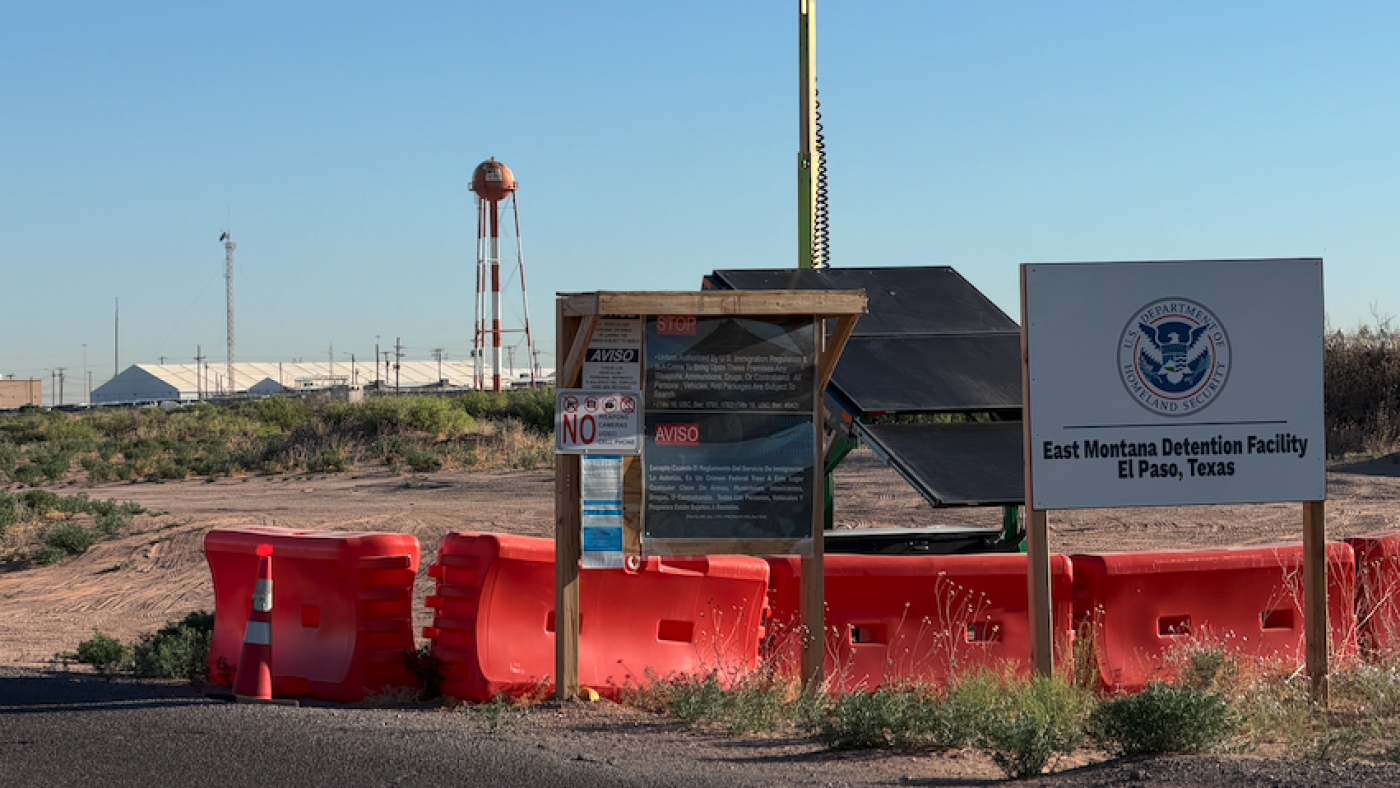
ICE detention deaths are on a record pace. One Texas facility bears the brunt

GOP rails against ‘s— sandwich’ deal as all eyes turn to House to end DHS shutdown
-

 South-Carolina5 days ago
South Carolina vs TCU predictions for Elite Eight game in March Madness
-

 Culture1 week ago
Wil Wheaton Discusses ‘Stand By Me’ and Narrating ‘The Body’ Audiobook
-

 Miami, FL1 week ago
Jannik Sinner’s Girlfriend Laila Hasanovic Stuns in Ab-Revealing Post Amid Miami Open
-

 Culture1 week ago
What Happens When We Die? This Wallace Stevens Poem Has Thoughts.
-

 Minneapolis, MN1 week ago
Boy who shielded classmate during school shooting receives Medal of Honor
-

 Vermont5 days ago
Skier dies after fall at Sugarbush Resort
-

 Education1 week ago
Video: Transgender Athletes Barred From Women’s Olympic Events
-

 Politics5 days ago
Trump’s Ballroom Design Has Barely Been Scrutinized