Maine
Here's where a fourth-generation lobsterman goes for lobster rolls in Maine


 Alamy
AlamyHeather Strout Thompson has been hauling lobster since traps were wooden. Here are her top lobster rolls in her home state of Maine, from Chipman’s Wharf to Luke’s Lobster.
Hundreds of years ago, lobsters washed up in droves along what’s now Maine’s rocky coast, so plentiful and cheap it was fed to prisoners. Today, tourists from all over come to the US’s north-easternmost state for the meatiest, sweetest lobster in the world, thanks to its freezing cold waters. And the best lobsters naturally make the best lobster rolls.

The SpeciaList
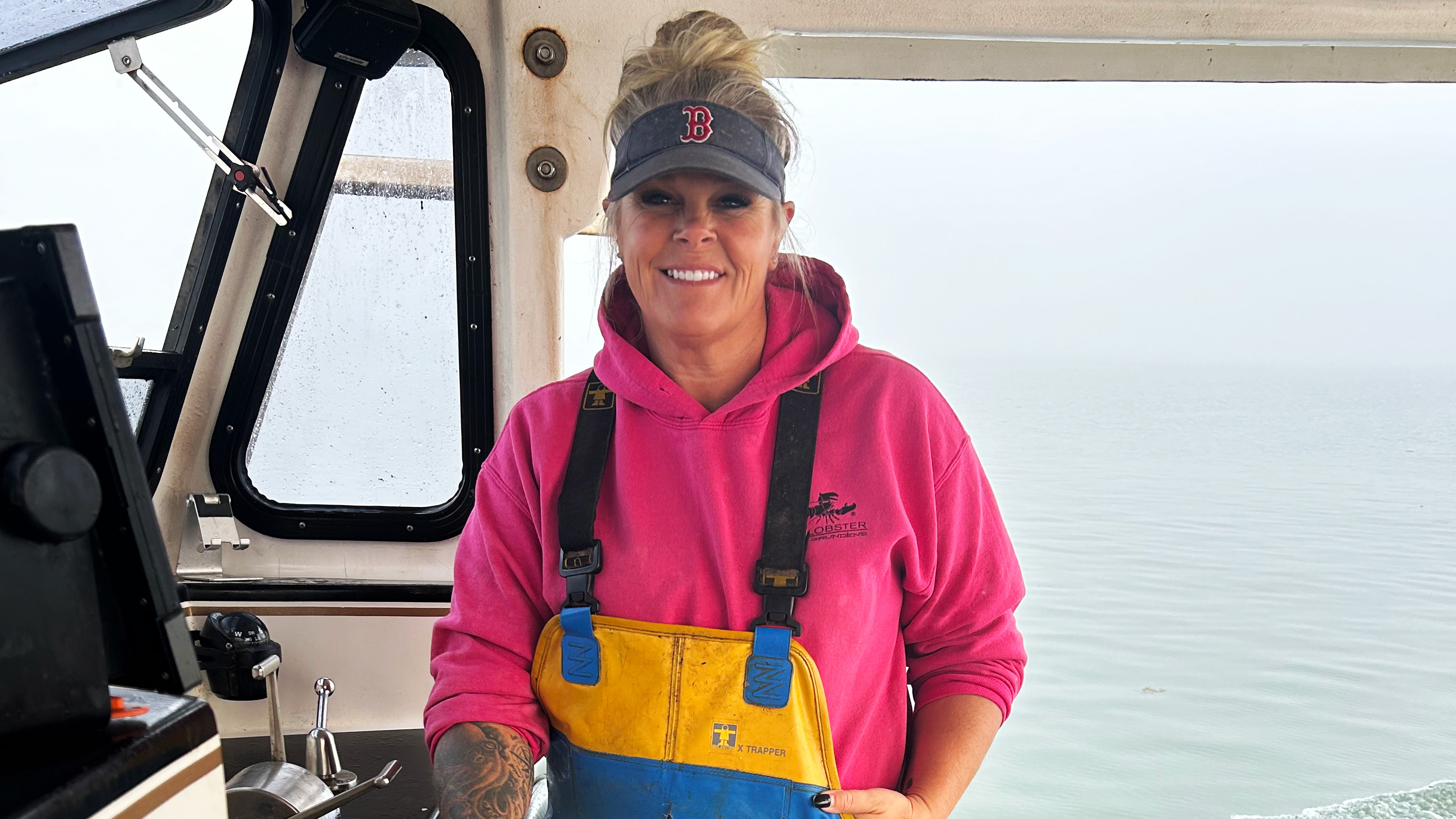
Heather Strout Thompson has been hauling lobsters since traps were wooden, starting as a 10-year-old on her dad’s lobster boat in the 1980s. Now, with her sister and niece assisting her as sternmen, she’s captain of the boat she built. Her 36ft Wayne Beal fishing vessel, “Gold Digger”, even finished first in five of Maine’s celebrated Lobster Boat Races.
The lobster roll is a classic and beloved New England sandwich, featuring fat hunks of delicious lobster meat stuffed into a grilled, split-top hot dog bun. To find Maine’s top specimens, we spoke to Heather Strout Thompson, a fourth-generation lobsterman (a gender-neutral term in Maine) from the town of Harrington, who’s among a growing number (now 15%, up from 8% 10 years ago) of females in this male-dominated industry.
“Fishing is in our blood,” says Thompson. “It’s the only thing I’ve ever done, so I’m going to do everything I can to protect it – for my grandchildren and theirs.’”
Thompson says the most tender, succulent lobster comes from the freshest daily catch. So whether you take your lobster roll drenched in melted butter (New England style) or tossed cold in a touch of mayonnaise (the Maine way), you can count on one thing: Thompson’s list of family-owned shacks and restaurants along the Maine coast serve their lobster rolls trap to table, no freezer needed.
Here are Thompson’s favourite lobster rolls in her home state.
 Getty Images
1. The best off the boat: Chipman’s Wharf, Milbridge
From the rooftop restaurant of Chipman’s Wharf, overlooking a working waterfront, a lobster roll has never tasted sweeter, says Thompson.
An industry in peril
The Gulf of Maine is warming faster than 99% of the world’s oceans, and with mounting regulations, the delicacy in Southern Maine is now scarcer by the year. In nearby Connecticut, where the first lobster roll was made in 1929, along with southern New England, the lobster population has declined by 70%, forcing Maine’s multigenerational lobstering families to work even harder to survive.
Visitors can support the industry by eating the best lobster rolls anywhere, straight from the boat.
Forty-four miles east of Acadia National Park on the Narraguagus River, lobster rolls are ordered (hot buttered or cold with light mayo) while patrons watch the boats deliver their catch. One of these boats is driven by owner John Chipman, a third-generation lobsterman, who constructed the restaurant in 2002.
“At Chipman’s they’re all lobstermen, and they’re bringing it up to the restaurant themselves, so you know it’s the freshest,” says Thompson.
Chipman recently had to reconstruct the restaurant’s 106ft wharf after the pilings and the 800 traps on them washed away in January 2024 storm floods that ravaged coastal Maine. But with a few dozen steadfast lobstermen delivering daily, this seasonal family restaurant isn’t letting up anytime soon. And if you prefer making your lobster roll at home, they ship too.
 Alamy
Alamy2. The best for sustainability: Luke’s Lobster, Portland
As a third-generation lobsterman, Luke Holden traded Wall Street investing in his 20s to start a tiny lobster shack with his partner, Ben Connif, in Manhattan’s East Village, sourcing directly from his dad’s Maine lobster processing facility.
Thompson’s tips
• Avoid seasonal crowds; travel in the shoulder season (May, September-October)
• Tracing from trap to table, meet a lobsterman on their lobstering tour.
• Go see a working waterfront (in Portland, Millbridge, Stonington, Monhegan, Friendship, Beals, Southwest Harbor or Vinalhaven).
Luke’s Lobster now has 17 branches in Japan, Singapore and across the US, but there’s only one fully fledged restaurant and it sits at the end of an old fishing pier with one of the best views of Casco Bay in the growing foodie mecca of Portland. The company’s lobsters, which are always bought directly from lobstermen, are kissed with a touch of butter and mayo and topped with Holden’s special seasoning.
Now back in Maine, Holden has his own Maine processing plant and donates a portion of his proceeds to preserve fishing communities and ocean sustainability, using only renewable energy and helping lobstermen reduce their carbon footprint.
“What Luke has done is vital to the future of Maine’s lobster industry,” she adds. “And, because the meat is so fresh, he makes a darn good lobster roll.”
 Getty Images
After an hour-long ferry ride from Boothbay, New Harbor or Port Clyde, a lobster roll is non-negotiable at Fish House at Mohegan Island, a fish house and seafood market owned by harbour master Sherman “Shermie” Stanley. The only place in Maine with exclusive rights to lobstering in the surrounding waters, Monhegan Island is also the state’s sole spot with a winter lobster season, kicking off on 1 October – on Trap Day, the island’s holiday.
Thompson’s tips: how to eat lobster like a local
• A softshell lobster available July-September) may contain less meat, but it’s sweeter and so soft you can rip it with your hands. No shell-cracking tool necessary.
• Skip the celery and tarragon. Let the lobster be the star: serve in a split-top hot dog bun, buttered on the griddle. Top with melted butter, light mayo or both.
• If preparing at home, leave no meat behind, starting with the legs.
That means lots of fresh lobster for the 59 year-round residents willing to tough it out in Maine’s freezing winters 12 miles out to sea – and its many visitors. This breathtakingly beautiful island doubles as an artist colony, drawing famous artists like Rockwell Kent and Jamie Wyeth, who still lives there seasonally.
Thompson suggests pairing your lobster roll with a tasty beer from lobsterman Matt Weber and his wife Mary at their nearby Monhegan Brewery before devouring a fresh lobster roll (mayo and a side of melted butter) at Fish Beach overlooking the harbour: “Their lobster roll is filled with giant satisfying chunks of claw meat.”
Website: www.monheganfishhouse.com
Address: Fish Beach, Monhegan
Phone: 207-594-8368
Instagram: @monheganfishhouse
 Getty Images
4. The best big roll: Taste of Maine, Woolrich
While those with big appetites might also consider buying their roll earlier in the season, there’s a reason to buy in the high season. “In July, you’ll start catching more and more ‘shedders’ and less hardshell lobster. After they bury themselves in the mud and moult (males once a year and females every two years) the lobster shell is softer,” says Thompson. “Some softshell shedders may have less meat, but they have a sweeter flavour and [to get to the meat] you can break them with your fingers like paper.” No lobster tools necessary and less messy too. “The colour is a nice bright orange. We call them pumpkins,” she adds. “The Taste of Maine serves softshell most of the summer. It’s fresh, amazing and packed with meat.”
This family-run restaurant, founded in 1978 and filled with nautical antiques does everything bigger, with live music and comedy, and of course, beautiful water views.
 Alamy
Alamy5. The best of the islands: McLoons Lobster Shack, South Thomaston
Also on the Mid-Coast, another family-owned lobster shack sits at the tip of one of Maine’s prettiest peninsulas on Spruce Head Island. “I love to see lobster shacks when I’m travelling. Most are family-owned-and-operated, and it’s nice to see people supporting local fishermen,” says Thompson.
McLoons belongs to Bree Birns, whose family owns and operates the bustling wharf where lobstermen deliver their catches to one of Maine’s long-standing fishing co-ops. The shack itself is an old lobster storage shed now serving up two rolls: a traditional quarter pounder and the double-sized Rolls Royce (with butter, mayo or both) and plenty of claws – the most tender, flavourful part, says Thompson. “Double the lobster fresh off the boat from another female lobsterman? What’s not to love about that?”
Her recommendation: Take it all in with a side of coleslaw and chips from the outdoor table and chairs made from lobster traps.
 Getty Images
6. The best old-school joint: Harraseeket Lunch & Lobster Company, South Freeport
Located right by the boats at the town landing in South Freeport, Harraseeket Lunch & Lobster Company is another landmark mom-and-pop waterfront shack that has been serving locally sourced lobster since 1970. The small dine-in-dine-out shack with a lobster pound is one of the longest-serving lobster shacks in the state.
“It looks like a hole in the wall but looks can be deceiving. The lobster roll is delicious – and one of the few left that still comes with fries,” says Thompson. With indoor or outdoor dining over harbour views, a lobster pound and the state’s celebrated homemade whoopie pies for dessert, this is classic Maine.
Website: harraseeketlunchandlobster.com
Address: 36 Main Street, South Freeport
Phone: 207-865-3535
BBC Travel‘s The SpeciaList is a series of guides to popular and emerging destinations around the world, as seen through the eyes of local experts and tastemakers.



For a lot of people throughout Maine, there’s some built up frustration that they’ve just been keeping inside.
That frustration can come in a lot of different forms. From finances to relationships to the world around you.
So it makes plenty of sense that a rage room opened in Portland, Maine, where people can let some of that frustration out.
It’s called Mayhem and people have been piling in to smash, crush and do dastardly things to inanimate objects that had no idea what was coming.
But Mayhem has realized not everyone is down with swinging a sledgehammer. So they’ve decided to cook up something new.
Mayhem Creating ‘Scream Room’ at Their Space in Portland, Maine
Perhaps the thought of swinging a baseball bat and destroying a glass vase brings you joy. The thought of how sore your body will be after that moment makes you less excited.
Mayhem Portland has heard you loud and clear and is developing a new way to get the rage out. By just screaming.
Mayhem is working on opening their very first scream room. It’s exactly what you think it is, a safe place to spend some time just screaming all of the frustration out.
There isn’t an official opening date set yet but it’s coming soon along with pricing.
Mayhem in Portland, Maine, Will Still Offer Rage Rooms and Paint Splatter
While a scream room is on the way, you can still experience a good time at Mayhem with one of their rage rooms or a paint splatter room.
Both can be experienced in either 20-minute or 30-minute sessions.
All the details including some age and attire requirements can be found here.
TripAdvisor’s Top 10 Things to do in Portland, Maine
Looking for fun things to do in Portland, ME? Here is what the reviewers on TripAdvisor say are the 10 best attractions.
This list was updated in March of 2026
Gallery Credit: Chris Sedenka
Top 15 of The Most Powerful People in Maine
Ever wonder who the most powerful players are in Maine? I’ve got a list!
Gallery Credit: Getty Images

BANGOR, Maine (WABI) – If you’ve ever wondered what goes into pitching a good business idea, you might want to stop by a Big Gig event.
The Big Gig Entrepreneurship Pitch Off brings professionals from across the state together to network and pitch their early-stage business ideas for a chance to win $500.
Tuesday’s competition was held at the Salty Brick Market in Bangor, and it drew a lot of spectators.
“The winners of each semifinal event get $500 and the opportunity to compete for $5,000, so that can make a huge impact on a business that’s just getting off the ground,” said Renee Kelly, a Big Gig organizer.
The winner of the competition, Colin McGuire, was also grateful for the opportunity to showcase his idea “Art on Tap,” which would connect local artists with local venues trying to put on events.
“The support tonight is huge, and it’s just giving me more enthusiasm for running with the idea,” he said.
The season finale of the competition will be held May 19th.
The location is yet to be determined.
If you’d like to apply to compete in the contest, you can go to biggig.org.
Copyright 2026 WABI. All rights reserved.

Are you up for a Maine food challenge, or are your eyes bigger than your stomach?
A Waterville staple, Buen Apetito has a monster burrito just waiting for someone to eat it down to the very last bite.
This thing is a beast, literally called La Bestia, and it’s definitely a mighty task for a fearless foodie.
Take on the Buen Apetito La Bestia Food Challenge in Waterville, Maine
According to Buen Apetito, if you can finish a super-sized burrito in 30 minutes or less, you’ll get the $60 meal for free, a La Bestia champion shirt, and a picture on the wall of fame. That’s not to mention the bragging rights of dominating a task few will be able to conquer.
Wondering what’s in the burrito?
The Mexican restaurant shared in a Facebook comment on a post that the burrito is filled with “grilled chicken, chorizo, and tender shredded beef or pork. Built on a layer of seasoned rice, refried beans, and French fries, it’s melted together with a shredded Mexican cheese blend and a drizzle of creamy cheese sauce, sautéed peppers and onions, green salsa, pico de gallo, sour cream, creamy guacamole, and a bed of shredded lettuce all wrapped in three extra-large tortillas fused into one epic wrap.”
Let’s just say that this thing is packed full.
The first La Bestia contender took up his fork and knife in December 2025, but despite coming close, he couldn’t come out with the win.
As of March 2026, the challenge has remained undefeated. But you never know, someone is bound to come out victorious.
Just note that you can only try your hand at this food challenge on Wednesday and Thursday.
Buen Apetito Has Been a Longstanding Waterville, Maine, Restaurant
First opened in 1999, Buen Apeitito has been around for nearly 30 years.
Centralmaine.com reported that the Mexican restaurant was originally located at the Railroad Square complex off Chaplin Street before moving to 99 West River Road in 2023.
A little over a year later, in 2024, Buen Apetito shared on Facebook that it was passing on the torch to new owners, including Dalia, “the heart and soul of [the] kitchen for twenty years,” her daughter, Norma, and Norma’s husband, Shawn.
READ MORE: Famous Maine Restaurant Buen Apetito Adds Powerhouse New Owner to Crew
And it seems like not only are things still going strong, but new additions like La Bestia food challenge are only enhancing the spirit of big flavor and delicious Mexican food at the Waterville staple.
So, you think you’re up for the task of taking down a beast of a burrito at Buen Apetito? Good luck.
You Know You’re From Maine If You’ve Tried All 19 of These Foods
Here’s a number of foods associated with Maine. How many of them have you had?
Gallery Credit: Sean McKenna
The New York Time’s Best Restaurant Lists Feature These 7 Maine Spots
Gallery Credit: Sean McKenna

Augusta Boxing Club faces financial uncertainty after nonprofit funding cuts

Tax expert explains DC filing season amid Congress-District dispute

Medical examiner releases new details about bodies of 2 young girls found in suitcases near Cleveland school

Will the rest of Austin allergies seasons be as bad as cedar this year?

New Alabama law to set screen time limits for kids in day care, pre-K and kindergarten

Florida High School Football Rankings: Top 25 teams – Oct. 21

Cleary's 21 help Le Moyne down Central Connecticut State 69-64 in OT

How old is Bo Nix? What to know about Oregon quarterback ahead of 2024 NFL Draft

99th annual Pony Swim held in Virginia

Indiana Members Credit Union announced as new anchor tenant at Bottleworks District

US submarine sinks Iranian warship by torpedo in a first since World War II

Which oil and gas facilities in the Gulf have been attacked?

Mojtaba Khamenei, son of former supreme leader, tipped to become Iran’s next head of state

Video: Senators Question Kristi Noem on ICE Immigration Tactics

Combustible Republican Senate primary in Texas heading into overtime
-

 World7 days ago
Exclusive: DeepSeek withholds latest AI model from US chipmakers including Nvidia, sources say
-

 Massachusetts1 week ago
Mother and daughter injured in Taunton house explosion
-

 Denver, CO1 week ago
10 acres charred, 5 injured in Thornton grass fire, evacuation orders lifted
-

 Louisiana1 week ago
Wildfire near Gum Swamp Road in Livingston Parish now under control; more than 200 acres burned
-

 Florida4 days ago
Florida man rescued after being stuck in shoulder-deep mud for days
-

 Wisconsin3 days ago
Setting sail on iceboats across a frozen lake in Wisconsin
-

 Maryland4 days ago
AM showers Sunday in Maryland
-

 Oregon5 days ago
2026 OSAA Oregon Wrestling State Championship Results And Brackets – FloWrestling