Northeast
Long Island residents face renewed concerns after discovery of toxic chemicals in graveyard of contaminants

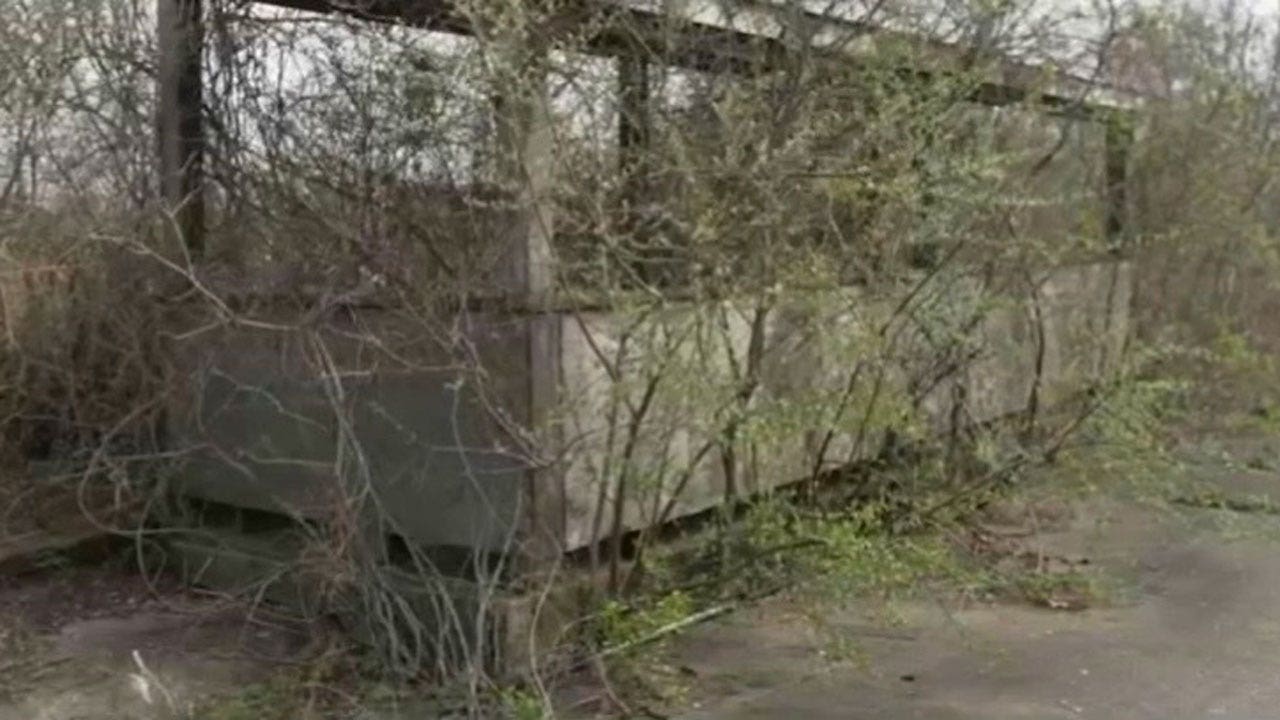
Large chemical drums found buried at a local park on Long Island have reignited anger and outrage from area officials and residents who have long feared that the park’s past may be linked to cancer’s prevalence in the community. The latest discovery has left some to believe there are more secrets to be dug up.
The New York State Department of Environmental Conservation (DEC) announced at the end of March that six 55-gallon steel drums had been discovered encased in concrete at Bethpage Community Park as the multi-year cleanup of the contaminated site continues. The area, located in the town of Oyster Bay, is the former dumping ground for aerospace manufacturer Northrop Grumman, previously known as Grumman Aerospace.
Preliminary testing revealed that the drums were filled with chlorinated solvents and waste oil, according to the state, which also said in a statement, “The discovery of the drums in an area of ongoing cleanup in the ball field does not present a threat to public health and safety at the site.”
Town of Oyster Bay Supervisor Joseph Saladino had a scathing rebuke of the ongoing cleanup process and called on Northrop Grumman to remove all the soil and haul it off Long Island.
“You’re looking at Grumman’s graveyard of contamination, we’ve been telling them for years that it’s a lot worse than they’re claiming,” Saladino told Fox News while standing in front of the site’s fenced off enclosure. “Now these drums prove that, and it’s time for Grumman to get on the stick, show they’re responsible [and] clean up this site fully and ship all the contaminants off Long Island. The people of this community and this town deserve nothing less.”
55-gallon steel drums were discovered encased in concrete at Bethpage Community Park as the multi-year cleanup of the contaminated site continues. (Fox News)
U.S. SENATE CANDIDATE GOES VIRAL FOR BLAMING NY EARTHQUAKE ON CLIMATE CHANGE, DELETES POST
The contaminated soil was first discovered at the park in 2002, and Northrop Grumman was named as a major contributor to a groundwater plume spreading from the site.
According to a state outline for remedial actions, “At its widest point, the plume is approximately 2.1 miles wide. In most areas, the top of the groundwater plume is over 200 feet beneath the ground surface and extends to depths of approximately 900 feet beneath the ground surface.”
The DEC says that from 1942 to 1996, Grumman Aerospace and the United States Navy used approximately 600 acres of property in Oyster Bay to manufacture military aircraft.
A tract of the land, which had been used by the company for waste disposal, was donated to the town in 1962 and later turned into a community baseball field.
There’s never been a confirmed link between the site and the cancer rates in the community, but nearby residents are increasingly joining class actions or filing personal injury lawsuits.
Northrop Grumman has previously denied culpability or declined to comment on ongoing litigation.
Regarding the latest discovery, a spokesperson for Northrop Grumman shared the following statement:
“While conducting environmental remediation in the Bethpage Community Park under the supervision of the New York State Department of Environmental Conservation (NYSDEC), we discovered several drums encased in concrete underground in a closed area of the Park. We promptly notified NYSDEC and other relevant stakeholders and we are working with NYSDEC to assess and address this situation as quickly as possible. We remain committed to protecting the health and well-being of the community and to continuing our partnership with NYSDEC and other government regulators to address environmental conditions in the area.”
Fears of a tainted childhood
Long Island was a beacon of opportunity for Lois Schiavetta and her family when they moved to the area decades ago.
“I was three years old, and my dad just got out of the Navy a year before and got a job at Grumman Aerospace, and they decided we might as well move to the town we’ll be working in,” Schiavetta said.
45% of U.S. Drinking water contains “forever chemicals” in Drinking Water (U.S. Geological Survey)
BIDEN ADMIN ENACTS FIRST-EVER PFAS ‘FOREVER CHEMICAL’ LIMITS ON DRINKING WATER
Schiavetta said her childhood was markedly happy; she spent time with her parents, siblings and friends.
“The ice skating rink was the Friday night thing to do, that’s where we all went to meet the boys and skate,” she said.
Schiavetta lived three blocks away from the manufacturing operation then known as Grumman Aerospace.
“We went swimming all the time, we played in the ballfields,” Schiavetta said. “We didn’t have parents driving us anywhere; we walked, took a bicycle, and that’s where we hung out.”
Throughout her adolescence, she noticed an alarming trend in the community.
“Every single household on the other side of the block had someone who contracted cancer of some sort.”
Now, she wonders whether the time she spent in and around the baseball field later contributed to her own cancer diagnosis.
“I had to have a double mastectomy and go through chemotherapy – it was trying, for sure, and put a large strain on the family and my kids, but I’m still here ten years later,” she said.
Despite the challenges, Schiavetta said she considers herself one of the lucky ones.
“I have many friends who had multiple cancers from my high school, and it’s pretty devastating,” she said. “The numbers that I’ve seen and the names … of our class list of those who have left us.”
55-gallon steel drums were discovered encased in concrete at Bethpage Community Park as the multi-year cleanup of the contaminated site continues. (Fox News)
BIDEN ADMIN FACING LEGAL CHALLENGES AFTER DECLARING WAR ON CHEMICAL INDUSTRY
A lengthy court battle
“I’m not surprised at all. Grumman has done everything they can … to hide the truth from the public,” Paul Napoli, a personal injury attorney on Long Island, said. “You know, they buried these barrels like they buried their heads in the sand when it comes to telling the community — they buried the truth.”
Since 2016, Napoli has been working with community members on a class action lawsuit against Northrop Grumman.
He alleged that the manufacturer’s historic operations led to expansive air pollution.
“It was actually air pollution they were emitting from 400 stacks at the site, millions of pounds of TCE into the air and thousands of pounds, by their own admission, of hexavalent chromium … and TCE is banned in New York,” Napoli said.
Napoli further alleged that Northrop Grumman initially left its 600-acre site because it didn’t want to pay newly required costs associated with monitoring air emissions following the enactment of the Clean Air Act in 1962.
“I always wondered why Grumman left Long Island – and the reason became pretty clear: the costs associated with putting scrubbers and air emission protection on these 400 stacks was so costly, it wasn’t worth staying in the community, and so they left, but what they left was this toxic legacy.”
Northrop Grumman still operates on nine acres in Bethpage on Long Island.
Napoli hopes by this fall the judge will have ruled on a motion filed in his class action lawsuit against Northrop Grumman. The judge has also appointed a mediator to try and resolve the case through a settlement, the attorney added.
Fox News producer Jennifer Johnson contributed to this report.
Read the full article from Here

Pennsylvania
America250 history trail: Visit Pennsylvania’s overlooked sites that helped win the American Revolution

As the nation marks its 250th anniversary, Pennsylvania’s role in the American story extends far beyond the iconic landmarks of Independence Hall and Valley Forge.
From Reading, where George Washington’s mobile headquarters tent — known today as the “First Oval Office” — was crafted, to a little-known Montgomery County encampment where exhausted Continental soldiers regrouped before becoming the formidable Grand American Army, local history reveals the people and places that quietly altered the course of the Revolution. Berks County riflemen armed with the Pennsylvania long rifle earned Washington’s praise, while southeastern Pennsylvania iron furnaces overcame early failures to forge the cannons needed to defend the fledgling nation.
Here is how you can step back in time to explore the remarkable stories of ingenuity, sacrifice and perseverance that helped secure American independence and continue to shape the nation’s identity 250 years later.
The First Oval Office: Reading
In early 1778, as Gen. George Washington endured the brutal Valley Forge winter, a new field headquarters tent — his mobile command center for the remainder of the Revolutionary War — was crafted in Reading.
Long overshadowed by the larger drama of the encampment, the tent’s origins in Reading reveal a local contribution to the nation’s founding that has only recently received the recognition it deserves, historians say.
“Washington’s tent was his command center during the Revolutionary War, and tells the story of his inspiring leadership, unyielding determination, and steadfast devotion to his troops,” Michael Quinn, then-president and CEO of the Museum of the American Revolution, said during the 2017 opening of the museum in Philadelphia. “It is a powerful symbol of American freedom, and one that we are thrilled to be able to preserve for future generations.”
The 23-by-14-foot tent, made of linen canvas, served as Washington’s office, sleeping quarters, and strategic hub from 1778 to 1783. It traveled with him through the war’s most consequential moments. The structure was a sophisticated, multichambered canvas marquee divided into an office, Washington’s sleeping area, and a space for his enslaved valet, William Lee. Inside these linen walls, Washington drafted dispatches, met with aides such as Alexander Hamilton, and shaped the military decisions that would ultimately secure American independence.
Today, Washington’s tent is the signature artifact of the Museum of the American Revolution. Installed after a years-long conservation effort, the tent is displayed in a dedicated 100-seat theater as part of a 10-minute presentation. More than 1 million visitors have viewed it since its installation.
(COURTESY OF MUSEUM OF THE AMERICAN REVOLUTION)
The battlefield tent Gen. George Washington featurd three rooms and was made in Reading and delivered to the Continental Army campment at Valley Forge in 1778, according to the Museum of hte American Revolution where the restored tent has served as the featured exhibit since it opened in 2017. (COURTESY OF MUSEUM OF THE AMERICAN REVOLUTION)
Plan your visit: The First Oval Office
Location: Museum of the American Revolution, 101 South Third Street, Philadelphia
The vibe: An intimate look at the mobile command center where George Washington strategized the war and secured American independence.
Must-see: The 23-by-14-foot tent, originally crafted in Reading, displayed in a dedicated 100-seat theater.
Tip: The tent presentation is a popular 10-minute immersive theater experience. Be sure to check the museum’s daily schedule upon arrival to secure your spot.

The Grand American Army Encampment: Towamencin Twp.
Montgomery County’s place in the nation’s founding is well documented in Revolutionary War history, from the winter at Valley Forge to nearby battles at Whitemarsh, Paoli, and Brandywine.
What is lesser known is an encampment by Washington and his troops in the hills and woods of Towamencin Twp. that transformed his army into the Grand American Army of 11,000 soldiers.
“They walked in as the Continental Army, and they walked out as the Grand American Army,” said historian Victor Verbeke, describing the Colonial soldiers’ encampment located between what are now the boroughs of Lansdale and Souderton.
Several Revolutionary War veterans are buried in Tennis-Lukens Cemetery in the township, and the township’s Morgan Log House dates back to the early 1700s. But there is not yet a marker that notes the site of the army’s encampment that “refreshed” their abilities, according to historians.
Last summer, two local historians made a request to the state’s Historic Preservation Office for a marker to indicate the location that proved so key to the young nation in the fall of 1777.
“General Washington and 11,000 Continental soldiers spent eight whole days here, from October 8 to October 16 of 1777,” Verbeke said. “There were no battles fought here, but there were some significant events that this township can be proud of. The residents, back in the day, on both sides of the Skippack Creek, welcomed these soldiers, most importantly fed these soldiers, and provided them with what General Washington specifically told John Hancock: ‘Rest and refresh my men.’”

shillings and six pence for the inconvenience of his house used as military headquarters. (Image courtesy of Brian Hagey, original document via U.S. Library of Congress)
Plan your visit: The Grand American Army Encampment
Location: Detwiler Road near Delp Drive in Towamencin Township (Montgomery County)
The vibe: A quiet, historically rich exploration of the grounds where 11,000 Continental soldiers rested and reformed after brutal campaigns.
Must-see: The historic Morgan Log House dating back to the early 1700s, and the Tennis-Lukens Cemetery, the final resting place of several Revolutionary War veterans.
Tip: Keep an eye out for future historical markers. Local historians are actively petitioning the state to officially recognize the exact locations of the encampment.

The Pennsylvania Long Rifle: Berks and Lancaster Counties
What most distinguished Revolutionary War soldiers from Berks County and Pennsylvania was their weapon of choice: the Pennsylvania long rifle.
That weapon played a decisive role in the regions included in Congress’ call to form an army, said Gregory Kreitz, a former Reading Eagle reporter and local history buff. Thompson’s Rifle Battalion drew recruits from counties including Bedford, Cumberland, York, Northumberland, Northampton, Lancaster, and Berks.
After the battles at Lexington and Concord in 1775, Kreitz noted it’s likely America’s founders were wishing for some kind of silver bullet. That silver bullet was a lead ball shot from a Pennsylvania long rifle with deadly accuracy up to 300 yards.
The rifle was first made in the early to mid-1700s by German immigrant gunsmiths in Lancaster and along the Wyomissing Creek in Berks County. Its greater range came from patched balls and spiral grooves inside a lengthy barrel, which spun the balls as they shot.
The congressional war resolution on June 14, 1775, was the first time an army was officially drafted — and it was solely riflemen. The resolution called for riflemen from Pennsylvania, Maryland, and Virginia, all areas along the Great Wagon Road — running from Philadelphia to the Shenandoah Valley — where long rifle gunsmiths had settled and sold their wares.
After major victories at Trenton, Assunpink Creek, and Princeton, Washington moved all his riflemen into one corps, commanded by Col. Daniel Morgan.

Plan your visit: The Pennsylvania Long Rifle
Location: Landis Valley Village & Farm Museum, 2451 Kissel Hill Road, Lancaster, and Berks History Center, 940 Centre Ave, Reading
The vibe: An authentic look into the meticulous craftsmanship of the 18th-century German immigrant gunsmiths who forged the frontier’s most decisive weapon.
Must-see: The collections of beautifully preserved, original Pennsylvania long rifles. Look closely for the intricate woodwork and imagine the spiral grooves inside the lengthy barrels that gave the weapon its deadly 300-yard accuracy.
Tip: Landis Valley is a living history museum that frequently hosts historical demonstrations. Check their seasonal schedule before you go to see if you can catch a glimpse of early blacksmithing and gunsmithing techniques in action.

The Revolutionary Iron Furnaces: Berks, Lebanon, and Chester Counties
After the battles at Lexington and Concord kicked off the war, Pennsylvania leaders decided they needed to protect Philadelphia’s port. To defend the waterways leading into the city, they devised a plan to create a navy and line the shores with cannons.
A cannon committee organized by Benjamin Franklin was tasked with answering a crucial question: Were the people and facilities needed to make cannons available locally? The answer was yes, historian Dan Graham said. Southeastern Pennsylvania had several working iron furnaces, including Hopewell in Berks County, Cornwall in Lebanon County, and Warwick and Reading in Chester County.
The forge operators got to work in the spring of 1776, but there was a catch: They had never made cannons before. Their early efforts were a mess, Graham noted.
Eventually, an expert was brought in to help the locals figure out the pervasive kinks. For about 18 months, local furnaces successfully produced working weapons — 12-pound cannons at Hopewell and Cornwall, and 18-pound cannons at Warwick and Reading.
Once France entered the war effort in late 1777 and began providing weapons, local cannon production fell by the wayside. However, remnants of this early weapon manufacturing era remain. Graham said half of a cannon is still on display at Hopewell, while a fully preserved cannon can be found at Cornwall.
Plan your visit: The Revolutionary Iron Furnaces
Location: Hopewell Furnace, 2 Mark Bird Lane in Elverson (Berks County), and Cornwall Iron Furnace, 94 Rexmont Rd, Cornwall (Lebanon County)
The vibe: Early American industrial ingenuity on display, highlighting the local forges that scrambled to build the cannons needed to defend Philadelphia’s port.
Must-see: A fully preserved cannon from the era at Cornwall, and the historic half-cannon remaining at Hopewell.
Tip: Because the sites are spread across two counties, plan a scenic drive to see how the local landscape supported these vital early ironworks.

WARWICK, R.I. (WJAR) — Rhode Island’s Lego Fan Convention Returned to the West Warwick Civic Center.
Professional Lego artists from around the country displayed their creations and connect with fans.
There are meet and greet opportunities with Lego celebrities too.
JOIN THE CONVERSATION (2)
Fans can also show off their own skills in the event’s Brick Pits.
Powerball, Mega Millions jackpots: What to know in case you win
Here’s what to know in case you win the Powerball or Mega Millions jackpot.
Just the FAQs, USA TODAY
The Vermont Lottery offers several draw games for those willing to make a bet to win big.
Those who want to play can enter the MegaBucks and Lucky for Life games as well as the national Powerball and Mega Millions games. Vermont also partners with New Hampshire and Maine for the Tri-State Lottery, which includes the Mega Bucks, Gimme 5 as well as the Pick 3 and Pick 4.
Drawings are held at regular days and times, check the end of this story to see the schedule.
Here’s a look at June 27, 2026, results for each game:
Winning Powerball numbers from June 27 drawing
03-16-28-30-59, Powerball: 11, Power Play: 2
Check Powerball payouts and previous drawings here.
Winning Pick 3 numbers from June 27 drawing
Day: 9-9-8
Evening: 4-1-0
Check Pick 3 payouts and previous drawings here.
Winning Pick 4 numbers from June 27 drawing
Day: 1-1-0-5
Evening: 9-3-6-7
Check Pick 4 payouts and previous drawings here.
Winning Megabucks Plus numbers from June 27 drawing
06-26-27-31-33, Megaball: 05
Check Megabucks Plus payouts and previous drawings here.
Winning Millionaire for Life numbers from June 27 drawing
26-32-38-51-52, Bonus: 05
Check Millionaire for Life payouts and previous drawings here.
Feeling lucky? Explore the latest lottery news & results
Are you a winner? Here’s how to claim your lottery prize
For Vermont Lottery prizes up to $499, winners can claim their prize at any authorized Vermont Lottery retailer or at the Vermont Lottery Headquarters by presenting the signed winning ticket for validation. Prizes between $500 and $5,000 can be claimed at any M&T Bank location in Vermont during the Vermont Lottery Office’s business hours, which are 8a.m.-4p.m. Monday through Friday, except state holidays.
For prizes over $5,000, claims must be made in person at the Vermont Lottery headquarters. In addition to signing your ticket, you will need to bring a government-issued photo ID, and a completed claim form.
All prize claims must be submitted within one year of the drawing date. For more information on prize claims or to download a Vermont Lottery Claim Form, visit the Vermont Lottery’s FAQ page or contact their customer service line at (802) 479-5686.
Vermont Lottery Headquarters
1311 US Route 302, Suite 100
Barre, VT
05641
When are the Vermont Lottery drawings held?
- Powerball: 10:59 p.m. Monday, Wednesday, and Saturday.
- Mega Millions: 11 p.m. Tuesday and Friday.
- Gimme 5: 6:55 p.m. Monday through Friday.
- Lucky for Life: 10:38 p.m. daily.
- Pick 3 Day: 1:10 p.m. daily.
- Pick 4 Day: 1:10 p.m. daily.
- Pick 3 Evening: 6:55 p.m. daily.
- Pick 4 Evening: 6:55 p.m. daily.
- Megabucks: 7:59 p.m. Monday, Wednesday and Saturday.
- Millionaire for Life: 11:15 p.m. daily
What is Vermont Lottery Second Chance?
Vermont’s 2nd Chance lottery lets players enter eligible non-winning instant scratch tickets into a drawing to win cash and/or other prizes. Players must register through the state’s official Lottery website or app. The drawings are held quarterly or are part of an additional promotion, and are done at Pollard Banknote Limited in Winnipeg, MB, Canada.
This results page was generated automatically using information from TinBu and a template written and reviewed by a Vermont editor. You can send feedback using this form.
-
Oklahoma1 second ago
Oklahoma Lottery Powerball, Lotto America results for June 27, 2026
-

 Oregon3 minutes ago
Visit Delicious Oregon
-

 Pennsylvania8 minutes ago
America250 history trail: Visit Pennsylvania’s overlooked sites that helped win the American Revolution
-

 Rhode Island15 minutes ago
Lego convention returns to Warwick
-

 South-Carolina18 minutes ago
What exactly was Ted Cruz doing in SC for Alan Wilson? Dreaming of the White House, perhaps.
-
South Dakota23 minutes ago
SD Lottery Powerball, Lotto America winning numbers for June 27, 2026
-

 Tennessee30 minutes ago
I-24 traffic to be impacted as Middle Tennessee Electric conducts electrical line work
-

 Texas33 minutes ago
World Cup crowds pack watch spots across DFW

