Northeast
‘Long Island Lolita’ survivor Mary Jo Buttafuoco says bullet in her head ‘will get me eventually’

NEWYou can now listen to Fox News articles!
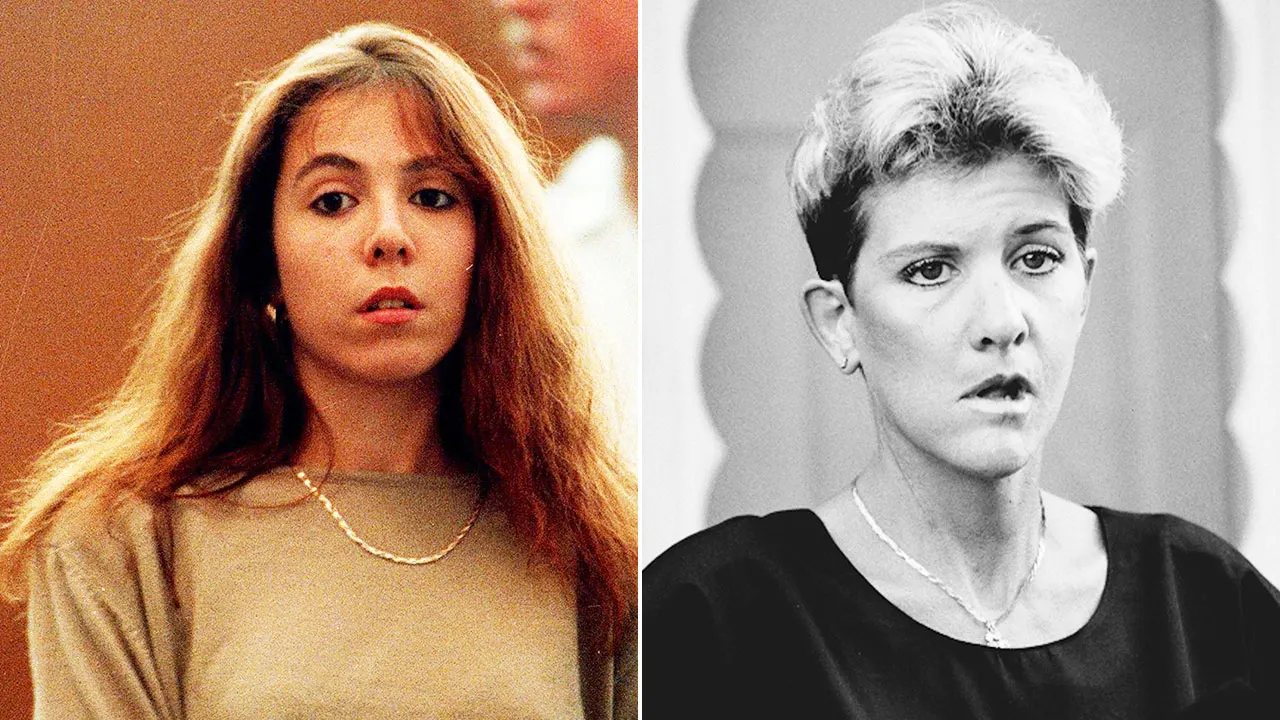
Mary Jo Buttafuoco was shot in the head on the front porch of her home by her husband’s 17-year-old mistress, Amy Fisher, who was later dubbed the “Long Island Lolita.”
Nearly 34 years after her husband’s affair almost turned fatal, the suburban mom at the center of the scandal is telling her story in the Lifetime biopic “I Am Mary Jo Buttafuoco,” starring Chloe Lanier as her younger self.
“I’m as recovered as I’m going to get,” Buttafuoco, now 70 and a grandmother, told Fox News Digital. “I still have the effects of this bullet. I’ve always said that people who get shot don’t heal from bullet wounds. You can break a leg, fall, scrape your knee and it heals. When you get shot, a bullet tears through wherever it goes, and it causes permanent damage.”
ELIZABETH SMART BLASTS GHISLAINE MAXWELL’S ‘COUNTRY CLUB’ PRISON TREATMENT: ‘MAKES ME SICK’
Mary Jo Buttafuoco, right, who survived being shot by “Long Island Lolita” Amy Fisher, left, is narrating her story in a new biopic, “I Am Mary Jo Buttafuoco.” (Dick Yarwood/Newsday RM via Getty Images; Dennis Caruso/NY Daily News Archive via Getty Images)
“I have permanent damage that will never heal,” she shared. “I’ve lost hearing in my right ear. I have facial paralysis and problems with my esophagus. I have only one carotid artery, so I face vascular issues that will be with me for the rest of my life.”
“I’ve always said this bullet will get me eventually,” she reflected. “But I’ve been very blessed that it’s let me hang on this long.”
Mary Jo Buttafuoco points to her bullet wound at her lawyer’s office. (Dennis Caruso/NY Daily News Archive via Getty Images)
The morning of May 19, 1992, started like any other Tuesday, she recalled. After sending her two children off to school, the Massapequa, New York, mother — then 37 — was preparing to paint in the backyard when a knock at the door changed everything.
WATCH: MARY JO BUTTAFUOCO TELLS ALL ABOUT THE AMY FISHER SCANDAL
Fisher, then a high school student, arrived holding a Complete Auto Body T-shirt from the shop where Buttafuoco’s husband, auto body mechanic Joey Buttafuoco, worked. Introducing herself as “Anne Marie,” Fisher claimed to be 19 and said the shirt was proof that the 36-year-old man was having a sexual relationship with her 16-year-old sister.
As Buttafuoco turned to call Joey, Fisher pulled out a .25-caliber handgun, fired a single shot and fled.
Amy Fisher, 17, from Merrick, Long Island, is arrested for the attempted murder of Mary Jo Buttafuoco. (Paul DeMaria/NY Daily News Archive via Getty Images)
“In the blink of an eye, the life I had ended when she came to my door,” Buttafuoco said. “I was nearly murdered in front of my own house — my safe place.”
This undated photo shows Mary Jo Buttafuoco and her daughter Jessica outside their home after the shooting. (Bill Turnbull/NY Daily News Archive via Getty Images)
Buttafuoco miraculously survived the attack. After eight hours of emergency surgery, doctors determined the bullet was too dangerous to remove. It had broken her jaw, traveled deep into her skull and lodged at the base of her brain, just above her spinal column.
Once she regained consciousness, Buttafuoco gave police a description of her attacker, though her husband vehemently denied any wrongdoing.
Joey Buttafuoco stands on the steps of his home in Massapequa, New York, on Sept. 25, 1992. (Marianne Barcellona/Getty Images)
Detectives arrested Fisher two days later — on May 21, 1992. After confronting her with phone records, witness descriptions and inconsistencies in her story, Fisher eventually confessed.
FOLLOW THE FOX TRUE CRIME TEAM ON X
Amy Fisher’s mugshot. (Kypros/Getty Images)
The case quickly became a national media circus that dominated headlines for months.
“It was awful,” said Buttafuoco. “They made fun of me on ‘Saturday Night Live.’ One of the actresses had her face all distorted — that was supposed to be funny. I thought, ‘My God, I look like this because I got shot. I was almost murdered.’
Joey and Mary Jo Buttafuoco outside their Long Island home. (John Roca/NY Daily News Archive via Getty Images)
“It became a joke. Maybe because I stood up, walked and talked, people thought, ‘Oh, she’s OK. Everything’s fine.’ But it wasn’t fine. It was mortifying. The name ‘Buttafuoco’ got dragged through the mud. It became a punchline.”
Chloe Lanier stars as Mary Jo Buttafuoco in Lifetime’s “I Am Mary Jo Buttafuoco.” (Lifetime)
Fisher pleaded guilty to first-degree assault and was sentenced to five to 15 years in prison. She served seven years before being released in 1999.
Buttafuoco remained with Joey for seven years after the shooting.
Amy Fisher sits in Nassau County Court in Mineola, New York. (Dick Yarwood/Newsday RM via Getty Images)
“First of all, I almost died,” she explained. “I was in no shape to say, ‘Get out.’ I was very sick for a long time. I had two little kids who were traumatized that their mom was almost murdered outside their home. And Joey lied easily and smoothly. He swore on the lives of our children that he had nothing sexual to do with Amy — that she was just a customer who misunderstood him. He had his story, and he stuck to it. And I believed him.”
SIGN UP TO GET THE TRUE CRIME NEWSLETTER
Mary Jo Buttafuoco stayed married to Joey Buttafuoco for seven years after the shooting. (Getty Images)
“I was on a lot of medication — a lot of pills that altered my thinking,” she admitted.
Looking back, Buttafuoco said she has wondered whether she suffered from symptoms of Stockholm syndrome.
Joey Buttafuoco stands near some of the bullet holes in the front window of his family’s auto body shop in Baldwin, New York, on June 24, 1994. The Complete Auto Body Shop was hit by about 30 bullets, police said. (Dick Yarwood/Newsday RM via Getty Images)
“I have been with Joey since I was 17,” she said. “Before I got shot, I’d been with him for 20 years. I realize now that he was a good talker — a schmoozer. He was personable, and everybody liked Joey in the neighborhood. He was everyone’s friend, with this over-the-top personality people were drawn to.”
Mary Jo Buttafuoco grew up with Joey Buttafuoco. They were married from 1977 to 2003. (Marianne Barcellona/Getty Images)
“Whenever I asked, ‘Why did this girl shoot me?’ he’d say, ‘She must have thought that because I was nice to her and fixed her car, she could have me. She must have misunderstood me.’ That’s what he would tell me — and it made sense at the time.”
“He was such a good liar,” Buttafuoco continued. “I would ask him a hundred times why. He never flinched — he’d just look at me and say, ‘I don’t know why she did this.’ He was my captor, and I listened to him. I believed him.”
Mary Jo Buttafuoco entered the Betty Ford Center to address her addiction to prescription drugs. (Rick Maiman/Sygma via Getty Images)
Buttafuoco turned to prescription medication to numb her pain and quiet her thoughts. Privately, she struggled with depression. She knew she needed help.
GET REAL-TIME UPDATES DIRECTLY ON THE TRUE CRIME HUB
Mary Jo Buttafuoco and her husband, Joey, are seen here heading to court. Date unknown. Buttafuoco told Fox News Digital that she was privately struggling with depression and an addiction to painkillers. (Rick Maiman/Sygma via Getty Images)
“There wasn’t an aha moment,” she said. “I was sick and tired of being sick and tired. Time was passing, and I wanted to set an example for my children — that mom can go through this, and it’ll be OK. They never saw me wiped out or drugged out. But I took pills to maintain, just to exist. They thought mom was fine, but when they’d go off to school or with friends, I would collapse in my room. I never wanted them to see me like that.”
“I became an addict,” Buttafuoco continued. “Back then, they gave me every pill I asked for. Nobody says no to a woman with a bullet in her head who says, ‘I’m in pain.’ They were handing that stuff out like candy — and I took it.”
Amy Fisher was released from prison in 1999. (Willie Anderson/NY Daily News Archive via Getty Images)
Buttafuoco entered the Betty Ford Center for addiction treatment, a decision she said “saved my life.” She later filed for divorce in 2003.
Mary Jo Buttafuoco filed for divorce in 2003. (James Leynse/Corbis via Getty Images)
“I remember they said, ‘Mary Jo, this terrible thing happened to you, and it’s awful, but you have so much anger and hate inside you. It’s not allowing you to heal.’ They opened my eyes. When I got sober, I realized I couldn’t stay in this anymore. I had to move on.”
Fisher, now 51, pursued a brief career in adult entertainment before leaving the industry in 2011, according to People magazine.
Mary Jo Buttafuoco’s case was the subject of several films over the years, including the 1993 made-for-TV movie “The Amy Fisher Story” starring Drew Barrymore. (ABC Photo Archives/Disney General Entertainment Content via Getty Images)
After Fisher’s conviction, Joey was indicted on multiple counts of statutory rape, sodomy and endangering the welfare of a child, People reported. He initially pleaded not guilty but later admitted to having sex with Fisher when she was 16. He served four months in jail.
CLICK HERE TO DOWNLOAD THE FOX NEWS APP
Amy Fisher attends Exxxotica New York on Sept. 25, 2009, in Edison, New Jersey. (Joe Kohen/Getty Images)
Fox News Digital reached out to Fisher and Joey, 69, for comment.
“What I’ve learned over the years is that Amy Fisher is a narcissist — and narcissists don’t change,” Buttafuoco said. “It’s always been about her. She doesn’t care one iota about what she’s done. It’s also inexcusable for any adult man to take advantage of a teenager. In that sense, she was a victim, but it doesn’t excuse what she did afterward.”
Today, Mary Jo Buttafuoco lives with her daughter in California. (JB Lacroix/WireImage/Getty Images)
Today, Buttafuoco lives in California with her daughter and remains close to her son. After extensive facial reconstruction surgery, she can smile again.
Mary Jo Buttafuoco, second left, with the cast of “I Am Mary Jo Buttafuoco.” (Lifetime)
“My head is half hollow,” she said. “If you’ve ever been on Novocaine, that’s what it feels like every day. I have no feeling on the right side of my face, but I’ve adapted to it. I made it. I’m a survivor — and I’m proud of myself for that.”
Lifetime’s “I Am Mary Jo Buttafuoco” is available for streaming
Read the full article from Here



Pittsburg, PA
Analysis: Most Pittsburgh‑area communities are losing residents — here’s why that might be OK


WETHERSFIELD, Conn. (WFSB) – A tractor trailer’s diesel fuel saddle tank ruptured on I-91 north between exits 25 and 27, state police said.
Approximately 25 to 30 gallons of fuel was released to the road surface, according to the state Department of Energy and Environmental Protection. No ground soil or waterways were involved, DEEP said.
The two right lanes were closed, according to the state Department of Transportation.
No other vehicles were involved and no injuries were reported, state police said.
Wethersfield Fire Department solidified the diesel fuel on the ground surface with Speedy Dry, DEEP said. An environmental cleanup contractor was en route for cleanup.
Copyright 2026 WFSB. All rights reserved.

Scott A. Harrison, Ed.D., M.B.A., is a senior advisor at The Harrison Group, a consultancy based in Yarmouth.
Maine has long valued local control in education. That tradition reflects an important belief that communities should have a strong voice in shaping their schools. But local control should not prevent us from asking a harder question: Are there core functions that could be delivered more effectively through a single statewide framework?
One of the most important is educator evaluation and professional growth. Maine law already recognizes the importance of this work. Under Title 20-A, Chapter 508 (Educator Effectiveness), districts must implement performance evaluation and professional
growth systems that evaluate educators, assign effectiveness ratings and support
professional growth.
The law further requires superintendents to use those ratings to inform key human capital decisions, including recruitment, hiring, induction, mentoring, professional development, compensation, assignment and dismissal. In short, educator evaluation is not intended to be a compliance exercise. It is intended to be a primary lever for the continual improvement of teaching and learning.
In 2012, LD 1858 sought to advance that vision by giving districts broad flexibility to design their own systems. Districts could choose instructional frameworks, establish measures of effectiveness and determine how evaluators would be trained and calibrated. The goal was to balance local autonomy with professional accountability.
More than a decade later, however, the evidence suggests that flexibility alone has not produced consistent results.
My research involving 130 educators across four Maine school districts found only modest perceptions of performance evaluation and professional growth systems’ effectiveness.
On a four-point scale, average ratings ranged from 2.48 to 2.99. While educators generally agreed that districts provide individualized growth plans and can differentiate levels of instructional effectiveness, they rated several critical implementation areas notably lower, including instructional coaching, evaluator training, feedback quality, evaluator calibration and the use of evaluation data to inform professional learning and personnel decisions.
Although the sample was relatively small, the findings closely mirror what I have observed while working with predominantly rural Maine districts over the past decade.
The qualitative findings were equally revealing. Teachers and administrators described systems that are often cumbersome, inconsistently implemented and difficult to sustain. Educators reported spending significant time developing goals and documenting evidence, while administrators acknowledged that competing priorities frequently reduce evaluation to a compliance exercise rather than a meaningful opportunity for growth.
Participants cited insufficient training, inconsistent expectations, limited coaching support and weak connections between evaluation results and professional learning. Perhaps most significant, though not surprising given the realities of today’s schools, the primary obstacle appears to be not commitment, but capacity — the time, expertise and tools required to implement these complex systems with fidelity.
Designing and sustaining high-quality evaluation systems requires expertise in instructional leadership, observation and feedback, adult learning, professional development, data use and evaluator calibration. While some districts have built this capacity, many — particularly smaller and rural systems — have not. Even where expertise exists, time remains a major barrier.
Effective evaluation depends on regular observation, coaching, feedback and calibration. Yet for principals balancing instructional leadership with the daily demands of running a school, carrying out these responsibilities consistently can be extraordinarily difficult.
As a result, Maine has effectively asked more than 250 districts to independently build and maintain highly complex educator effectiveness systems. The outcome is predictable: uneven quality and implementation, and variable impact on teaching and learning.
This raises an important policy question: Should every district continue to design, train, calibrate and maintain its own evaluation system, or would educators and students be better served by a common statewide framework supported by regional and state expertise?
A statewide approach would not eliminate local control. Districts would continue to make decisions about hiring, staffing, curriculum, budgeting and school improvement priorities. Instead, the state would provide shared infrastructure: a common instructional and evaluation framework, validated tools, evaluator training, calibration supports, professional learning resources and implementation assistance.
The benefits extend beyond evaluation. A common framework would create stronger alignment across Maine’s educator pipeline. Colleges and universities could align coursework, clinical experiences and assessments to the exact same standards used in schools while sharing responsibility for educator success beyond initial placement.
Preparation programs, districts and the state would become partners in a continuous system of educator development, creating mutual accountability for results and a stronger return on Maine’s investment in teacher preparation.
Such alignment matters. As systems thinker Peter Senge observed, people working within the same system tend to produce similar results. If we want more consistent outcomes for students, we must pay closer attention to the systems shaping educator practice.
A statewide approach would not eliminate local control. Districts would continue to make decisions about hiring, staffing, curriculum, budgeting and school improvement priorities.
A common framework would establish a shared language and clearer expectations throughout the career continuum. It would also make continuous improvement easier. Rather than asking hundreds of districts to independently revise complex systems, the state could evaluate implementation, refine practices, share lessons learned and respond to emerging research. Educators have experienced too many short-lived initiatives that consume considerable time and effort before fading away.
A coherent statewide system would provide greater stability and more meaningful long-term improvement. The question is not whether local control matters. It does. The question is whether every district should be expected to independently build and sustain complex systems that require specialized expertise, significant resources and ongoing refinement.
If Maine is serious about improving outcomes for students, it should rethink which functions are best managed locally and which are better supported through statewide infrastructure. Educator effectiveness is one example. There are likely others.
In a previous op-ed here, I argued that Maine should reconsider whether teacher compensation is best negotiated district by district. The same question applies here. When critical human capital systems are essential to student success, a coherent statewide framework may be better positioned to advance equity, efficiency and effectiveness while preserving local decision-making where it matters most.
The goal is not less local control, but a smarter balance between local autonomy and statewide support — one that strengthens schools and improves outcomes for every student, regardless of geography.
-

 Pittsburg, PA3 minutes ago
Analysis: Most Pittsburgh‑area communities are losing residents — here’s why that might be OK
-

 Washington, D.C6 minutes ago
Trump’s DC makeover frenzy bewilders locals and visitors: ‘It’s like we’re under occupation’
-

 Augusta, GA6 minutes ago
Augusta Regional Airport hosts drone camp for students
-

 Cleveland, OH18 minutes ago
Cleveland police arrest suspect in involuntary manslaughter investigation, find fentanyl and PCP
-

 Austin, TX21 minutes ago
Austin community celebrates ‘Black Artists Matter’ mural before removal
-

 Alabama26 minutes ago
Two Alabama bridges rank among longest in U.S. Have you crossed them?
-

 Alaska33 minutes ago
Pilot dies in small plane crash southeast of Cordova
-

 Arizona36 minutes ago
Arizona’s Rugged Wilderness Area Has Gorgeous Mountain Trails And Scenic Camping Spots – Islands

