Northeast
Killer doctor's son played key role in his demise as he recalls haunting sounds decades later

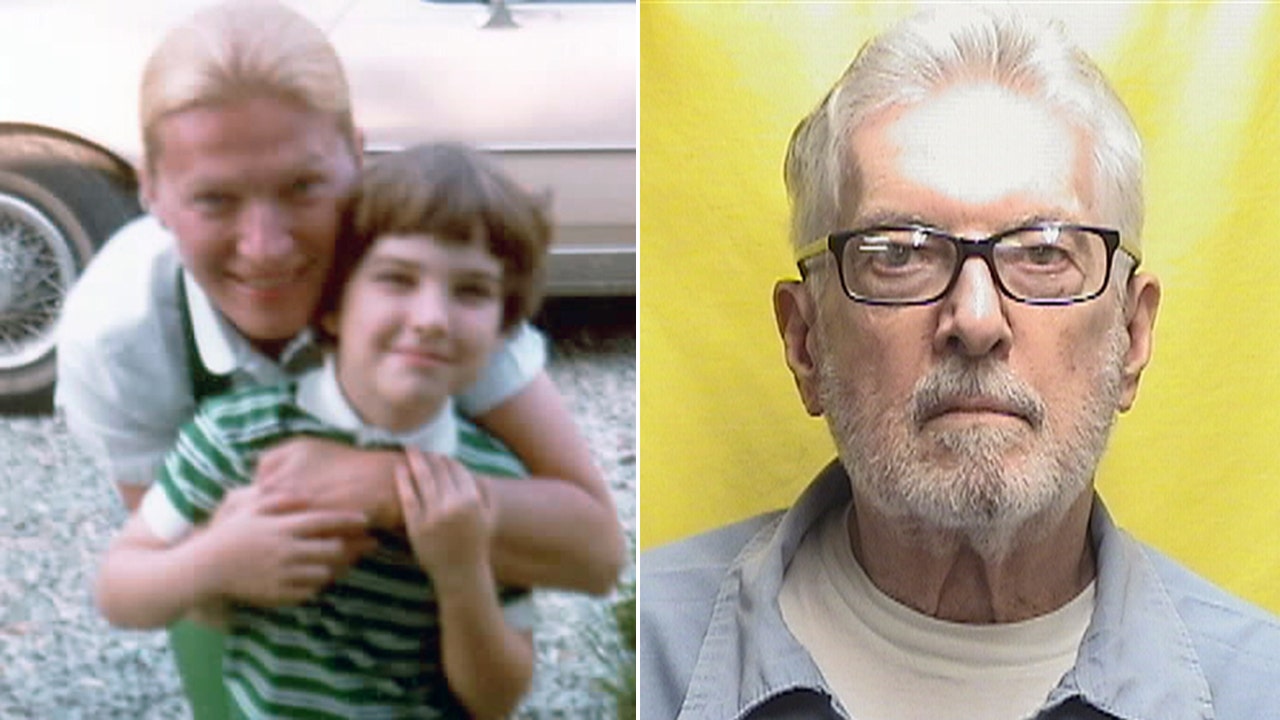
It was five days after Christmas in 1989 that Collier Landry heard what he said sounded like “a body hitting a wall.”
It was late at night, and the 11-year-old was in bed, not knowing that his mother, Noreen Boyle, was being murdered in their Ohio home.
“I will never forget those sounds – they haunt me,” the now-46-year-old told Fox News Digital. “But there was nothing I could have done to prevent what may have been occurring.”
SERIAL KILLER’S DAUGHTER EXPOSES CHILLING SECRET, TURNS HIM IN TO POLICE
Collier Landry was 11 when he heard “scary sounds” that continue to haunt him. (Courtesy of Collier Landry)
“I was a little boy,” he shared. “I was asthmatic. My father was big and scary, and I was still trying to figure it out. But then when I heard my father’s footsteps down the hall, and I could see his shoes out of my peripheral vision in the doorway, I knew something had happened.”
Landry said he suddenly heard a voice “screaming inside of me.” It warned him not to look up. He pretended to be asleep.
“I am convinced to this day that if I had chosen to look up, I would not be sitting here right now,” said Landry.
Collier Landry is speaking out about his mother’s murder in the true-crime series, “A Plan to Kill.” (Oxygen)
The case that would become a local media circus is being explored on Oxygen’s true-crime series, “A Plan to Kill.” It examines the true tales of disturbed killers who spend weeks, months or even years plotting the demise of their victims.
Landry, who has launched a podcast, said it was important for him to detail how violent crimes impact the children of perpetrators.
“I think stories like these are really important to hear, to know that somebody can work for justice, to know that law enforcement will eventually listen to you, that you can get justice,” Landry explained.
FOLLOW THE FOX TRUE CRIME TEAM ON X
Noreen Boyle with her son Collier celebrating his first birthday. (Courtesy of Collier Landry)
Landry described Boyle as a loving and doting mother.
“So many of my childhood friends have fond memories of her,” he beamed. “She was so kind, so supportive of people. I remember every holiday season; I would have to donate half of my toys to Toys for Tots, because she wanted me to learn the value of giving. She also wanted me to realize how fortunate I was as a child to have a mommy and daddy, to have a roof over my head, to have toys in my toy chest.”
“I wasn’t allowed to just pick out the random toys that I didn’t like,” he chuckled. “I had to sacrifice some of the ones I did like, because my mother wanted me to sacrifice for the good of others and to have compassion. That has stayed with me my entire life since.”
Dr. John Boyle was a prominent osteopath. (Courtesy of Collier Landry)
Landry’s father, Dr. John Boyle, was a prominent osteopath. But life at home was far from blissful.
The Boyles had lived in Mansfield since 1983, having moved from Virginia, where John had worked at a Navy clinic. During the marriage, John reportedly carried on many affairs.
Boyle filed for divorce in November 1989 after 22 years of marriage, charging extreme mental cruelty and gross neglect. During the divorce proceedings, John purchased a new home in Pennsylvania, court documents revealed. He began to relocate his medical practice to Erie from Mansfield.
SIGN UP TO GET THE TRUE CRIME NEWSLETTER
Noreen Boyle filed for divorce in November 1989 after 22 years of marriage. (Courtesy of Collier Landry)
Landry described how he and his mother were “fearful” of the patriarch, who “was a very violent guy.”
“Towards the end, my mother was downtrodden because of my father,” Landry explained. “He was becoming more and more aggressive towards me, saying horrible things. Like, ‘I’ve started a new family, I’m going to make sure you are both living on the street.’”
“I think it all started to weigh in on my mother,” Landry reflected. “At the same time, my mother was still full of optimism that she was going to make it through. And she did her best not to let things affect me… She did her best to be as strong as she could for me, and I for her.”
Collier Landry described Noreen Boyle as a doting mother who was optimistic about her future. (Collier Landry)
“She was optimistic that in the end, we would be OK,” he shared.
In the morning, after hearing the “scary sounds,” Landry ran over to his mother’s bedroom. She was gone.
He then confronted his father, who insisted that “mommy took a little vacation” and there was no need to call the police.
“I knew right then that he had done something to her,” said Landry. “He told me this whole story about how she had gotten up in the middle of the night. I asked him about the thuds. He said that was my mother’s purse that she had thrown at him, and it hit a wall.”
GET REAL-TIME UPDATES DIRECTLY ON THE TRUE CRIME HUB
Dr. John Boyle didn’t want his son to speak to police about Noreen Boyle’s disappearance. (Courtesy of Collier Landry)
“He was gaslighting me,” said Landry. “I needed to find out what happened.”
Landry snuck away and called Shelly Bowden, his mother’s best friend. When officers came to the home, Landry insisted that his mother would never leave him. He told police he had heard his parents argue, followed by a scream and a loud thump.
“They didn’t believe me,” he said. “It wasn’t until [Captain] Dave Messmore came on the scene. He took me seriously. That’s how we launched this whole investigation.”
Retired police Captain Dave Messmore of the Mansfield Police Department also spoke out in the episode. (Oxygen)
“I knew I was risking my life,” he shared. “I knew that my father was dangerous, that he was violent, but I didn’t care. I was going to find out what happened to my mother. All I cared about was finding my mother.”
Authorities obtained search warrants partially based on Landry’s word.
On Jan. 25, 1990, less than a month after Boyle went missing, police discovered her body in John’s new Erie home, the Mansfield News Journal reported.
Authorities recovered Noreen Boyle’s body on Jan. 25, 1990, under the basement floor of Dr. John Boyle’s new home in Erie, Pennsylvania. (Courtesy of Collier Landry)
She was wrapped in a tarp with a plastic bag covering her head and buried two feet below the basement in “soft, white clay,” the outlet reported. A green carpet covered the floor.
At age 12, Landry became a key witness in his father’s trial. He took the witness stand, stared down his father and helped secure a conviction.
“I knew that if I did not testify against my father, and he somehow walked free, I would regret that for the rest of my life,” Landry explained. “If I had to go back and live with him because, of course, he would maintain custody as my father, he could have tortured me for the rest of my life.”
Collier Landry said he spent parts of three days testifying. (Courtesy of Collier Landry)
“He haunted me in a lot of ways, but it really would’ve been bad had he been acquitted,” Landry continued. “I needed to do what was right for my mother.”
A mistress, Sherri Lee Campbell, gave birth to a daughter in January 1990, less than two weeks after Boyle disappeared.
John maintained his innocence. He took the stand on his behalf, testifying for nine hours over two days. Former Richland County Prosecutor James Mayer Jr. called him “probably the biggest liar I’ve ever seen.”
OHIO DETECTIVE BRINGS DOWN ‘LADYKILLER’ SHAWN GRATE WITH 33-HOUR INTERROGATION: ‘A HUNGER TO KILL’
Collier Landry was adopted by George and Susan Zeigler. Landry credited the Zeiglers with providing him a loving, stable home. (Courtesy of Collier Landry)
John was convicted of killing Boyle. He was sentenced to 20 years to life in prison for aggravated murder and 18 months for abuse of a corpse.
Landry found himself alone. According to the episode, his mother’s family refused to take him in, because he resembled John. His father’s family also refused to welcome him, because, according to Landry, they wanted him to recant his testimony.
“When your family abandons you at the lowest point of your young life, that affects you,” he said. “Even though I was adopted by a loving family, and I was very grateful for that when I was 13, you still feel like you’re walking the majority of your life alone. It’s very hard to reconcile.”
John Boyle was sentenced to 20 years to life in prison for aggravated murder and 18 months for abuse of a corpse. (Ohio Department of Rehabilitation & Correction)
“But I do it every day,” he said quietly. “I put one foot in front of the other, smile and say, ‘Today’s another day.’”
Landry later moved to California to pursue a career as a cinematographer and director. He began using his middle name as his new surname.
Today, Landry is determined to turn his pain into purpose. He’s now a speaker and provides coaching to those who find themselves in similar circumstances.
JEALOUS TEEN’S ‘PLAN TO KILL’ ADOPTIVE PARENTS WITH BIRTH MOM’S BLESSING EXPOSED BY DETECTIVE WITH CLOSE TIES
Collier Landry, who now resides in California, has launched a podcast that aims to uplift those in similar circumstances. (Oxygen)
“My story is centered around a true crime story, but this is also a story of healing and resilience,” said Landry. “You can go through unimaginably tragic circumstances, come out on the other side and be OK.
“… That’s what I would tell my younger self – ‘You’re going to be OK. You’re going to make it.’”
“A Plan to Kill” airs Sundays at 7 p.m. The Associated Press contributed to this report.
Read the full article from Here


Robert Bryan is a licensed forester from Harpswell and author or co-author of numerous publications on managing forests for wildlife. Paul Larrivee is a licensed forester from New Gloucester who manages both private and public lands, and a former Maine Forest Service forester.
In November 2025, the Department of Environmental Protection (DEP) approved a conservation plan and forest management plan as mitigation for impacts from the NECEC transmission corridor that runs from the Quebec border 53 miles to central Maine.
As professional foresters, we were astonished by the lack of scientific credibility in the definition of “mature forest habitat” that was approved by DEP, and the business-as-usual commercial forestry proposed for over 80% of the conservation area.
The DEP’s approval requires NECEC to establish and protect 50,000 acres to be managed for mature-forest wildlife species and wildlife travel corridors along riparian areas and between mature forest habitats. The conservation plan will establish an area adjacent to the new transmission corridor to be protected under a conservation easement held by the state. Under this plan, 50% of the area will be managed as mature forest habitat.
Under the forest management plan, a typical even-aged stand will qualify as “mature forest habitat” once 50 feet tall, which is only about 50 years old. These stands will lack large trees that provide wildlife denning and nesting sites, multiple vegetation layers that mature-forest birds use for nesting and feeding habitats and large decaying trees and downed logs that provide habitat for insects, fungi and small mammals, which in turn benefit larger predators.
Another major concern is that contrary to the earlier DEP order, the final approval allows standard sustainable forestry operations on the 84% of the forest located outside the stream buffers and special habitats. These stands may be harvested as soon as they achieve the “mature forest habitat” definition, as long as 50% of the conserved land is maintained as “mature.”
After the mature forest goal is reached, clearcutting or other heavy harvesting could occur on thousands of acres every 10 years. Because the landowner — Weyerhaeuser — owns several hundred thousand acres in the vicinity, any reductions in harvesting within the conservation area can simply be offset by cutting more heavily nearby. As a result, the net
mature-forest benefit of the conservation area will be close to zero.
Third, because some mature stands will be cut before the 50% mature forest goal is reached, it will take 40 years — longer than necessary — to reach the goal.
In the near future the Board of Environmental Protection (BEP) will consider an appeal from environmental organizations of the plan approval. To ensure that ecologically mature forest develops in a manner that meets the intent of the DEP/BEP orders, several things need to change.
First and most important, to ensure that characteristics of mature forest habitat have time to develop it is critical that the definition include clear requirements for the minimum number of large-diameter (hence more mature) trees, adjusted by forest type. At least half the stocking of an area of mature forest habitat should be in trees at least 10 inches in diameter, and at least 20% of stands beyond the riparian buffers should have half the stocking in trees greater than or equal to 16 inches in diameter.
Current research as well as guidelines for defining ecologically mature forests, such as those in Maine Audubon’s Forestry for Maine Birds, should be followed.
Second, limits should be placed on the size and distribution of clearcut or “shelterwood” harvest patches so that even-aged harvests are similar in size to those created by typical natural forest disturbance patterns. These changes will help ensure that the mature-forest block and connectivity requirements of the orders are met.
Third, because the forest impacts have already occurred, no cutting should be allowed in the few stands that meet or exceed the DEP-approved definition — which needs to be revised as described above — until the 50% or greater mature-forest goal is reached.
If allowed to stand, the definitions and management described in the forest management plan would set a terrible precedent for conserving mature forests in Maine. The BEP should uphold the appeal and establish standards for truly mature forest habitat.

Human remains were discovered Wednesday in the water in Shirley, Massachusetts, and authorities suspect foul play.
Police in Shirley said in a social media post at 7:15 p.m. that they responded to “a suspicious object in the water near the Maritime Veterans Memorial Bridge on Shaker Road.” Massachusetts State Police later said the object was believed to be human remains.
The bridge crosses Catacoonamug Brook near Phoenix Pond.
The office of Middlesex County District Attorney Marian Ryan said a group of young people was walking in the area around 5:30 p.m. and “reported seeing what appeared to be something consistent with a body part in the water.”
Foul play is suspected, Ryan’s office said.
Authorities will continue investigating overnight into Thursday, and an increased police presence is expected in the area.
No further information was immediately available.


Local woman having ‘closet revival’ with new consignment store – East Idaho News

How a clump of moss helped convict grave robbers in Illinois

Watch Indiana basketball’s Lamar Wilkerson give his mom a Cadillac

Iowa House OKs ‘3 strikes’ bill with 20-year prison terms. What to know

RESULTS: NE Kansas high schools to play Saturday after Wednesday sub-state wins

Florida High School Football Rankings: Top 25 teams – Oct. 21

Cleary's 21 help Le Moyne down Central Connecticut State 69-64 in OT

How old is Bo Nix? What to know about Oregon quarterback ahead of 2024 NFL Draft

99th annual Pony Swim held in Virginia

Indiana Members Credit Union announced as new anchor tenant at Bottleworks District

DHS defends McLaughlin against allegations husband’s company profited millions from ad contracts: ‘Baseless’

Sánchez defies Trump in political gamble as Madrid say no to war

Satellite images show Iran school strike hit more buildings than earlier reported

US submarine sinks Iranian warship by torpedo in a first since World War II

Which oil and gas facilities in the Gulf have been attacked?
-

 World1 week ago
Exclusive: DeepSeek withholds latest AI model from US chipmakers including Nvidia, sources say
-

 Massachusetts1 week ago
Mother and daughter injured in Taunton house explosion
-

 Wisconsin3 days ago
Setting sail on iceboats across a frozen lake in Wisconsin
-

 Maryland4 days ago
AM showers Sunday in Maryland
-

 Denver, CO1 week ago
10 acres charred, 5 injured in Thornton grass fire, evacuation orders lifted
-

 Florida4 days ago
Florida man rescued after being stuck in shoulder-deep mud for days
-

 Oregon6 days ago
2026 OSAA Oregon Wrestling State Championship Results And Brackets – FloWrestling
-

 Massachusetts2 days ago
Massachusetts man awaits word from family in Iran after attacks