Northeast
Karen Read loses double jeopardy appeal in Boston cop slaying case, will receive new trial

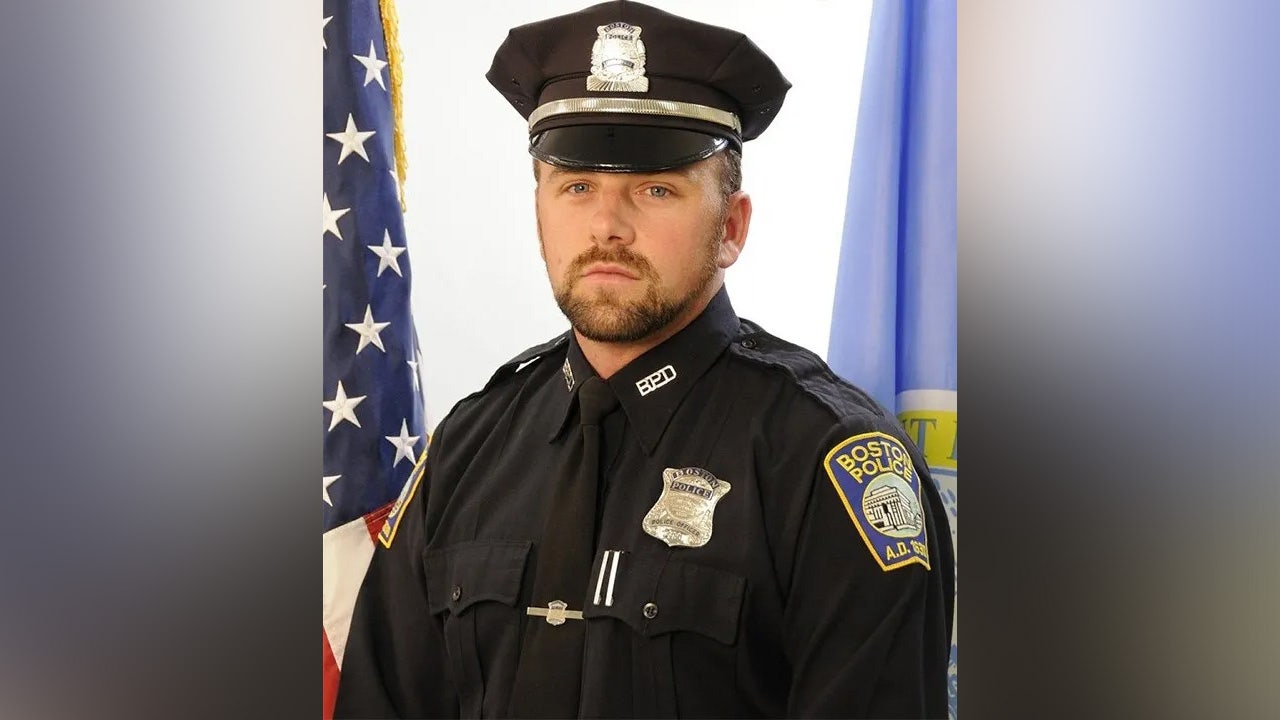
The Massachusetts woman accused of killing her Boston police officer boyfriend in a snowy collision has lost her Massachusetts Supreme Court appeal seeking to have her case tossed on the grounds of double jeopardy after a chaotic murder trial ended in a hung jury.
Karen Read, 45, is expected to go on trial for the second time as previously scheduled in April on charges of second-degree murder and leaving the scene of a deadly accident.
Boston Police Officer John O’Keefe died from blunt force trauma to the head and hypothermia during a January snowstorm in Canton, Massachusetts, about 15 miles outside Beantown. Prosecutors say Read hit him with her SUV and fled the scene after a drunken fight. She claimed it was an elaborate cover-up and that she had left before he suffered any injuries. Jurors couldn’t reach an agreement on which side to believe.
After a lower court denied her motion to dismiss following the mistrial, she appealed to the state’s highest court, which handed down a decision Tuesday rejecting her argument that jurors only deadlocked on one of the three charges. She wanted the remaining two thrown out.
WATCH KAREN READ: KILLER OR CONVENIENT OUTSIDER?
Karen Read departs Norfolk Superior Court in Dedham, Massachusetts on Friday, August 9, 2024. Read, who was accused of killing her Boston police officer boyfriend with a vehicle in January 2022, was back in court Friday for a hearing discussing her defense team’s motion to dismiss. (Patriot Pics/Backgrid for Fox News Digital)
“The jury clearly stated during deliberations that they had not reached a unanimous verdict on any of the charges and could not do so,” Massachusetts Supreme Court Justice Serge Georges Jr. wrote in the court’s 35-page decision.
Jurors told the judge in a series of notes that they were “deeply divided” over Read’s guilt of murder and other charges and could not reach an agreement.
“Only after being discharged did some individual jurors communicate a different supposed outcome, contradicting their prior notes,” Georges wrote.
KAREN READ MISTRIAL PUTS COPS IN TOUGH SPOT, OPENS DOOR FOR ACCUSED KILLER OF BOYFRIEND OFFICER TO WALK FREE
Because the jurors broke their silence only after the trial, it was too late, the court ruled.
“Such posttrial disclosures cannot retroactively alter the trial’s outcome — either to acquit or to convict,” Georges wrote. “Accordingly, we affirm the trial judge’s denial of the motion to dismiss and the defendant’s request for a posttrial juror inquiry.”
Boston Police Officer John O’Keefe poses for his official portrait. O’Keefe’s girlfriend, Karen Reed, will have a second murder trial after the first ended with a hung jury following his death in January 2022. (Boston Police Department)
SIGN UP TO GET TRUE CRIME NEWSLETTER
Read’s new trial is expected to be led by a special assistant prosecutor, Hank Brennan, who once represented the mobster James “Whitey” Bulger and has already begun trying to obtain unpublished records from Massachusetts reporters who have interviewed Read.
Read the court’s decision
WATCH: DASHCAM FROM THE NIGHT JOHN O’KEEFE WAS FOUND DEAD
“I don’t see how that was going to fly, because it was a mistrial, she wasn’t found guilty or not guilty,” said Paul Mauro, a former NYPD inspector and attorney. “Double jeopardy applies when you have a verdict. It’s in the Constitution.”
FOLLOW THE FOX TRUE CRIME TEAM ON X
“This is settled law,” he added. “This is not double jeopardy, I agree with the court. Let’s get to a new trial and resolve this.”
The new trial is scheduled to begin on April 1.
She is also facing a wrongful death lawsuit from O’Keefe’s family.
Read, in a recent round of interviews, argued that she was framed by the real killers, whom she believes are other members of law enforcement O’Keefe got into a fight with after she dropped him off at the home of fellow Boston Police Officer Brian Albert. O’Keefe was found dead in the snow on Albert’s front lawn.
Karen Read waits as her legal team meets at the side bar during Reid’s trial in Norfolk Superior Court, Friday, June 14, 2024, in Dedham, Mass. Read, 44, is accused of running into her Boston police officer boyfriend with her SUV in the middle of a nor’easter and leaving him for dead after a night of heavy drinking. (AP Photo/Charles Krupa, Pool)
GET THE LATEST FROM THE FOX NEWS TRUE CRIME HUB
Testimony from Massachusetts State Trooper Michael Proctor, one of the key investigators, severely hurt prosecutors in court.
Jurors were seen shaking their heads in court as Read’s defense team read some of his text messages.
In them, he called Read a “wack job,” a “babe … with no a–” and a “c—.” He wrote that he wished she would kill herself and joked about looking for nude selfies while searching her phone.
Read the full article from Here

Northeast
New York AG orders Manhattan hospital to resume gender-transition treatment for transgender youth
NEWYou can now listen to Fox News articles!
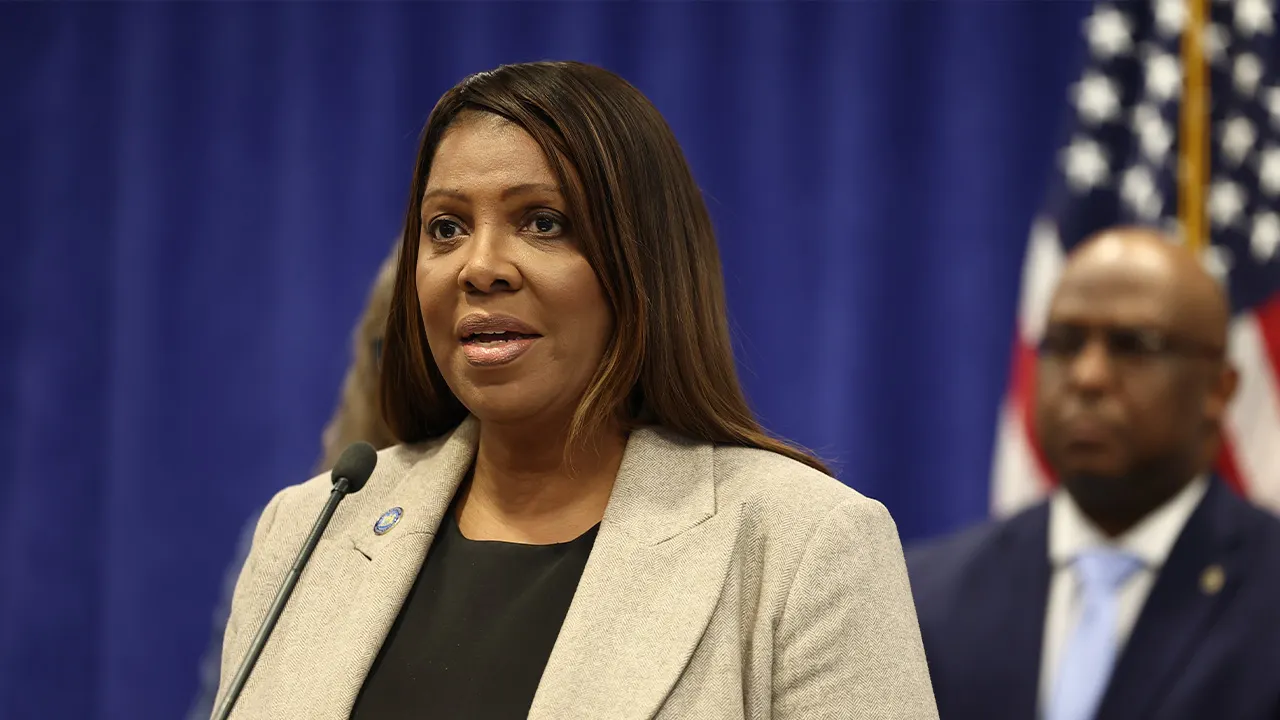
New York Attorney General Letitia James is instructing a Manhattan hospital to resume offering gender-transition treatment to transgender youth after it ended such treatments last month over funding threats from the Trump administration.
NYU Langone’s decision to close its Transgender Youth Health Program violated the state’s anti-discrimination laws by “jeopardizing access to medically necessary healthcare for some of the most vulnerable New Yorkers,” James wrote in a Feb. 25 letter first made public this week.
James’ office threatened “further action” if the hospital does not immediately resume offering hormone therapies, puberty blockers and other treatment to transgender youth.
New York Attorney General Letitia James is instructing a Manhattan hospital to resume offering gender-transition treatment to transgender young people. (Michael M. Santiago/Getty Images)
NYU Langone, one of the city’s largest hospital systems, said last month it would stop providing certain gender-transition treatments for patients under the age of 19.
“Given the recent departure of our medical director, coupled with the current regulatory environment, we made the difficult decision to discontinue our Transgender Youth Health Program,” NYU Langone spokesman Steve Ritea said in a statement at the time. “We are committed to helping patients in our care manage this change. This does not impact our pediatric mental health care programs, which will continue.”
The hospital ceased admitting new patients into its transgender youth program last year after President Donald Trump signed an executive order entitled “Protecting Children from Chemical and Surgical Mutilation,” which aims to restrict gender-transition treatment for people under 19.
The U.S. Department of Health and Human Services has announced a proposal to cut federal Medicaid and Medicare funding to hospitals that provide these treatments to transgender young people. (Andrew Harnik/Getty Images)
Referencing Trump’s order, the U.S. Department of Health and Human Services later announced a proposal to cut federal Medicaid and Medicare funding to hospitals that provide these treatments to transgender youth.
But the Feb. 25 letter signed by the attorney general’s health care bureau chief, Darsana Srinivasan, said the proposal did not officially change federal law and did not affect a “medical institution’s existing duties and obligations under New York law.”
“The sudden discontinuation of medically necessary transgender healthcare can have severe, negative health outcomes,” Srinivasan wrote. “Accordingly, the Attorney General is extremely concerned by your institution’s decision to cease the provision of care to this vulnerable, minority population.”
LETITIA JAMES SUES HHS OVER TYING FEDERAL FUNDS TO TRANSGENDER POLICY
NYU Langone said last month it would stop providing certain gender-transition treatments for patients under the age of 19. (Stephanie Keith/Bloomberg via Getty Images)
CLICK HERE TO DOWNLOAD THE FOX NEWS APP
The letter gives the hospital until March 11 to show its compliance, although it is unclear what steps would be taken if it fails to resume the treatments.
Several other hospitals across the country have also halted transgender youth treatments following Trump’s executive order and funding threats.
The Associated Press contributed to this report.
Related Article

Read the full article from Here

Charlotte Hornets (31-31, ninth in the Eastern Conference) vs. Boston Celtics (41-20, second in the Eastern Conference)
Boston; Wednesday, 7:30 p.m. EST
BETMGM SPORTSBOOK LINE: Celtics -6.5; over/under is 214.5
BOTTOM LINE: Charlotte is looking to keep its five-game win streak alive when the Hornets take on Boston.
The Celtics are 27-13 against Eastern Conference opponents. Boston is sixth in the NBA with 46.2 rebounds led by Nikola Vucevic averaging 8.8.
The Hornets are 19-21 in conference matchups. Charlotte is 7-8 when it turns the ball over less than its opponents and averages 15.0 turnovers per game.
The Celtics average 15.5 made 3-pointers per game this season, 2.7 more made shots on average than the 12.8 per game the Hornets allow. The Hornets average 16.0 made 3-pointers per game this season, 2.1 more made shots on average than the 13.9 per game the Celtics allow.
TOP PERFORMERS: Jaylen Brown is averaging 29 points, 7.1 rebounds and five assists for the Celtics. Payton Pritchard is averaging 17 points and 5.8 assists over the past 10 games.
Kon Knueppel is averaging 19.2 points, 5.5 rebounds and 3.5 assists for the Hornets. Brandon Miller is averaging 22.7 points, 5.3 rebounds and 3.6 assists over the past 10 games.
LAST 10 GAMES: Celtics: 8-2, averaging 109.4 points, 50.7 rebounds, 27.1 assists, 6.1 steals and 6.4 blocks per game while shooting 45.7% from the field. Their opponents have averaged 98.5 points per game.
Hornets: 7-3, averaging 117.3 points, 47.8 rebounds, 27.4 assists, 8.5 steals and 4.2 blocks per game while shooting 45.6% from the field. Their opponents have averaged 106.2 points.
INJURIES: Celtics: Jayson Tatum: out (achilles), Neemias Queta: day to day (rest).
Hornets: Coby White: day to day (injury management).
___
The Associated Press created this story using technology provided by Data Skrive and data from Sportradar.

The bodies of two young girls were found inside suitcases in Cleveland, Ohio, police said on Tuesday.
In a press conference, Cleveland Police Chief Dorothy Todd said on Tuesday that the bodies of the two girls were found in suitcases buried in shallow graves on Monday evening. One of the girls was believed to be between the ages of 8 and 13 years old, while the other was believed to be 10 to 14 years old. Neither girl was identified as of Tuesday night.
“This is a priority,” Todd said during Tuesday’s press conference. “This is a traumatic event for our officers, for the community, and this is just such a tragic incident, but we are trying to develop any leads we can.”
Police said there are no active missing persons reports in Cleveland that match the two victims.
Officials said someone walking their dog near East 162nd Street and Midland Avenue found what appeared to be a body inside a suitcase around 6 p.m. on Monday. When officers responded to the scene near Ginn Academy, they found one of the bodies stuffed in a suitcase in a shallow grave. The second shallow grave with the body stuffed in a suitcase was found after officers searched the area.
“This is a field close to the school over there,” Todd said. “This is just a residential neighborhood that I’m sure a lot of people do frequent.”
The Cuyahoga County Medical Examiner’s Office has custody of the bodies and will identify the girls. Todd said there is no clear indication of possible causes of death for the girls or how long the girls were there.
“It was some time, so it’s not something that was recent,” Todd said.
There is no suspect, Todd added. Anyone with information can contact the Cleveland police at 216-623-5464.
“Usually in residential areas, you know what’s happening in your neighborhood, something just seems a little bit off,” Todd said. “That’s why we’re asking that anyone who has anything that they believe to be information directly related to or suspicious, that they give us a call.”

The sea is higher than we thought and millions more are at risk, study finds

Video: U.S. ‘Accelerating’ Military Assault in Iran, Hegseth Says

On the brink of death, a woman is saved by a stranger and his family

MacBook Neo versus an old MacBook Air: good luck

Israel hammers Iranian internal security command centers to open door to uprising

Florida High School Football Rankings: Top 25 teams – Oct. 21

Cleary's 21 help Le Moyne down Central Connecticut State 69-64 in OT

How old is Bo Nix? What to know about Oregon quarterback ahead of 2024 NFL Draft

99th annual Pony Swim held in Virginia

Indiana Members Credit Union announced as new anchor tenant at Bottleworks District

US submarine sinks Iranian warship by torpedo in a first since World War II

Which oil and gas facilities in the Gulf have been attacked?

Mojtaba Khamenei, son of former supreme leader, tipped to become Iran’s next head of state

Video: Senators Question Kristi Noem on ICE Immigration Tactics

Combustible Republican Senate primary in Texas heading into overtime
-

 World7 days ago
Exclusive: DeepSeek withholds latest AI model from US chipmakers including Nvidia, sources say
-

 Massachusetts7 days ago
Mother and daughter injured in Taunton house explosion
-

 Denver, CO7 days ago
10 acres charred, 5 injured in Thornton grass fire, evacuation orders lifted
-

 Louisiana1 week ago
Wildfire near Gum Swamp Road in Livingston Parish now under control; more than 200 acres burned
-

 Oregon5 days ago
2026 OSAA Oregon Wrestling State Championship Results And Brackets – FloWrestling
-

 Florida3 days ago
Florida man rescued after being stuck in shoulder-deep mud for days
-

 Maryland3 days ago
AM showers Sunday in Maryland
-

 Wisconsin2 days ago
Setting sail on iceboats across a frozen lake in Wisconsin