Northeast
Honey Deuce, US Open's signature cocktail, owes its origin to honeydew melon balls

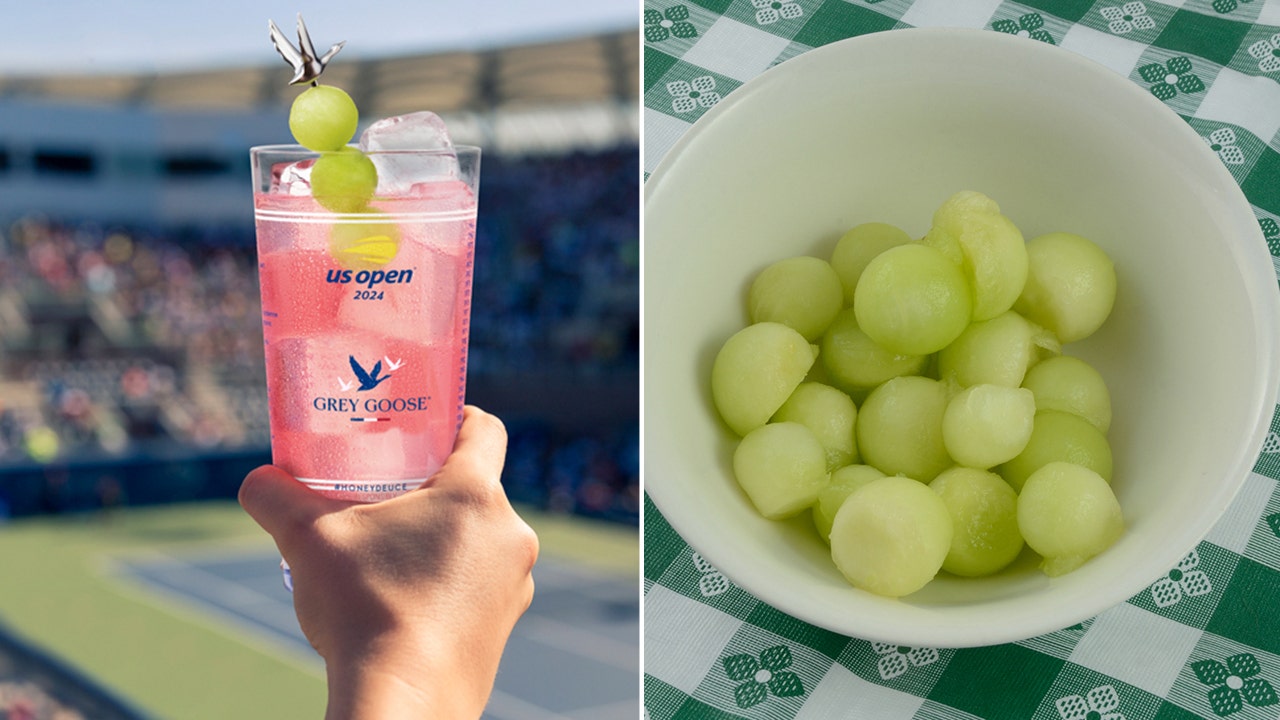
The Honey Deuce cocktail, which made its debut at the U.S. Open in 2006, is arguably as popular today as the tennis tournament itself.
Case in point: An awkward moment occurred during a broadcast this week when a man returning to his seat with two of the cocktails — one of which was presumably for the woman next to him — was beaten to it by another man seated in the row behind him.
But if not for one man’s purchase of honeydew melon balls before a weekend in the Hamptons some years ago, the U.S. Open’s signature cocktail might not have looked as it does today.
TEQUILA IS MORE THAN JUST A SHOT, PLUS OTHER FUN FACTS ABOUT THIS SPIRIT
Fox News Digital spoke with Nick Mautone, a mixologist and hospitality industry consultant who served as brand ambassador for Grey Goose vodka, to discuss the birth of the beverage.
A New York native who lives in Seattle today, Mautone said he was tasked with creating a new cocktail for the U.S. Open when Grey Goose became the official beverage sponsor in 2006.
The Honey Deuce is the signature cocktail of the U.S. Open. It is the brainchild of mixologist Nick Mautone, a New York native, shown at right. (Nathan Congleton/NBC via Getty Images; Nick Mautone)
As Mautone was driving home in the Hamptons, he stopped to pick up some items to create a dessert salad that he intended to make for guests who would be visiting.
On the grocery list were honeydew melon balls.
“Immediately the thunderbolt went off and I said, ‘Holy cow, these look just like tennis balls,’” Mautone recalled to Fox News Digital.
“Holy cow, these look just like tennis balls.”
“So, from that moment on, I knew that that was the garnish, non-negotiable.”
Mautone presented it to the brand team at Grey Goose, who “fell in love” with the garnish; he also spoke to the U.S. Open staff.
NEW JERSEY RESTAURANT BREAKS GUINNESS WORLD RECORD FOR LARGEST TEQUILA, MEZCAL LIBRARY
“The people doing the food service operations were less than thrilled at the idea of making a gazillion honeydew melon balls,” Mautone said.
That is, until they found a company that “makes hundreds of thousands of melon balls every day and ships them fresh to the U.S. Open.”
The U.S. Open’s Honey Deuce is made of Grey Goose vodka, fresh lemonade and a “drizzle” of Chambord black raspberry liqueur. The honeydew melon balls provide the garnish. (Nathan Congleton/NBC via Getty Images)
Mautone played around with “a couple of iterations” of the cocktail at first, including one version that used blackberry liqueur, before settling on the final recipe.
It includes Grey Goose vodka, fresh lemonade, a “drizzle” of Chambord black raspberry liqueur and, of course, the honeydew melon balls.
The goal, Mautone said, was to avoid making “a very complex drink so that the bartenders can actually serve it without getting frustrated.”
“Lo and behold, it’s become a cultural icon.”
He added, “It’s a very simple two- or three-step process for a bartender to make the drink.” He said he was “dead set on a tall drink as well.”
Since the tournament is played in New York in August, Mautone didn’t want “something very spirit-forward because it’s too alcoholic and not pleasant to drink in the summer heat.”
Mautone said he believes patrons were “getting bored with beer and other libations” — so the Honey Deuce came along at the right time.
“Lo and behold, it’s become a cultural icon,” Mautone said.
The inspiration for the Honey Deuce cocktail came from honeydew melon balls, which resemble little tennis balls. (Grey Goose; iStock)
He attributes much of it to “old-school guerrilla marketing,” he said.
“It went viral,” he said.
The cocktail was crafted before Instagram existed and while social media was still in its infancy — so the Honey Deuce didn’t find fame outside of Queens, New York, until much later.
VIRAL ‘FLUFFY COKE’ DRINK TREND TAKES OVER TIKTOK AND IT ONLY REQUIRES 2 INGREDIENTS
“It’s become a cultural phenomenon by virtue of social media, specifically the honeydew melon balls, which I think a lot of people just look at as a genius garnish at a tennis match,” Mautone said.
“So it’s become an Instagram-worthy drink that’s very friendly, very refreshing and inviting.”
The Honey Deuce has been the U.S. Open’s signature cocktail since Grey Goose took over as beverage sponsor in 2006. (Grey Goose)
The Honey Deuce has been in the news recently after its latest price hike, selling for $23.
It sold for $22 at last year’s tournament.
Mautone said he thinks the beverage, which comes with a souvenir cup, is priced appropriately.
“If I was in midtown Manhattan or a great craft cocktail bar in Brooklyn and I ordered a craft cocktail, I’d be paying $18,” he said.
“So, when you say $23, it’s not that much more for the experience you’re getting at, to me, one of the greatest sporting events in the country.”
For more Lifestyle articles, visit www.foxnews.com/lifestyle
Mautone said he plans to attend the U.S. Open.
And when asked if he intended to order a Honey Deuce while he’s there, his answer was emphatic: “Absolutely.”
Read the full article from Here


NEWYou can now listen to Fox News articles!
A third victim has died from injuries suffered in last week’s Rhode Island rink shooting, police said, in an attack allegedly carried out by a transgender suspect.
Gerald Dorgan, the father of Rhonda Dorgan and grandfather of Aidan Dorgan, who were both killed in the attack, died from his injuries after being in critical condition, according to The Associated Press, citing Pawtucket police.
Police previously identified the shooter as Robert Dorgan, 56, who fatally shot his ex-wife, Rhonda Dorgan, and their adult son, Aidan Dorgan, when he opened fire at the Dennis M. Lynch Arena in Pawtucket, North Providence Mayor Charles Lombardi previously said, according to WCVB.
The alleged shooter, Robert Dorgan, right, fatally shot his ex-wife, Rhonda Dorgan, at the Dennis M. Lynch Arena in Pawtucket and his son, Aidan Dorgan. Left, Police stand near the Dennis M. Lynch Arena in Pawtucket, Rhode Island, following a deadly shooting during a high school hockey game. (AP Photo/Mark Stockwell; X/@VerdadEsPoder)
The shooter died from a self-inflicted gunshot wound after being tackled by bystanders who intervened and quickly stopped the attack, officials said. At least three bystanders were able to contain the shooter in the middle of the stands as the crowd fled, officials said.
Pawtucket Mayor Donald Grebien said he was heartbroken that another person had died because of the shooting.
“Our thoughts and prayers remain with the victim’s family, friends, and all those impacted by this tragic act of violence,” he said in a statement.
Rhonda Dorgan’s mother, Linda Dorgan, and a family friend, Thomas Geruso, were also wounded.
The shooter, who identified as transgender, also went by the names Roberta Esposito and Roberta Dorgano, authorities said.
Colin Dorgan, the 17-year-old son of Robert and Rhonda Dorgan and a North Providence High School senior, was on the ice playing in the game when the shooting occurred, per WPRI-TV.
RHODE ISLAND ICE RINK SHOOTING VICTIMS CONFIRMED AS SHOOTER’S DAUGHTER ALLEGES ‘VENDETTA’ AGAINST FAMILY
A split image shows Robert Dorgan, identified by police as the suspect in the shooting at the Dennis M. Lynch Arena in Pawtucket, Rhode Island, and Rhonda Dorgan with her son, Aidan Dorgan, in a graduation photo. Authorities said Rhonda and Aidan were killed in the attack. (Roberta Esposito via Facebook; Rhonda Dorgan via Facebook)
Video from inside the arena shows players diving and fans fleeing their seats as shots rang out during the high school game. At least a dozen shots can be heard in the footage, along with people screaming as they scramble for cover.
Police have not publicly identified a motive. Pawtucket Police Chief Tina Goncalves previously described the shooting as a “family dispute.”
Amanda Wallace-Hubbard, Robert Dorgan’s daughter from another relationship, accused the shooter of having a “vendetta” against the family.
“I just want to make sure people understand this was one person’s vendetta against their family,” Wallace-Hubbard told WPRI-TV. “We were targeted. This was very specific. It wasn’t random.”
Court records show Robert Dorgan had a documented history of conflict with relatives in recent years, including disputes tied to his gender transition, WPRI reported.
In 2020, Robert Dorgan reported to North Providence police that he had undergone gender-reassignment surgery and said his father-in-law wanted him out of the family home because of it.
WATCH: PAWTUCKET POLICE RELEASE NEW DETAILS ABOUT RHODE ISLAND HOCKEY SHOOTING
According to court documents cited by WPRI, Robert Dorgan alleged his father-in-law used a derogatory term for transgender individuals and threatened retaliation if he did not move out. The father-in-law was charged at the time, though prosecutors later dismissed the case.
Court filings also show Robert Dorgan’s then-wife initially cited “gender reassignment surgery, narcissistic + personality disorder traits” in divorce paperwork before the grounds were amended to “irreconcilable differences.”
The divorce was finalized in 2021. Paperwork from the divorce showed Robert Dorgan lived at the time in Jacksonville, Florida, and was working as a truck driver.
Also in 2020, Robert Dorgan accused his mother of assaulting him and acting in a “violent, threatening or tumultuous manner,” according to police records cited by WPRI. His mother was charged with simple assault and battery and disorderly conduct, though the case was later dismissed, court records show.
Police stand outside the Dennis M. Lynch Arena in Pawtucket, Rhode Island, after a shooting on Feb. 16, 2026, has now left three people dead in what authorities described as a family dispute. At right is Robert Dorgan, identified by police as the suspect, who died from a self-inflicted gunshot wound. (Joseph Prezioso/AFP via Getty Images; X/@VerdadEsPoder)
The dispute was also referenced in Robert Dorgan’s conflict with his father-in-law. According to court documents, Dorgan told police his father-in-law “told me that if I did not drop the assault charges against my mother that further retaliation could be expected and that was another reason to have me killed.”
CLICK HERE TO DOWNLOAD THE FOX NEWS APP
The day before the shooting, Robert Dorgan posted on X about going “BERSERK” after an actor insisted that Rep. Sarah McBride, D-Del., is a man.
Fox News’ Louis Casiano, Alexis McAdams and Bonny Chu, as well as The Associated Press, contributed to this report.
Related Article

Read the full article from Here

FORT MYERS, Fla. — Over the past few years the Red Sox pitching program has been completely transformed.
Since Craig Breslow took over as chief baseball officer, the Red Sox have gone from one of the worst organizations at developing young pitchers to one of the best, and now the club is overflowing with talented arms who are already making their mark in the majors.
That hasn’t gone unnoticed, and this past offseason one of the people most responsible for executing the club’s turnaround — former director of pitching Justin Willard — was hired away by the New York Mets to be their new major league pitching coach.
Now the Red Sox are handing the baton to two others, who they hope can keep the train rolling and ensure the club’s pitching pipeline keeps flowing.
This winter the Red Sox promoted Ben Buck to succeed Willard as the club’s director of pitching while also hiring away Quinn Cleary from the Seattle Mariners to serve as his No. 2. The two have already begun working to make their mark on the organization, though both emphasized that the Red Sox already have a solid foundation in place and that they plan to continue emphasizing Willard’s core tenet of “throwing nasty stuff in the zone.”
“That is the mantra,” Buck said. “Because it is simple to say, our guys remember it, and you can branch off from each one of those words and they become very complex.”
“It’s a perfect one sentence one-liner that really sums up the two big components of being a successful pitcher in the majors,” Cleary said.
Buck earned his promotion after just one year with the organization, joining the Red Sox as a pitching coordinator following the 2024 season after previously serving in a similar role with the New York Yankees. Upon coming to Boston, Buck worked closely with many of the Red Sox’s top pitching prospects, including Payton Tolle, one of the club’s biggest recent minor league success stories who rose from High-A to the majors in just his first year of professional baseball.
“The first time that I talked to him or heard him talk about pitching, I was a lot dumber then (than I am now),” Tolle said of Buck. “He’s one of the smartest guys that I’ve ever been around in the baseball world so to now have him as the head of development, it’s huge.”
Another Red Sox pitcher who Buck has worked with is Garrett Whitlock, serving as the future Red Sox right-hander’s pitching coach during his rookie ball days as a Yankees farmhand.
“I think he’s going to be great for the organization,” Whitlock said. “He’s a very good pitching mind. He’s going to bring a lot of wisdom to the table when it comes to the movement side of things, the preparation, how to build up arms, that kind of thing. He’s very, very good at that.”
Before making the jump to the professional coaching ranks, Buck spent 15 years as a college coach after playing collegiately at Lamar Community College in Colorado and at the University of Utah. He also played a year of independent baseball before spending two years away from the sport working in a poker room, first as a dealer and then as the boss.
That job prepared him for coaching in ways you wouldn’t expect.
“There are a lot of skills that I learned from poker and from running a poker room that I still use to this day,” Buck said. “We had a VIP list of something like 280 VIPs, so attributing people’s names to their faces and not forgetting. Dealing with conflict, like for them this is higher stakes, it’s win or lose money. In some regards (baseball is) win or lose money. They’re putting themselves on the line thinking in bets. What are you willing to risk? What is not worth the risk? And how aggressive are you? How unaggressive are you? All these are transferable skills to life and this job.”
Cleary’s journey to the Red Sox is equally fascinating.
Just 26 years old, Cleary is only a few years removed from his college playing days at Yale. He has quickly risen through the front office ranks since, first interning at Cressey Sports Performance before landing with the Philadelphia Phillies and then the Mariners, with whom he served as pitching coordinator.
This past offseason the Red Sox hired him as their new assistant director of pitching and head pitching strategist, specifically requesting permission from the Mariners to interview him.
“What a great hire,” Buck said. “Sharp mind, huge feel, I can’t imagine being as young as he is, as smart as he is, with as much feel as he has.”
How has he done it at such a young age?
“I think a combination of being in the right place at the right time,” Cleary said. “I’ve been able to learn from a lot of really good people at all the stops I’ve been at. I hope to continue to do that here.”
Cleary also has a fascinating family history. His grandfather, Bill Cleary, was a member of the gold medal-winning 1960 U.S. Olympic hockey team and was the longtime men’s hockey coach and athletic director at Harvard. His parents were both Harvard athletes too, and his three brothers all attended Harvard as well.
Naturally, Cleary going to rival Yale was a bit of a departure from the family tradition.
“I am like truly the black sheep of my family,” Cleary said. “We joke that I sit at a different table at Thanksgiving but other than that it’s not too bad.”
Cleary described his new role as a hybrid front office and coaching/player development role that helps with both the majors league and minor leagues. He will also be among those assisting injured big leaguers with their rehab process, and he said he hopes to add value wherever he can.
Red Sox pitching coach Andrew Bailey said Buck and Cleary have both been great to work with so far.
“It’s been fantastic, the communication lines are really solid,” Bailey said. “A lot of bright ideas and thoughts and visions, and what’s really good is the open-mindedness and the ability to listen and take in information and what’s worked and what hasn’t worked.”
With three pitchers ranked inside Baseball America’s Top 100 Prospects list and a huge crop of young arms coming up from the past two years’ pitcher-heavy draft classes, Buck and Cleary find themselves in a much different situation than the one Breslow and Willard inherited after the 2023 season. They said a lot of smart people put in a lot of work to help get the club’s pitching program on the right track, and they hope to build on that progress in the months and years to come.
“Justin did such an amazing job when he was here of laying this unbelievable foundation, things are really going in a real good direction and our job is to search for the one percents and two percents to keep improving,” Buck said. “It’s less about change and more about continuing on the path where evolution can happen.”

Bello’s big homecoming
Years from now Brayan Bello probably won’t remember his first two starts of spring training, but you can be sure he’ll never forget his next one.
This Wednesday the Red Sox right-hander will take the mound for Team Dominican Republic in a pre-World Baseball Classic exhibition against the Detroit Tigers at Estadio Quisqueya in Santo Domingo. Bello has never pitched at the historic stadium before, and getting to pitch there will mark a special homecoming for the 26-year-old.
“It’s going to be my first time after I was a big leaguer that I’m getting to pitch in the Dominican Republic in front of my friends and family, in front of my home country,” Bello said Friday via interpreter Carlos Villoria Benítez. “For me it’s going to be very emotional, I’m very excited to be able to pitch there and I’m looking forward to it.”
A native of Samana, a town roughly two and a half hours away from the Dominican Republic’s capital city, Bello hopes to help pitch his country to its second World Baseball Classic title. The Dominican team previously won it all in 2013 and this year features All-Star standouts like Juan Soto, Vladimir Guerrero Jr., Manny Machado and Fernando Tatis Jr., among others.
Hometown kids coming up
Almost anyone who grows up playing baseball around New England dreams of one day playing for the Red Sox, and this spring several local standouts hope to take the next step in their journey towards making that dream a reality.
Shea Sprague and Jack Winnay, both recent draft picks by the Red Sox with Boston-area ties, are among the many minor leaguers populating the Fenway South complex this spring. Sprague, a BC High alum from Hanover who starred at the University of North Carolina, is entering his second full professional season after being selected as a 13th-round pick in 2024. Winnay, a Newton resident who starred at Belmont Hill and Wake Forest, is in his first spring training after going as a 13th-round pick himself last summer.
Brian Abraham, the Red Sox’s senior director of player development, said the organization is really excited about both, noting that the pair also played for the same travel ball club as his son, North East Baseball.
Sprague appeared in 22 games in his first pro season, earning a promotion from Low-A to High-A along the way and finishing with a 3.82 ERA in 96 2/3 innings, which was the eighth-highest innings total of any Red Sox minor leaguer.
“Really good pitchability,” Abraham said of the 23-year-old lefty. “Trying to increase his fastball velo, because he already has a good pitch mix and has a good way on the mound with his mix.”
Winnay debuted as a professional weeks after being drafted and made a strong first impression, batting .321 with a home run, three doubles and 11 RBI in only 15 games at Low-A Salem. The 22-year-old infielder will be a candidate to start this season at High-A, and Friday he was among a handful of minor leaguers who traveled up to North Port with the big league club.
“Jack has been playing mostly third but can play first, has really good power, moves well, really exciting I think,” Abraham said. “A lot of tools that we like and value.”
Burt signs with Tigers
North Andover’s Max Burt, a former St. John’s Prep and Northeastern University standout, signed with the Detroit Tigers as a minor league free agent this past week. The longtime New York Yankees minor leaguer spent his first eight professional seasons with the organization, playing the majority of that time at Double-A Somerset.
According to the Somerset Patriots, Burt departs as the team’s all-time franchise leader in hits (241), runs (179) and games played (361). The 29-year-old will now get a fresh start as he looks to make a push to the majors with a new organization.

Vegas Golden Knights (28-17-14, in the Pacific Division) vs. Pittsburgh Penguins (30-15-13, in the Metropolitan Division)
Pittsburgh; Sunday, 1 p.m. EST
BETMGM SPORTSBOOK LINE: Golden Knights -149, Penguins +125; over/under is 6.5
BOTTOM LINE: The Pittsburgh Penguins and the Vegas Golden Knights square off in a non-conference matchup.
Pittsburgh has a 14-8-7 record at home and a 30-15-13 record overall. The Penguins have scored 197 total goals (3.4 per game) to rank 10th in NHL play.
Vegas is 28-17-14 overall and 14-9-7 in road games. The Golden Knights are 27-6-8 in games they score at least three goals.
Sunday’s game is the first meeting between these teams this season.
TOP PERFORMERS: Anthony Mantha has 21 goals and 23 assists for the Penguins. Benjamin Kindel has six goals and one assist over the last 10 games.
Mark Stone has 21 goals and 38 assists for the Golden Knights. Pavel Dorofeyev has seven goals and three assists over the past 10 games.
LAST 10 GAMES: Penguins: 7-1-2, averaging 4.2 goals, 7.1 assists, 3.3 penalties and 6.9 penalty minutes while giving up 2.5 goals per game.
Golden Knights: 4-4-2, averaging 3.5 goals, 5.8 assists, 2.6 penalties and 5.8 penalty minutes while giving up 3.3 goals per game.
INJURIES: Penguins: None listed.
Golden Knights: None listed.
___
The Associated Press created this story using technology provided by Data Skrive and data from Sportradar.

Mass shooting at Austin, Texas bar leaves at least 3 dead, 14 wounded, authorities say

Newsom’s ‘disgraceful’ call for Dems to be ‘culturally normal’ is ‘dangerous,’ far-left podcaster says

Judge orders Ilhan Omar attack suspect to remain in custody pending trial

RICK PERRY: Where’s the beef? Trump knows and he’s trying to make it affordable

Virginia Democrats talk affordability — and vote to nearly triple their own pay

Florida High School Football Rankings: Top 25 teams – Oct. 21

Cleary's 21 help Le Moyne down Central Connecticut State 69-64 in OT

How old is Bo Nix? What to know about Oregon quarterback ahead of 2024 NFL Draft

99th annual Pony Swim held in Virginia

Indiana Members Credit Union announced as new anchor tenant at Bottleworks District
Mass shooting at Austin, Texas bar leaves at least 3 dead, 14 wounded, authorities say

Mamdani’s response to Trump’s Iran strike sparks conservative backlash: ‘Rooting for the ayatollah’

Activists hail ‘historic’ EU’s decision on accessible abortion

A long-buried recording and the Supreme Court of old (CT+) : Consider This from NPR

2 Survivors Describe the Terror and Tragedy of the Tahoe Avalanche
-

 World3 days ago
Exclusive: DeepSeek withholds latest AI model from US chipmakers including Nvidia, sources say
-

 Massachusetts4 days ago
Mother and daughter injured in Taunton house explosion
-

 Montana1 week ago
2026 MHSA Montana Wrestling State Championship Brackets And Results – FloWrestling
-

 Denver, CO4 days ago
10 acres charred, 5 injured in Thornton grass fire, evacuation orders lifted
-

 Louisiana6 days ago
Wildfire near Gum Swamp Road in Livingston Parish now under control; more than 200 acres burned
-

 Technology1 week ago
YouTube TV billing scam emails are hitting inboxes
-

 Technology1 week ago
Stellantis is in a crisis of its own making
-

 Politics1 week ago
OpenAI didn’t contact police despite employees flagging mass shooter’s concerning chatbot interactions: REPORT