Northeast
Honey Deuce, US Open's signature cocktail, owes its origin to honeydew melon balls

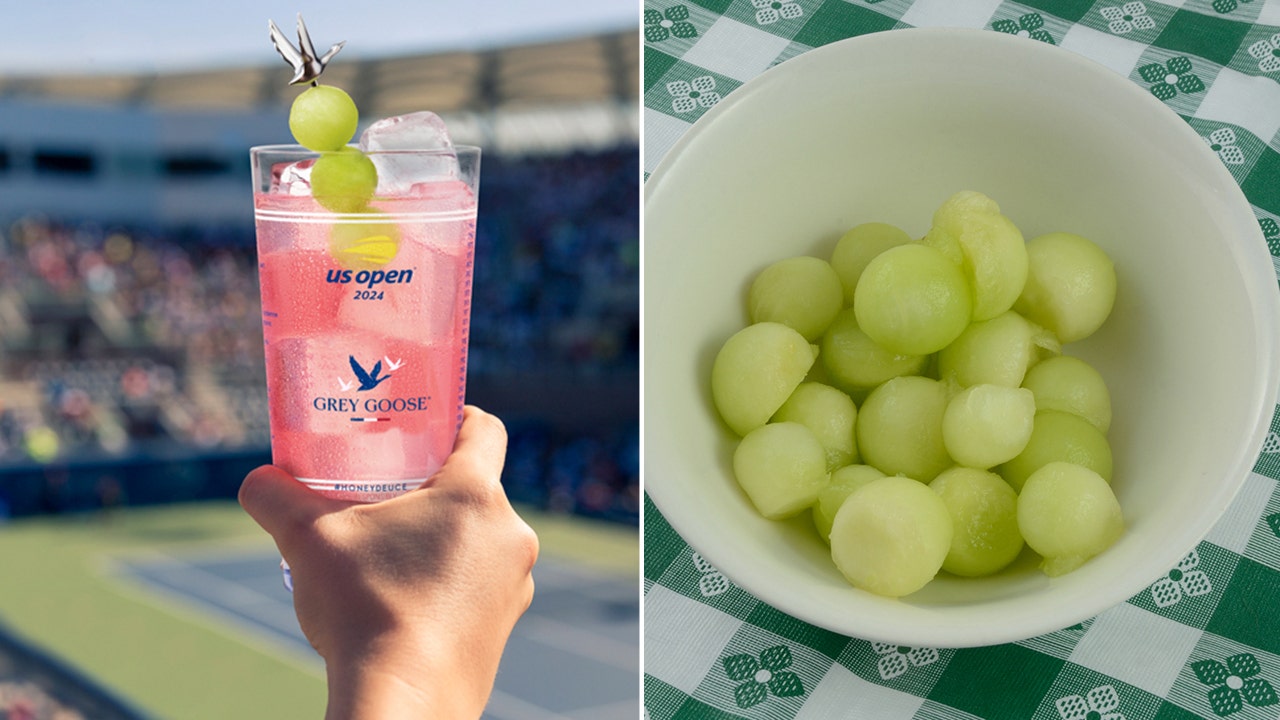
The Honey Deuce cocktail, which made its debut at the U.S. Open in 2006, is arguably as popular today as the tennis tournament itself.
Case in point: An awkward moment occurred during a broadcast this week when a man returning to his seat with two of the cocktails — one of which was presumably for the woman next to him — was beaten to it by another man seated in the row behind him.
But if not for one man’s purchase of honeydew melon balls before a weekend in the Hamptons some years ago, the U.S. Open’s signature cocktail might not have looked as it does today.
TEQUILA IS MORE THAN JUST A SHOT, PLUS OTHER FUN FACTS ABOUT THIS SPIRIT
Fox News Digital spoke with Nick Mautone, a mixologist and hospitality industry consultant who served as brand ambassador for Grey Goose vodka, to discuss the birth of the beverage.
A New York native who lives in Seattle today, Mautone said he was tasked with creating a new cocktail for the U.S. Open when Grey Goose became the official beverage sponsor in 2006.
The Honey Deuce is the signature cocktail of the U.S. Open. It is the brainchild of mixologist Nick Mautone, a New York native, shown at right. (Nathan Congleton/NBC via Getty Images; Nick Mautone)
As Mautone was driving home in the Hamptons, he stopped to pick up some items to create a dessert salad that he intended to make for guests who would be visiting.
On the grocery list were honeydew melon balls.
“Immediately the thunderbolt went off and I said, ‘Holy cow, these look just like tennis balls,’” Mautone recalled to Fox News Digital.
“Holy cow, these look just like tennis balls.”
“So, from that moment on, I knew that that was the garnish, non-negotiable.”
Mautone presented it to the brand team at Grey Goose, who “fell in love” with the garnish; he also spoke to the U.S. Open staff.
NEW JERSEY RESTAURANT BREAKS GUINNESS WORLD RECORD FOR LARGEST TEQUILA, MEZCAL LIBRARY
“The people doing the food service operations were less than thrilled at the idea of making a gazillion honeydew melon balls,” Mautone said.
That is, until they found a company that “makes hundreds of thousands of melon balls every day and ships them fresh to the U.S. Open.”
The U.S. Open’s Honey Deuce is made of Grey Goose vodka, fresh lemonade and a “drizzle” of Chambord black raspberry liqueur. The honeydew melon balls provide the garnish. (Nathan Congleton/NBC via Getty Images)
Mautone played around with “a couple of iterations” of the cocktail at first, including one version that used blackberry liqueur, before settling on the final recipe.
It includes Grey Goose vodka, fresh lemonade, a “drizzle” of Chambord black raspberry liqueur and, of course, the honeydew melon balls.
The goal, Mautone said, was to avoid making “a very complex drink so that the bartenders can actually serve it without getting frustrated.”
“Lo and behold, it’s become a cultural icon.”
He added, “It’s a very simple two- or three-step process for a bartender to make the drink.” He said he was “dead set on a tall drink as well.”
Since the tournament is played in New York in August, Mautone didn’t want “something very spirit-forward because it’s too alcoholic and not pleasant to drink in the summer heat.”
Mautone said he believes patrons were “getting bored with beer and other libations” — so the Honey Deuce came along at the right time.
“Lo and behold, it’s become a cultural icon,” Mautone said.
The inspiration for the Honey Deuce cocktail came from honeydew melon balls, which resemble little tennis balls. (Grey Goose; iStock)
He attributes much of it to “old-school guerrilla marketing,” he said.
“It went viral,” he said.
The cocktail was crafted before Instagram existed and while social media was still in its infancy — so the Honey Deuce didn’t find fame outside of Queens, New York, until much later.
VIRAL ‘FLUFFY COKE’ DRINK TREND TAKES OVER TIKTOK AND IT ONLY REQUIRES 2 INGREDIENTS
“It’s become a cultural phenomenon by virtue of social media, specifically the honeydew melon balls, which I think a lot of people just look at as a genius garnish at a tennis match,” Mautone said.
“So it’s become an Instagram-worthy drink that’s very friendly, very refreshing and inviting.”
The Honey Deuce has been the U.S. Open’s signature cocktail since Grey Goose took over as beverage sponsor in 2006. (Grey Goose)
The Honey Deuce has been in the news recently after its latest price hike, selling for $23.
It sold for $22 at last year’s tournament.
Mautone said he thinks the beverage, which comes with a souvenir cup, is priced appropriately.
“If I was in midtown Manhattan or a great craft cocktail bar in Brooklyn and I ordered a craft cocktail, I’d be paying $18,” he said.
“So, when you say $23, it’s not that much more for the experience you’re getting at, to me, one of the greatest sporting events in the country.”
For more Lifestyle articles, visit www.foxnews.com/lifestyle
Mautone said he plans to attend the U.S. Open.
And when asked if he intended to order a Honey Deuce while he’s there, his answer was emphatic: “Absolutely.”
Read the full article from Here


A 96-year-old Boston woman received the surprise of a lifetime when she discovered the French men’s national soccer team had become her neighbors at the Four Seasons Hotel in the Back Bay.
Shirley, a beloved resident of the neighborhood, said she had no idea she would end up meeting the players in town for the World Cup.
“They’re my buddies,” she said with a laugh.
Her caretaker, Samia, said Shirley has become well known around Back Bay.
“Anyone outside, when we are walking, people come to her and want to talk to her,” Samia said.
The U.S. is out of the World Cup. Fellow co-hosts Mexico and Canada are too. So who should
The excitement around the hotel grew after the French team arrived to stay there during the tournament.
Shirley said the encounter happened unexpectedly while she was eating lunch.
“I was having lunch and they came over, and since then, it’s been wonderful to have them here,” she said.
Shirley said team representatives soon invited her to meet the players.
“And they said, ‘He would like to meet you.’ I said, ‘I’m glad to meet anybody,’” she recalled.
For this Massachusetts teenager, attending a World Cup match was more than a dream come true, it was a milestone in a journey that began when he was diagnosed with Ewing sarcoma — something that might not have happened if he hadn’t been playing soccer.
After the visit, Shirley recorded a cellphone video sharing her excitement.
“This is absolutely — I cannot tell you how unbelievably fabulous this is,” she said.
The meeting ended with a memorable gift: A jersey from French star Kylian Mbappé.
The team also made her a promise.
“[They] told me that if they win, he will sign it, and then it will be worth a lot of money,” she said, laughing.
Samia, who is from Algeria, quickly agreed. She said she was already a devoted supporter of the French squad after spending many years living in France.
“I’m so excited. I went to Philadelphia to watch the game this past weekend. So, believe me, I’m totally 100% with them. I wanted them to go back to France with a cup,” she said.
Shirley said she never expected to become a fan, but she appreciated the sense of community the tournament brought to her neighborhood.
“It’s good to see such camaraderie happening, with people here getting along. Yeah, it’s the greatest thing,” she said.
She said she still did not know why the team wanted to meet her, but she’s grateful nonetheless. Shirley remains hopeful her new friends would keep winning, and keep returning to Boston.


Neighbors who live in the Elm City’s Fair Haven neighborhood might notice a change of scenery at Quinnipiac River Park.
With city planning and a $250,000 state grant, the walkways were paved, water fountains were installed, and the riverbank was improved to prevent erosion.
It’s come a long way since the area was an industrial site in the 1960s.
“Decades and decades ago, this was a junkyard and it’s just shocking to see what is here now, this beautiful site,” New Haven Mayor Justin Elicker said.
The area eventually became a park that saw a massive cleanup a few years ago. What was once a dump is now frequented by visitors young and old, on wheels and on four legs.
“I’d be the only guy running laps around ad now morning, night, afternoon, there’s people running, there’s people having picnics,” neighbor Eric Murray said.
Elicker said a nicer park with lighting and clean, open space can make visitors feel safe.
“People are less likely to engage in crime if they think that there’s a lot of people to witness and they could get caught,” he said.
The work isn’t done yet. Future plans include picnic tables, a new patio area and welcome gardens. The walkways will become a part of a trail that goes around Fair Haven, according to the mayor.
That requires more funding and the continued work of neighbors who have been keeping the park clean.
The Friends of Quinnipiac River Park take pride in maintaining the beauty here by planting flowers and trees, taking care of them in every season.
“I love planting, especially for the neighborhood,” Sadi Vidro, a member of the Friends of Quinnipiac River Park. “I saw the, the outcome of it and that’s what keeps me going.”
Some trees are decorated with a cross and a message that might stop you on your walk. One tree is planted in memory of Michael Caliz.
“Our friend Rita, this is a tree she planted in memory of her son and Rita comes back faithfully every year,” Tom Burwell, the founder of the Friends of Quinnipiac River Park, said. “She’s definitely has taken ownership in the tree and she’s become a staple. She’s been like a mom to us in the group as well.”
Phase one of the project is complete. Concept plans for phase 2 focus on the northern end of the park.
-
 Lifestyle13 minutes ago
Appeals court denies Trump’s request to halt removal of his name from the Kennedy Center
-

 Technology21 minutes ago
Meta is reportedly working on smart glasses that would be recording all the time
-

 World28 minutes ago
Trump says ‘Iran lies and cheats’ as IRGC emerges as dominant force in negotiations with US
-

 Politics31 minutes ago
Who is Valli Geiger? Meet the Maine Dem that Platner urged to run for Senate
-

 Health36 minutes ago
Deadly Legionnaires’ disease outbreak sparks concern in major US city: Know the symptoms
-

 Sports43 minutes ago
Caitlin Clark’s return falls flat after Fever coach limits her in loss to shorthanded Sparks
-
Business51 minutes ago
Commentary: Trump wants to let companies make fewer disclosures, thus keeping investors in the dark
-
 Entertainment58 minutes ago
Justin Baldoni and wife break silence after ‘It Ends With Us’ legal battle with Blake Lively


