Northeast
High rent forces mom of two to move family into hotel: 'Hope and joy is not paying my bills'

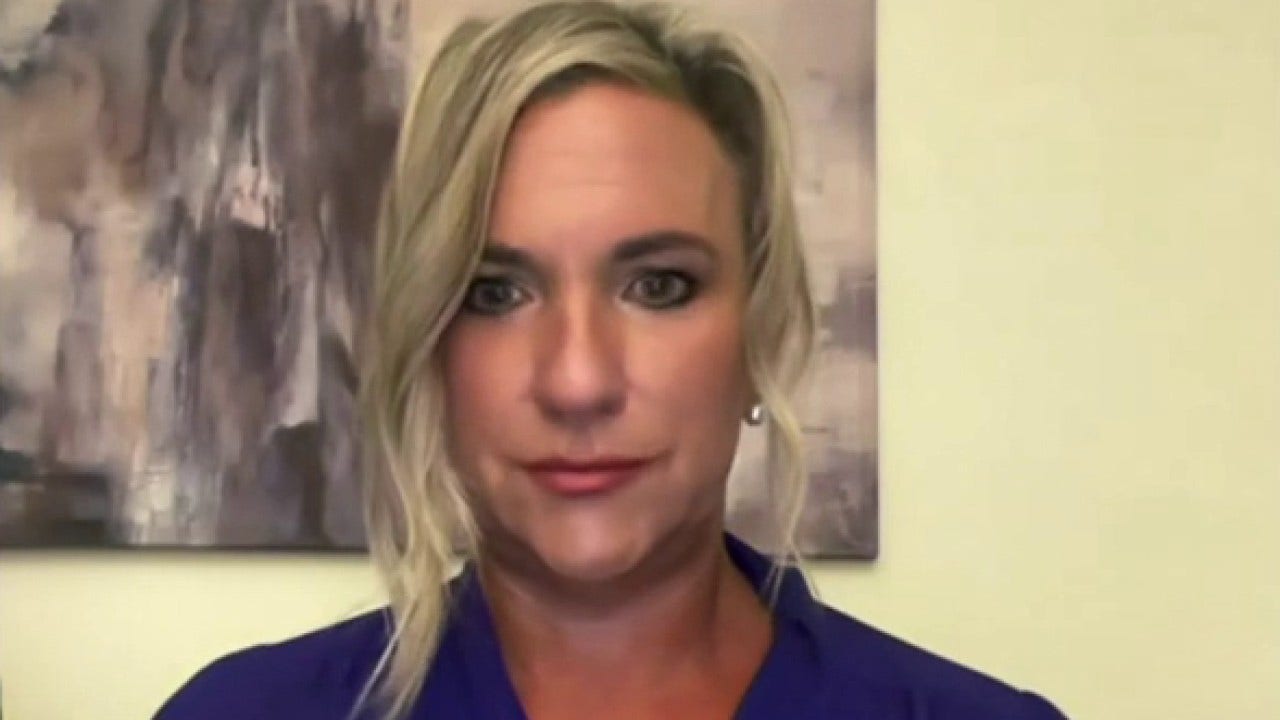
High rent costs and living expenses have forced a Connecticut mother of two to move her family from an apartment into a hotel, adding to the list of unconventional living situations America’s working class has been compelled to take on to make ends meet.
Her story comes as Democrats, including party Chair Jaime Harrison, sell a message of “hope and joy” as VP Kamala Harris takes the reins for the 2024 nomination, “Fox & Friends First” host Todd Piro noted.
“Hope and joy is not paying my bills,” Suzanne Hayes told Piro when asked about the DNC’s message to voters.
While not venturing deeper into politics, she continued by saying, “I’m really just kind of focused on myself and my family and I hope that whoever is elected can make some real change in both the economy at large and this housing crisis for people like me.”
BUYING A HOUSE JUST GOT MORE EXPENSIVE FOR AMERICANS
Suzanne Hayes said high rent costs forced her to move her family into a hotel. (Fox & Friends First)
Hayes leans heavily on prayer, gratitude and faith, adding that she is lucky to have a family who can help.
Despite it all, she said “the struggle is real.”
Her search for a new place to live began when she had 30 days to move out of her old apartment, which had a set rate of $1,700 a month. When it came time to look for a new place, she was in for a shock.
“I did my due diligence and I looked in all local towns and didn’t want to give up hope that I would find a space, for me and my kids to live that was convenient. I just had no luck. It was not possible,” she said.
“I was faced with the reality that rents had skyrocketed since I was last in the market, and I was looking at homes that were two bedrooms, which is one less than I was accustomed to living in, and they were $1,000 more a month, and I quickly realized that that was unrealistic for me,” she added later.
Inflation has hit families hard in recent years, with Hayes’ being no exception. She says rent expenses are different than expenses like groceries and clothing, however, because money can be stretched a little further with the latter.
MILLENNIALS LAMENT BEING UNABLE TO AFFORD HOMES, PAY RENT: ‘THIS IS INSANE’
High rent costs have affected many Americans in recent years, forcing some to turn to other living situations, including roommates or even living in vans. (Joe Raedle/Getty Images)
“When it comes to housing being $1,000 more a month, there’s just nothing that can be done,” she explained.
Pushed to the point of potentially moving in with her parents, she weighed her options and began making calls to local hotels, where she eventually found a more affordable solution to her problem. She told Fox News she considers her current living situation to be a “blessing.”
“I kind of pulled out all stops and emailed local hotels and found this place, and it ended up being a great, huge blessing for me and my kids.”
High rent costs and little hope of compiling enough money to afford a home has left many Americans, especially younger generations, opting for alternative living situations.
‘RENT IS TOO DAMN HIGH’: ROSEN PANNED FOR BIDEN-ALIGNED VOTES, HIGH HOUSING COSTS
Some millennials, including TikToker Michael Alberse, have chosen to live in vans for at least some time to accumulate money to go toward their homeownership dreams.
“I’m seeing this become wildly popular because they’re getting rid of that $2,000 rent burden, and they’re able to use that money to save for a down payment. Because the bigger the down payment, the less income you need to qualify,” Orlando-based realtor and TikToker Freddie Smith said.
But the problem has also impacted the elderly in some ways, leaving a number of them to open their homes to non-relatives to help those looking for smaller living expenses in the new “Boommate” trend.
Read the full article from Here



A nearly $7 million home on the coast of Kennebunk topped out as the most expensive home to sell in Maine last month.
We assembled a list of the top 10 most expensive residential properties in Maine that changed hands in June. The information comes from state transfer tax documents that are available to the public online.
While Maine’s most expensive residential property sales last month all surpassed $3 million and averaged nearly $5 million, they are not as pricey as some of the commercial real estate transactions from the same time frame.
The Press Hotel in downtown Portland, for example, sold for just under $58 million, making it the state’s most expansive property sale from last month.
— Scott Edmunds, Trustee of The Oyster Shell Real, bought 7 Shoreline Way in Kennebunk from Evergreen/Kennebunk Realty LLC for $6.9 million on June 30.
— Rebecca and Eric Deschambault bought 49 Rising Tide Lane in Freeport from Daniel and Lauren Mills for $6.7 million on June 1.
— Sea Rose Holdings LLC bought 488 Main St. in Ogunquit from John Brennan for $6.3 million on June 30.
— Set Family Investments LLC bought 9 Starboard Lane in York from The Richard Jackson Sr. 2023 Trust for $5.2 million on June 8.
— Suzanne and Christopher Hendriksen bought 904 Kings Highway in Kennebunkport from The Anchorage LLC for $4.5 million on June 15.
— The 149 Lighthouse Road Trust bought 149 Lighthouse Road in Bridgton from The William P. Boardman Irrevocable Trust for $4.2 million on June 30.
— Kevin Devaney and Melissa Croatti bought 7 Nubble Point in York from Jennifer and Andrew Amorosi for $3.5 million on June 18.
— Melanie and David Cox bought 909 Princes Point Road in Yarmouth from Thomas Harden for $3.4 million on June 18.
— The BH Family Trust bought 75 Scenic View Drive in Naples from the Denis R. Landrey and Cathleen Landry Revocable Trust for $3.4 million on June 26.
— April and Joshua Lafrance and Gail Marie Sasseville bought 93 Governors Point Road in Harpswell from Donna B. Barmore for $3.1 million on June 17.

A Holbrook, Massachusetts man who fell critically ill while sailing through the South Pacific has died, his family told WBZ-TV Tuesday evening.
Scott Winslow was in intensive care at a hospital in Fiji for weeks, as his family fought to get him back home so he could be treated for septic shock and a serious infection.
Winslow’s wife and two daughters had made the 8,000-mile trip to be with him and fight for his care when he died.
“We are at the hospital and just said goodbye to our father,” his daughters told WBZ-TV. “We are heartbroken.”
Winslow was traveling on his nephew’s sailboat in the South Pacific on what was supposed to be a three-month voyage when he noticed what appeared to be a bug bite.
His family isn’t sure exactly what the cause of the illness was, but his condition quickly deteriorated, and he could no longer walk once they diverted the boat to Fiji.
The family provided WBZ medical documents from doctors in Fiji, who said he needed to be evacuated to another hospital.
The family said his insurance company, Aetna, denied the transport and the medical flight to get Winslow home would have cost hundreds of thousands of dollars.
Winslow’s family said they had secured medical services with the Mass General Brigham group if he got back to Massachusetts.
“I don’t understand. My problem is, my parents pay for insurance, this is what insurance is for,” Lisa Babbin, Scott’s daughter told WBZ-TV earlier on Tuesday.
Before Winslow died, WBZ-TV reached out to Aetna. In a statement, a spokesperson said they were continuing to work with Winslow’s family “and his providers in Fiji to identify the best way to get him back safely to the United States for continued treatment.”
The Winslow family had also reached out the U.S. Embassy in Fiji for help securing an emergency loan.
-

 California2 minutes ago
California still hasn’t released Newsom’s Baby2Baby diaper contract as lawmakers weigh longer public records delays
-

 Colorado5 minutes ago
Colorado River, public lands reopen as Snyder Fire containment increases
-

 Connecticut10 minutes ago
Opinion: A lifeline in CT’s childcare desert
-

 Delaware17 minutes ago
Talk & Film Bring Delaware’s Revolutionary Story to Life at Archives’ First Saturday Program – State of Delaware News
-
 Florida20 minutes ago
Heat alerts expand across Florida as dangerous temperatures return
-

 Georgia25 minutes ago
Trooper injured in chain-reaction crash on Georgia 400
-

 Hawaii32 minutes ago
Redesigned Hawaii IDs begin rolling out statewide
-
 Idaho35 minutes ago
All lanes blocked on I-84 in Payette County due to multiple brush fires, officials say

