Plus special access to select articles and other premium content with your account – free of charge.
By entering your email and pushing continue, you are agreeing to Fox News’ Terms of Use and Privacy Policy, which includes our Notice of Financial Incentive.
Please enter a valid email address.
RIVERHEAD, N.Y. – Suspected Long Island serial killer Rex Heuermann returned to a New York courthouse Thursday to be charged with killing two more women.
Heuermann was indicted on two new murder charges in the deaths of Jessica Taylor in July 2003 and Sandra Costilla in November 1993.
Advertisement
Authorities also revealed in court records that during their investigation they found a document on Heuermann’s computer they believe was a “planning document” he used to “methodically blueprint and ‘plan out’ his ‘kills,’” with sections about things to remember, problems, supplies, prep work, dump sites and targets.
Police arrested the 59-year-old New York City architect last year in connection with three cold case murders and prosecutors secured an indictment for a fourth victim months later. He made a brief appearance in court Thursday in a suit and handcuffs, and is due back on July 30.
REX HEUERMANN’S FAMILY KEPT GRUESOME PIECE OF EVIDENCE, SOURCE SAYS
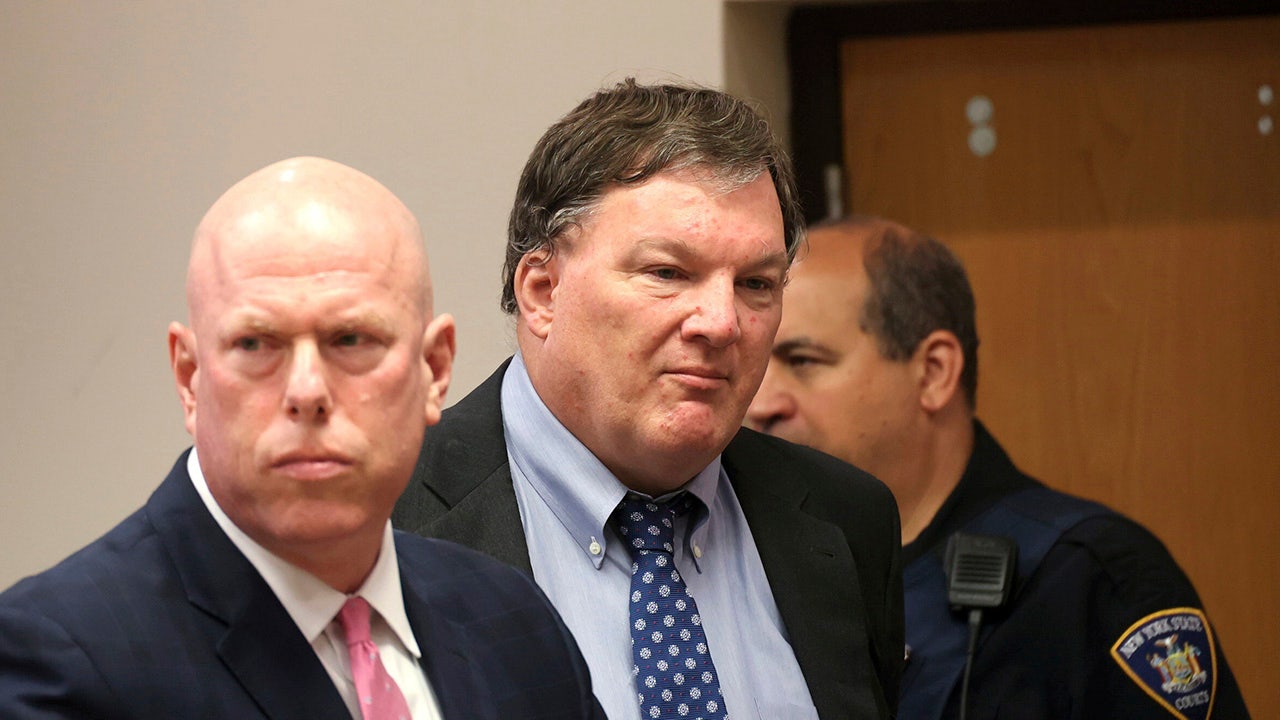
Rex Heuermann, charged in the Gilgo Beach serial killings on Long Island, appears for a hearing at Suffolk County Court in Riverhead, N.Y., Thursday, June 6, 2024. Heuermann was charged Thursday in the deaths of two more, after prosecutors said they gathered new DNA evidence and found a computer document he had used to “blueprint” his crimes.(James Carbone/Newsday via AP, Pool)
The Gilgo Beach murders went unsolved for more than a decade. And the case is broadening.
Advertisement
A task force with state and local investigators pieced together evidence that led them to their “ogre” suspect: an eyewitness description of his green Chevy Avalanche, records from a slew of burner phones, crime scene DNA and a discarded pizza crust.
Rex Heuermann, charged in the Gilgo Beach serial killings on Long Island, appears for a hearing at Suffolk County Court in Riverhead, N.Y., Thursday, June 6, 2024. Heuermann was charged Thursday in the deaths of two more, after prosecutors said they gathered new DNA evidence and found a computer document he had used to “blueprint” his crimes.(James Carbone/Newsday via AP, Pool)
Rex Heuermann, charged in the Gilgo Beach serial killings on Long Island, appears for a hearing at Suffolk County Court in Riverhead, N.Y., Thursday, June 6, 2024. Heuermann was charged Thursday in the deaths of two more, after prosecutors said they gathered new DNA evidence and found a computer document he had used to “blueprint” his crimes. (James Carbone/Newsday via AP, Pool)
Taylor’s body was discovered in Manorville, Suffolk County, on July 26, 2003, with her head decapitated, her arms severed, and a tattoo mutilated. Her other remains were found on March 29, 2011, along Ocean Parkway, just east of Gilgo Beach, near where the other Gilgo victims’ remains had been found.
Costilla’s remains were found on Nov. 20, 1993, in a wooded area of Southampton.
Advertisement
An evidence photo shows Rex Heuermann’s personal copy of “The Cases That Haunt Us,” a book detailing several famous serial murder cases, in his home office. According to court documents, the book was discovered during authorities’ initial search warrant execution in July 2023.(Suffolk County District Attorney’s Office)
In July 2023, police arrested Heuermann outside his Manhattan office and spent nearly two weeks scouring through his home in Massapequa Park, about 20 minutes from where police found the bodies of Melissa Barthelemy, 24; Megan Waterman, 22; and Amber Costello, 27, in 2010.
Prosecutors later tacked on charges for the murder of Maureen Brainard-Barnes, 25, whose remains they found near the others.
The “Gilgo Four” clockwise from top left: Maureen Brainard-Barnes, Melissa Barthelemy, Megan Waterman and Amber Costello. The background shows a wooden cross in the marsh next to Gilgo Beach, New York, where their remains were found in the brush just yards from Ocean Parkway.(Suffolk County Police Department/Mega for Fox News Digital)
Collectively, those women are known as the Gilgo Four because they were found close together and under similar circumstances.
Advertisement
SUSPECTED SERIAL KILLER REX HEUERMANN’S HOME SEARCHED AGAIN
Shannan Gilbert’s remains were found near Oak Beach, New York on December 13, 2011. (The family of Shannan Gilbert)
Police uncovered their remains in the brush along Ocean Parkway after another woman, Shannan Gilbert, vanished into the night after placing a panicked 911 call begging for help.
Police found seven other bodies further east along the highway. Most of the deaths remain under investigation. Gilbert was the last one in 2011.
Rex Heuermann, charged in the Gilgo Beach serial killings on Long Island, appears for a hearing at Suffolk County Court in Riverhead, N.Y., Thursday, June 6, 2024. Heuermann was charged Thursday in the deaths of two more, after prosecutors said they gathered new DNA evidence and found a computer document he had used to “blueprint” his crimes. (James Carbone/Newsday via AP, Pool)
Advertisement
John Ray, attorney for Gilbert’s family, said after Thursday’s court appearance that Heuermann’s notes mentioned Stockholm syndrome, which suggests he held his alleged victims for some unknown time.
“How long did he keep them alive is the big question,” Ray said.
Ray, who said he has evidence that ties Heuermann to Gilbert, said he does not think that any of things listed in the planning document would ever be found.
Rex Heuermann’s attorney Michael Brown, right, arrives to the courtroom in Riverhead, N.Y., Thursday, June 6, 2024. Heuermann, the New York architect accused of killing four women and leaving their bodies near Long Island’s Gilgo Beach, has been accused in the deaths of two more women. (AP Photo/Seth Wenig)
Police said in 2020 that Gilbert’s death appeared to be an accidental drowning, although her official cause of death is undetermined and a private autopsy conducted by Dr. Michael Baden found evidence of “homicidal strangulation.”
Advertisement
SIGN UP TO GET TRUE CRIME NEWSLETTER
An evidence photo depicts phone call records from Rex Heuermann’s Massapequa Park address to the Vermont address his family was visiting in July 2003.(Suffolk County District Attorney’s Office)
GET REAL TIME UPDATES DIRECTLY ON THE TRUE CRIME HUB
Another Long Island homicide victim is Valerie Mack, who was dismembered and dumped.
Additional remains of hers were uncovered near the Gilgo victims.
Advertisement
Jessica Taylor, left, and Valerie Mack, right, were both murdered and dismembered. Suffolk County police discovered partial remains of each victim in both Manorville, N.Y., and along a stretch of Ocean Parkway near Gilgo Beach.(Suffolk County Police Department/Handout)
K-9 units conducted a search in Manorville in April and then served a second search warrant on Heuermann’s house in May.
The prime suspect in Costilla’s death was previously another serial killer, former Manorville carpenter John Bittrolff, who is currently in prison for two other murders.
Suffolk County District Attorney Ray Tierney arrives to the courthouse in Riverhead, N.Y., Thursday, June 6, 2024. Rex Heuermann, the New York architect accused of killing four women and leaving their bodies near Long Island’s Gilgo Beach, has been accused in the deaths of two more women. (AP Photo/Seth Wenig)
Advertisement
If Heuermann is responsible for any of the deaths out east, his suspected killing spree would have started years earlier than previously known.
Heuermann has pleaded not guilty to murder charges in connection with the Gilgo Four.
Ed Shanahan has been the editor of Metropolitan Diary for 10 years. Agnes Lee has drawn more than 2000 illustrations for the weekly column since 2017.
Welcome to the Metropolitan Diary challenge, part of our 50th anniversary celebration for a column that, by design, could only have gotten this far with readers’ contributions. Metropolitan Diary is a weekly collection of New York experiences that capture the essence of this remarkable metropolis at its best — and it is composed entirely of submissions from readers sharing short personal stories.
In the next two days, the plan is to help you carry us to the 100-year mark. We want your New York story! Today, we’ll help you jog your memory to find a good one. Tomorrow, we’ll offer tips for how to turn it into a great written submission.
Advertisement
Metropolitan Diary is a grab bag with one constant: Every story is set in the city. Odd snippets overheard on the street; snappy comebacks from waiters; random encounters with strangers that illuminate human kindness; and, of course, the occasional celebrity sighting. It’s all column fodder.
So what’s your Metropolitan Diary story? First, a few basic parameters: It must be true, something you saw or experienced firsthand and be a tale you can tell in no more than 300 words (we are quite strict about that). We keep politics, and pretty much anything else that could be divisive, out. Also, nothing vulgar and, generally, no “kids say the darndest things.” Again, when we say “Metropolitan,” we really do mean a story about New York City.
Advertisement
Beyond that, it’s up to you. It’s almost certainly true that the submissions we wind up publishing begin with something that stuck in the author’s head for whatever reason — for a day, a week or 20 years — and made them think, “that’s New York to me.” It’s something you can’t wait to share with a partner, parent or friend over coffee or drinks. And very often, it’s something that others can easily relate to because there is something familiar in the details.
A story like this may already be in the back of your mind or on the tip of your tongue. If you’re unsure of how to begin the process of writing it down, consider these durable Diary categories as potential starting points. Here are some popular standbys:
Advertisement
Getting From One Place to Another
New York’s mass transit system, that great urban unifier, is a reliable source of items. Virtually everyone rides the subway or buses. Do you recall something funny that happened on the train? Ever see something unexpected during your daily commute? Did running late (or early) put you in a spot to meet someone you otherwise wouldn’t have?
Advertisement
Advertisement
The Kindness of Strangers
Did a stranger ever do you a good deed or vice versa?
Advertisement
Nostalgic Places
Advertisement
Do you have a memory of a special moment tied to one of the city’s well-known landmarks or neighborhoods? Is there a particular room at the Met or a favorite diner in Queens where you once had a memorable encounter?
Memorable Lines
Advertisement
Do you still laugh about something you overheard a passer-by say? Did a waitress or counterman ever respond to your order with a snappy comeback dripping with New York attitude?
Did these stories remind you of anything? Spend some time today thinking about it. Once you have some ideas, jot them down. Come back tomorrow for Day 2 of the Metropolitan Diary challenge and we’ll help you develop one of them into a full story.
BOSTON (WHDH) – It’s the fall of 1974 in South Boston, and four generations of the Moran family are rushing to church for baby Lila’s baptism. The moment is filled with great anticipation, and one of the most memorable images frozen in time in Constantine Manos’s “Where’s Boston” series.
Now, more than 50 years later, that photograph has taken on a new meaning.
The Boston Athenaeum has revived the landmark exhibition first shown during Boston’s Bicentennial celebration in 1976. To mark America’s 250th anniversary, the library has paired Manos’s photographs with 12 newly recorded oral histories, giving the people captured in the images a chance to tell the stories behind them.
“These images show one moment in time, but when you talk to someone and ask them to reflect on it, you learn so much more about them and their larger family history,” said Boston Athenaeum curator Lauren Graves. “Then somehow that history, too, ends up relating to a larger Boston history.”
Advertisement
In their oral history, George and Carolyn Moran reflected on the social upheaval surrounding Boston’s bussing crisis, when court-ordered school integration sparked intense racial conflict across the city.
While the baptism photograph captures a day of celebration, the Moran family said it also stirs memories of another pivotal moment: their decision to leave the South Boston neighborhood they had long called home.
“Around the corner came a huge swarm of people being chased by police on horseback with clubs,” George Moran said. “Apparently earlier that day there had been a stabbing around the corner of South Boston High School, and the town was in total turmoil over that incident.”
Fearing for their children’s safety as tensions escalated, the two Boston Public Schools teachers made the difficult decision to move their family to Brookline.
“We were very careful in making our decision because we did have a strong allegiance to the schools and to education,” Carolyn Moran said. “I would say our concerns about the education of our daughters was our primary reason for making the move.”
Advertisement
Courtesy Boston Athenaeum
Many of Manos’s seemingly innocuous photographs reveal the city’s deeply segregated spaces that shaped Boston a half-century ago. An Italian religious process in the North End, young Black men unwinding at Franklin park, and a father looking lovingly at his son at a Chassidic center in Brookline each offer a glimpse into communities that rarely intersected.
But even amid turmoil and division, Manos found beauty in life’s small moments—a bride leaving a church on her wedding day, a young man absorbed in a game of chess, and a father flying a kite with his son.
Courtesy Boston Athenaeum
“The exhibit shows some of the terrible times of protest, but it also shows the moments of joy,” Carolyn Moran said. “They’re all juxtaposed, and that’s life—these difficult times as well as beautiful times.”
Advertisement
As the nation celebrates its 250th anniversary, curators hope the exhibition encourages visitors to reflect on not just how far the city has come, but also the work that still needs to be done in the coming decades.
“We thought this was a unique moment to look back at the Bicentennial, to look back 50 years and think about this recent past,” Graves said. “What do we want for Boston today? What do we want for the future? And what do we want for the future of the country itself?”
Visitors are also invited to become part of the exhibition by filling out comment cards reflecting on where Boston is today.
The Boston Athenaeum says it is still identifying people featured in Manos’s photographs and plans to continue expanding the exhibition’s online oral history collection.
“Where’s Boston” is open until December 12.
Advertisement
(Copyright (c) 2026 Sunbeam Television. All Rights Reserved. This material may not be published, broadcast, rewritten, or redistributed.)
Join our Newsletter for the latest news right to your inbox
You don’t need to have your eyes checked, you are seeing things right – the Cincinnati Reds have won a second straight game against a National League Central division opponent. The win in a back-and-forth game came down to the 9th inning and down to their last strike the Reds got a 3-run home run from Eugenio Suarez and they held on to beat the Pirates and pick up a series win in Pittsburgh with one game left on Sunday.
Final
R
H
E
Cincinnati Reds (39-42)
9
10
0
Pittsburgh Pirates (41-42)
7
11
2
W: Ferguson (1-0) L: Soto (4-2) SV: Petty (1)
Statcast | Box Score | Game Thread
After a delayed start due to some rain, the game started about 40 minutes after the originally scheduled time. Cincinnati didn’t take much time to grab a lead. Sal Stewart took the 4th pitch of the game and went the other way for a solo home run. Chase Burns had to work around two singles in the bottom of the inning but he got out of the jam to keep the lead.
Two innings later the Reds offense got back to it when Jose Trevino led off with a ground-rule double and later came in to score on a 2-out hit by Stewart as he picked up his second run batted in on the day. The Pirates put together a rally of their own in the bottom of the frame. Back-to-back singles got things started and then Brandon Lowe came through for the home team with a 3-run home run to put Pittsburgh in the lead. In the 4th inning they would tack on another run on a single by Jared Triolo that made it 4-2.
Cincinnati got back in the game in the 5th with plenty of help from the Pirates. Dane Myers walked and then took second base thanks to a balk. A wild pitch moved him to third base and he would later score on a double by Edwin Arroyo. A second wild pitch in the inning moved him up to third and then he scored when Brandon Lowe failed to come up with a grounder cleanly at second base with two outs and that tied up the game.
Advertisement
The next inning the Reds would take the lead. They would load the bases with one out thanks to a walk and two singles. That set things up for Jose Trevino who came through with a 2-run single that made it 6-4.
At 90 pitches on the day, Chase Burns headed back to the mound for the 7th inning with a lead but he gave up a leadoff double that just missed being a home run off of the top of the wall in right field. That ended his day and manager Terry Francona called on Sam Moll from the bullpen. He would get a groundout, but it moved Jared Triolo up to third base and he then came in to score on a sacrifice fly that made it a 1-run game. Moll then walked Bryan Reynolds and Nick Gonzales, bringing up left-handed hitter Ryan O’Hearn and he came through with a game-tying single into right field. Tejay Antone then entered the game and struck out Marcell Ozuna to end the inning.
Pittsburgh would see a new reliever to start the 8th inning as Caleb Ferguson took over for Antone. He got a line out to begin the inning but then Esmerlyn Valdez took the first pitch he saw and hit it into the seats in right field for a go-ahead solo home run to give Pittsburgh the lead.
Cincinnati entered the top of the 9th down by a run but they got the tying run on base immediately as Edwin Arroyo lined a single into right field. Elly De La Cruz was called out on strikes, but he challenged the call and it was overturned and turned strike three into ball four and the Reds had two men on with no outs. After Sal Stewart grounded into a double play, moving Arroyo to third base, JJ Bleday worked a walk to put runners on the corners for Eugenio Suarez. He came through in the biggest way as he took a 2-2 97 MPH fastball and went the other way for a 3-run home run to put Cincinnati up 9-7.
Now holding a lead the Reds sent Chase Petty to the mound. The first pitch he threw turned into a groundout. It took four pitches to get Bryan Reynolds to pop up for the second out. Petty fell behind the next hitter and wound up walking Nick Gonzalez, bringing Ryan O’Hearn to the plate as the tying run. He pulled a line drive down the line but Spencer Steer was standing right there to catch it and end the game.
Advertisement
Key Moment of the Game
Eugenio Suarez hitting a go-ahead 3-run home run in the top of the 9th inning.
Notes Worth Noting
Cincinnati had just two wins against the NL Central when this series began. They’ve now doubled that and have a chance at a sweep on Sunday.
Sal Stewart, Jose Trevino, and Edwin Arroyo all had 2-hit days.
Eugenio Suarez had been in a big slump, going 1-22 from June 16-23rd. But since then he’s been heating up a bit, going 4-11 with two doubles, a home run, and two walks in the last three games.