Northeast
Florida sheriff issues warning for authorities enforcing homeless crackdown


Tough-on-crime Polk County Sheriff Grady Judd tells Fox News Digital that a new Florida law prohibiting homeless people from sleeping outside will increase the quality of life for regular people by clearing sidewalks and public places of homeless people who clog up these areas and make them unsavory.
However, homeless advocates say the law may put unhoused people in danger by driving them away from urban areas with critical services and potentially making them “vulnerable to predators.”
The new law, one of the strictest anti-homelessness measures in the nation, came into effect last week and bans camping on streets, sidewalks and in parks. Local governments are required to offer temporary housing to the homeless, where individuals will be prohibited from using drugs. They must also be offered substance abuse and mental health treatment.
NEWSOM VETOES BIPARTISAN ACCOUNTABILITY LEGISLATION AIMED AT STATE SPENDING ON HOMELESSNESS CRISIS
A person sleeps on a sidewalk in Fort Lauderdale, Fla., last week. Proponents of a new state law prohibiting the homeless from sleeping outside say it will increase the quality of life by clearing sidewalks and public places of homeless people in those areas. (AP Photo/Lynne Sladky)
Judd said the law needs to strike the right balance between providing safety for residents walking the streets while at the same time helping those in need. He said that while he’s empathetic to the circumstances of homeless people, it doesn’t give some of them the right to block sidewalks.
“And that’s important because our family, our children, our wife, our husband, our significant other has the right to walk down a sidewalk without having to step over or walk around a homeless person that’s decided to set up camp in the middle of the sidewalk,” Judd said.
“That’s a quality-of-life issue for everyone, and because you don’t want to live in housing and because you don’t want to work and live like the rest of America, it doesn’t give you the right to lay around in the public parks, lay on the benches, set up your nasty little camps. So that’s what we’re cleaning up. But we’ve always done that here, and at the end of the day my heart breaks for them, and we’re going to help them, but they’ve got to help themselves.”
The new law gives municipalities the power to arrest those not complying, but Judd said his department does regular outreach to the homeless to help them and that he wants to avoid a situation where homeless people are arrested, taken to jail and end up in the prison system.
“What we’re working toward is what we’ve always done, [which] is not letting the jail be a de facto homeless camp, and that’s not going to happen,” Judd said. “We’ve got to be careful when we implement this. It’s designed so that government really doesn’t set up housing camps because that part of it is very onerous.”
“What I hear overwhelmingly is, ‘We want food, clothing and shelter, but we don’t want to go into homes. We don’t want to go into organized places. We just want to be left alone.’ So our challenge is: Where do they go?
Polk County Sheriff Grady Judd says the law needs to strike the right balance between providing safety for residents walking the streets while at the same time helping those in need. (Fox News Digital)
Martha Are, the CEO of the Homeless Services Network of Central Florida, told Fox News Digital that the new law will push homeless people out of built-up areas, which could prove the difference between life and death. The group works to provide stable long-term housing for people experiencing homelessness in Central Florida.
“If you think about the horrendous storm that just tore up the Southeast. If people had been experiencing homelessness and had been more isolated further into the woods, farther away from other people, harder to find, they may not have even known that the storm was coming,” Are said.
“They’d have been afraid to believe it, to listen, so if they had seen a police officer coming out to try and encourage them to get to safety before the storm, they may have avoided that officer, never gotten the message and then been completely overwhelmed in a storm. Those are the kind of real-life consequences with this type of legislation.”
BLUE STATE COUNTY BUCKS TRENDS ON HANDOUTS – AND HOMELESS POPULATION CRATERS
Are said the legislation does little to tackle homelessness, which she said is driven largely by the lack of affordable housing.
She said the No. 1 demographic of homeless people in Florida is the elderly, who oftentimes are on fixed incomes and then get priced out of housing, forcing them to take to the streets. For example, the population of Orange County grew by 25% between 2010 and 2020, whereas the housing stock grew by 15%, she said.
“When you’ve got many more people moving here than you’re developing housing and transportation, then you end up with this mismatch,” Are said. “And so there are certain people that are more vulnerable in that type of market.”
The belongings of a homeless person are piled on the sidewalk on the first day the law took effect. (AP Photo/Lynne Sladky)
Under the new law, local governments can offer county-owned land for people to sleep on as long as they keep it clean and free of crime, and as long as the people staying there are provided access to showers and mental health services. For approval, the county must prove there are not enough beds in homeless shelters to keep up with the local homeless population and that the camp would not hurt the property value or safety and security of other homes or businesses in the county.
The legislation provides $30 million to help municipalities enact the law, and it provides the homeless with mental health and substance abuse treatment, but Are said only $10 million of new money is being provided since the remainder of the funds are already annually allocated.
If counties don’t have enough shelter beds, the law allows them to erect outdoor encampments where the homeless could live for up to a year, with the biggest counties required to equip them with sanitation and 24-hour security.
Are said it would be difficult for local governments to meet those standards, and that if a type of homeless encampment was to be set up it would pose serious safety concerns, for children in particular.
“The people experiencing unsheltered homelessness are extremely diverse … then you’re talking about putting young children, youth and families with lots of human trafficking, violence, people who are mentally ill and substance users. And unfortunately, that would become like a playground for predators.
A dog is shown as a homeless person sleeps in the backyard of an abandoned house in Fort Lauderdale, Fla. (AP Photo/Lynne Sladky)
Are said the solution to solving the homeless crisis is to invest in adequate housing and transportation and make sure there are enough shelters for people to go to.
“Short of that, we are going to continue to see more people experiencing homelessness, and then when we criminalize it, we essentially say that you’re a criminal because you’re having this experience that in many cases was absolutely beyond someone’s control.
“And then it becomes quite dangerous, and it would say an unfortunate thing about our communities and our state if we continue to pursue that strategy.”
Fox News’ Landon Mion and the Associated Press contributed to this report.
Read the full article from Here

Massachusetts
How did Damon, Affleck, Fallon handle Cape Cod town names trying to recite all 351 in MA?


Matt Damon explains his ‘Be Good’ pin at ‘The Rip’ movie premiere
Matt Damon explains to USA TODAY why he wore a “Be Good” pin to the premiere of his new Netflix film, “The Rip,”
Can Matt Damon, Ben Affleck and Jimmy Fallon pronounce every city and town in Massachusetts correctly, including those on Cape Cod, Nantucket and Martha’s Vineyard?
In a promotion for Damon and Affleck’s upcoming thriller film, “The Rip,” the trio hammered through every single one of the state’s 351 municipalities on NBC’s “The Tonight Show” on Tuesday, Jan. 13 – in thick Boston accents.
Having grown up in Massachusetts, the two actors are no strangers to Boston accents – famously putting them to use in “Good Will Hunting.” And while their newest movie is set in Miami, not Boston, the actors jumped at the chance to slip into their New England personas on “The Tonight Show.”
Wearing their most “Boston” outfits – Red Sox merch and cold-weather gear – Damon, Affleck, and Fallon took turns reciting the names of each Massachusetts town in alphabetical order as soft music played in the background.
“Abington, Acton, Acushnet, Adams, Agawam,” Damon started, with a deadpan expression on his face.
“Alford, Amesbury, Amherst, Andover, Aquinnah,” Affleck continued, with a gruff Boston accent.
“Arlington, Ashburnham, Ashby, Ashfield, Ashland,” Fallon went on, trying his hand at an accent as well.
And yes, the segment continued like this for about five minutes.
Were there any slip-ups on the Massachusetts town names?
For the most part, the three flew through the Massachusetts town names, even though it’s easy for tongues to get twisted when reciting them all at top speed.
Fallon stumbled briefly over Winchendon, repeating it a few times before he sounded confident. Damon pronounced “Uxbridge” as “Oxbridge.”
Cape and Islands towns seemed to get a fair shake. Fallon made a point to enunciate each “r” in the town of Truro. Chatham and Eastham, spelled similarly, but pronounced differently, were each said correctly. Yarmouth got a little more airtime as the final town on the list, when Affleck threw up his hands in celebration while drawing out his Boston-accented “Yaaaah,” then bowed.
Affleck, a Massachusetts town-name natural, couldn’t resist a cheeky comment when he reached the home of the New England Patriots.
“Foxboro for your mother,” he quipped.
Another notable moment was when Affleck seemed to learn mid-recitation that Peru is, in fact, the name of a town in Massachusetts.
You can find a list of all 351 Massachusetts towns and cities here – if you’re feeling up to the challenge of reciting them all.
Where, when to watch the new Matt Damon and Ben Affleck movie
You can watch “The Rip” on Netflix on Friday, Jan. 16.
Damon and Affleck are featured in the film alongside actors Steven Yeun, Teyana Taylor, Kyle Chandler, Scott Adkins, Catalina Sandino Moreno, Sasha Calle, Nestor Carbonell, and Lina Esco, according to Netflix. The movie is directed by Joe Carnahan, whose other works include “Narc,” “The A-Team,” and “Copshop.” Damon and Affleck are also producers of the film.
Here’s the official movie synopsis for “The Rip,” provided by Netflix:
“Upon discovering millions in cash in a derelict stash house, trust among a team of Miami cops begins to fray. As outside forces learn about the size of the seizure, everything is called into question — including who they can rely on.”
New Hampshire
New Hampshire Lawmakers Take Up Bipartisan Bills To Legalize Psilocybin For Medical Use – Marijuana Moment

New Hampshire lawmakers on Wednesday took up a pair of bipartisan bills to legalize the regulated use of psilocybin for medical purposes.
At a hearing before the House Health, Human Services and Elderly Affairs Committee, members heard public testimony on the proposals: HB 1809 from Rep. Buzz Scherr (D) and HB 1796 from Rep. Michael Moffett (R).
Both measures seek to create a regulatory pathway for patients with certain conditions to access the psychedelic for therapeutic use through a program overseen by the state Department of Health and Human Services (DHHS). But Moffett’s legislation is more prescriptive about the proposed regulatory framework.
“I am an unlikely prime sponsor for a measure such as this,” Moffett told fellow lawmakers at the hearing, saying he’s “always been very wary and skeptical of” psychedelics and has “always been a hard no on marijuana for many reasons, to include the fact that I was constantly drug tested myself for many years in the Marine Corps, where I developed a zero tolerance for illegal drug use.”
He said that he changed his mid after seeing a presentation on psychedelic therapies at a national veterans conference last summer, where he learned that “a psilocybin treatment option could have value to almost anyone, beyond military people or former military people.”
Scherr, for his part, said there’s a “substantial amount of research going on currently about the therapeutic uses of psilocybin.”
“The research in terms of it helping with those who have treatment-resistant depression is pretty significant at this point,” he said. “Research in terms of broader use for those suffering from other forms of PTSD is developing. Research for use with people who have certain forms of substance abuse is also developing.”
Jenny O’Higgins of the state Department of Health and Human Services said officials have some concerns around the lack of appropriated funds in Moffett’s legislation, saying the department would “not be able to absorb” the program under its current budget.
A representative of the prohibitionist organization Smart Approaches to Marijuana’s New Hampshire affiliate testified against the proposals, saying that psilocybin is a federally illegal Schedule I drug. She also argued that there is insufficient evidence to support the psychedelic’s therapeutic potential.
Here are the key provisions of HB 1809:
- DHHS would be responsible for approving licensed medical professional to serve as providers of psilocybin for qualifying patients.
- In order to qualify for the program, patients would need to be diagnosed with treatment-resistant depression, post-traumatic stress disorder (PTSD), substance use disorder or another condition authorized by an advisory board and DHHS.
- The legislation specifically stipulates that only natural psilocybin could be administered, excluding synthetic versions of the psychedelic.
- Providers would also need to be approved by the department to grow and harvest their own psilocybin products.
- The process for treating qualifying patients with the psychedelic would need to involve a preparation session, administration session and integration session.
- A Medical Psilocybin Advisory Board would be established, comprised of a representative of DHHS, a qualifying patient, a veterans advocate and eight medical professionals.
- Those medical experts would need to include a psychedelics researcher, two regulators overseeing existing medical psilocybin programs and specialists in the treatment of addiction, palliative care, veterans’ affairs, naturopathy, nursing and mental health counseling.
- The board would be tasked with analyzing data on patient outcomes from DHHS, consider adding qualifying conditions for participation in the program and determine whether the law should be expanded.
- The program would only be implemented if the advisory board, within two years of the bill’s enactment, notifies lawmakers, regulators and the governor that it can be effectively administered.
“The medical community has always recognized that patients exist with serious conditions that are very resistant to effective treatment,” a statement of purpose for the measure says. “Recently, research has begun to show that certain of those patients have had positive results with the closely supervised use of psilocybin for treatment.”
“Patients with significant post-traumatic stress disorder, with treatment-resistant clinical depression, and with serious substance use disorder have been shown to benefit from the controlled, therapeutic use of psilocybin in a supervised setting,” it says. “The purpose of this act is to create a carefully monitored and closely supervised setting in which an approved medical provider can treat a carefully chosen patient with appropriate doses of psilocybin which that same provider has produced for a medical intervention.”
Here are the main details of HB 1796:
- The bill would permit the regulated use of psilocybin in a medically supervised setting, with DHHS responsible for overseeing the program.
- To qualify for psilocybin treatment, a patient 21 or older would need to be diagnosed with treatment-resistant depression, PTSD, substance misuse disorder, a terminal illness requiring end-of-life care or any other condition authorized by DHHS.
- A Psilocybin Licensing Board under the department would be tasked with issuing licenses for independent medical psilocybin providers, therapy providers, cultivators and testing laboratories.
- There would be specific guidelines for facilities where the psychedelic could be administered, including security requirements and other safety protocols such as ensuring there are rescue medications on site if a patient experiences an adverse event.
- The legislation would also establish a Therapeutic Psilocybin Treatment Fund, which would be funded by revenue from licensing taxes and fees. The fund would go toward studies into the possibility of expanding the program to include additional psychedelics in the program.
- The law if enacted would take effect beginning in January 1, 2027.
“The purpose of the Therapeutic Psilocybin Act is to allow the beneficial use of psilocybin in a regulated system for alleviating qualified medical conditions,” the bill’s statement of purpose says.
The prospects of either bill advancing this session remain unclear, but lawmakers have been increasingly active in pursuing psychedelics reform in recent years.
Last June, the New Hampshire Senate voted to scrap compromise legislation that would have lowered the state’s criminal penalty for first-time psilocybin possession while also creating mandatory minimum sentences around fentanyl.
As originally introduced, the legislation would have completely removed penalties around obtaining, purchasing, transporting, possessing or using psilocybin, effectively legalizing it on a noncommercial basis. However a House committee amended the bill before unanimously advancing it last March.
Meanwhile in New Hampshire, the House last week approved a bill to legalize marijuana in the state—though its chances of passage in the Senate remain dubious, and the governor has expressed clear opposition to the reform.
Also last week, the chamber passed a proposal to allow medical cannabis dispensaries to become for-profit businesses.
The legalization bill, sponsored by Rep. Jared Sullivan (D), is one of several cannabis proposals filed for the 2026 session, including legislation from Rep. Jonah Wheeler (D) that seeks to put a constitutional amendment on the state ballot that would let voters decide if they want to legalize marijuana for adults 21 and older, allowing them to “possess a modest amount of cannabis for their personal use.”
Gov. Kelly Ayotte (R) has already threatened to veto any legalization bill that reaches her desk, though the constitutional amendment proposal would not require gubernatorial action.
The governor said in August that her position on the reform would not change even if the federal government moved forward with rescheduling the plant. Since then, President Donald Trump has directed the attorney general to finalize the process of moving cannabis from Schedule I to Schedule III of the Controlled Substances Act (CSA).
At a committee meeting last year, Sullivan ultimately made a persuasive argument for advancing his legalization bill, pointing out that the House has repeatedly passed similar legislation and that the chamber should stand its ground, forcing the Senate and governor to again go on record with their opposition to a policy popular among voters.
“We know where it’s going to go. Let’s send a virtue signal,” Sullivan said. “Let them be the ones that are pissing off voters who care about this.”
Meanwhile, the House also approved a bill last week from Rep. Wendy Thomas (D) that would allow medical marijuana dispensaries (known as “alternative treatment centers,” or ATCs, in the state) to convert their dispensary licenses to become for-profit entities. HB 54, which passed on the consent calendar with other legislation, previously advanced unanimously out of the House Finance Committee.
Part of the motivation behind the legislation is the fact that medical marijuana dispensaries don’t qualify for federal non-profit status. But in the state, they’re considered non-profit organizations, which has resulted in disproportionately increased operating costs.
Other bills filed for 2026 include two proposals to protect the gun rights of medical cannabis patients.
There are also a few pieces of legislation aimed at regulating hemp sales—an issue that’s receiving heightened attention given that Congress passed, and Trump signed, an appropriations bill that would effectively re-criminalize most consumable hemp products.
Meanwhile, after the House added provisions to a Senate-passed bill last year that would allow medical marijuana patients to grow cannabis at home, those measures were stripped in conference.
Image courtesy of CostaPPR.
Marijuana Moment is made possible with support from readers. If you rely on our cannabis advocacy journalism to stay informed, please consider a monthly Patreon pledge.
New Jersey
Governor-elect Sherrill Nominates Tom Hauck to Serve as Director of Homeland Security – Insider NJ

Governor-elect Mikie Sherrill announced today that she will appoint Marine Corps Veteran Tom Hauck to serve as New Jersey’s Director of Homeland Security. Hauck is currently serving as the Director of Intelligence and Operations of New Jersey’s Office of Homeland Security, where he leads the state’s counterterrorism and counterintelligence efforts, works in coordination with the FBI and local law enforcement, and implements intelligence collection and outreach programs to keep communities safe.
“I’m on a mission to deliver for New Jersey, and that means first and foremost keeping our residents safe. Tom brings decades of professional law enforcement experience that will help us do just that. As Director of Homeland Security, Tom will help us protect houses of worship, run the nation’s first state-level cyber information-sharing and incident response center, and be a key part of our preparations to welcome the world to celebrate both the FIFA World Cup and America’s 250th anniversary,” said Governor-elect Sherrill.
“I am honored to continue to serve the State of New Jersey as Director of Homeland Security. I look forward to working alongside the Governor-elect to lead the Office in our mission to intercept and mitigate threats before they reach communities. Together, we will continue to run the nation’s premier cyber information sharing center, work with state and local law enforcement to protect communities, and be a partner in preparing New Jersey to safely host world-class events this summer,” said Tom Hauck.
Thomas Hauck joined the New Jersey Office of Homeland Security and Preparedness (NJOHSP) in July 2022 as the Director of the Intelligence and Operations Division. Mr. Hauck oversees the activities of three bureaus that work in close collaboration with federal, State, and local partners: Operations Bureau, Intelligence and Analysis Bureau, and Mission Support Bureau. He leads NJOHSP’s collaboration efforts on counterterrorism, domestic terrorism, counterintelligence, and other specific criminal matters with the FBI Joint Terrorism Task Force and other law enforcement entities. He also implements intelligence collection and outreach programs and resources to help NJOHSP meet its mission of helping to keep the residents and visitors in New Jersey safe. Mr. Hauck brings a wealth of knowledge and experience to the agency, having served the FBI for two decades, most recently as an Assistant Special Agent in Charge and Compliance Officer at the FBI’s Newark Field Office. Prior to the FBI, he served in the U.S. Marine Corps as an Intelligence Officer/Captain.
###

How did Damon, Affleck, Fallon handle Cape Cod town names trying to recite all 351 in MA?

Minnesota Wild Recalls Defenseman David Špaček From Iowa | Minnesota Wild

Verizon outage reported across Mississippi, in more states. What we know

2025 Lightning Report: Missouri makes top 10 as U.S. flashes surge 10%

Missoula School Board fills trustee vacancy, receives facilities update

Florida High School Football Rankings: Top 25 teams – Oct. 21

Cleary's 21 help Le Moyne down Central Connecticut State 69-64 in OT

How old is Bo Nix? What to know about Oregon quarterback ahead of 2024 NFL Draft

99th annual Pony Swim held in Virginia

Video: ‘It Didn’t Have to Happen This Way:’ U.Va. Faculty Call for Review of Police Response to Protests

Republicans light cigars, cigarettes on burning photos of Khamenei to show support for Iranian protesters

EU Parliament questions defence loan’s ‘€17 billion gift’ to Hungary
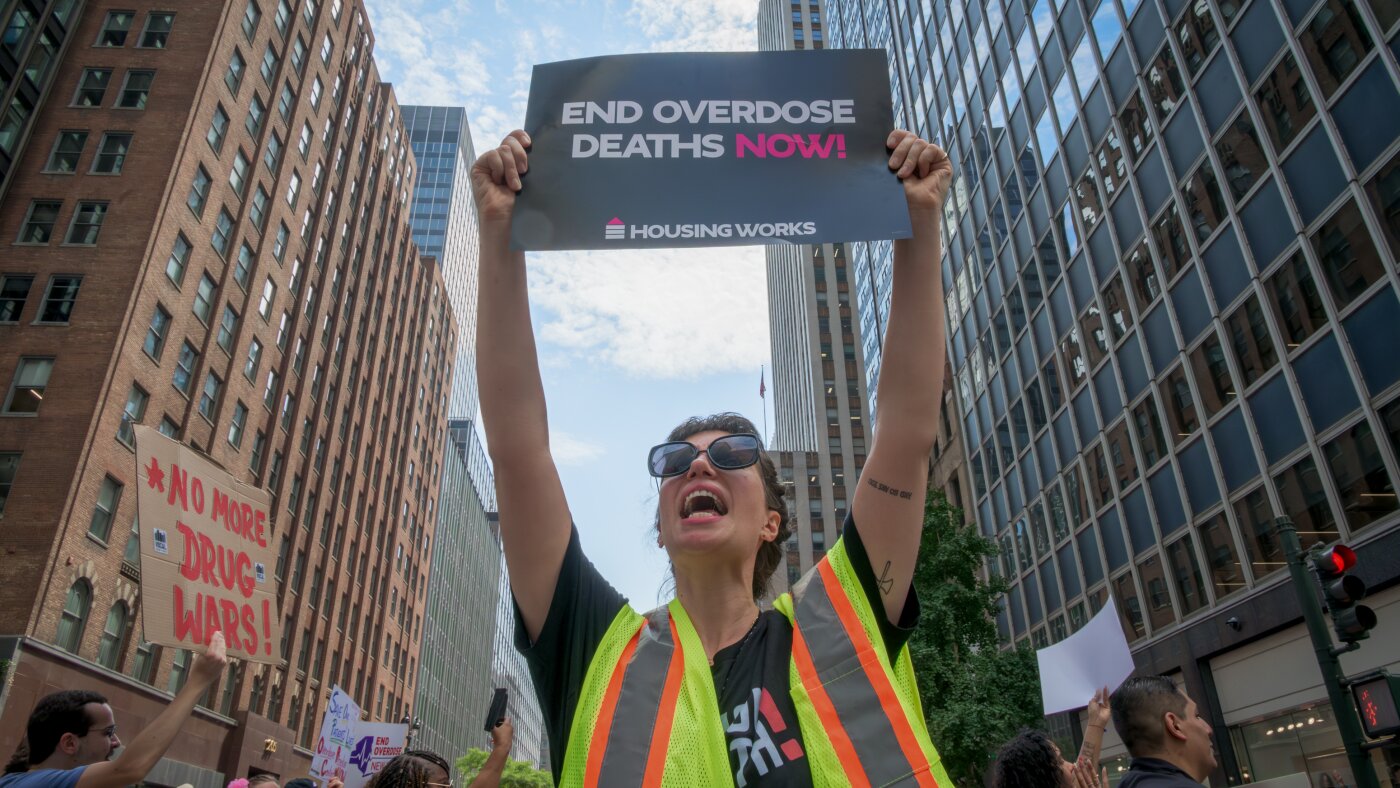
Trump administration sends letter wiping out addiction, mental health grants

Video: Clashes With Federal Agents in Minneapolis Escalate

Venezuela releases multiple American citizens from prison following military operation
-

 Montana4 days ago
Service door of Crans-Montana bar where 40 died in fire was locked from inside, owner says
-

 Technology1 week ago
Power bank feature creep is out of control
-

 Delaware5 days ago
MERR responds to dead humpback whale washed up near Bethany Beach
-

 Dallas, TX6 days ago
Anti-ICE protest outside Dallas City Hall follows deadly shooting in Minneapolis
-

 Dallas, TX1 week ago
Defensive coordinator candidates who could improve Cowboys’ brutal secondary in 2026
-

 Virginia4 days ago
Virginia Tech gains commitment from ACC transfer QB
-

 Education1 week ago
Video: This Organizer Reclaims Counter Space
-

 Iowa1 week ago
Pat McAfee praises Audi Crooks, plays hype song for Iowa State star