Sign up for the Today newsletter
Get everything you need to know to start your day, delivered right to your inbox every morning.

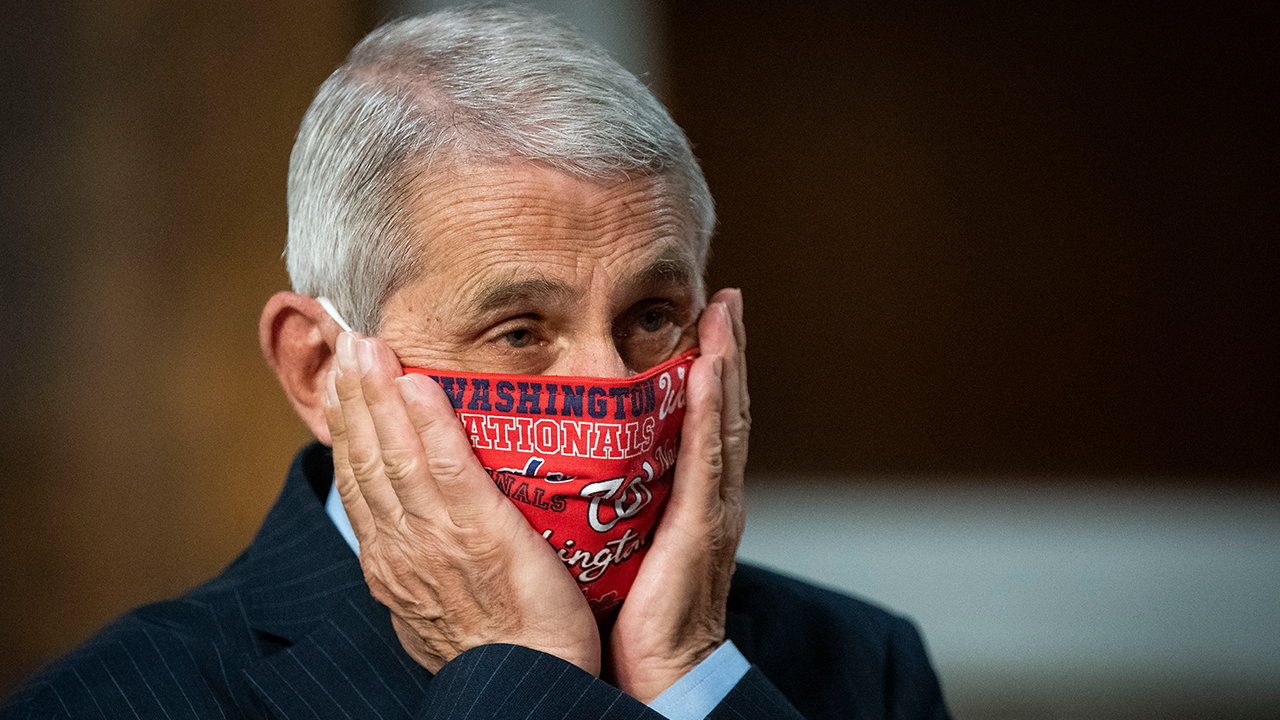
As the U.S. nears the five-year mark since nationwide lockdowns turned toilet paper into a hot commodity, Fox News Digital took a look back at some of the most controversial mandates – those that sparked debate – and, to some, defied logic.
Former NIAID Director Anthony Fauci was a ubiquitous sight throughout the pandemic, during the administrations of both Donald Trump and Joe Biden.
The octogenarian allergist, who had been with the government since 1968 and appointed head of the NIH’s infectious disease arm by former President Ronald Reagan, was often lambasted for contradictory or questionable medical orders.
Fauci drew heat for apparent contradictions in mask-wearing orders, with critics often locking onto the certainty with which the Brooklynite announced each countervailing development.
In March 2020, Fauci told “60 Minutes” about “unintended consequences” of wearing masks to prevent the spread of COVID-19.
“People keep fiddling with the mask and they keep touching their face,” he said, suggesting germs and viruses could be spread by too much fidgeting.
Soon after, and for most of the rest of the pandemic, Fauci was adamant that Americans must wear masks nearly at all times in public.
He raised eyebrows further when he told CNBC it might be time to double up on masks – a stance that clashed with claims from right-wing physicians who warned that excessive face coverings could obstruct breathing.
‘CUOMO CHIP’ LOOPHOLE CRUMBLES AS NY NOW WANTS ‘SUBSTANTIAL FOOD’ SOLD WITH BOOZE
Dr. Anthony Fauci (Getty)
“If you have a physical covering with one layer, you put another layer on it just makes common sense that it likely would be more effective,” Fauci said.
National Review writer David Harsanyi balked at the order at the time, quipping, “No, thanks, Dad.”
Current Secretary of State Marco Rubio also commented at the time about Fauci’s varied orders:
“Dr. Fauci is a very good public-health official. His job is to advise policymakers and inform the public, but his job is not to decide what we can do, where we can go or which places can open or close. His job is not to mislead or scare us into doing the [supposed] right things,” the Floridian said.
Pennsylvania’s most visible shutdown-opposing lawmaker, who later ran for governor on a related “Walk as Free People” slogan, regularly quipped in public remarks at people he would see driving alone in their cars on Interstate 81 while wearing a mask.
“You can’t make this stuff up,” Sen. Doug Mastriano often repeated.
New York City is known for its pizza, bagels, heros and chopped cheese – but western New York holds another food item just as dear – the Buffalo wing.
The COVID-19 lockdowns proved the love upstaters have for their chicken apps after then-Gov. Andrew Cuomo laid out what “substantive food” a watering hole has to offer in order for patrons to go out for a drink.
“To be a bar, you have to have food available. Soups, sandwiches – More than just hors d’oeuvres, chicken wings; you had to have some substantive food,” he said.
New Yorkers used to sloshing Frank’s Red Hot on their chicken became Red Hot themselves and lambasted the governor for appearing to define their beloved dish as less than a meal.
The outrage led to a New York state communications official later tweeting a diagrammed-sentence breakdown of Cuomo’s comments, seeking to illustrate that the clause “more than just hors d’oeuvres” was an interjection and that “chicken wings” were to be associated with the “soups, sandwiches” mentioned – but the damage had been done.
In return, bars began charging a dollar or so each for a slice of deli meat, a handful of croutons or a single french fry in order to allow their patrons an end-round around the edict and have a cold one.
PENNSYLVANIA GOV. TOM WOLF THREATENS TO WITHHOLD CORONAVIRUS AID TO COUNTIES THAT DEFY LOCKDOWN ORDERS
Demonstrators gather around state Rep. Russ Diamond at a Reopen PA rally in Harrisburg, May 15, 2020. (IMAGN)
In neighboring Pennsylvania, Gov. Tom Wolf instituted a similar ban – requiring a meal to be purchased before alcohol could be served. The state police’s bureau of liquor enforcement patrolled towns to enforce the mandate and other regulations, warning small-town saloons that their liquor licenses were on the line.
When many restaurants were closed for eat-in dining in Pennsylvania, several lawmakers held a demonstration in Lebanon outside what was then the Taste of Sicily Italian Restaurant.
Several area lawmakers – state Reps. Russ Diamond, Frank Ryan and the late Dave Arnold – joined Mastriano and restaurant manager Mike Mangano to decry “stop the spread” orders that cut off family restaurants’ income.
Flanked by the others, Diamond read from Article I Sec. 2 of the Pennsylvania Constitution, which stated “all power is inherent in the people… and they have at all times an inalienable… right to alter, reform or abolish their government in such matter they see fit.”
“That means,” he said, “You can exercise your constitutional right to abolish the interminable b—- of this government, which happens to be the governor’s obtuse, stupid and bass-ackward orders.”
In Pennsylvania, Wolf and Health Secretary Rachel Levine were ubiquitous on the airwaves with their lockdown provisions and orders – from traffic-light color-coded maps instructing which counties’ residents could have varying levels of freedom, to Levine’s daily warning on TV to “stay home, stay calm, stay safe.”
Early in the shutdown period, the Wolf administration utilized a seven-decade-old state law aimed at blunting a syphilis outbreak as legal backing for some of their orders.
In April 2020, a York woman was charged under that statute when she tried to quell her cabin fever with a Sunday drive.
Anita Shaffer told local media at the time she had been returning home from a drive when she passed police parked in the town of Yoe.
Originally stopped for a broken taillight, Shaffer was ultimately issued a $202 ticket for violating the Disease Prevention and Control Act of 1955, which was described to her as the “stay-at-home-act” in force at the time – to which she pleaded “not guilty.”
PENNSYLVANIA LAWMAKER SLAMS PA COVID LOCKDOWNS AS ‘KEYSTONE KOPS’
Supporters of Pennsylvania Sen. Doug Mastriano hold signs emblazoned with his anti-COVID-lockdown slogan, “Walk as Free People.”
Current Pennsylvania Attorney General David Sunday – a Republican who was then York County’s district attorney – later expressed opposition to the state’s lockdown orders and told the York Daily Record he wouldn’t prosecute businesses Wolf’s classifications deemed “nonessential” if they opened before Harrisburg said so.
Police said after the incident: “Sunday drives are not essential travel.”
Drivers on the state’s highways also encountered other unique COVID order roadblocks.
Mastriano spoke at several demonstrations in Harrisburg, Lancaster and beyond, and recounted some such experiences.
Pennsylvania rest areas were briefly closed to “stop the spread,” he noted, adding how incredulous it was to come upon an Interstate 81 rest area on his commute, see it barricaded closed, and then see several big-rigs parked dangerously close to traffic on the shoulder in a line for the ensuing mile.
Republicans in Pennsylvania later drafted a constitutional amendment ballot initiative seeking to claw back some of the restrictions. Some proponents cited what they called a biblical irony in the randomly-assigned bill number – SB 836 – which echoed John 8:36’s admonition “If Christ sets you free, you are free indeed.”
Another stop-the-spread order that led to public outcry affected children more than those of-age to travel or drink.
Cities from California to New Jersey began dumping sand into skate parks, playgrounds, and public areas to prevent groups or crowds from the recreation sites.
Tons of sand were dumped into public skate parks in Los Angeles, which enraged professional and amateur shredders alike.
In April 2020, skaters were so fed up with the city of Los Angeles that they brought their own shovels to clear sand from the iconic Venice Beach skate park.
Professional skater Paul Rodriguez told “The Undefeated” at the time that the move was “a little stronger than [the city] needed to do.”
“I was like, damn, that’s aggressive… But as a human, I’m like, we’re going through a pandemic, I mean, we’ve got to do what we got to do,” Rodriguez said.
CA SKATEPARKS FILLED WITH SAND
The Venice Beach skate park was filled with sand to prevent people from using it during the coronavirus pandemic. (Getty)
Skate “bowls” in San Clemente, California, were also filled in with 37 tons of sand after skaters ignored several “No Trespassing” signs.
In Pittsburgh, skaters climbed over closed fences and cut locks, according to the public works department, when local media asked about its own decision to fill the parks with sand.
In other cities, public basketball hoops were removed from backboards, while 2x4s were nailed to cover other baskets in an effort to prevent people from congregating.
While lockdown policies in many states had either intentional or unintentional consequences on the consumption of alcohol, the Northeast was incongruently affected by such a change in social behavior.
In August 2021, as some states began slowly slackening some of their orders, others retained a tough stance to “stop the spread.”
Virginia, Pennsylvania and several other states employ “state stores” or “ABC” outlets to sell alcohol that is effectively solely available from the state government.
One state that doesn’t is Delaware. With its regional tax-free shopping mecca in Christiana and the availability of liquor in mega-stores like Total Wine, it is often a draw for higher-tax or socially-stricter states around it.
COVID-19 made the First State no different, as Pennsylvania continued to keep its state stores closed, Philadelphians and others tried to find new ways to get their alcohol legally.
Just as Pennsylvania’s side of its state lines is dotted with fireworks outlets geared toward out-of-state visitors, a liquor superstore stands just yards inside Delaware at I-95 and DE-92.
The store began seeing a major influx of out-of-state patrons who snuck across from Marcus Hook – until Delaware instituted a travel ban and then-Gov. John Carney’s administration gave police authority to pull over any out-of-state-tagged vehicle.
The parking lot of the Total Wine was a hub for such activity, as thirsty Pennsylvanians converged on the market to purchase their drinks of choice and zip home.
DSP Cpl. Michael Austin responded to the situation in a statement to the Delco Times:
“The primary intent and goal of the Delaware State Police is to uphold their sworn duties by providing information to the public that we serve, in order to gain voluntary compliance with the mandates, and to promote, and further ensure public safety and health.”
Similar dynamics occurred across state lines around the country as well, but not to the high-profile nature media-wise of the “Naamans Road checkpoint.”
Read the full article from Here


Health
Massachusetts health officials have confirmed the state’s first two measles cases of the year, a school-aged child and a Greater Boston adult.
The Department of Public Health announced the cases Friday, marking the first report of measles in Massachusetts since 2024.
According to health officials, the adult who was diagnosed returned home recently from abroad and had an “uncertain vaccination history.” While infectious, the person visited several locations where others were likely exposed to the virus, and health officials said they are working to identify and notify anyone affected
The child, meanwhile, is a Massachusetts resident who was exposed to the virus and diagnosed with measles out-of-state, where they remain during the infectious period. Health officials said the child does not appear to have exposed anyone in Massachusetts to measles.
The two Massachusetts cases come as the U.S. battles a large national measles outbreak, which has seen 1,136 confirmed cases nationwide so far in 2026, according to the Centers for Disease Control and Prevention.
“Our first two measles cases in 2026 demonstrate the impact that the measles outbreaks, nationally and internationally, can have here at home,” Massachusetts Public Health Commissioner Robbie Goldstein said Friday. “Fortunately, thanks to high vaccination rates, the risk to most Massachusetts residents remains low.”
Measles is a highly contagious disease that spreads through the air when an infected person sneezes, coughs, or talks. The virus can linger in the air for up to two hours and may even spread through tissues or cups used by someone who has it, according to the DPH.
Early symptoms occur 10 days to two weeks after exposure and may resemble a cold or cough, usually with a fever, health officials warned. A rash develops two to four days after the initial symptoms, appearing first on the head and shifting downward.
According to the DPH, complications occur in about 30% of infected measles patients, ranging from immune suppression to pneumonia, diarrhea, and encephalitis — a potentially life-threatening inflammation of the brain.
“Measles is the most contagious respiratory virus and can cause life-threatening illness,” Goldstein said. “These cases are a reminder of the need for health care providers and local health departments to remain vigilant for cases so that appropriate public health measures can be rapidly employed to prevent spread in the state. This is also a reminder that getting vaccinated is the best way for people to protect themselves from this disease.”
According to the DPH, people who have had measles, or who have been vaccinated against measles, are considered immune. State health officials offer the following guidance for the Measles-Mumps-Rubella (MMR) vaccine:

Get everything you need to know to start your day, delivered right to your inbox every morning.

It’s a scheme made famous by a nearly 30-year-old episode of the sitcom Seinfeld.
Hoping to earn a quick buck, two characters load a mail truck full of soda bottles and beer cans purchased with a redeemable 5-cent deposit in New York, before traveling to Michigan, where they can be recycled for 10 cents apiece. With few thousand cans, they calculate, the trip will earn a decent profit. In the end, the plan fell apart.
But after Connecticut raised the value of its own bottle deposits to 10 cents in 2024, officials say, they were caught off guard by a flood of such fraudulent returns coming in from out of state. Redemption rates have reached 97%, and some beverage distributors have reported millions of dollars in losses as a result of having to pay out for excess returns of their products.
On Thursday, state lawmakers passed an emergency bill to crack down on illegal returns by increasing fines, requiring redemption centers to keep track of bulk drop-offs and allowing local police to go after out-of-state violators.
“I’m heartbroken,” said House Speaker Matt Ritter, D-Hartford, who supported the effort to increase deposits to 10 cents and expand the number of items eligible for redemption. “I spent a lot of political capital to get the bottle bill passed in 2021, and never in a million years did I think that New York, New Jersey and Rhode Island residents would return so many bottles.”
The legislation, Senate Bill 299, would increase fines for violating the bottle bill law from $50 to $500 on a first offense. For third and subsequent offenses, the penalty would increase from $250 to $2,000 and misdemeanor punishable by up to one year in prison.
In addition, it requires redemption centers to be licensed by the state’s Department of Energy and Environmental Protection (previously, those businesses were only required to register with DEEP). As a condition of their license, redemption centers must keep records of anyone seeking to redeem more than 1,000 bottles and cans in a single day.
Anyone not affiliated with a qualified nonprofit would be prohibited from redeeming more than 4,000 bottles a day, down from the previous limit of 5,000.
The bill also seeks to pressure some larger redemption centers into adopting automated scanning technologies, such as reverse vending machines, by temporarily lowering the handling fee that is paid on each beverage container processed by those centers.
The bill easily passed the Senate on Wednesday and the House on Thursday on its way to Gov. Ned Lamont.
While the bill drew bipartisan support, Republicans described it as a temporary fix to a growing problem.
House Minority Leader Vincent Candelora, R-North Branford, called the switch to 10-cent deposits an “unmitigated disaster” and said he believed out-of-state redemption centers were offloading much of their inventory within Connecticut.
“The sheer quantity that is being redeemed in the state of Connecticut, this isn’t two people putting cans into a post office truck,” Candelora said. “This is far more organized than that.”
The impact of those excess returns is felt mostly by the state’s wholesale beverage distributors, who initiate the redemption process by collecting an additional 10 cents on every eligible bottle and can they sell to supermarkets, liquor stores and other retailers within Connecticut. The distributors are required to pay that money back — plus a handling fee — once the containers are returned to the store or a redemption center.
According to the state’s Department of Revenue Services, nearly 12% of wholesalers reported having to pay out more redemptions than they collected in deposits in 2025. Those losses totaled $11.3 million.
Peter Gallo, the vice president of Star Distributors in West Haven, said his company’s losses alone have totaled more than $2 million since the increase on deposits went into effect two years ago. As time goes on, he said, the deficit has only grown.
“We’re hoping we can get something fixed here, because it’s a tough pill to be holding on to debt that we should get paid for,” Gallo said.
Still, officials say they have no way of tracking precisely how many of the roughly 2 billion containers that were redeemed in the state last year were illegally brought in from other states. That’s because most products lack any kind of identifiable marking indicating where they were sold.
“There’s no way to tell right now. That’s one of the core issues here,” said state Rep. John-Michael Parker, D-Madison, who co-chairs the legislature’s Environment Committee.
Parker said the issue could be solved if product labels were printed with a specific barcode or other feature that would be unique to Connecticut. Such a solution, for now, has faced technological challenges and pushback from the beverage industry, he said.
Not everyone involved in the handling, sorting and redemption of bottles is happy about the upcoming changes — or the process by which they were approved.
Francis Bartolomeo, the owner of a Fran’s Cans and Bart’s Bottles in Watertown, said he was only made aware of the legislation on Monday from a fellow redemption center owner. Since then, he said, he’s been contacting his legislators to oppose the bill and was frustrated by the lack of a public hearing.
“I know other people are as flabbergasted as I am because they don’t know where it comes out of,” Bartolomeo said “It’s a one sided affair, really.”
Bartolomeo said one of his biggest concerns with the bill is the $2,500 annual licensing fee that it would place on redemption centers. While he agreed that out-of-state redemptions are a problem, he said it should be up to the state to improve enforcement.
“We’re cleaning up the mess, and we’re going to end up being penalized,” Bartolomeo said. “Get rid of it and go back to 5 cents if it’s that big of a hindrance, but don’t penalize the redemption centers for what you imposed.”
Lynn Little of New Milford Redemption Center supports the increased penalties but believes the solution ultimately lies with better labeling by the distributors. She is also frustrated by the volume caps after the state initially gave grants to residents looking to open their own bottle redemption businesses.
“They’re taking a volume business, because any business where you make 3 cents per unit (the average handling fee) is a volume business, and limiting the volume we can take in, you’re crushing small businesses,” Little said.
Ritter said that he opposed a move back to the 5-cent deposit, which he noted was increased to encourage recycling. However, he said the current situation has become politically untenable and puts the state at risk of a lawsuit from distributors.
“We’re getting to a point where we’re going to lose the bottle bill,” Ritter said. “If we got sued in court, I think we’d lose.”





Exclusive: DeepSeek withholds latest AI model from US chipmakers including Nvidia, sources say


Mother and daughter injured in Taunton house explosion


2026 MHSA Montana Wrestling State Championship Brackets And Results – FloWrestling


Wildfires rage in Oklahoma as thousands urged to evacuate a small city


Wildfire near Gum Swamp Road in Livingston Parish now under control; more than 200 acres burned


10 acres charred, 5 injured in Thornton grass fire, evacuation orders lifted


YouTube TV billing scam emails are hitting inboxes


Stellantis is in a crisis of its own making
