Northeast
Family of three, including teen daughter, found dead in Massachusetts mansion, valued at $6.8: DA's office

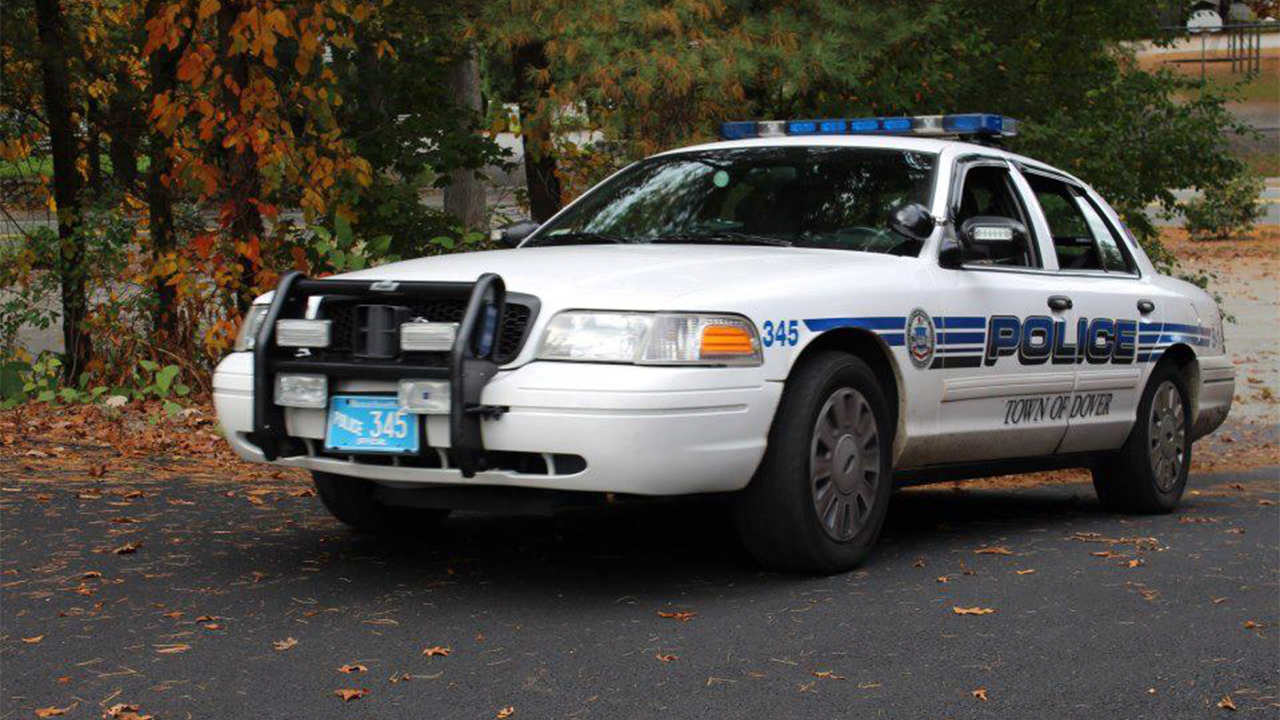
A couple and their teen daughter were found dead in their 19,000 square foot home in a possible murder-suicide in one of the wealthiest suburbs of Massachusetts.
Rakesh Kamal, 57; his wife, Teena; and their daughter, Arianna, 18, were found Thursday evening at their home in Dover, Massachusetts, Norfolk County District Attorney Michael Morrissey said at a news conference on Friday.
The home, which is located approximately 20 miles southwest of Boston, is 19,000 square feet and is worth $6.8 million.
Authorities said that Arianna was a student at Middlebury College in Vermont and home for Christmas break.
2 TEENS KILLED IN REPORTEDLY ‘TARGETED’ MASSACHUSETTS SHOOTING, POLICE SAY
DA Michael Morrissey has identified the deceased as Rakesh Kamal, 57, Teena Kamal, 54, and Arianna Kamal, 18, a student at Middlebury College in Vermont. (Dover Police Department)
Morrissey revealed that local authorities received a call on Thursday at approximately 7:30 p.m. after a concerned family member stopped by the home after they did not hear from the family for a couple of days.
When the relative arrived at the mansion, they told police that they had found one of the victims.
1 DEAD, 3 INJURED IN WESTERN MASSACHUSETTS SHOOTING
During a search of the home, local police found all three victims within the home. Massachusetts State Police officers found a firearm near the husband, Morrissey said.
“I’m led to believe that it’s safe for me to tell you that this is probably a domestic incident,” Morrissey said.
In an updated press release, the Norfolk District Attorney’s office identified the three deceased. (Norfolk District Attorney)
The Medical Examiner’s Office is working to determine the manner of the death
The Norfolk County District Attorney said that this incident is an example of how domestic violence crosses all economic situations.
“I would say: This is an event to remember that that domestic violence crisis cross all economic and social situations,” Morrissey said.
Read the full article from Here


Leer en español
Walking into the ESPN Welcome Center in Bristol, Connecticut, you pass by an eye-catching red wall that loudly screams Latino. From floor to ceiling are anchor catchphrases — many in Spanish — like “En fuego,” “He’s livin’ la vida loca,’” and “Suave, suave, suavecito!”
Latinos are one of the fastest-growing populations of sports fans in the U.S. They currently make up 19% of the $160 billion sports industry, according to a 2025 study from Telemundo and McKinsey. The research projects Latino fans will contribute one-third of the economic growth in the industry in the next decade.
At ESPN, much of that growing sports audience is served by fellow Latinos, specifically Puerto Ricans. In fact, ESPN’s main headquarters is in Connecticut, the state with the highest proportion of Boricuas: 8%.
The universal language of sports
Sports has continued to be a mainstay for Latinos, regardless of their preferred language. Nielsen’s latest data shows viewership of popular sports for Latinos, like soccer, baseball and boxing, has only grown in recent years. For example, more than 12 million people tuned in to the 2024 Copa América Final. Of those fans, more than half identified as Latino.
Even leagues that have historically marketed toward an English-speaking audience have pivoted in modern times — from the predominantly white NHL’s bilingual marketing of the Florida Panthers to the NFL’s most recent choice for its Super Bowl Half Time performer: Bad Bunny. The Spanish-language concert brought in a record 4.2 billion viewers worldwide.
At ESPN, Spanish-language content became a pillar more than 20 years ago. In 2004, it launched ESPN Deportes, a separate outlet, offering ESPN’s coverage in Spanish. That required hiring an entirely new staff of anchors, reporters, producers and more to create independent content that included not only the native language, but also cultural context sought by Latino audiences.
Many of those Latinos recruited in the early days were pioneers from Puerto Rico’s sports media industry. It was a small circle at the time, where many of those who landed at ESPN had known — and sometimes even mentored — each other for years.
Ryan Caron King
/
Connecticut Public
José “Canelo” Álvarez Martínez
José “Canelo” Álvarez Martínez first rolled into ESPN 15 years ago — literally.
Álvarez Martínez skateboarded to work for his first eight months at ESPN, as part of its PA Trainee Program. The recent University of Puerto Rico graduate didn’t want to invest in a car in case he didn’t make the cut for a full time contract.
The lifelong athlete grew up in San Juan, eventually playing on the UPR Men’s Volleyball Team and the Puerto Rico Golf Junior National Team. He said love of sports runs in his family.
“It’s funny because I was watching a documentary on the Puerto Rico national team that was playing in the World Baseball Classic,” he said. “And they posted a picture of the first Puerto Rican national team in 1938, and I paused it. I was like, ‘That’s my grandpa on that team.’”
Álvarez Martínez watched ESPN with his “pops” every morning before school. Now, the 39-year-old is a father himself and a digital director of video and original storytelling for ESPN Global Team.
He is now up for two 2026 Emmys for features he worked on last year, but he is most proud of producing coverage of Puerto Rico’s first-ever gold medal at the 2016 Olympics in Rio de Janeiro.
“I think part of all of our success is understanding that we don’t have to fit in and that we can do something very special and unique as Latinos and Hispanics, and as Puerto Ricans,” he said.

Ryan Caron King
/
Connecticut Public
Michele LaFountain-Stokes
Michele LaFountain-Stokes is one of the first Latinas to ever anchor ESPNews in English.
With nearly three decades in sports media, the 57-year-old serves as general editor for ESPN Deportes Digital, shaping coverage in an industry where women were once barely part of the conversation.
“I knew that it was a male-dominated field, obviously, sports,” she said. “So that was the pressure for me, that I didn’t want to do a bad job … I always knew that I would be a role model.”
The San Juan native got her start through a two-summer internship at El Nuevo Día newspaper. After earning her master’s degree in communications from Boston University, she was introduced to ESPN by a colleague and — at first — she turned the opportunity down, since she didn’t know much about the technical side of TV.
Her career brought her to Mexico’s Univision and Telemundo then English-language networks in the U.S., before she returned to ESPN. One of her biggest challenges was deciding, live on air, how much or how little of an accent to use on Spanish surnames.
“I would read on the internet, ‘She mispronounces that name.’ That would get to me, and I would feel insecure,” she said. “Now, I’m older. I’m wiser. So, I feel more confident in myself.”
Recently, she was given the responsibility of women’s sports coverage. With the way they’re taking off, she says, “it’s almost like vindication.”

Ryan Caron King
/
Connecticut Public
Freddy Rolón Narváez
Freddy Rolón Narváez was born in New York to Puerto Rican parents. He grew up five blocks from Yankee Stadium in The Bronx and was always going to games.
“The Yankees were really, really bad, but that didn’t stop my dad from being super passionate,” he said, laughing. “I used to have a deal with my parents that if I finished my homework before 6 o’clock, I could go to the game.”
Back then, bleacher seats were less than $4 each, and that easy access spurned a lifelong love of sports for Rolón Narváez.
Now the head of global sports for ESPN, Rolón Narváez’s corner office at headquarters is filled with signed boxing gloves and baseball posters, including an image of Roberto Clemente.
He said that his father, who is from Salinas, is the main reason he is passionate about sports.
“My dad came to visit earlier last year, and he had a smile the entire time he was here,” he said. “It was just a nice moment to come full circle. Like, I’m not in sports if it wasn’t for my dad helping me have that passion.”
Rolón Narváez says his dad has “probably got ESPN branded clothes 365 days of the year” now.

Ryan Caron King
/
Connecticut Public
Marilyna Rodriguez
Marilyna Rodriguez, a Bayamón native, had a storied journalism career in Puerto Rico, working for legacy outlets like El Diario de Puerto Rico, El Mundo and El Vocero. Her husband, Hector Cruz, was also a journalist at the online version of El Nuevo Día.
Then, her husband got an interview with ESPN Deportes.
“I told him when he was coming, ‘Make sure you get a tour, because we’re never going there. Like, they’re not going to hire you,’” Rodriguez recalled, laughing. “I am what it’s called in HR, a trailing spouse.”
Rodriguez, 50, first took a temp role at ESPN and then found a way to stay, holding multiple positions until joining the diversity team in 2015.
“Connecticut is a great place, but it’s significantly different from being back on the island,” Rodriguez said. “I’m incredibly grateful for ESPN, for the community of Puerto Ricans that we have here. We have built a family away from home, which is an incredible experience.”
That family became all the more important when her husband, Cruz, passed from cancer in 2023. A few years later, she still goes to work each day with the couple’s decadeslong colleagues and friends — plus, their adult son, who works in statistics and information.

Ryan Caron King
/
Connecticut Public
Jaime Vega-Curry
Jaime Vega-Curry’s path into sports media started at just 12 years old on a bicycle, working as a newspaper delivery boy for his dad’s workplace, El Nuevo Día.
Over the years, he moved through different roles at the paper, working in inserts, at the front desk and, eventually, in the photo archive, where he met aspiring journalists like Michele LaFountain-Stokes.
His mind was on sports, a section he finally moved to and reported in for over a decade.
In September 2001, he was sent to New York City to cover Puerto Rican boxer Félix Trinidad’s match with Bernard Hopkins at Madison Square Garden, but the 9/11 terrorist attacks pulled him into hard news.
Eventually, Vega-Curry moved to California for his wife’s journalism career, and there they remained until a coffee meeting with a colleague at ESPN in LA.
“I always said that it will take for me a bulldozer to take me out of California. I love California,” Vega-Curry said. “And then the bulldozer was ESPN.”
Today, the 63-year-old is the deputy editor for ESPNdeportes.com, helping guide digital storytelling for the U.S. Latino audience.
“Be ready when the moment arrives,” Vega-Curry advises. “It may be anytime, anywhere. Be on the lookout for it.”

Ryan Caron King
/
Connecticut Public
Hiram Martínez
Hiram Martínez is originally from Puerto Rico’s mountainous interior in Utuado, but he has now called Connecticut home for 15 years.
Many know the senior editor for ESPNdeportes.com as “the father of the Puerto Rican sports journalists,” but he said he owes his sports media career to Jaime Vega-Curry.
“We went together to the University of Puerto Rico,” Martínez said in Spanish. “Senior year, I was in a precise moment of not knowing what I wanted to do, but I knew a lot about sports.”
Martínez read the entire issue of El Nuevo Día every day from the back to the front to make sure he didn’t miss any sports news. If you ask him who won the MLB World Series any year since 1970, he claims to know the answer.
Vega-Curry knew this about his childhood friend, which is why he called Martínez about an open position at El Nuevo Día.
“I ended up here thanks to people I knew from Puerto Rico and entered the industry thanks to people I’ve known since I was a kid, so I’ve always had those guardian angels,” Martínez said.
Martínez went on to work at all three of the major outlets on the island, as founding sports editor for Primera Hora, also a subsidiary — like El Nuevo Día — of GFR Media and, after 12 years, moved to El Vocero. In 2011, a friend living in the states got him an interview at ESPN.
The “father” title came from his years trying to pass that kindness forward — to aspiring sports journalists, like José “Canelo” Álvarez Martínez.
“One of the things I’m most proud of during my career is having helped so many people,” Martínez said. “I believe in giving opportunities to young journalists.”

Tennessee forward J.P. Estrella, a Scarborough native and former South Portland standout, announced earlier today that he is entering the transfer portal.
Estrella shared the news in a social media post, writing that his time at Tennessee “means more to me than I can put into words” and that he’ll “cherish the time I spent there.”

The increasing gas prices are having an impact on landscaping businesses in Massachusetts, and it may mean customers have to pay more.
Gas prices continue to climb across the country, and the average price of a gallon of regular in Massachusetts was $3.93 on Monday, according to AAA. That is up 13 cents from last week and 78 cents from one month ago.
It’s an extremely busy time for landscapers. Spring cleaning is underway, which means lawnmowers, blowers, weedwhackers and trimmers are in overdrive. Andrew Pecorella runs his own landscaping business serving areas like Natick, Framingham, Brookline and Newton. He says the increasing cost of gas prices is impacting the industry.
“Everybody wants their properties looking well so if it has to go up, then my prices are going to have to go up a little bit,” Pecorella said.
He uses diesel for his truck and premium fuel for his landscaping equipment. He goes to the pump every day to fill up. He’s noticed a big increase since last spring, which is why he has to charge his customers more.
“Mostly been saying to them that prices are going to have go up a little bit, mainly because of my cost of fuel and cost of materials,” Pecorella said. “Because the materials have to get to the yard and that costs more money for them to ship it to the yard and make the mulch and make all the products. It costs money. It costs fuel.”
He says fuel, materials and equipment costs are making it challenging, which is why he’s cutting it close to make sure he’s being fair to his customers and also being business savvy. He says if he has to drive further, it will cost more.
He’s been in the landscaping business since 2010 and started his own business in 2018. He says he loves his job even when it’s hard to predict how much things will cost each year.
“It’s just one step at a time, do the best that you can, and try to make sure all your customers are happy,” Pecorella said.

Reward offered for information on fugitive who violated parole in Northeast Ohio

Aaliyah Crump plans to transfer from Texas: report

Tuscaloosa librarian Katy Busby named finalist for Alabama Elementary Teacher of the Year

VIDEO: World’s first wingsuit skydive through Alaska’s northern lights

Avoiding AC fire risks while staying cool in Arizona

Florida High School Football Rankings: Top 25 teams – Oct. 21

How old is Bo Nix? What to know about Oregon quarterback ahead of 2024 NFL Draft

Cleary's 21 help Le Moyne down Central Connecticut State 69-64 in OT

99th annual Pony Swim held in Virginia

Indiana Members Credit Union announced as new anchor tenant at Bottleworks District

Map: Minor Earthquake Strikes Near San Diego

Trump claims he’d win as the president of Venezuela — just needs to ‘quickly’ learn Spanish

US Supreme Court clears path for Steve Bannon criminal case dismissal

Trump reiterates threats to bomb Iran’s power plants and bridges

Trump threatens Iranian infrastructure over Strait of Hormuz | BBC News
-

 Atlanta, GA2 days ago
1 teenage girl killed, another injured in shooting at Piedmont Park, police say
-

 South-Carolina1 week ago
South Carolina vs TCU predictions for Elite Eight game in March Madness
-

 Vermont1 week ago
Skier dies after fall at Sugarbush Resort
-

 Movie Reviews5 days ago
Vaazha 2 first half review: Hashir anchors a lively, chaos-filled teen tale
-

 Politics1 week ago
Trump’s Ballroom Design Has Barely Been Scrutinized
-

 Politics1 week ago
JD Vance says he was ‘obsessed’ with UFOs, believes aliens are actually ‘demons’
-
 Entertainment5 days ago
Inside Ye’s first comeback show at SoFi Stadium
-

 Atlanta, GA1 week ago
Fetishist ‘No Kings’ protester in mask drags ‘Trump’ and ‘JD Vance’ behind her wheelchair