


Sign up for the Today newsletter
Get everything you need to know to start your day, delivered right to your inbox every morning.

NEWYou can now listen to Fox News articles!
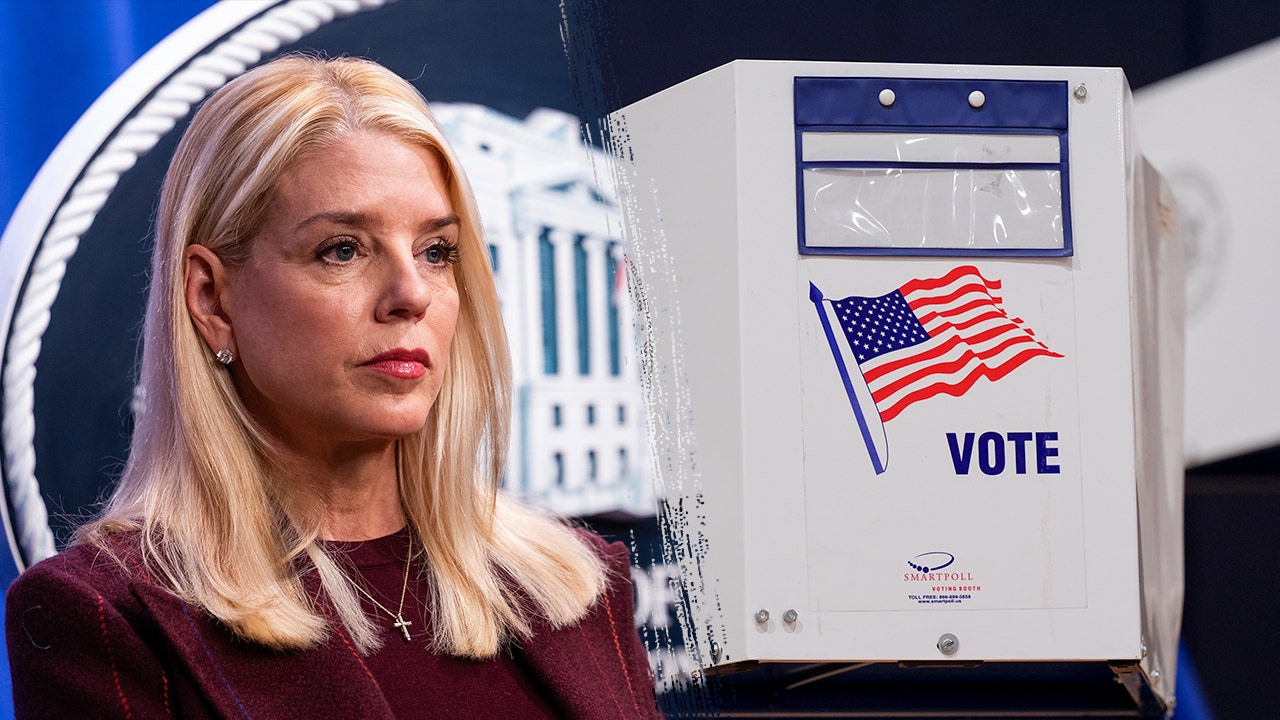
The Justice Department filed lawsuits Tuesday against six blue states: Delaware, Maryland, New Mexico, Rhode Island, Vermont and Washington, accusing them of violating federal law by refusing to provide statewide voter registration rolls upon request.
The complaints, filed by the DOJ’s Civil Rights Division, argue the states failed to meet their legal obligations under the National Voter Registration Act (NVRA), the Help America Vote Act (HAVA), and the Civil Rights Act of 1960, three federal statutes that require states to maintain accurate voter rolls and make those records available for inspection.
Attorney General Pam Bondi said state refusals to disclose the lists undermine the transparency and accountability those laws were designed to guarantee.
“Accurate voter rolls are the cornerstone of fair and free elections, and too many states have fallen into a pattern of noncompliance with basic voter roll maintenance,” Bondi said in a statement announcing the lawsuits. “The Department of Justice will continue filing proactive election integrity litigation until states comply with basic election safeguards.”
NEWSOM’S FIERY CLAIM DOJ HAS ‘NO BUSINESS’ MONITORING CA ELECTION BLASTED BY TRUMP OFFICIAL: ‘CALM DOWN BRO’
The Department of Justice announced a new suit against six blue states Tuesday over access to voter roll data. (Getty Images)
According to the DOJ, the agency formally requested each state’s current, statewide voter registration roll and did not receive the required records. In each lawsuit, the department argues that Congress gave the attorney general clear authority to demand the production, inspection, and analysis of voter registration data to ensure compliance with federal law.
Assistant Attorney General for Civil Rights Harmeet Dhillon, who leads the Civil Rights Division, said the department is escalating enforcement efforts ahead of the 2026 election cycle.
“Our federal elections laws ensure every American citizen may vote freely and fairly,” Dhillon said. “States that continue to defy federal voting laws interfere with our mission of ensuring that Americans have accurate voter lists as they go to the polls, that every vote counts equally, and that all voters have confidence in election results. At this Department of Justice, we will not stand for this open defiance of federal civil rights laws.”
FIRST TIME VOTING? HERE IS THE ULTIMATE GUIDE TO BALLOT BOXES, CRITICAL ISSUES ON ELECTION DAY
Assistant Attorney General for Civil Rights Harmeet Dhillon arrives for a news conference at the Justice Department on September 29, 2025 in Washington, DC (Andrew Harnik/Getty Images)
The DOJ says the lawsuits are part of a broader effort to enforce voter-registration transparency requirements that Congress put in place to ensure public confidence in election administration. NVRA requires states to maintain accurate voter lists and produce them upon request; HAVA mandates states modernize and safeguard voter registration systems; and the Civil Rights Act of 1960 authorizes the government to inspect and copy certain election records, including voter rolls.
Fox News Digital has reached out to elections officials in all six states for comment.
The Justice Department filed lawsuits against six blue states: Delaware, Maryland, New Mexico, Rhode Island, Vermont and Washington, accusing them of violating federal law by refusing to provide statewide voter registration rolls upon request. (Patrick T. Fallon/AFP via Getty Images)
Federal officials have increasingly pressed states on voter roll compliance issues in recent years, arguing that transparency around registration lists is essential to maintaining accurate records, preventing administrative errors and ensuring voters have confidence in election outcomes. The DOJ says the six states named in these new suits have repeatedly failed to meet the department’s requests.
The cases will now move forward in federal court, where judges could order the states to turn over the voter lists, impose compliance deadlines, or issue injunctions requiring adherence to federal law.
CLICK HERE TO DOWNLOAD THE FOX NEWS APP
Election law disputes over voter roll access and maintenance have escalated nationwide as states prepare for the 2026 midterms and the DOJ’s latest actions show an aggressive legal posture toward states that fail to meet federal disclosure rules.
The department says it will “continue filing proactive election integrity litigation until states comply,” and has left open the possibility of additional lawsuits.
Read the full article from Here


Local News
A Boston man is facing charges after he allegedly lunged at a Burger King employee, punched a customer, and then resisted arrest at a nearby MBTA station in East Boston, authorities announced Monday afternoon.
Patrick Donovan, 59, was charged July 1 with one count of assault and battery causing injury on an over 60 or disabled person, assault and battery, disorderly conduct, resisting arrest, assault, and vandalism, Suffolk District Attorney Kevin Hayden’s office said in a press release.
The charges stem from an incident shortly before 10 p.m. on June 30, when Boston police responded to a disturbance call from Burger King at 1 Maverick Square, Hayden’s office said.
A Burger King employee told officers that, after ordering his food and receiving it, Donovan yelled that he no longer wanted it and smacked a napkin holder off the counter. He then allegedly lunged at an employee and grabbed her by the arm, prosecutors said.
Donovan subsequently shoved a customer from behind and allegedly punched him in the face three times while calling him racial slurs, the DA’s office said.
Emergency medical services evaluated the customer for “visible lacerations to the forehead,” but the victim declined additional treatment, authorities said.
Donovan fled the restaurant following the assaults, and officers tracked him to the nearby MBTA Maverick Station, prosecutors said.
“While officers tried to detain Donovan inside the station, he swung at them with a closed fist but did not make contact,” Hayden’s office said, noting that Donovan made racial slurs towards the officers. “Donovan was placed into custody after a brief struggle.”
During his arraignment in the East Boston division of the Boston Municipal Court, Donovan pleaded not guilty and was released on personal recognizance. Court records show he was also ordered to stay away from Maverick Square and Burger King.
He is scheduled to return to court Aug. 7 for a pre-trial hearing, prosecutors said.
Officers obtained security footage of both assaults. Authorities said the incident remains under investigation and could result in further charges.
“Our workers deserve to be safe in their workplaces and our consumers deserve to be safe in their shopping or dining places, without exception,” Hayden said in a statement. “Beyond that, none of our citizens or first responders should be subjected to racial slurs. These appalling words have no place in Suffolk County or anywhere else in our society.”
Attorney information for Donovan was not immediately available Monday afternoon.
Get everything you need to know to start your day, delivered right to your inbox every morning.


A hit HBO documentary series is looking to Connecticut for stories to feature in its second season.
The show “Neighbors” follows on-going neighbor disputes across the country. The goal of the show is to help neighbors reach a resolution, according to the show’s casting director and executive producer Harleigh Shaw.
“Each story we explore, we spend extensive time with neighbors on both sides to really understand the full context beyond the disputes,” Shaw said.
Producers wanted to share stories in the second season that were based in states that weren’t featured earlier this year in the first season, including Connecticut, Shaw said.
“A lot of the things that we’re most interested in are things that may seem small, but become a bigger issue between the neighbors,” Shaw said. “Anything from disagreements over gardening practices to property lines to noise to dock issues, if it’s a waterfront property. A whole myriad of things. We’re really open to anything.”
However, the show does avoid situations that are violent or dangerous.
Residents from Connecticut looking to participate should be open to third party conflict resolution, according to Shaw.
“Some of the ways that we did that were through mediation,” Shaw said. “That’s a huge one. But there are other things in terms of resources we’d be open to help the neighbors to like help work through the issues.”
Filming will take place throughout the summer and is expected to be completed by the end of September.
The show’s production team is located in New York City and Los Angeles.
“Connecticut has always been really interesting because it’s just a short trip away, and we’re just curious to explore the types of neighbor dynamics that are going on there,” Shaw said.
Connecticut residents who are interested in being on “Neighbors,” can apply at helloneighbortv.com and are encouraged to submit information about themselves as well as their neighbor dispute.
“The neighbor disputes are the entry point for this show, but we’re always also just very interested in inspiring amazing people doing cool stuff,” Shaw said.
“Neighbors” premiered in February and was quickly renewed. The show averages about 3 million viewers per episode.
The show features stories that make viewers laugh and cringe, according to HBO Programming’s Executive Vice President Nina Rosenstein.
“At a time when even the smallest disagreements can spiral out of control, ‘Neighbors’ feels both hilariously absurd and surprisingly relatable,” Rosenstein said. “What makes the show special isn’t just the stories and people they find, but the empathy and humanity they bring to each episode.”

Sam Neill, known for ‘Jurassic Park’ and ‘The Piano,’ dies at 78, his family says


Microsoft tests Windows Search without all the ads and fluff


Iran-backed terror proxy Houthis threaten fresh attacks after Yemen airport strike


Hegseth announces joint task force with DOJ to prosecute leaks to journalists ‘with the full force of the law’


Microwaved squishy toy explodes onto boy’s face and chest amid viral trend, causing horrific burns


FBI, Atlanta police target unauthorized drones flying near World Cup venues


Why careful people still end up on data broker sites

Netflix to add videos from digital publishers to its homepage

