Connecticut
CT seeks to lower drunk driving threshold. Here’s what the new BAC threshold would be.


With numerous wrong-way crashes and fatalities on Connecticut highways, state lawmakers called Wednesday for making it easier to arrest drunken drivers.
The legislature’s transportation committee is debating a bill that calls for reducing the drunken driving arrest threshold to 0.05% blood alcohol content, down from the current .08.
Thomas B. Chapman of the National Transportation Safety Board testified via Zoom in favor of lowering the limit, a position by the NTSB since 2013. Utah became the first state to do so in 2018 and has seen a drop in fatalities.
Dropping the level, Chapman said, would lower the death rate by an estimated 11%. Like Connecticut, other states that are currently considering .05 are Hawaii, Washington, New York, North Carolina and others.
“We are an outlier,” Chapman said, referring to the United States. “Over 100 countries in the world have .05 or lower … That includes much of Europe, where drinking is part of the culture. What is not part of the culture is drinking and driving. … You are impaired at .05. … There is a demonstrable diminishment in cognitive and physical skills at that level.”
Noting that some drivers would not be deterred and would ignore lower levels, Chapman said, “.05 is not the entire answer on this. It is a piece of the answer.”
Nationally, 13,384 people died in the United States in alcohol-related crashes in 2021, the most recent year where complete numbers are available. That includes 112 alcohol-related deaths in Connecticut.
State transportation Commissioner Garrett Eucalitto, testifying remotely Wednesday from a transportation meeting in Philadelphia, said, “What we have been doing as a state has not been working. … Drunk driving is a reckless choice made by the driver. … Everyone is impaired at .05. I know some people might argue with that … but the science is clear.”
Saying that Connecticut could emulate Utah, Eucalitto said the change to .05 did not decrease tourism or alcohol sales in Utah.
Marijuana impact
While the impact of drunken driving has been well documented for years, state legislators are also questioning the influence of the recent decriminalization of marijuana in Connecticut. Drivers smoking pot become impaired, and police have complained repeatedly that they do not have a simple test for marijuana in the way they can measure blood levels for alcohol.
Marijuana has been involved in some fatal accidents, and both drivers had traces of marijuana in their blood in the wrong-way crash last year that killed state Rep. Quentin “Q” Williams of Middletown after he left the governor’s inaugural ball in Hartford.
Rep. Thomas O’Dea, a New Canaan Republican, said lawmakers need to focus closely on the impact of cannabis on car crashes.
“That’s the elephant in the room in my opinion,” O’Dea said. “My biggest problem is the marijuana laws in Connecticut.”

Mark Mirko/The Hartford Courant
Sen. Tony Hwang of Fairfield is concerned about drivers who have been smoking marijuana and got involved in car crashes.
State Sen. Tony Hwang of Fairfield, the committee’s ranking Senate Republican, said the combination of marijuana and alcohol can be deadly.
“Impairment of any kind is part of the danger on the roads,” Hwang told Chapman. “If we only handle one part and not address the other, it may be a half-completed task. … If you lack common sense, you’re still going to have violators on the roads.”
Chapman responded that alcohol remains the biggest problem, but there is an “increasing prevalence of other impairing substances” that include marijuana.
“It is a growing problem — one that we are concerned about,” Chapman said. “It’s not as easy to test these other substances.”
He noted that airplane pilots have an even higher standard that keeps the skies safe. He noted that pilots avoid alcohol before flying under the mantra of “eight hours from bottle to throttle.”
State Rep. Devin Carney, an Old Lyme Republican, said, “We talk about Big Tobacco, Big Pharma, but we don’t talk about Big Alcohol.”
In an attempt to reduce crashes, the committee voted last year to lower the blood alcohol level for arrest. The measure passed by 21-15 with Republicans and Democrats on both sides of the bipartisan issue. The bill, however, never passed in the state House of Representatives and Senate before time expired.
The measure is part of a broader plan to reduce a skyrocketing number of fatalities on Connecticut roads. Legislators were stunned at 366 deaths on the roads in 2022 — about one per day. The statistics show that 2022 was the worst year on Connecticut roads since 1989. While fatalities dipped to 323 last year, the accidents are continuing this year.
If approved, Connecticut would follow Utah as the second state in the nation at .05. The national standard is .08 that states have enacted in order to avoid losing funding for federal highway construction. As a result, Connecticut is currently at the same level as nearby New York, Massachusetts, Vermont, New Hampshire and Rhode Island.
Wednesday marked the committee’s final public hearing of the 2024 legislative session as nearly 60 people signed up to testify. No decisions were made Wednesday, but all bills are subject to final approval by the full House of Representatives and state Senate before the regular session adjourns on May 8.
Statistics
Besides .05, the committee is working on overall traffic safety, including the deaths of pedestrians and a rash of wrong-way crashes on the highways.
In 2022, the 366 overall deaths were the highest in 33 years. Another peak in 2022 was 73 pedestrian fatalities, compared to 55 pedestrians in 2019 and 2021 and 51 last year.
Motorcycle deaths have claimed 68, 66, and 62 lives over the past three years, up sharply from 49 in 2019.
Wrong-way crashes also peaked in 2022 with 13 accidents that led to 23 fatalities, the highest total by far in recent years. Last year, the total dropped back down to 7 fatalities — still above the levels of four each in 2020 and 2021.
Christopher Keating can be reached at ckeating@courant.com



A state trooper who was arrested in August and November of 2025 for the same domestic disturbance resigned on March 5, Connecticut State Police confirmed on Tuesday.
On Aug. 27, 37-year-old Trooper Edward Gookin was arrested after a verbal and physical altercation at a home in Griswold, and he was determined to be the aggressor.
He was charged with disorderly conduct, released on $2,500 bond, and placed on paid administrative duty at that time.
Then on Nov. 19, Gookin was arrested again for the same incident that happened on Aug. 27.
This time, he was charged with risk of injury to a child, reckless endangerment, and illegal discharge of a firearm. He was again placed on paid administrative duty, posted a $25,000 bond, and appeared in court.
Now, state police say Gookin has resigned.

A proposal to build a bridge linking Long Island to Connecticut is once again sparking conversation—and controversy—nearly a century after the idea first surfaced.
The latest plan, introduced by Connecticut developer Steve Shapiro, calls for a 14-mile span stretching across Long Island Sound from Bridgeport, Connecticut, to the Sunken Meadow Parkway on Long Island’s North Shore. If completed, the project would mark the first direct roadway connection between Long Island and New England.
Supporters say the bridge could transform regional travel, easing congestion and offering an alternative route for drivers who currently must pass through New York City to reach the mainland.
“We have such an opportunity in Connecticut and on Long Island to connect our two regions,” Shapiro said in a promotional video.
The proposed crossing would cost an estimated $50 billion to construct, with tolls projected at roughly $39 each way. Plans could also include a rail component to accommodate both passenger and freight service.
The idea of a cross-sound bridge is not new. Discussions date back to the 1930s, but repeated proposals over the decades have failed to gain enough political or public support to move forward.
At Sunken Meadow State Park, where the bridge could make landfall, residents and visitors expressed mixed reactions.
“I think it’s helpful with traffic—alleviating congestion trying to get to the city,” said Gus Hueber of East Northport.
Others worry about the environmental and cultural impact on Long Island’s character.
“It would destroy this area,” said Maureen Abbatecola of Kings Park. “It might make it easier for people to get on and off Long Island, but it’s also very special that this is an island—and that might take some of that away.”
Shapiro has suggested a potential compromise to address environmental concerns, including a hybrid design that would tunnel a portion of the route beneath the shoreline near the park.
“You could tunnel it under about a mile or two offshore and then go under the park,” he said.
In Connecticut, a bill that would authorize a feasibility study for the bridge was introduced in the state assembly but has not yet advanced out of committee. Despite that, Shapiro remains optimistic, emphasizing that cooperation between New York, Connecticut, and the federal government would be key to making the project a reality.
For now, the proposal remains in its early stages—but as it has for generations, the idea of bridging Long Island Sound continues to divide opinion on both sides of the water.

There’s already an AGANORSA Leaf Aniversario Connecticut Toro; it measures 6 1/4 x 52. In a month, there will also be a 6 x 52 toro.
It’s not simply a quarter-inch of difference in length. The new Tubo is a round cigar while the original Toro is box-pressed. Also, as the name implies, the Tubo will come individually packaged in tubes. Blend-wise, the two cigars are the same: an Ecuadorian Connecticut-seed wrapper over Nicaraguan tobaccos grown by AGANORSA. The line is made at the company’s factory in Nicaragua.
The AGANORSA Leaf Aniversario Connecticut Tubo has an MSRP of $19.99 and comes in boxes of 10 cigars.
“The Aniversario Connecticut Tubo offers a perfect combination of elegance, convenience, and flavor,” said Terence Reilly, vp of sales & marketing for AGANORSA Leaf, in a press release. “It’s an ideal cigar for both longtime fans of the brand and smokers discovering Aganorsa for the first time.”
AGANORSA Leaf will show off the Aniversario Connecticut Tubo to retailers during the 2026 PCA Convention & Trade Show, which takes place April 18-20 in New Orleans. The company says it will ship the cigar to stores in late April.

Charlie Minato
I am an editor and co-founder of halfwheel.com/Rueda Media, LLC. Previously, I started TheCigarFeed, one of the two predecessors blogs of halfwheel. I have written about the cigar industry since 2010, covering everything from product launches to regulation to M&A. Beyond writing, I handle a lot of the behind-the-scenes stuff from weighing cigars to coordinating the tech. Outside of work, I enjoy playing tennis, watching boxing, falling asleep to the Le Mans 24, wearing sweatshirts year-round and eating gyros. echte liebe.

Driver dies days after head-on collision in Colorado Springs; surviving driver may have been involved in a race, police say

State trooper who was arrested twice has resigned

Final spotlight on Top 67 players in Delaware high school boys basketball

Democrat Emily Gregory flips Florida state House district that includes Mar-a-Lago

Special election set for Georgia Senate District 7 seat in Gwinnett County

Florida High School Football Rankings: Top 25 teams – Oct. 21

How old is Bo Nix? What to know about Oregon quarterback ahead of 2024 NFL Draft

Cleary's 21 help Le Moyne down Central Connecticut State 69-64 in OT

99th annual Pony Swim held in Virginia

Indiana Members Credit Union announced as new anchor tenant at Bottleworks District

LaGuardia Crash Timeline: Moments Before Air Canada Plane Collided With Fire Truck

Chicago alderwoman apologizes for ‘wrong place at the wrong time’ comment on slain student

Fake Euronews website targets Hungary election with false claims
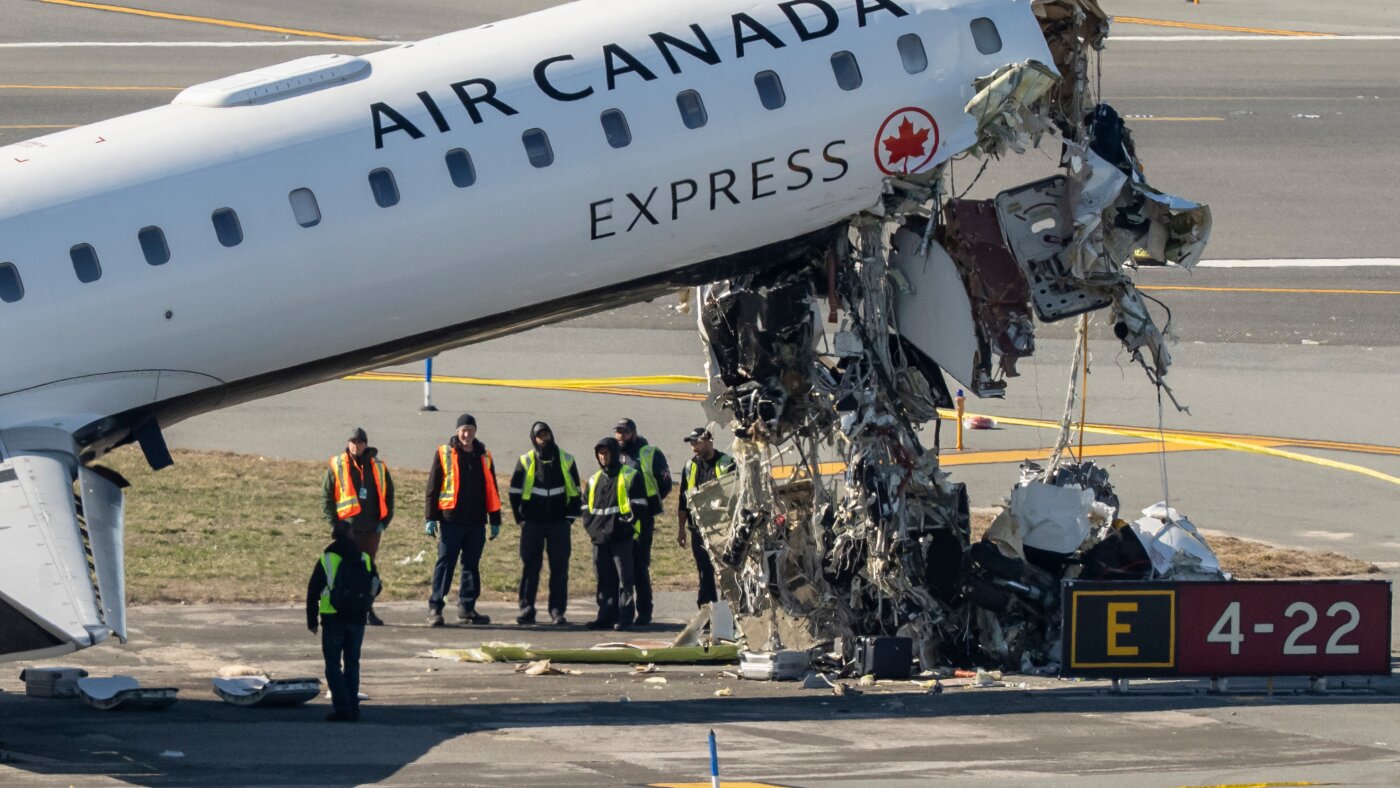
An air traffic controller was juggling extra roles during the LaGuardia plane crash

Iran War: Pentagon set to send thousands of elite 82nd Airborne troops to region | BBC News
-

 Detroit, MI6 days ago
Drummer Brian Pastoria, longtime Detroit music advocate, dies at 68
-

 Georgia1 week ago
How ICE plans for a detention warehouse pushed a Georgia town to fight back | CNN Politics
-

 Movie Reviews6 days ago
‘Youth’ Twitter review: Ken Karunaas impresses audiences; Suraj Venjaramoodu adds charm; music wins praise | – The Times of India
-

 Education1 week ago
Video: Turning Point USA Clubs Expand to High Schools Across America
-

 Sports4 days ago
IOC addresses execution of 19-year-old Iranian wrestler Saleh Mohammadi
-
 Science1 week ago
Industrial chemicals have reached the middle of the oceans, new study shows
-

 Science1 week ago
How a Melting Glacier in Antarctica Could Affect Tens of Millions Around the Globe
-

 Culture1 week ago
Test Your Memory of Great Lines From Classic Irish Poems