Connecticut
Connecticut Sinks Deeper into Debt, Hidden Behind Budget Surpluses


The U.S. and the State of Connecticut are sinking deeper into debt. The skyrocketing national debt receives widespread media attention, Connecticut’s almost none. Uncle Sam’s growing debt is highlighted and explained by huge budget deficits, while Connecticut’s increasing liabilities are hidden behind budget surpluses.
Yet, there’s another reason that growing debt in the Nutmeg State is largely ignored. The increase is caused mainly by overgenerous and underfunded state employee compensation. No one, certainly not union-friendly Democrats, wants to offend public sector unions by exposing this reality.
Actually, Democrats have employed active disinformation and willful indifference to misinform and uninform the public about the last two state labor contracts.
In 2022, Governor Lamont inked the SEBAC 2022 agreement, a four-year deal with three years of 4.5% annual pay boosts (combining wages and “annual increments”). Lamont is now negotiating the fourth year, which was left “open.” The three-year increase accumulates to a robust 14% compound increase. That doesn’t count $3,500 in pensionable bonus payments nor the separate pandemic pay averaging $1,000 per employee in 2023.
When legislators approved SEBAC 2022, the Office of Fiscal Analysis estimated the future cost of the agreement, excluding the impact upon the state employee pension fund. OFA stated “The SERS impact will not be recognized until FY 24.” There has been no official follow-up analysis of SEBAC 2022, even to assess its impact upon SERS.
Contrast this with the treatment of the SEBAC 2017 labor agreement negotiated by former governor Dannel Malloy. Malloy claimed that SEBAC 2017 would save the state $24 billion over 20 years. He and Democrat legislators passed a law requiring the State Comptroller to track the alleged savings on an annual basis over a decade. Every year, the State Comptroller prepares the “SEBAC 2017 Savings Report,”
Almost half ($9.7 billion) of the “savings” were fictional wage concessions that state employees never made.
The fantasy relies upon the preposterous notion that state employees are entitled to raises every year, as if annual raises are the equivalent of a birthright. If employees do not get a raise, the raise they don’t get is called a “saving.”
So, who established the “raise they didn’t get” in 2017? Malloy did. In his budget proposal, he proposed hundreds of millions of raises. Then, he negotiated a better bargain for a few years and called the difference “savings.”
How do we know this? From the documentation that Malloy’s Office of Policy and Management published in support of his claimed savings. Under a header of “Wage Estimates were developed by OPM” (not an independent source), it states “Elimination of potential FY 2017, 2018, and 2019 increases: Removes all of the proposed RSA increase in the Governor’s recommended budget…” [Emphasis added.]
The raises that workers “didn’t get” were figments of Dan Malloy’s imagination – they were “potential,” “proposed” and “recommended.” There was no existing wage contract under which unionized state workers were legally entitled to raises that they gave up in negotiations with Malloy.
Malloy claimed these wage savings in the fiscal 2018-2019 budget – and over the next 18 years. That is how the fantasy number balloons to $9.7 billion. Why not $48.5 billion over the next century?
Malloy’s claim was ludicrous in the first place, but this exercise in make-believe has become embarrassing even to the State Comptroller who wrote in the recent Report “In general, savings estimates of prior policy changes become more tenuous the more time passes…”
Wait, it gets worse. While employees agreed to three years of wage freezes, then they received two healthy 3.5% wage increases. In addition, most still received five years of “annual increments” (aka “step increases”) that average 2% per employee, and Malloy paid a $2,000 bonus to those who did not receive “increments” and $1,000 to those who did. Factoring in “increments” (but not bonuses), employees enjoyed three years of 2% annual increases and two of 5.5%. That accumulates to a compound 13.7% increase over the five-year period. Not bad.
The entire exercise involved sleight of hand where Malloy backloaded wage increases, so he could create the illusion of “savings” at the front end.
While SEBAC 2017 has been distorted by this elaborate exercise in disinformation, Lamont’s SEBAC 2022 deal has simply been ignored.
Except that the Nutmeg Research Institute chose not to ignore SEBAC 2022 and commissioned a study of it by The Townsend Group, which I head. We found that SEBAC 2022 increased the unfunded liability of the SERS pension fund by a whopping $4.5 billion, or 11%, and that it has increased state labor costs to a current annual running rate of $8.5 billion, a level $836 million, or 11%, higher than costs in fiscal 2021 immediately before SEBAC 2022 took effect.
It is time for Lamont to impose a back-loaded wage and increment freeze in the fourth “open” year of SEBAC 2022. Otherwise, the Nutmeg State will fall even deeper in debt.



A first-of-its-kind labor agreement will cover hundreds of fast food workers at 23 Connecticut highway service plazas, marking a rare union foothold in the fast food industry and a milestone for labor organizers nationwide.
The deal, reached between 32BJ SEIU and Applegreen, the primary operator of the plazas, runs from April 1, 2026, through March 1, 2031, and follows years of organizing and worker complaints about wages and conditions. Applegreen did not respond to a request for comment.
Gov. Ned Lamont, who helped broker the contract, praised the agreement, saying the workers “deserve good pay and benefits” and calling the contract recognition of the role they play serving travelers across the state.
“For these fast food workers who work in the Connecticut rest stop plazas, the chance to have a union is something pretty unique for this group of workers,” said Manny Pastreich, president of 32BJ SEIU.
“There are basically no fast food workers in this country who have union representation,” Pastreich said.
The agreement covers workers at plazas along Interstate 95, the Merritt Parkway and other major corridors, after a campaign that began in 2019 and culminated in a union vote late last year.
More predictable schedules, more control over daily life
The contract guarantees more consistent hours and advance scheduling, addressing one of the most common concerns among fast food workers.
“People can know what their hours are in advance. They can get the hours they need and can depend on,” Pastreich said.
Pastreich said predictable scheduling will bring immediate stability to workers who often struggle with inconsistent hours.
“Something that so many of us take for granted is having control over the schedule of our lives, often in the fast food industry is not true,” he said. “So I think that this is a huge step forward.”
He said that stability can help workers manage child care, attend school and better plan their daily lives.
Addressing long-standing workplace concerns
Workers began organizing in 2019 after raising concerns about pay, benefits and working conditions, including allegations of substandard wages and unsafe environments.
The agreement also creates formal workplace protections, including a grievance process, arbitration rights and stronger enforcement of wage standards under state law.
“They 1774882326 have a process to fix problems big and small,” Pastreich said.
“The other thing they have is the 6,000 members in Connecticut of 32BJ and the entire labor movement now behind them,” he said.
Pastreich said that broader support can be critical when serious issues arise on the job.
Could this deal reshape organizing in fast food?
The agreement comes as labor groups search for ways to organize in an industry that has historically resisted unionization.
“The issue of why workers in America don’t have a union has nothing to do with the fact that they don’t want the union,” Pastreich said. “The real challenge to winning the union is overcoming intense employer opposition.”
Pastreich said the Connecticut deal could serve as a model for similar efforts elsewhere.
“I think this group of 300 workers … that’s what 32BJ does … is stand there to give those workers a voice on the job that, alone, they really wouldn’t be able to make the change that they want,” he said.
Immigrant workers at the center of the effort
Pastreich says immigrant workers played a central role in organizing the service plaza workforce, reflecting broader trends within the union.
“At this moment of time when the federal administration is attacking immigrants and trying to drive divisions …our union…was founded by immigrants,” Pastreich said.
“It has always been a majority immigrant union, and continues to this day to be a majority immigrant union,” he said.
“That is who we are…and honestly, are the backbone of the work that this country does,” Pastreich said.
This story was first published March 27, 2026 by Connecticut Public.


2026 Men’s Final Four preview as title hopes collide
The 2026 men’s Final Four is set in Indianapolis with UConn, Illinois, Arizona and Michigan two wins from a national championship.
WASHINGTON – For 39 minutes and 59 seconds, it look like Connecticut’s bid for a third national title in four seasons was going to fall short.
Until freshman guard Braylon Mullins hit one of the great shot in men’s NCAA Tournament history putting the Huskies into the Final Four with a 73-72 defeat of Duke in the championship game history.
The unlikely finish came after Connecticut trailed by as much as 19 in the first half and were down by two with 10 seconds left. Attempting to get a steal, Silas Demery deflected a pass by Blue Devils guard Cayden Boozer at midcourt. Mullins would recover the deflection and pass to Alex Karaban, who gave him the ball back 35 feet from the basket and the clock winding down.
With no other option, he launched with the game in the balance. It swished through the basket with 0.4 seconds left, keeping Connecticut’s hopes of winning a third national title in four years alive.
“We were trying to force a turnover or foul the worst free-throw shooter, and the ball got tipped,” Mullins said. “I threw the ball to (Karaban). I thought (Karaban) was going to shoot the ball. He threw the ball back to me and I had to shoot it.”
The shot was something that Mullins had recreated growing up. And it comes with Huskies now advancing to the Final Four in Indianapolis. And it will be a homecoming for Mullins, who played 30 minutes from the state’s capital.
“You play for those moments,” Mullins said. “You dream about that. You definitely had that (thought) in the childhood. That’s a one-of-kind experience.”
The heroics from Mullins were preceded by mostly a dominant effort by Duke behind twins Cameron and Cayden Boozer, who combined for 42 points.
Connecticut cut a 15-point halftime lead to single digits with 12:20 left. However, the Blue Devils led by 11 with less than eight minutes left after a pair of free throws.
But the Huskies kept chipping away and didn’t panic while the mostly Duke crowd was anticipating another trip to the Final Four. The poise was helped by a lineup of mostly upperclassmen that had more experience that the freshman-led Duke team.
“It takes strong men,” Connecticut coach Dan Hurley said. “It takes a strong team. It takes a tough team. It takes strong men. It takes a bunch of players that let us coach them, let us coach them hard. That starts in June. We run a very intense program.”
Karaban and Ball, the two regulars remaining from that team won consecutive titles in 2023-24, struggled throughout the game. The duo are the team’s second- and third-leading scorers. They combined for just 15 points on 5-of- 21 shooting
But they each were instrumental in the comeback when the pressure was the greatest.
Ball had two baskets and a free throw in a run that Duke’s 9-point lead with five minutes left lead to 67-65 before the final media timeout.
Karaban’s three-pointer – his only one of the game after four previous misses – with 50 seconds left trimmed the margin to one.
“You just got to keep moving through the game,” Ball said. “Your shot is not always going to fall. You just got to keep playing and make plays that affect the game.”
Karaban made one of those winning plays in the final seconds with his decision to give the ball back to a freshman instead of taking a potential game-winner himself in what could have been the last moment of his college career.
“When I saw Braylon, and for some reason I had the gut instinct to pass it to him,” Karaban said. “I looked at the rim and there was five seconds left, and I thought maybe something better could develop. I had Cam Boozer in front of me, which was a harder, more difficult shot, so I passed it to Braylon.
“When I saw him release it, I was like, that really might go in.”
It did go in, and Duke’s attempt for a miraculous win with less than a second left ended when Karaban tipped away the inbounds pass.
The unlikely victory keeps UConn’s quest to win a third title in four season, something accomplished by only two schools (Kentucky and UCLA) with neither coming in the last 50 years.
The next step will be against No. 3 Illinois in the national semifinals Saturday. While returning to the Final Four again won’t be unique, the experience of getting there was altogether different – even for a redshirt senior like Karaban, who is a rarity in being with the same program since he was a freshman.
“I’m so proud of these guys pushing through the adversity of this game,” Karaban said. “The other two (Elite Eight games) were like 30-point wins. This one actually felt like a March Madness moment where it was like a game-winner: We were down the whole game. For us to respond like that was awesome.”

Two people have been arrested according to Wethersfield Police in connection to an armed robbery at a Family Dollar on Silas Deane Highway Saturday night.
According to police a store clerk said one of the suspects was a male who displayed a handgun and stole merchandise from the store.
They say he was accompanied by a female when fleeing the scene in a red Hyundai Elantra before police arrived.
At 10:43 p.m. Hartford Police officers found the suspect’s vehicle and detained them where they were positively identified as 57-year-old Miguel Ramirez of New Britain and 48-year-old Susette Mendes of Hartford.
During the investigation, police say Ramirez admitted to selling the stolen merchandise in Hartford and was found in possession of a knife.
Ramirez was charged with first-degree robbery, sixth-degree larceny and sixth-degree conspiracy to commit larceny.
Mendes was charged with first-degree robbery, sixth-degree larceny, sixth-degree conspiracy to commit larceny and possession of a controlled substance.
They were each held on a $50,000 bond and scheduled to appear in New Britain Superior Court on Monday.

How a Database Manager Lives on $118,000 in Inwood

Detroit Lions ‘Ready’ for All-Pro Moving to Left Tackle

This Week: Bike Ambassador, Lake Merritt Loop, Cayuga Street – Streetsblog San Francisco

How FC Dallas Can Unlock Santiago Moreno Alongside Musa, Valiente, and Farrington

Could Miami Dolphins trade up in first round of 2026 NFL Draft?

Florida High School Football Rankings: Top 25 teams – Oct. 21

How old is Bo Nix? What to know about Oregon quarterback ahead of 2024 NFL Draft

Cleary's 21 help Le Moyne down Central Connecticut State 69-64 in OT

99th annual Pony Swim held in Virginia

Indiana Members Credit Union announced as new anchor tenant at Bottleworks District

Video: Iran to Allow More Oil Ships Through Strait of Hormuz, Trump Says

Dem senator warns deportation could let Virginia woman’s illegal immigrant killer ‘escape accountability’

Newsletter: G7 ministers to hold talks on war’s economic fallout
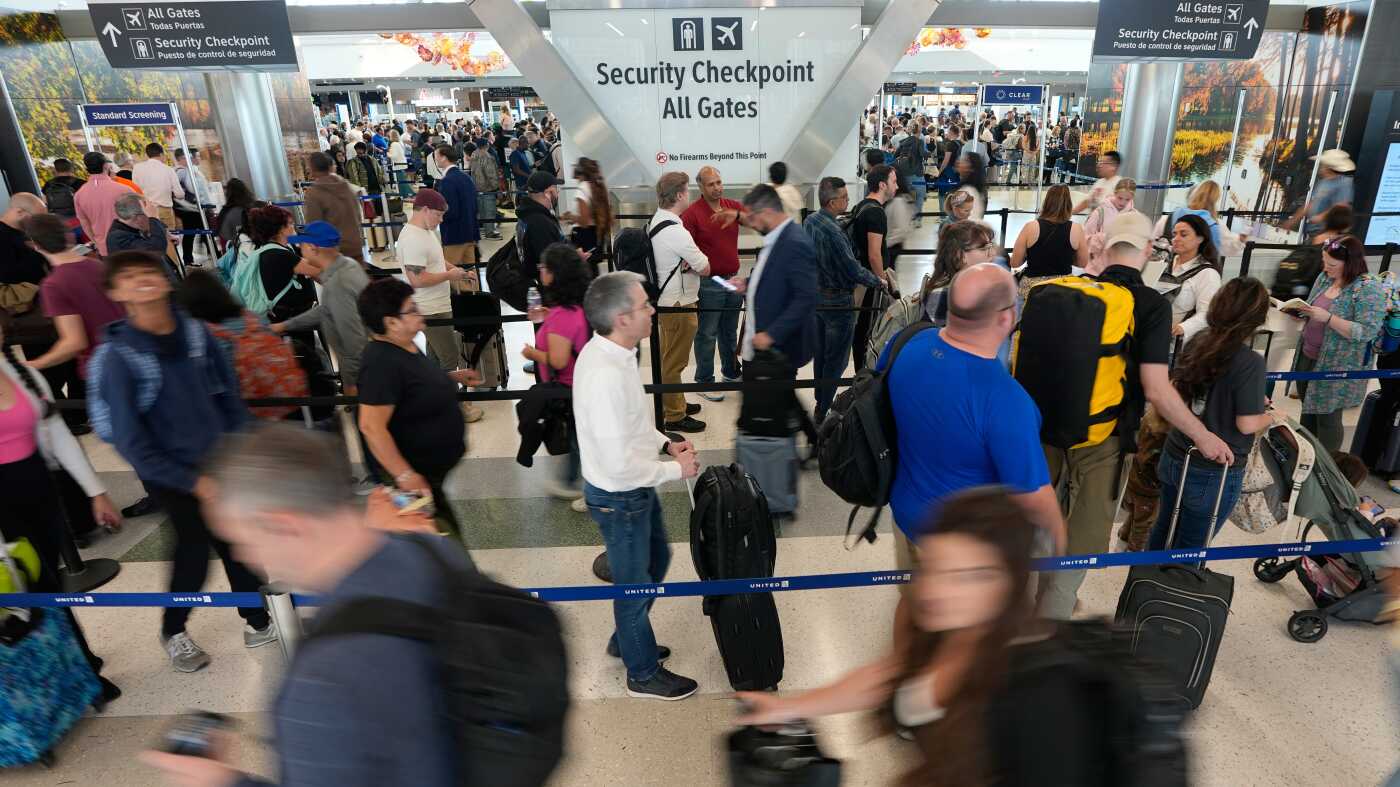
ICE officers could remain at airports after TSA workers are paid

Scathing report claims nation’s oldest labor union ‘betrayed’ MAGA members through ‘shocking’ spending
-

 Sports1 week ago
IOC addresses execution of 19-year-old Iranian wrestler Saleh Mohammadi
-

 Miami, FL4 days ago
Jannik Sinner’s Girlfriend Laila Hasanovic Stuns in Ab-Revealing Post Amid Miami Open
-

 New Mexico1 week ago
Clovis shooting leaves one dead, four injured
-

 Politics1 week ago
Schumer gambit fails as DHS shutdown hits 36 days and airport lines grow
-

 Tennessee7 days ago
Tennessee Police Investigating Alleged Assault Involving ‘Reacher’ Star Alan Ritchson
-

 Minneapolis, MN4 days ago
Boy who shielded classmate during school shooting receives Medal of Honor
-

 Science1 week ago
Record Heat Meets a Major Snow Drought Across the West
-

 Politics1 week ago
Trump gives Iran 48-hour ultimatum to reopen Strait of Hormuz or face strikes on power plants