Northeast
Connecticut man allegedly digs up neighbor's yard, accuses family of being pirates: police

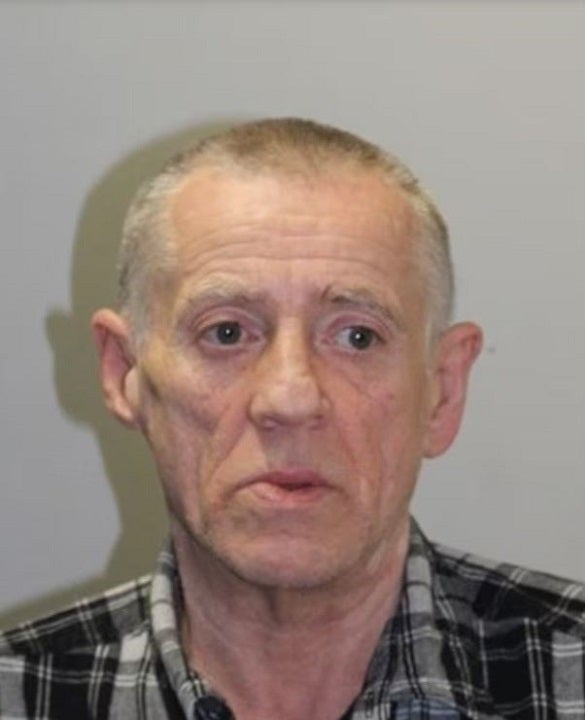
A Connecticut man is facing several criminal charges after digging up his neighbor’s yard and claiming the family living there were pirates, according to local reports.
Mark Uterstaedt, 62, was charged with risk of injury, second-degree threatening, fourth-degree criminal mischief, breach of peace, and simple trespass in connection to the Sunday incident, the Ledyard Police Department said.
SLAIN CONNECTICUT POLICE SERVICE DOG RECEIVES STATE’S FIRST K9 MEDAL OF VALOR AS TROOPERS MOURN ‘FALLEN HERO’
Authorities were alerted around 10:15 a.m. by a caller, who said her neighbor had dug up her front yard with a rock rake and refused to leave.
Connecticut man Mark Uterstaedt allegedly dug up his neighbor’s yard because he believed he owned the neighborhood and the neighbors were pirates, according to Ledyard police. (Ledyard Police Department)
When officers arrived at the scene, they learned that Uterstaedt had walked to the caller’s property because he believed he owned the neighborhood, and that the caller and her family were pirates, police said.
“The caller’s husband confronted Uterstaedt about being on his property and digging up his yard,” police said. “Uterstaedt began to yell and scream obscenities directed at the caller’s husband and young children. Uterstaedt then swung his rock rake in the direction of the caller’s husband in a threatening manner.”
Uterstaedt told officers that he was upset because he believed his neighbors were trying to install a waterline.
Uterstaedt was arrested and held on a $15,000 cash or surety bond.
Read the full article from Here



Grocery prices are rising. Rents are up. There is one product, though, that’s actually getting cheaper: marijuana.
The price of a gram of weed — the amount in a large joint — was down to just above $4, on average, in January, the latest continuation of a years-long nose-dive that has brought prices plummeting over 70 percent since pot stores first opened in Massachusetts in 2018. In those days, a gram cost more than $14.
“I’m taking advantage definitely,” Tori Wells, a Boston customer, said of current rock-bottom prices as she left downtown dispensary Pure Oasis one recent afternoon.
While consumers are happy, low prices have launched the industry into turmoil. It’s a far cry from the visions of wealth in cannabis that laid the foundation for many entrepreneurs to enter the industry and the state’s efforts at enriching Black and Latino communities that were targeted by the war on drugs.
“Profitability is tough to reach,” said Gabriel Vieira, CEO of Zyp Run, the first cannabis delivery service to open in Greater Boston in 2023. Delivery business licenses remain exclusive to equity operators, but many have struggled to find success. Just last month, Vieira’s company had to settle a state tax debt of more than $410,000 in order to continue operating this year, he said.
Marijuana growers and manufacturers said retail businesses are increasingly stiffing them on payments as money runs thin across the industry. There are signs that lawsuits, debts, and unpaid taxes are piling up, while business closures accelerate. Last fiscal year, 13 retail stores closed after either having their licenses revoked or choosing not to renew their licenses operations — more than in all previous years of legalization combined. And of the 71 cannabis business licenses of all kinds surrendered since recreational pot sales began, almost half were given up in the most recent fiscal year.
“Every state has a bottom, and we are in it,” said Derek Ross, CEO of Nova Farms, a company with six dispensaries across Massachusetts, Connecticut, Maine, and New Jersey, and hundreds of cultivation acres in the Northeast. “If we didn’t have opportunities in other states, we’d be struggling to keep our head above water.”
The industry’s dismal state is the result of an oversaturated market with too many marijuana plants being grown, said Commissioner Kimberly Roy, of the Cannabis Control Commission.
The commission is considering whether to freeze new cultivation licenses, with a public hearing on the matter likely soon. It’s a measure Roy supports.
“We need to hit the brakes,” Roy said. “Quite frankly, it’s overdue.”
By the end of 2025, the industry had the capacity to grow over 4.5 million square feet of cannabis plant canopy, up from 3.65 million in 2023.
Now cultivator competition is driving “razor-thin margins,” Roy added, and becoming a pain point for the entire industry.
Andrew Kazakoff, of Fathom Cannabis, a cultivator in West Boylston, said he supports a freeze on new growers.
“We need to take a halt,” Kazakoff said, adding: “Let the industry settle, work on itself, and come to equilibrium.”
As companies jockey for business there is also a “race to the bottom” on prices in the retail market that has led to “a lot of these businesses kind of cannibalizing each other,” said Ryan Dominguez, executive director of the Massachusetts Cannabis Coalition, a trade group. He added that a freeze could be a necessary step in righting the industry.
What’s happening in Massachusetts is something that other states have experienced, said Beau Kilmer, co-director of the RAND Drug Policy Research Center.
Cannabis prices have fallen nationwide, particularly in early legalizing states such as Colorado, California, and Oregon, whose head start in infrastructure building has quickly turned to rampant oversupply. Oregon has imposed various pauses on its cannabis licensing dating back to 2018, with new license approvals of any kind currently banned.
“If you’re not going to limit the amount that’s produced, you should expect to see these price declines,” Kilmer said. Likewise, other New England states, including Connecticut and Maine, have retained higher prices than Massachusetts, the first pot stronghold on the East Coast and still its largest grower, since going legal.
The low prices mean cannabis businesses are mired in money problems, even as demand has continued to grow for their products. The number of cannabis sales that occurred last year increased by 8 percent over 2024, but revenues from those sales essentially plateaued, totaling around $1.65 billion for both 2024 and 2025.
Ross, the CEO of Nova Farms, said he cut 25 percent of his multi-state workforce in the last 18 months, as even diversified outfits have had to become “lean and mean,” to weather today’s market.
Two dozen companies, including four cultivators and 12 retailers, were in court-appointed receivership, the state’s legal alternative to bankruptcy, in January, according to commission data. More have been added since. Bankruptcy isn’t an option for cannabis companies as long as the drug remains federally illegal.
Designated as participating in “trafficking,” cannabis sellers also pay significantly more in federal taxes, often at rates of 60 to 80 percent, and are barred from making some regular deductible expenses.
Brian Keith, cofounder of Rooted In, said his Newbury Street dispensary, which opened in 2022, would be profitable if it weren’t for the heavy burden of the federal tax code, which places the most strain on retail stores.
Brian Keith, owner of Rooted In, is one of many small cannabis shops facing plummeting retail prices on cannabis and a compression that is making it difficult for local owners to stay afloat.
A future VIP social consumption private room is set up downstairs at Rooted In.
(David L. Ryan/Globe Staff)

(David L. Ryan/Globe Staff)
He filed his taxes on time this year but didn’t have the funds, he said, and now it may take over 12 months to settle over $170,000 in outstanding debts through a payment plan with the IRS.
“We’re seeing the same number of people walking through the door, but less revenue,” Keith said.
Keith is a member of the state’s social equity program, aimed at helping communities disproportionately impacted by the war on drugs build wealth.
His company has raised more than a quarter million dollars from communities of color in Dorchester, Roxbury, and Mattapan to fund its initial operations, he said, but the profits he planned to bring back to those communities haven’t materialized because of the prices plummeting.
Keith’s business is one of about 100 owned by people in the state’s two equity programs — about 15 percent of all open businesses in the state. Many of these entrepreneurs are struggling to make ends meet, the Globe has reported.
The CCC has approved a framework to allow the opening of marijuana lounges, giving exclusive access to equity entrepreneurs and smaller operations, though that rollout is just getting off the ground.
Many cannabis cultivators and manufacturers are seeing an escalating issue of unpaid debts.
Kazakoff, the grower in West Boylston, said half his orders last year were not paid on time by retailers, and a few not at all. That was barely a problem before 2025, he said.
“I grapple with the fact every single month of: Do I stay in business when I’m not getting paid by dispensaries?” he said. “Or how am I going to pay my employees?”
Currently, the CCC has no authority to police these business-to-business transactions, Commissioner Roy said, though she said it’s time for them to try and address it. Cannabis reform bills pending in the State House and Senate look to reshape cannabis regulations, including by mirroring alcohol enforcement, by restricting delinquent companies to having to pay their bills as soon as they receive products and publishing their names. Both versions of the legislation would also dissolve the current five-member cannabis commission, replacing it with a smaller three-member body.

Cultivators such as Kris Foley, CEO of Berkshire Roots, have taken matters into their own hands, initiating legal action to retrieve funds he said he is owed from around a half dozen retailers.
“A lot of partners that we worked with early on, they were good payers,” but that changed suddenly, said Foley, who runs two Pittsfield cultivation facilities and a nearby dispensary, as well as another shop in East Boston. He hasn’t been paid on time for between $150,000 and $200,000 worth of product since 2024.
Nova Farms has been shorted payment for an estimated $4.5 million in product in Massachusetts in the past two years, far more than its other states, Ross said.
Steve Reilly, co-owner and head of government relations at INSA, a large cannabis operator in Massachusetts and four other states, worries that debt issues in the industry have driven away investment.
“Most of these companies are just struggling to keep the lights on and they’re doing what they can do,” he said. “But as they’re doing that, they’re dragging everybody else down.”
Bryan Hecht can be reached at bryan.hecht@globe.com. Follow him on Instagram @bhechtjournalism.

The son of Cher is scheduled to be in court Wednesday for a hearing over allegations he broke into a New Hampshire home earlier this month.
It was the second arrest in a matter of days for Elijah Allman, 49, of Malibu, California, who was detained Feb. 27 after allegedly acting belligerently at a prestigious prep school in New Hampshire. It was unclear if Allman had any connection to either St. Paul’s School or the home in Windham, New Hampshire.
Allman remains in the Rockingham County Department of Corrections in what is called preventive detention, Superintendent Jonathan Banville said.
Allman, whose father was the late singer Gregg Allman, faces two counts of criminal mischief, one count of burglary and a count of breach of bail for breaking into the home on March 1. Police said in a report that Allman did not have permission to be at the home and forcibly entered it .
In the incident at the prep school, Allman was charged with four misdemeanors: two counts of simple assault, criminal trespass and criminal threatening. Allman was also charged with a violation of disorderly conduct, which is illegal in the state but not considered a crime.
At about 7 p.m. that day, Concord police responded to reports that Allman was disturbing people in the dining hall of St. Paul’s School. After charging Allman, police said he was released on bail as his case works through the court system.
Allman did not respond to an email requesting comment, and a phone number for him was not working. It was unclear from the court records if Allman has an attorney.
In December 2023, Cher filed a petition to become a temporary conservator overseeing her son’s money, saying Allman struggles with mental health issues and addiction have left him unable to manage his assets and potentially put his life in danger.
The petition from the singer and actress said Elijah Allman is entitled to regular payments from a trust fund. But “given his ongoing mental health and substance abuse issues,” she is “concerned that any funds distributed to Elijah will be immediately spent on drugs, leaving Elijah with no assets to provide for himself and putting Elijah’s life at risk,” the petition says.
A few weeks later, Los Angeles Superior Court Judge Jessica Uzcategui denied the request, saying she was not convinced that a conservatorship was urgently needed. Allman was in the courtroom with his his attorneys, who acknowledged his previous struggles but argued that he is in a good place now, attending meetings, getting treatment and reconciling with his previously estranged wife.

New Castle County Council finally votes on data center regulations

Collier County’s most expensive home sold in February sold for $25M

Daily Briefing: All eyes on Rome, Georgia

Towering lava fountains of Hawaii’s Kilauea volcano trigger park and highway closures

Ask the Meteorologist: How one storm produced a violent tornado, 6-inch hail in Illinois

Florida High School Football Rankings: Top 25 teams – Oct. 21

Cleary's 21 help Le Moyne down Central Connecticut State 69-64 in OT

How old is Bo Nix? What to know about Oregon quarterback ahead of 2024 NFL Draft

99th annual Pony Swim held in Virginia

Indiana Members Credit Union announced as new anchor tenant at Bottleworks District

EXCLUSIVE: ICE says El Paso detention facility will stay open under new contractor after $1.2B deal scrapped

Von der Leyen ‘acting outside of competence,’ Araud tells Euronews

Wheelchair curler Steve Emt’s path from drunk driver to three-time Paralympian

Map: 2.3-Magnitude Earthquake Reported North of New York City

Trump stirs GOP primary drama with visit to Massie’s Kentucky home turf
-

 Wisconsin1 week ago
Setting sail on iceboats across a frozen lake in Wisconsin
-

 Massachusetts1 week ago
Massachusetts man awaits word from family in Iran after attacks
-

 Pennsylvania6 days ago
Pa. man found guilty of raping teen girl who he took to Mexico
-

 Detroit, MI5 days ago
U.S. Postal Service could run out of money within a year
-

 Miami, FL7 days ago
City of Miami celebrates reopening of Flagler Street as part of beautification project
-

 Sports6 days ago
Keith Olbermann under fire for calling Lou Holtz a ‘scumbag’ after legendary coach’s death
-

 Virginia7 days ago
Giants will hold 2026 training camp in West Virginia
-

 Culture1 week ago
Try This Quiz on the Real Locations in These Magical and Mysterious Novels