Northeast
Connecticut considers banning legacy admission preferences at public and private universities

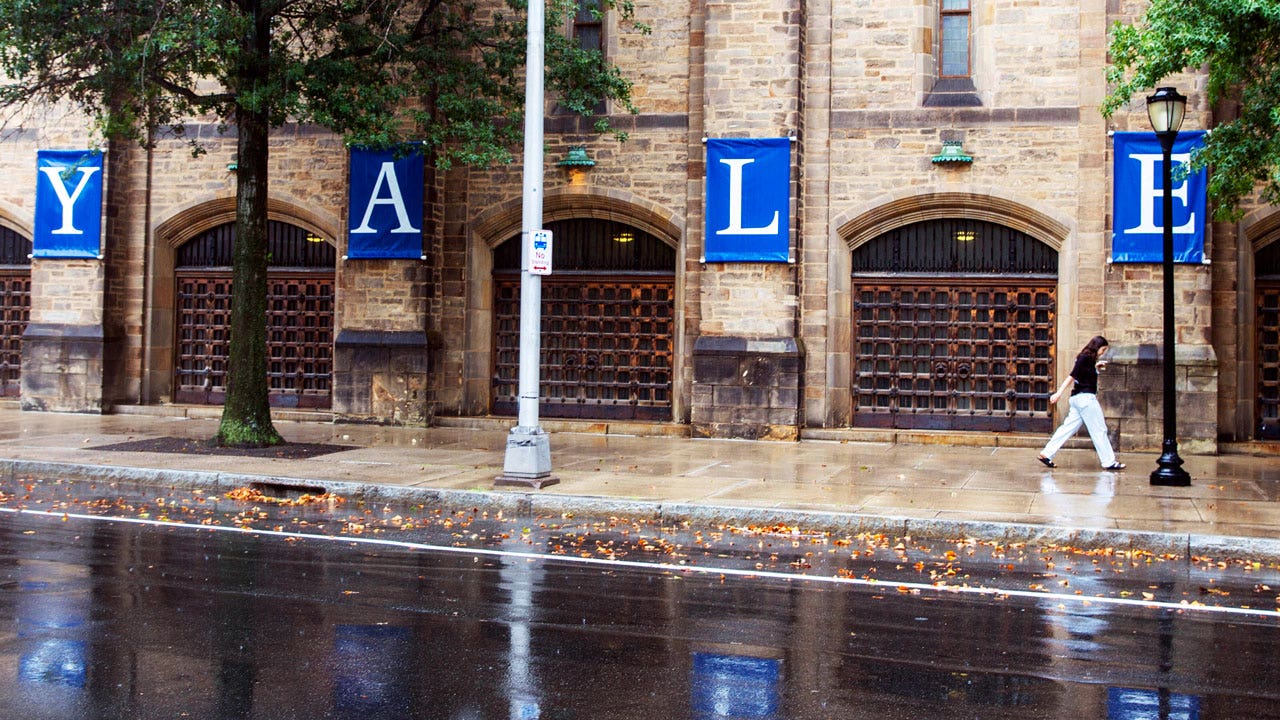
Connecticut lawmakers are considering banning the use of legacy and donor preferences in admissions to all colleges and universities across the state, including private ones like Yale University.
A bill was advanced to the Senate floor on Thursday, days after Virginia Gov. Glenn Youngkin signed legislation barring consideration of a student’s familial ties to a public college or university when being considered for admission. The first such law was signed in Colorado in 2021.
There has been pushback to Connecticut’s bill from some private institutions in the state, including Yale, which have argued the state should not be dictating how they make admissions decisions, just like it shouldn’t dictate decisions on curriculum and faculty hiring. But proponents note how these schools, which receive substantial tax benefits for their non-profit status, have the power to provide all kinds of students with a ticket to an elite world.
CONNECTICUT UNIVERSITY DORM FIRE FORCES DOZENS OF STUDENTS INTO TEMPORARY HOUSING
“If you look at leaders of Fortune 500 companies, you look at members of Congress, United States Supreme Court justices, this really matters to how our society operates,” said Democratic state Sen. Derek Slap, co-chair of the Higher Education and Employment Advancement Committee.
An Associated Press survey of the nation’s most selective colleges in 2022 found that legacy students in the freshman class ranged from 4% to 23%, though many schools declined to provide basic data in response to AP’s request. The AP found that at four schools — Notre Dame, USC, Cornell and Dartmouth — legacy students outnumbered Black students.
Slap noted how the U.S. Supreme Court last summer struck down affirmative action in college admissions, proving they don’t have institutional freedom to make preferences based on race.
A woman walks by a Yale sign reflected in the rainwater on the Yale University campus on Aug. 22, 2021, in New Haven, Connecticut. Connecticut lawmakers are considering banning the use of legacy and donor preferences in admissions to all colleges and universities across the state. (AP Photo/Ted Shaffrey, File)
“I think it’s egregious, though, that this preference, the one for wealthy folks, remains,” he said.
Republican Sen. Kevin Kelly said he has heard from private schools in his district, especially faith-based colleges, that are concerned about how they would be impacted by the legislation. He said the ability of institutions of higher education to “exercise their freedom to teach how they are and what they are” has helped to create “American exceptionalism.”
“I think when the state government starts to interfere in that process, we’re not only interfering in private relations of institutions, but we’re also interfering in that American excellence,” he said.
Jeremiah Quinlan, dean of Undergraduate Admissions and Financial Aid at Yale University, recently told state lawmakers that the school agrees with the “central aim” of the bill, which is to enroll more low-income and first-generation students. But in addition to the state overstepping its bounds, he said the bill doesn’t address the key challenge of providing less advantaged students with the resources needed to prepare for college and graduate on time.
He also said Yale’s undergraduate admissions office strives to “assemble a group of the most promising students from the most diverse collection of backgrounds.” He said undergraduates from families that can’t afford the full cost of attending Yale receive a need-based scholarship that covers tuition, housing, meals, travel, books and personal expenses.
Last year, Wesleyan University, another private school in Connecticut, announced it was ending its policy of giving preferential treatment in admissions to those whose families have historical ties to the school.
The bill, which cleared the committee on a vote of 18-4, moves to the Senate for further action.
Read the full article from Here


A 20-year-old Boston man is facing a series of charges after prosecutors say he shot at Boston Police officers during an attempted stop in Dorchester before leading them on a foot chase through neighborhood backyards.
Rasiel Carbuccia was arraigned in Dorchester District Court Thursday on a list of charges, including assault with a dangerous weapon, carrying without a license and possession of a large capacity firearm, stemming from the Wednesday night incident near Devon and Laredo streets.
Opened fire with ghost gun, prosecutors say
According to prosecutors, Boston Police officers attempted to stop Carbuccia when he pulled out a gun and began shooting, striking a Boston police cruiser before fleeing the scene.
Investigators said Carbuccia ran through backyards and hopped fences before he was taken into custody. Officers did not fire their weapons during the encounter.
Prosecutors said investigators later recovered the firearm along the path where Carbuccia had been running.
“It was determined that the firearm was a ghost gun, and it did not possess a serial number,” Suffolk County prosecutor Jacqueline Martinelli said in court.
Union says “everyone should be outraged”
Larry Calderone, president of the Boston Police Patrolmen’s Association, said the shooting is part of what he believes is a troubling trend of violence this summer and renewed his call for more officers on Boston streets.
“Everybody should be outraged. Bullets flying in the city’s streets at uniformed police officers. How can we possibly convince the general public that they’re safe to walk around their own neighborhoods?” Calderone said.
“We have teenagers pulling firearms and stealing mopeds from others in broad daylight. We have shots being fired at police officers in uniform, officers being attacked, people being shot daily that we can’t solve the crimes,” he added.
No one was injured in the shooting, but Calderone said the outcome could have been much worse.
“Thank goodness, neither officer or a pedestrian, an innocent child or somebody in the middle of the evening did not get killed last night. Just as thankful, at least they caught him. They recovered the weapon,” he said.
After the arraignment, Carbuccia’s attorney declined to discuss the case in detail but indicated mental health issues could become part of the proceedings.
“Ultimately as you guys know this is a process that has to play out and he’s presumed innocent and there’s going to be a number of things that are going to come out in respect to mental health and potentially the investigation, I don’t really have much more to say beyond that,” attorney Bob White told reporters.
According to prosecutors, Carbuccia had two open assault cases and an active warrant at the time of his arrest.
He’s being held in jail without bail and is scheduled to return to court later this month for a dangerousness hearing.

A Westmoreland County family wants to warn others after they said they found a large void beneath the garage in their house built by Ryan Homes.
“More than anything, we just want folks to know that there is potential that other homes could be built like this and just to be aware,” said homeowner Nicole Holderfield.
Beneath their seemingly normal front-facing two-car garage in the Altman Farms neighborhood in North Huntingdon is a lot of dead space that the Holderfield family just found out about. They said having a secret room is not as cool as it sounds when you realize the structural integrity of the 30-year-old home is at risk.
“I hate to say shocking, but it’s not something that we really wanted to be the first one on the street to find out,” Holderfield said.
Holderfield said there are leftover cinder blocks and even a Lowe’s bucket down there.
“You can actually stand all the way down here on this side, a lot of backfill, and then we did see it was weatherproofed on some of the walls,” Holderfield said.
This all started because Holderfield wanted to fix the growing number of large cracks popping up across her garage floor.
“We were starting the cosmetic fix, and our contractor was here. And with a sledgehammer, he wanted to see what he was working with, so he simply pounded down the sledgehammer,” Holderfield said.
The large void directly underneath the garage is not accessible from their finished basement. Only one wall appears to be weatherproofed, so the family believes moisture rusted away the single support column and the steel rebar attempting to carry the weight of the entire two-car garage.
“A couple different companies did stop by, and they were in awe of what they found. Even the North Huntingdon inspector came out, took a look, and it was not something he was familiar with seeing,” said Holderfield.
That inspector encouraged the family to hire a structural engineer. They did, and received a report that concluded the issue was the result of “poor workmanship and faulty construction,” Holderfield said.
The family’s homeowner’s insurance denied the claim, saying defects from faulty construction are excluded from coverage.
“Knowing that we were parking our cars in here up until we found this problem — we have children and animals, and knowing that a catastrophe could come, I think that’s our biggest concern,” Holderfield said.
That’s why the family called the builder, Ryan Homes, and alerted all of their neighbors with similar builds and floorplans.
“They really just took a look and took pictures. When we did speak to the one gentleman at Ryan Homes, he said this was 30 years ago, there were different laws back then,” Holderfield said.
KDKA Investigates reached out to Ryan Homes for comment to ask if building these dead spaces is still its practice. And if so, should other homeowners who live in Ryan Homes inspect further?
Ryan Homes said they do not comment on news stories.
In an update on Thursday, the Holderfields told KDKA Ryan Homes reached out and said it’s willing to work with them on this, share the cost of the fix, and manage the project to ensure it is fixed as they would expect.
The family feels that’s a valid attempt to make it right.
KDKA Investigates talked to a Cranberry homeowner who also lives in a Ryan Home built around the same time. She sent photos showing the wet tire marks where her car drove over and broke through the concrete last year. When the garage floor failed, she said it revealed a 9-foot void. She said it took four triaxle trucks of fill and $20,000 to fix.
Holderfield says that makes her wonder who else could find this.
“I would love people to be held accountable, but I also understand the laws and that we could potentially be out of the warranty period is what they say. I do wish we could have them stand behind their work or help us get this fixed,” Holderfield said.
More than anything, the Holderfield family says it wants people to know there is potential that other homes could be built like this and to be aware.

Park Ranger Ben Croll says outdoor plans for kids attending New Haven’s parks and rec summer camp at West Rock Ridge state park are changing with the wind, after thick smoke from Canada’s wildfires continues to make its way through the Connecticut skies.
-
 Business4 minutes ago
Netflix reports higher profits as investors worry about growth
-
 Entertainment10 minutes ago
Kris Jenner’s mom, beloved matriarch Mary Jo ‘MJ’ Shannon, dies at 91
-
 Politics22 minutes ago
Trump repeats debunked claims about voting vulnerabilities in prime-time speech
-
 Science28 minutes ago
Bass administration quietly replaced chief heat officer a month ago
-
 Sports34 minutes ago
UCLA women embrace new players, tougher standards in bid to repeat as champs
-

 World46 minutes ago
China rebukes UK over nationalisation of British Steel
-
 News1 hour ago
Flood sirens blare in South Central Texas as rivers reach perilous heights
-

 Los Angeles, Ca3 hours ago
Arrest made in deadly shooting at 4th of July gathering in Compton; search for 2nd suspect continues

