Northeast
Complete mastodon jaw found in New York homeowner's backyard: 'Remarkable discovery'

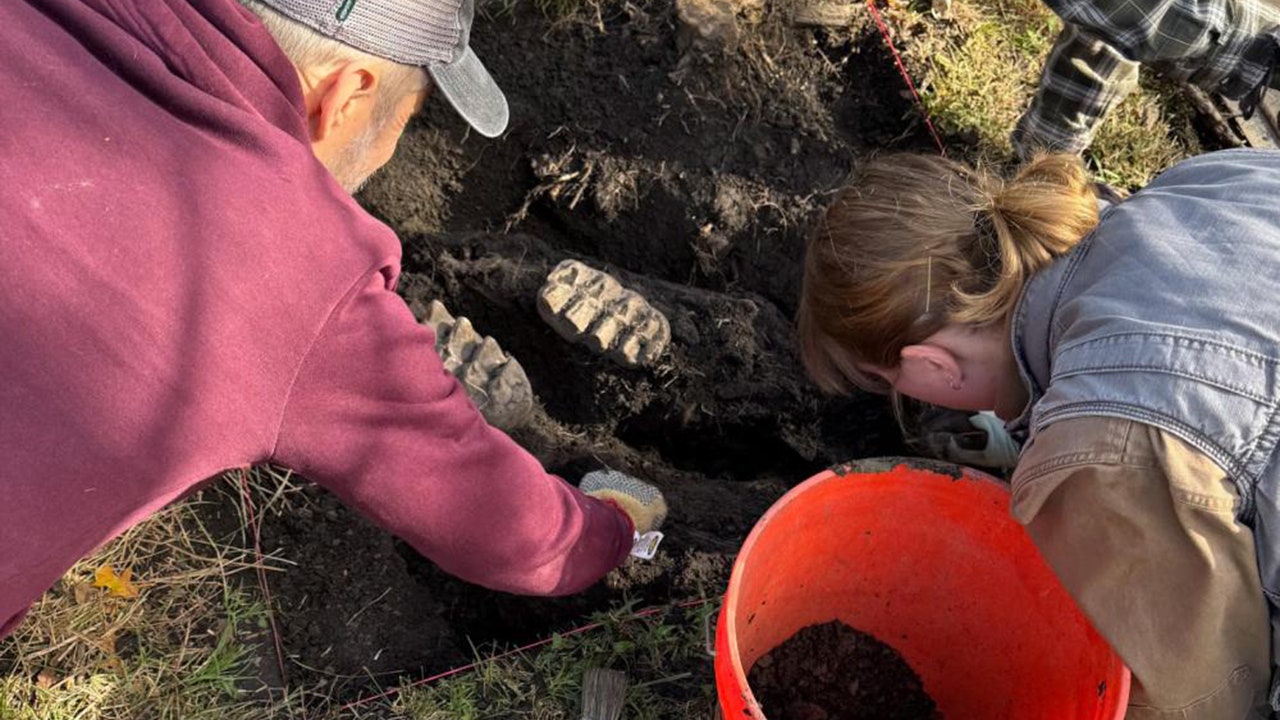
A homeowner in New York uncovered a complete mastodon jaw in their backyard in what officials are calling a “remarkable discovery.”
The jaw of the extinct mammal, which was similar to an elephant, and several bone fragments were excavated from a property in Scotchtown by researchers from the New York State Museum and SUNY Orange.
“The fossils – discovered by a curious homeowner – will undergo carbon dating and extensive scientific analysis to determine the mastodon’s age, diet, and habitat,” the New York State Museum said in a statement. “Once preserved and studied, the jaw and related findings will be showcased in public programming in 2025, offering visitors a glimpse into New York’s rich Ice Age history.”
The Albany-based Museum said the homeowner first noticed the jaw when they spotted “two unusual teeth concealed by plant fronds and, intrigued, dug a bit deeper to uncover two more teeth just inches beneath the surface.”
ARCHAEOLOGISTS UNEARTH 13,000-YEAR-OLD MASTODON SKULL IN IOWA
New York State Museum and SUNY Orange staff excavate a mastodon jaw found on a property in Scotchtown, N.Y. (New York State Museum)
“When I found the teeth and examined them in my hands, I knew they were something special and decided to call in the experts,” the museum quoted the homeowner as saying. “I’m thrilled that our property has yielded such an important find for the scientific community.”
The discovery is also being described by the museum as the first of its kind in New York in 11 years, and a “prehistoric treasure.”
480-YEAR-OLD FIREARM DISCOVERED IN ARIZONA DESCRIBED BY RESEARCHERS AS THE ‘OLDEST’ FOUND IN THE US
A mastodon tooth that was still embedded in the jaw found in New York’s Orange County. (New York State Museum)
“Excavation efforts by the New York State Museum and SUNY Orange unearthed a full, well-preserved mastodon jaw belonging to an adult individual,” it said. “Alongside the jaw, researchers also recovered a piece of a toe bone and a rib fragment, offering valuable additional clues about the mastodon’s life and environment.”
Museum officials said 150 mastodon fossils have been found across New York, but a third of them have come from Orange County, where the jaw was discovered.
A printed illustration of a mastodon from the book Animals of the Prehistoric World. (Florilegius/Universal Images Group via Getty Images)
“While the jaw is the star of the show, the additional toe and rib fragments offer valuable context and the potential for additional research,” Cory Harris, Chair of SUNY Orange’s Behavioral Sciences Department, said in a statement. “We are also hoping to further explore the immediate area for more bones that may have been preserved.”
Read the full article from Here

NEWYou can now listen to Fox News articles!
New Jersey Gov. Mikie Sherrill was booed by fans attending the NJ Devils hockey game at the Prudential Center on Wednesday.
The game marked the NHL return of Team USA Olympic hero Jack Hughes since he scored the winning goal against Canada in the gold medal game on Sunday.
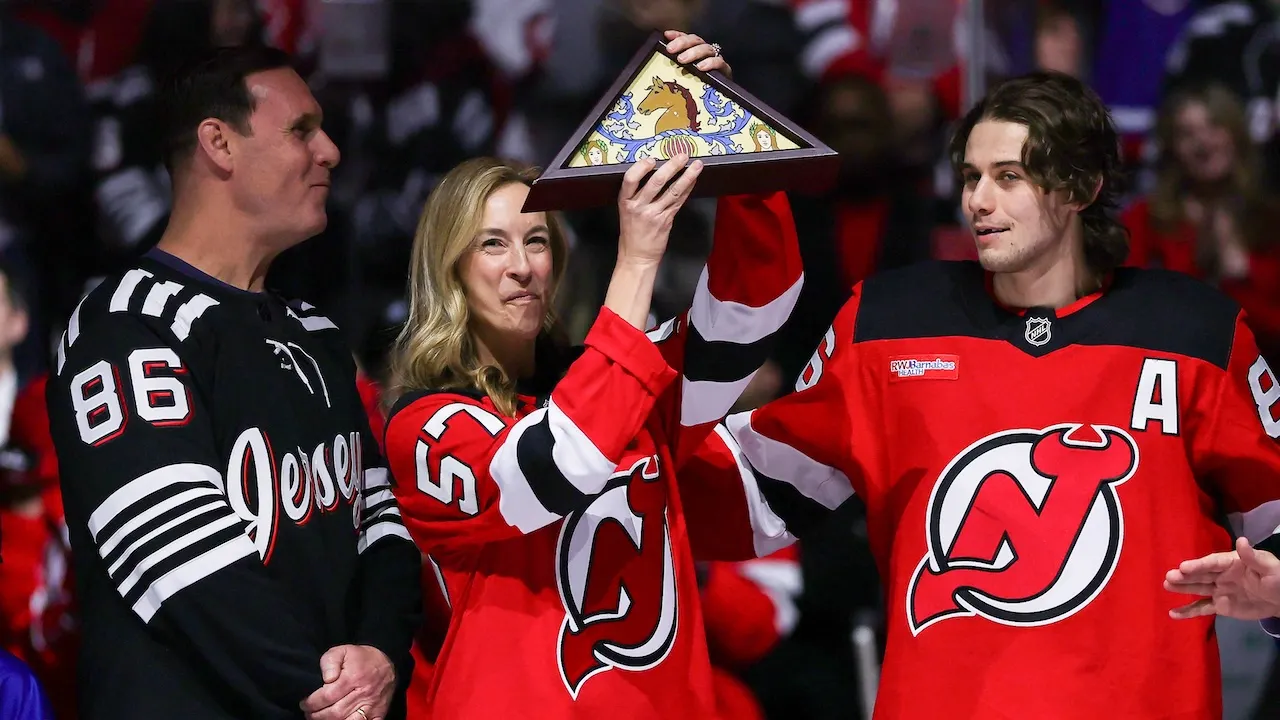
Sherrill was in attendance to welcome Hughes and other Olympic players back to stateside ice, but when she was announced by the PA spokesperson for the ceremonial puck drop, the Newark crowd erupted in relentless boos for her and her husband, Jason Hedberg.
Jack Hughes #86 of the New Jersey Devils during a pregame Olympic Ceremony with New Jersey Gov. Mikie Sherrill and Devils Owners David and Allison Blitzer on Feb. 25, 2026 at the Prudential Center in Newark, New Jersey. (Rich Graessle/NHLI via Getty Images)
Still, Sherrill went on to make a social media post that included photos of her, Hughes and other players, celebrating the gold medal. Sherrill was mocked in response, as many critics pointed out how loudly she was booed.
“You managed to somehow get booed loudly during the most festive thing at the Rock ever,” one X user wrote.
Another user wrote, “Didn’t everyone boo you?”
Sherrill has been a target of criticism from patriotic Americans dating back to her 2025 campaign, when it was revealed she was kept from participating in her Naval Academy commencement due to disciplinary action involving midshipmen stealing test answers in a particularly challenging electrical engineering course required for all non-engineering majors.
Sherill downplayed her involvement, saying, “I didn’t turn in some of my classmates, so I didn’t walk but graduated and was commissioned as an officer in the U.S. Navy, serving for nearly 10 years with the highest level of distinction and honor.”
New Jersey Gov. Mikie Sherrill presents the state flag to Jack Hughes #86 of the New Jersey Devils in a pregame welcome home ceremony on Feb. 25 in Newark, New Jersey, following Team USA’s gold medal win. (Ishika Samant/Getty Images)
Just this week, the Justice Department filed a lawsuit against New Jersey and Sherrill, accusing the state of expanding its sanctuary policies and obstructing federal immigration enforcement through a new executive order.
Still, Sherill’s presence didn’t stop anyone at the Prudential Center from celebrating Hughes and company on Wednesday.
Prior to the puck drop against the Buffalo Sabres, the Devils honored all of their Olympians from 2026, including those who represented foreign nations. No one received a warmer reception from the crowd than Hughes, as fans chanted “U-S-A!”
Hughes nearly broke down in tears while addressing the crowd.
CLICK HERE TO DOWNLOAD THE FOX NEWS APP
“I’m so proud, and I’m so happy that the men’s and women’s USA hockey teams brought gold medals back to the United States of America,” Hughes said to the crowd. “You guys are making me emotional, but I’m so proud to represent the New Jersey Devils organization. And I’m so, so proud to represent the great state of New Jersey – so proud.
“From the bottom of my heart, all of my teammates, USA teammates, we just want to thank you guys for all the love and support. We feel it.”
Follow Fox News Digital’s sports coverage on X, and subscribe to the Fox News Sports Huddle newsletter.
Related Article

Read the full article from Here
Boston, MA
Monster effort from Neemias Queta helps pave the way for Celtics in win over 76ers – The Boston Globe

Queta has been a revelation for the Celtics this season and helped them improbably surge into second place in the Eastern Conference. But it is unlikely he or his team envisioned nights like Sunday, when he crafted the best game of his career to propel Boston to a 114-98 win over the 76ers at TD Garden, its 11th in 13 games.
The 26-year-old center finished with 27 points and 17 rebounds and received ‘MVP’ chants several times in the fourth quarter.
“I thought he’s had great ownership and responsibility to what it calls for to be a starting center for the Celtics, and he’s got to continue to get better,” Mazzulla said. “He works at it. He cares. So, it’s a credit to him.”
The Celtics, who entered the night averaging 17.1 second-chance points per game, poured in 30 Sunday, with Queta leading the charge. With 76ers center Andre Drummond often playing up and trying to congest the lanes for Boston’s talented ballhandlers, Queta forcefully and quickly found space around the rim.
“We just gave him the ball and trusted him to make the right decision every time, and he was able to get it going,” forward Jaylen Brown said. “He had some nice up-and-unders in the seam and stuff like that that helped propel us to a win.”
Brown added 27 points, 8 rebounds, and 8 assists for Boston.
Tyrese Maxey had 33 points to lead the 76ers, but they did not come easily. The All-Star guard played 43 minutes and made just 12 of 34 shots. Philadelphia was without star center Joel Embiid (oblique).
“He didn’t have a ton of layups, didn’t have a ton of free throws,” Mazzulla said of Maxey. “I thought he obviously missed some good shots, but when you have the ball as much as he did, I thought we did a really good job just being disciplined, defending without fouling, keeping him out of transition.”
The Celtics improved to 40-20, with just 22 games remaining in the regular season. After the game, there was a visible reminder of what could be on the way.
Star forward Jayson Tatum, who could be nearing a return from last May’s Achilles injury, sat at his locker and laughed and joked with team staffers. He also posted the latest clip from the NBC docuseries about his comeback on his social media accounts.
For now, of course, the Celtics continue to plow forward without him. On Sunday, Boston quickly wiped away an early 10-point deficit behind Queta. He registered five offensive rebounds in the opening period, and flashed an unusual amount of offensive creativity during his dominant second quarter.
During one stretch, he danced through the lane for a basket, converted a putback, then dazzled the crowd by trailing a fast break, taking a pass from Brown, and converting an acrobatic scoop shot that gave Boston a 40-35 lead.
“We don’t want him to get too carried away with some of those,” Brown said, smiling. “But he was converting them tonight and it looked good.”
Queta reminded everyone that much of his value comes from his defensive work when he swatted a Kelly Oubre Jr. shot out of bounds, and he received a rare standing ovation when he checked out moments later.

Finally, after a well-executed two-for-one opportunity, Brown found Baylor Scheierman, who played with a splint on his broken left thumb, in the right corner; he hit a buzzer-beating 3-pointer that gave Boston a 62-50 lead at the break. Scheierman gave a high thumbs-up with his bandaged digit.
The Celtics led by 16 early in the third quarter, but the 76ers continued to push back. Three-pointers in the final minute by Quentin Grimes and Maxey made it 89-83 at the start of the fourth.
The 76ers trailed by 6 with four minutes left in the fourth quarter but missed their next five shots, any one of which could have put real pressure on Boston.
With 2:56 left, Queta converted a layup as he was fouled, stretching the lead back to 105-97. He received ‘MVP’ chants for the second time in the quarter when he went to the foul line. Then, with 1:56 left, he put an exclamation point on his memorable night by grabbing yet another offensive rebound and throwing down a two-handed dunk that made it 109-98.
“I thought Neemi matched and exceeded the [76ers] physicality,” Mazzulla said.
Adam Himmelsbach can be reached at adam.himmelsbach@globe.com. Follow him @adamhimmelsbach.

Police are investigating two shootings that happened less than 30 minutes apart on Sunday night in McKeesport.
Two men were injured in the shootings that happened at two different locations.
Allegheny County Police said that the department’s Homicide Unit was requested and responded to assist in the shooting investigations.
According to police, officers were first called to the area of Lysle Boulevard and Huey Street, where a man was shot just after 10:30 p.m. on Sunday night.
KDKA’s news crew at the scene saw the outside of the Sunoco gas station along Lysle Boulevard lined with crime tape and what appeared to be blood on the front door of the store.
Police also had an area taped off around the intersection of nearby 5th Avenue and Huey Street. The man who was shot in the area was taken to the hospital in stable condition.
Police said they are also investigating a shooting that happened in the area of an alleyway behind Madison Avenue, where another man was shot Dispatchers said the second shooting happened around 25 minutes after the first.
The two shooting scenes in McKeesport are located around 1/4 of a mile apart.
At the second shooting scene, KDKA’s news crew at the scene saw police taping off an alleyway between Madison Avenue and Petty Street.

Officers at the scene were shining flashlights and looking into a black sedan that had its flashers on. The man who was shot in the area of Madison Avenue was taken to the hospital in stable condition.
Police didn’t specify if the two shootings are believed to be related.

A look at some of the contenders to be Iran’s supreme leader after the killing of Khamenei

Map: Earthquake Shakes Central California

Video: Defense Officials Give No Timeline for War in Iran as U.S. Boosts Forces

Try This Quiz on the Real Locations in These Magical and Mysterious Novels

‘Scream 7’ takes a weak stab at continuing the franchise : Pop Culture Happy Hour

Florida High School Football Rankings: Top 25 teams – Oct. 21

Cleary's 21 help Le Moyne down Central Connecticut State 69-64 in OT

How old is Bo Nix? What to know about Oregon quarterback ahead of 2024 NFL Draft

99th annual Pony Swim held in Virginia

Indiana Members Credit Union announced as new anchor tenant at Bottleworks District
Map: Earthquake Shakes Central California

Gas prices could jump as Middle East tensions threaten global oil supply

Pakistan calls troops, orders 3-day curfew as 24 killed in pro-Iran rallies

US says Kuwait accidentally shot down 3 American jets

House Republicans push Johnson to go to war with Senate over SAVE Act
-

 World5 days ago
Exclusive: DeepSeek withholds latest AI model from US chipmakers including Nvidia, sources say
-

 Massachusetts5 days ago
Mother and daughter injured in Taunton house explosion
-

 Denver, CO5 days ago
10 acres charred, 5 injured in Thornton grass fire, evacuation orders lifted
-

 Louisiana1 week ago
Wildfire near Gum Swamp Road in Livingston Parish now under control; more than 200 acres burned
-

 Technology1 week ago
YouTube TV billing scam emails are hitting inboxes
-

 Politics1 week ago
OpenAI didn’t contact police despite employees flagging mass shooter’s concerning chatbot interactions: REPORT
-

 Technology1 week ago
Stellantis is in a crisis of its own making
-

 News1 week ago
World reacts as US top court limits Trump’s tariff powers