Northeast
Brown University shooting: Timeline of terror that left 2 dead, 9 injured

NEWYou can now listen to Fox News articles!
PROVIDENCE, R.I. — Police in Rhode Island spent days searching for the individual who shot and killed two students and injured nine others at Brown University.
The shooting happened around 4 p.m. Saturday at Brown University’s Barus and Holley engineering building. While a person of interest was taken into custody early Sunday morning, that individual was later released.
Ella Cook and Mukhammad Aziz Umurzokov died in the shooting. Cook, 19, was the president of the Brown University College Republicans.
The manhunt ended with the discovery of suspect Claudio Manuel Neves-Valente. Here’s a timeline of the investigation.
Timeline of the Brown University shooting:
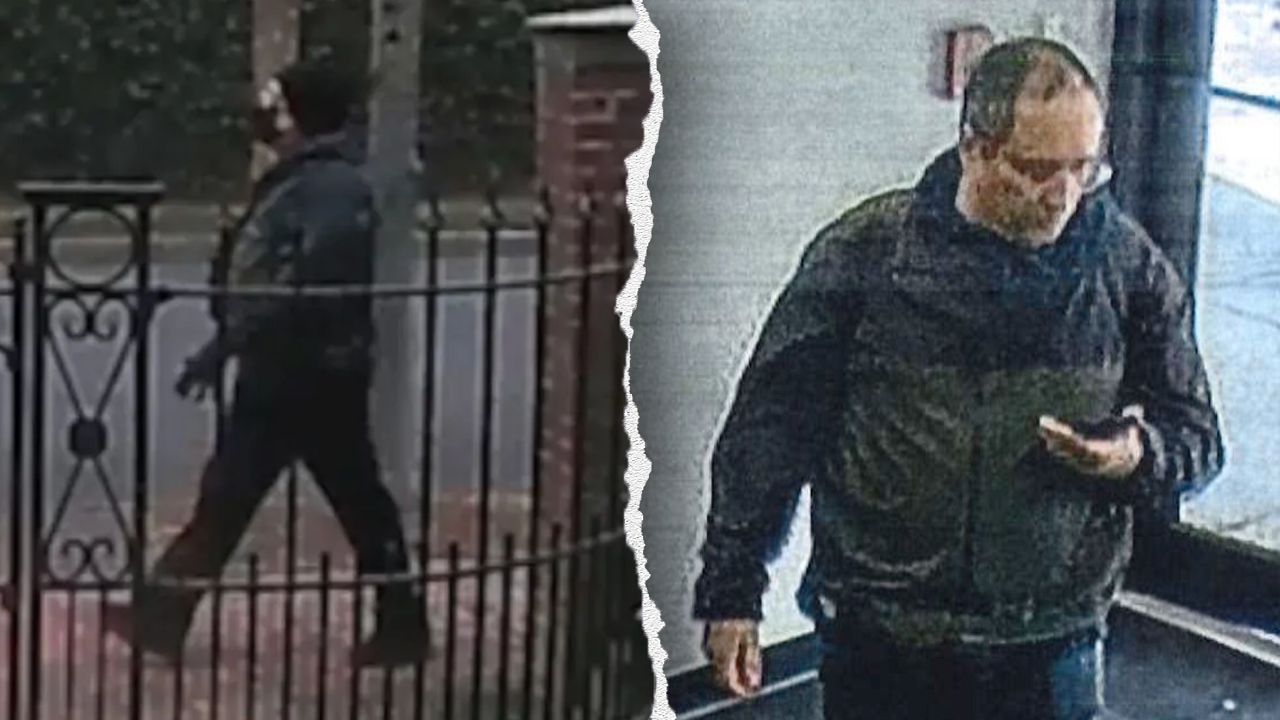
Saturday at 2 p.m.: The person of interest was seen on surveillance camera wearing dark clothing and a mask while walking on Manning Street before going onto Cooke Street.
2:08 p.m.: The person of interest was seen walking on Benevolent Street and paused when walking by the Aldrich House.
2:16 p.m.: The person of interest turned west down George Street.
2:20 p.m. The person of interest was seen running east on Benevolent Street toward Cooke Street, away from the campus.
2:51 p.m.: The individual was seen on Manning Street turning onto Hope Street toward a parking lot that’s near the Barus and Holley engineering building, where the shooting happened.
4:03 p.m.: The person of interest was seen walking through Lot 42 to Hope Street.
4:22 p.m.: Brown University notifies the campus community of an active shooter.
A shooter entered the Barus and Holley engineering building and began firing, killing two people and injuring nine other students.
A shelter-in-place order was issued for the entire Brown University campus, which was later lifted as police searched for the shooter. Brown University President Christina H. Paxson described the shooting as a “tragic day” for the institution.
“There are truly no words that can express the deep sorrow we are feeling for the victims of the shooting that took place today at the Barus & Holley engineering and physics building,” Paxson said.
ELITE IVY LEAGUE CAMPUS LATEST TO GRAPPLE WITH MASS SHOOTING AS VIOLENCE ERUPTS AT BROWN UNIVERSITY
The outer doors to the campus building were unlocked because of final exams, authorities said.
The suspect was described as a man dressed in black leaving the building by foot, according to Providence Police Deputy Chief Tim O’Hara.
4:50 p.m.: Brown University Department of Public Safety says a person of interest is in custody. The shelter in place was still in effect.
6:35 p.m.: Providence Mayor Brett Smiley said during a press conference that two people were killed in the shooting and another eight other individuals were injured.
11:04 p.m.: Police release video showing a person of interest.
Authorities late Saturday released surveillance footage of a person of interest following a deadly shooting at Brown University in Providence, Rhode Island. (Providence Police Department)
A map showing the Barus and Holley Building at Brown University, where a gunman killed two and wounded nine Saturday, as well as the intersection where a dark-clad person of interest was seen on surveillance video. (Google Maps, Fox News Digital)
PATRIOTS ‘HEARTBROKEN’ AS DEADLY SHOOTING OCCURS AT BROWN UNIVERSITY
Sunday at 5:42 a.m.: After over 12 hours, Brown University lifted the shelter in place and allowed students to leave. Law enforcement officials had been evacuating students throughout Saturday night and Sunday morning.
3:45 a.m.: Authorities early Sunday morning announced a person of interest had been detained. Providence Chief of Police Colonel Oscar Perez Jr. didn’t mention if the individual was affiliated with the university.
PERSON OF INTEREST IN CUSTODY FOLLOWING DEADLY SHOOTING AT BROWN UNIVERSITY
11 p.m.: Officials in Providence released the person of interest that was previously in custody, saying there was a lack of evidence.
BROWN UNIVERSITY SHOOTING VICTIM IDENTIFIED AS ELLA COOK: ‘AN INCREDIBLE LIGHT’
“Yeah, look, I think it’s fair to say that, ah, there is no basis to consider him a person of interest. So that’s why he’s being released,” Rhode Island Attorney General Peter Neronha said.
In a post on X, the Providence Police wrote, “Tonight, we announced that the person of interest is being released. The investigation has been ongoing and remains fully active between all agencies. Since the first call to 911, we have not received any specific threats to our community.”
Monday at 2:30 p.m.: Police release additional surveillance footage of a person of interest:
5:15 p.m.: The FBI and Providence Police released new images and video of a person of interest, showing someone wearing dark clothing, captured from surveillance cameras.
The images were retrieved around 2 p.m. Saturday, two hours before the shooting, authorities said at a news conference on Monday. The person of interest was described as a male, approximately 5 feet 8 inches tall with a stocky build.
Authorities added during the news conference that the shooter used a 9mm handgun.
File photo of Mukhammad Aziz Umurzokov, who is reportedly one of the victims in the mass shooting incident at Brown University in Providence, Rhode Island, Dec. 13, 2025. (GoFundMe)
Tuesday at 11:54 a.m.: Norfolk District Attorney’s Office in Massachusetts announced that Massachusetts Institute of Technology Professor Nuno F.G. Loureiro had been killed at his home on Monday night. He was found with an apparent gunshot wound.
MIT Professor Nuno Loureiro who was killed in his home on Tuesday, Dec. 16. (Jake Belcher)
Wednesday at 12:36 p.m.: The Providence Police Department released pictures of an individual who was “in proximity” to the person of interest, who they want to speak with.
Thursday at 9:45 p.m.: Authorities in Rhode Island identified Claudio Manuel Neves-Valente as the suspect in the Brown University shooting. A source told Fox News that the suspect died of a self-inflicted gunshot wound.
CLICK HERE TO DOWNLOAD THE FOX NEWS APP
A split image shows Claudio Neves-Valente, identified as the Brown University gunman, wearing the same jacket as a man identified earlier as a person of interest in the case. (Providence Police Department)
Police said Neves-Valente used his real name on a rental car agreement, which helped officials locate the suspect. Neves-Valente rented a Nissan Sentra with Florida plates from Alamo Rent A Car in Boston, Massachusetts, on Dec. 1.
10:48 p.m.: U.S. Attorney Leah Foley said Neves-Valente was also responsible for the murder of Massachusetts Institute of Technology professor Nuno F. Gomes Loureiro, who died after suffering “apparent gunshot wounds” on Monday evening.
Retired FBI Supervisory Agent Jason Pack told Fox News Digital “people want answers,” noting there’s an intense amount of pressure on law enforcement.
“Parents want to know their kids are safe. Students want to know if they can move freely on campus. Families of the victims want justice, and they deserve it,” Pack said. “There is also pressure. Investigators feel it. Prosecutors feel it. University officials feel it. Families of the victims carry it every hour of every day. Pressure, however, does not solve cases. Evidence does.”
Fox News Digital’s Louis Casiano, Michael Ruiz, Andrea Margolis and Greg Norman contributed to this report.
Read the full article from Here



Pittsburg, PA
Pittsburgh has rainiest March in nearly 60 years as flooding causes issues across area

Several areas across western Pennsylvania were hit by flooding as overnight rainfall pushed Pittsburgh past a nearly 60-year-old record.
Pittsburgh has recorded 6.18 inches of rain in March, breaking the record of 6.10 inches, which was set in 1967. The rain caused issues in several communities on Friday, including some in Washington and Westmoreland counties.
Major road flooded in Washington County
Communities across Washington County spent Friday cleaning up after flooding from Thursday night’s storms.
Roads were closed, and ballfields were wrecked because of the rain. Ponds that aren’t supposed to be there could be found all over the county.
“As long as it rains and the creek is flooded, then the road is flooded,” Ruth Mahoney, the owner of The Glass Place in Cecil Township, said.
Georgetown Road in Cecil Township turned into a lake at the bottom of a hill and underpass. Dispatchers said the driver of a car stuck in the water didn’t have to be rescued or taken to the hospital. The flooding ties up the area as the road connects Interstate 79 to Route 19.
“It’s a main artery,” Mahoney said. “Tons of cars come down here every day.”
North Strabane Township saw more of the same. The Lindenwood Golf Club had some new water hazards on the course on Friday. As the water receded into the Linden Creek, a mess was left behind.
It was the same story in Houston.
“When I looked out the window, I was like, ‘woah.’ It’s just rising fast,” said Rogelio Esteris. “My daughter was here playing baseball yesterday because she’s on the softball team and now the field is ruined.”
South Strabane Township had a landslide on Locust Road as well. Mother Nature didn’t take it easy on Washington County. Mahoney said it’s affecting her business.
“When people call, they want to know how to get here,” she said. “You have to tell them, you can’t come because it’s closed today or there’s a backroad, but they don’t understand how to come on the backroad.”
Mahoney said the water should take about a day to recede. Officers told KDKA the car would have to wait to be towed until the water goes down.
Loyalhanna Creek rises, flooding yards
As dawn broke on Friday morning and the rain from the previous night began to cease, some residents of Westmoreland County who live close to the Loyalhanna Creek saw flooding around their homes and along their local roads.
Paul Faust, who lives in the Darlington area of Ligonier Township, has a small tributary to the Loyalhanna Creek in his backyard, but on Friday, that run was acting less like a stream and more like a moat.
“I was up probably about 5 a.m., and it was high,” Faust said. “But it wasn’t over the bank like this and then the next following two hours it started going up. But that is always how it is after it rains.”
Faust says that he and his wife have a system for when their area floods, including tying down outdoor furniture and moving their cars to the top of their driveway.
Many people that KDKA spoke with in Ligonier Township on Friday who live in low-lying areas said they are used to this type of thing and while this flash flood was unexpected, it was not out of the ordinary.
Some water had already begun to recede by Friday afternoon, but Ligonier Valley Police Chief Michael Matrunics still wanted to urge caution, especially for people driving on side roads that may still be flooded around the township.
“It might not look it, but it could be deeper than you expect,” Matrunics said. “And keep in mind, if you go past signs that are posted here, you could be cited for that. Also, if emergency services have to come out and rescue you or tow companies, you’re responsible for the cost. And your safety. Let’s put that at number one. So don’t drive through standing water on these bad weather dates.”
Connecticut
The Houston Comets are back as the Sun sets on the WNBA’s time in Connecticut, where fans face unfortunate reality

FORT WORTH, Texas — The Houston Comets’ four WNBA championship banners and the jerseys of their icons have a rightful home again. If only it didn’t come at the expense of another.
The news of the Connecticut Sun selling to Houston Rockets owner Tilman Fertitta and relocating to the Lone Star state as the Comets is a zero-sum game, transporting heartache elsewhere.
Advertisement
Sure, it’s a long-awaited victory for Houston and its fans, who were many and only grew in number as vintage became trendy. This city deserved the return of a team ripped from its clutches at the start of the Great Recession, and despite decent attendance throughout its success.
Yet, the basketball-crazed state of Connecticut will now feel that same void. It’s hard to overlook that the final report of the sale dropped while 12-time national champion UConn actively extended its winning streak to 53 with a victory in the Sweet 16 here in Fort Worth, Texas. Four hours from Houston.
Hey, the move screamed, look over there instead. The epitome of a Friday night news dump that everyone involved with hoped wouldn’t sting quite so much.
“The people at Mohegan Sun, they stepped up when they were needed and brought a team to Connecticut,” UConn coach Geno Auriemma told ESPN. “…We’re a proven [place] where people would support women’s basketball. Now [with them] moving, I think it leaves a void.”
Advertisement
The Mohegan Sun Tribe entered into the WNBA at a time when the NBA stepped out. It became the first Native American tribe to own a professional sports team when it purchased the Orlando Miracle franchise for $5 million in 2003 and brought it to UConn’s backyard to play at their casino in Uncasville, Connecticut.
The move marked a historic first for the six-year-old league. That previous October, the WNBA’s Board of Governors changed its bylaws so that teams did not have to be located in NBA cities, play in NBA arenas and be owned by the league in conjunction with the NBA. The decision was sparked by declining attendance and falling TV ratings. Teams in Miami and Portland folded that same offseason.
As attendance booms and TV ratings explode nearly 25 years later, the Sun franchise’s sale for a reported $300 million is another screaming example that NBAers want back into the lucrative fold. All three incoming expansion teams that will join the W beginning in 2027 are connected to the NBA. So, too, are the Golden State Valkyries and Toronto Tempo. Atlanta, Chicago, Las Vegas, Seattle, Dallas and the incoming Portland Fire, which also took its folded name, are not associated by ownership with NBA teams.
The writing was scribbled on the Mohegan Sun’s yellowed walls long before news became public of a potential sale. Their arena holds 10,000, more than a couple of unfortunate WNBA stragglers, but nowhere close to the 15,000-plus atmosphere for which the league yearns. Though they maintained healthy attendance, the Sun never won a WNBA championship despite a run of success in the early 2010s that was hampered by health.
Advertisement
That player core departed for greener pastures, trading New England summers for sweltering hot desert heat kept at bay by sparkling, state-of-the-art practice facilities. Transportation was always a headache with the closest airport nearly an hour away. Players voiced displeasure at the overall location, desiring a city instead of an arena dropped inside a casino in the countryside.
The new collective bargaining agreement (CBA) passed by both the players union and WNBA Board of Governors this week wrote it all in permanent marker. The Sun can’t meet the new facilities, staff and financial standards set forth in it, a key bargaining chip pushed by the players themselves. The jump in salary cap alone, from $1.5M to $7M, is difficult to meet.
Advertisement
The unfortunate reality is the league outgrew the market and what it could offer, even if that contribution was a healthy women’s basketball base fed by the Huskies’ success. A team will be ripped from its home again, leaving behind fans who will hand down this hurt for generations. The women’s game is old enough to be shared that way now.
The Comets are finally back. And the Sun will become a vintage symbol of loss.

HOWLAND (WGME) — The Maine State Fire Marshal’s Office says a Howland woman has been charged with arson in connection with a 2022 fire at the Howland Corner Store.
The fire happened on November 2, 2022 around 9:08 p.m.
First responders reported the fire was developing rapidly just after the store closed for the night.
Officials say 39-year-old Samantha Randall of Howland was arrested Friday and charged with arson.
The Maine State Fire Marshal’s Office says a Howland woman has been charged with arson in connection with a 2022 fire at the Howland Corner Store. (State Fire Marshal’s Office)
JOIN THE CONVERSATION (2)
The investigation remains ongoing.

Pittsburgh has rainiest March in nearly 60 years as flooding causes issues across area

Augusta’s Turpin neighborhood to get affordable homes with $1.85M federal grant

‘Strong smell’ shuts down flights at major DC-area airports for the second time this month

Miami Heat vs Cleveland Cavaliers Live Stream: How to Watch NBA

Austin Police Investigating Two Friday Morning Traffic Fatalities

Florida High School Football Rankings: Top 25 teams – Oct. 21

How old is Bo Nix? What to know about Oregon quarterback ahead of 2024 NFL Draft

Cleary's 21 help Le Moyne down Central Connecticut State 69-64 in OT

99th annual Pony Swim held in Virginia

Indiana Members Credit Union announced as new anchor tenant at Bottleworks District

WATCH: Senate hearing goes silent after Angel Father confronts top Dem over daughter’s death

US diplomat Marco Rubio denounces settler violence, tolls in Hormuz strait

Iran-linked hackers have breached FBI Director Kash Patel’s personal emails | CNN Politics

Live: CPAC 2026 Day 2

Video: Will ICE Change Under Its New Leader?
-

 Detroit, MI1 week ago
Drummer Brian Pastoria, longtime Detroit music advocate, dies at 68
-

 Movie Reviews1 week ago
‘Youth’ Twitter review: Ken Karunaas impresses audiences; Suraj Venjaramoodu adds charm; music wins praise | – The Times of India
-

 Sports6 days ago
IOC addresses execution of 19-year-old Iranian wrestler Saleh Mohammadi
-

 New Mexico5 days ago
Clovis shooting leaves one dead, four injured
-
 Business1 week ago
Disney’s new CEO says his focus is on storytelling and creativity
-

 Technology5 days ago
YouTube job scam text: How to spot it fast
-

 Tennessee4 days ago
Tennessee Police Investigating Alleged Assault Involving ‘Reacher’ Star Alan Ritchson
-

 Texas1 week ago
How to buy Houston vs. Texas A&M 2026 March Madness tickets