Northeast
Bragg’s absurd case against Trump finally gets its undeserved day in court

NEWYou can now listen to Fox News articles!
Absent an eleventh-hour reprieve from a higher court, Donald Trump will become the first U.S. president to face a criminal trial when it commences on Monday in New York.
Let the circus begin.
The ringmaster of the Big Top clown show is Alvin Bragg, the progressive Manhattan district attorney who campaigned — unethically — on the promise to bring down Trump. Once in office, Bragg inflated a time-barred and nominal misdemeanor into a multitude of dubious felonies by mangling evidence and contorting the law.
TRUMP REQUEST TO DELAY HUSH-MONEY TRIAL DENIED FOR THIRD TIME
With a wave of his showman’s cane, Bragg transformed a singular transaction into 34 separate charges in what’s known as “count stacking” that no good prosecutor would ever do. It’s a transparent window into an otherwise opaque case.
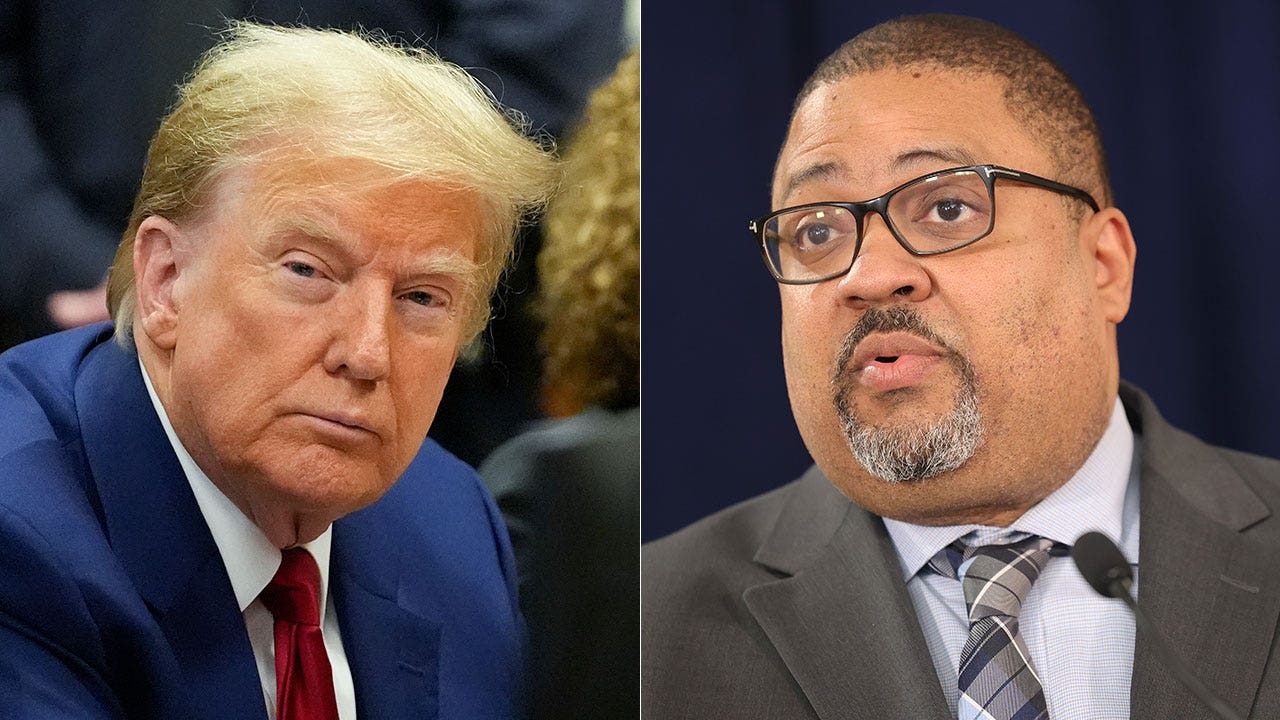
Former President Donald Trump, left, squares off against progressive Manhattan District Attorney Alvin Bragg starting April 15. Photographer: Mary Altaffer/AP/Bloomberg via Getty Images (Getty Images)
The gravamen of the indictment is that in 2016 Trump used his lawyer to pay money to Stephanie Clifford (a.k.a. Stormy Daniels) in exchange for her silence about a purported affair that occurred a decade earlier, that he incorrectly recorded the payments in business records, and that all of it violated election laws, even though it did not.
Bragg surely knows his case is specious, at best. But it doesn’t matter. He’s counting on the sympathies of a liberal trial judge, Juan Merchan, and the venom of a jury pool destined to be dominated by Trump-hating New Yorkers. The once-respected standard of an “impartial jury” is being treated as a mere inconvenience instead of a constitutional right.
It is self-evident to many that the charges against the former president would be brought against no one else not named Trump. The fact that he is the leading candidate for president in the upcoming election is the only reason he is being persecuted under the guise of prosecution.
Even the left-leaning New York Times “could “identify only two other felony cases in Manhattan over the past decade in which defendants were indicted on charges of falsifying business records but no other crime.” This makes the DA’s legal theory not just untested, but absurd.
It is also an archetype of unequal justice. In the same 2016 election, Hillary Clinton secretly paid for the phony Steele dossier by using a lawyer to funnel the money while misreporting it as “legal expenses.” She was fined by the Federal Election Commission (FEC), but never prosecuted. Trump, however, is a disfavored Republican, so he is treated differently.
The most curious — and corrupt — aspect of Bragg’s case is that he still has not identified what underlying crime Trump supposedly committed. This, of course, is required under the Sixth Amendment. But no one, least of all Merchan, seems the least bit bothered by it. His honor ruled that Bragg had presented “legally sufficient evidence” to proceed. Okay, but under what law exactly?
In his malign indictment, the DA vaguely accuses Trump of “violating election laws” without specifying which ones were transgressed. No applicable statutes are set forth. The reason for the masquerade is obvious — in a state case, a local prosecutor has no authority to charge federal crimes allegedly committed during the course of a federal election. Period.
Stormy Daniels sat down with Piers Morgan for an interview available on Fox Nation (Fox News)
None of that is stopping Bragg or his sycophant judge. The DA asserts that any payments to Daniels were illegal campaign donations. Forget the fact that the FEC investigated Trump and concluded that said payments do not constitute unlawful donations. Never mind that the Department of Justice also studied the same expenditures and decided that no crimes were committed. Even Bragg’s predecessor, Cyrus Vance, chose not to charge Trump at the end of his years-long investigation.
It is well established that money paid in exchange for non-disclosure agreements (or NDAs, as they’re known) is perfectly legal and quite common. Corporations and individuals do it every day. You can assign the pejorative term of “hush money” if you want. But it is often a normal conclusion to settlement agreements and even encouraged by judges who are motivated to resolve lawsuits that clog their courts.
However, Bragg is insistent that since Trump’s then-attorney, Michael Cohen, pled guilty to a federal charge of making an illegal campaign contribution, then that somehow makes Trump guilty, too. It does not. There are two reasons for this. First, the plea of one person does not determine the guilt of another. Second, Cohen willingly pled guilty to a non-crime offered up by federal prosecutors to gain leniency in his sentencing for other crimes he committed, including fraud.
In the end, Cohen was shipped off to the hoosegow for telling so many whoppers that you’d need a calculator to keep track. Yet, Bragg has no reservations in featuring an inveterate and confessed perjurer as his star witness against Trump. The same has been said of Daniels, who peddled inconsistent stories about her putative relationship while preening for cameras in numerous interviews.
The only credible case that Bragg could bring against Trump is falsely representing an NDA reimbursement as a payment for legal services to Cohen. But even that improbable legal theory (which requires evidence of an “intent to defraud” that is difficult to prove) constitutes a mere misdemeanor.
Moreover, it is barred by the statute of limitations that expired four years before the indictment. So, to circumvent the extinct statute, Bragg is cleverly twisting the law by attaching the misdemeanor to a felony that has not lapsed, but over which he has no jurisdiction.
CLICK HERE FOR MORE FOX NEWS OPINION
A conscientious and able judge would have long ago halted Bragg’s abusive machinations. But Merchan is neither. Instead, he is blithely enabling the district attorney’s illicit scheme to “get Trump” by ignoring fundamental rules of law, as well as his own duty to see that justice is fairly administered.
The charges against Trump are a prime example of selective prosecution driven by political animus. It is a patently partisan attempt to interfere in a presidential election. Manipulating the legal system by bringing a slew of spurious criminal charges against an opponent to delegitimize his candidacy is reprehensible “lawfare.”
It is self-evident to many that the charges against the former president would be brought against no one else not named Trump. The fact that he is the leading candidate for president in the upcoming election is the only reason he is being persecuted under the guise of prosecution.
It has gained in popularity, especially among media handmaidens who have happily embraced the righteous cause by declaring Trump guilty in the court of public opinion before any trial has ever begun.
Will their chicanery work? I doubt it.
What Biden Democrats and the liberal press underestimate is the intelligence of American voters. They see the dirty tricks of Alvin Bragg, Georgia DA Fani Willis, special counsel Jack Smith, and Attorney General Merrick Garland for exactly what they are — a pernicious attempt to steal an election through an abuse of our legal system.
Instead of ruining Trump, their antics have fortified his popular support. A growing number of people see the former president not as a villain, but as a victim of unscrupulous political enemies who weaponized the law to destroy him.
CLICK HERE TO READ MORE FROM GREGG JARRETT
Read the full article from Here

NEWYou can now listen to Fox News articles!
A Baltimore man faces first-degree murder and multiple armed robbery charges after authorities say he carried out a nine-day crime spree that left a convenience store clerk dead.
Baltimore police said 52-year-old Brian Burrows was arrested in connection with a commercial armed robbery and the fatal shooting of Khaled Saleh Mohamed Alshariki on Feb. 13.
Court records show Burrows has been charged in three separate cases stemming from incidents on Feb. 6, Feb. 13 and Feb. 15. In total, he faces 21 charges, including one count of first-degree murder, three counts each of armed robbery, first-degree assault, use of a firearm in a violent crime and handgun on person.
He also faces two counts each of robbery and second-degree assault, along with charges including reckless endangerment, theft and discharging a firearm.
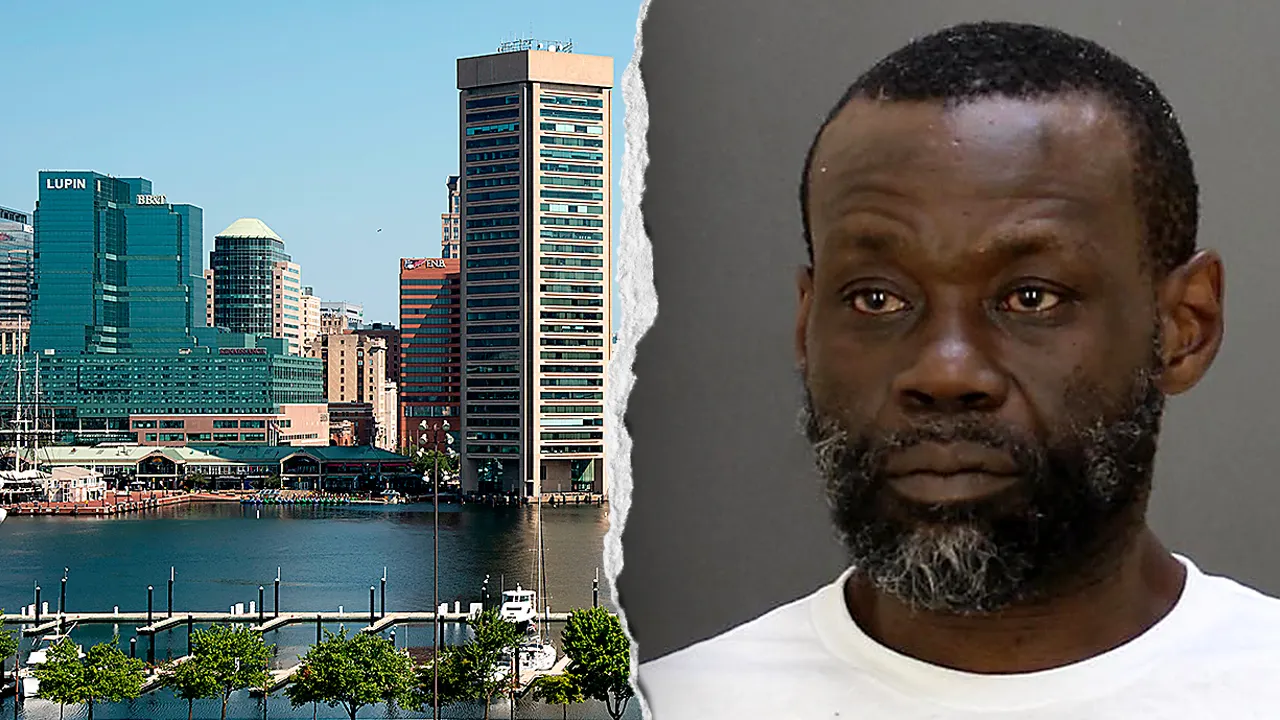
Brian Burrows faces first-degree murder charges, among numerous others, after police say a nine-day robbery spree left a convenience store clerk dead. (Baltimore City Police)
According to police, officers responded to reports of a shooting around 9:30 a.m. on Feb. 13 and found a 36-year-old man suffering from a gunshot wound to the torso. The victim, later identified as Alshariki, was transported to a nearby hospital where he died.
FOX45 News in Baltimore reported it obtained charging documents in the cases, which state surveillance footage captured a suspect approaching Alshariki as he worked behind the counter, pulling out a gun, demanding money and firing a fatal shot.
Court records show investigators used facial recognition technology to identify Burrows as a possible match.
COLORADO REPEAT OFFENDER FREED FROM JAIL LESS THAN TWO WEEKS BEFORE ALLEGEDLY KILLING MOTHER OF THREE: REPORT
A Baltimore man faces first-degree murder and 20 other charges. (Getty Images)
Two days later, another armed robbery was reported at Family Grocery and Tobacco, about a half mile north of the Broadway store.
Police said witness statements and surveillance footage helped identify Burrows, and investigators allege the video evidence also linked him to the fatal shooting.
BALTIMORE RESIDENTS REJECT NARRATIVE FROM CITY LEADERS ABOUT VIOLENT CRIME DROPPING: ‘NOT GOING LOW’
Burrows was arrested Feb. 19 after detectives executed a warrant. (iStock)
Burrows was arrested Feb. 19 after detectives executed a warrant at a home in Linden Heights. He was taken to an intake facility and charged.
Court records also show Burrows had an outstanding probation violation warrant issued in September 2025 in a prior armed robbery case. In that case, he was sentenced to 20 years in prison, with 13 years suspended, and placed on supervised probation before his release.
CLICK HERE TO DOWNLOAD THE FOX NEWS APP
Burrows remains held without bond as prosecutors pursue the murder and robbery charges, while the probation violation from his prior armed robbery case remains pending.
Related Article

Read the full article from Here

FORT MYERS, Fla. — Johan Oviedo’s first outing of the spring last week didn’t go great, as the right-hander walked three over 1 2/3 innings in a performance manager Alex Cora described as “erratic.”
His second outing on Monday went much better.
Oviedo was dominant in Monday’s 7-6 win over the Toronto Blue Jays in Dunedin, striking out four over three scoreless innings while holding Toronto to two hits and no walks. He was also highly efficient, throwing 25 of his 31 pitches for strikes while drawing five whiffs.
After allowing a leadoff single to George Springer out of the gate, Oviedo got a strikeout and a double play to quickly get out of the first. He followed that by pitching around a harmless one-out single in the second before sending the Blue Jays down 1-2-3 to finish his outing in the third.
Viewed as the likely top candidate to earn Boston’s No. 5 rotation spot heading into camp, Oviedo clearly helped out his cause with the brilliant showing. He will be in line to make his next start on Saturday.
Gonzales smokes one
Justin Gonzales, a hulking 6-foot-7 outfielder and Boston’s No. 6 prospect according to MLB Pipeline’s latest rankings, made the trip up to Dunedin with the big league club and showed off his power in breathtaking fashion.
In the top of the ninth inning the 19-year-old scorched a single that was measured at 117.3 mph off the bat. According to MLB researcher Sarah Langs’ Daily Statcast leaders, that is the second hardest exit velocity recorded by any player so far this spring. The only ball hit harder was Kansas City Royals’ slugger Jac Caglianone’s 120.2 mph double on Feb. 26.
Franklin Arias, a 20-year-old infielder and Boston’s consensus No. 2 prospect, also made the trip and got the start at shortstop. He went 0 for 3 with two strikeouts at the plate but helped turn a double play to end the bottom of the first.
Big day for Gasper
Monday’s lineup consisted largely of players who are likely to start the season in the minor leagues, but even with that being the case, Mickey Gasper made a strong impression.
The Red Sox catcher and utility player led the offense by going 2 for 3 with a home run and three RBI. Gasper had an RBI single in the top of the third and followed that by crushing a two-run home run with two outs in the top of the fifth.
Nathan Hickey (1 for 2) also had a two-run home run to put the Red Sox ahead for good in the top of the eighth, Allan Castro (2 for 3, stolen base) hit a game-tying solo shot in the sixth, Max Ferguson (1 for 2, walk) had an RBI double and Braiden Ward went 2 for 3 with a stolen base.
Watson struggles
Ryan Watson, a Rule 5 pick looking to make the Red Sox roster as a rookie, had a tough outing on Monday. The right-hander allowed four runs over 2/3 of an inning on one hit, two walks and a hit by pitch.
Watson led off the inning with a lineout before allowing a single, hit by pitch and a walk to load the bases. He then drew a run-scoring groundout before walking another batter to reload the bases. At that point manager Alex Cora lifted the rookie and all three inherited runners came around to score when minor leaguer Patrick Halligan allowed a grand slam to Blue Jays third baseman Addison Barger.
Coming up next
The Red Sox will host Team Puerto Rico in an exhibition at JetBlue Park on Tuesday night ahead of the World Baseball Classic. Left-hander Jake Bennett will get the start for the Red Sox, and Zack Kelly, Tyler Uberstine, Tyler Samaniego and Vinny Nittoli are all scheduled to pitch for Boston too. First pitch is scheduled for 6:05 p.m. and the game will be broadcast on NESN+, NESN 360 and WEEI 93.7 FM.

In the early 1960s, the peregrine falcon population declined so sharply that the raptors weren’t even nesting in Pennsylvania. But now, the National Aviary says a record number have been counted in Allegheny County.
The National Aviary says six peregrine falcons were recorded in the county during the annual Audubon Christmas Bird Count. The nation’s longest-running citizen science project collects data on bird populations for ornithologists, the aviary says. It also plays a role in guiding conservation action, like what was needed to bring peregrine falcons back from the brink of extinction.
Because of the use of DDT, peregrine falcons were no longer nesting in the state of Pennsylvania by the early 1960s, the aviary said. But after the harmful pesticide, which negatively affects reproduction rates in birds, was banned in 1972, conservation efforts have helped the peregrine falcon rebound. It was removed from the federal endangered species list in 1999 and Pennsylvania’s list in 2021.
The record number of peregrine falcons in Allegheny County is thanks in part to the nest on top of Pitt’s Cathedral of Learning in Oakland. For the past two years, biologists with the Pennsylvania Game Commission have banded chicks born in the nest. Three were banded last year, and two the year before that.
People can watch Carla and Ecco raise their family in the nest on a livestream camera run by the National Aviary. Carla laid her first egg of the breeding season on March 16 last year, so the aviary says the start of another season isn’t too far away.

Why the Microsoft 365 Copilot bug matters for data security

California gas is pricey already. The Iran war could cost you even more
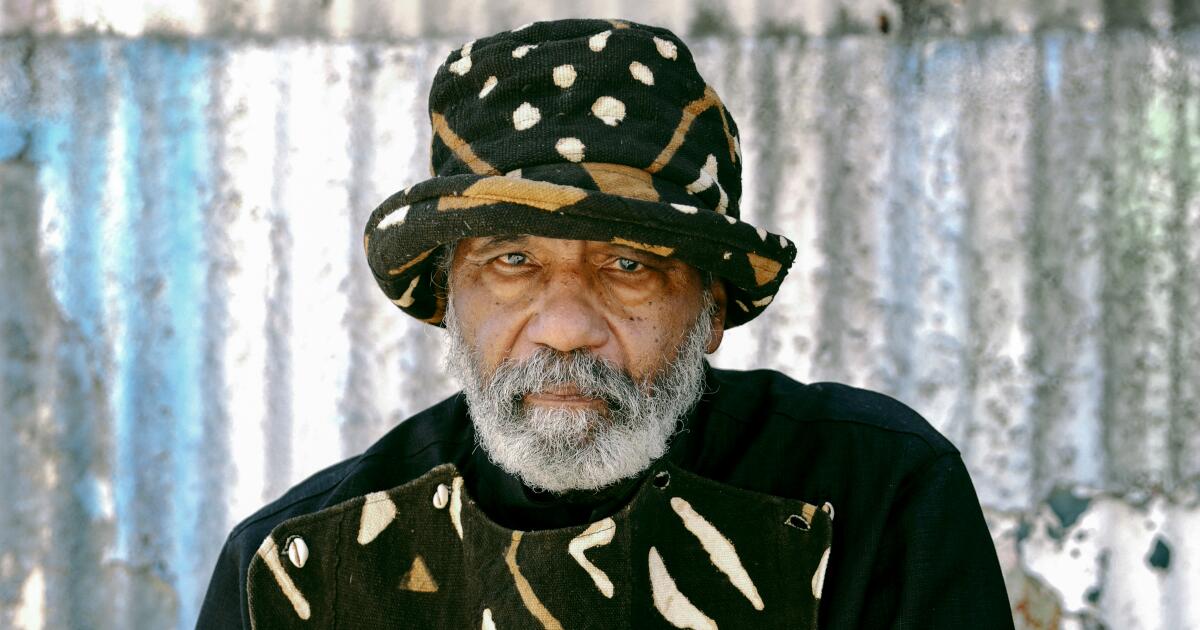
Ulysses Jenkins, Los Angeles artist and pioneer of Black experimental video, dies at 79

‘Evil Dead’ Star Bruce Campbell Reveals He Has Cancer

Rep. Kevin Kiley opts against challenging fellow Republican Tom McClintock

Florida High School Football Rankings: Top 25 teams – Oct. 21

Cleary's 21 help Le Moyne down Central Connecticut State 69-64 in OT

How old is Bo Nix? What to know about Oregon quarterback ahead of 2024 NFL Draft

99th annual Pony Swim held in Virginia

Indiana Members Credit Union announced as new anchor tenant at Bottleworks District

Unexpected birth brings hope to near-extinct Amazon tribe

Supreme Court blocks redrawing of New York congressional map, dealing a win for GOP

Map: Earthquake Shakes Central California

Gas prices could jump as Middle East tensions threaten global oil supply

Pakistan calls troops, orders 3-day curfew as 24 killed in pro-Iran rallies
-

 World5 days ago
Exclusive: DeepSeek withholds latest AI model from US chipmakers including Nvidia, sources say
-

 Massachusetts5 days ago
Mother and daughter injured in Taunton house explosion
-

 Denver, CO5 days ago
10 acres charred, 5 injured in Thornton grass fire, evacuation orders lifted
-

 Louisiana1 week ago
Wildfire near Gum Swamp Road in Livingston Parish now under control; more than 200 acres burned
-

 Technology1 week ago
YouTube TV billing scam emails are hitting inboxes
-

 Politics1 week ago
OpenAI didn’t contact police despite employees flagging mass shooter’s concerning chatbot interactions: REPORT
-

 Technology1 week ago
Stellantis is in a crisis of its own making
-

 News1 week ago
World reacts as US top court limits Trump’s tariff powers