


Sign up for the Today newsletter
Get everything you need to know to start your day, delivered right to your inbox every morning.


The Iranian strike on Bahrain came after Tehran accused the US of hitting one of its desalination plants. Persian Gulf countries relay on the civilian infrastructure for most of their fresh drinking water, and sustained attacks could compound the impact of a war that’s already rattled the stability of financial hubs in the region.
President Masoud Pezeshkian said he had instructed the military not to attack any nation that isn’t striking the Islamic Republic and apologized to neighboring countries. Trump said the remarks amounted to a surrender, but Tehran pressed ahead with strikes.
“When the enemy attacks us from bases in the region, we respond and will continue to respond. That’s our right and it’s a standing policy,” Ali Larijani, secretary of Iran’s Supreme National Security Council, said on state television on Saturday. “Countries in the region must either prevent the US from using their territory against Iran themselves, or we will.”
The Iranian president’s comments drew domestic anger, prompting speculation of a rift between him and the Islamic Revolutionary Guard Corps, which coordinates Iran’s missile program and regional militia alliances, according to Trita Parsi, executive vice president of the Quincy Institute.
On Sunday, Pezeshkian said Iran’s adversaries had drawn “naive conclusions” from his earlier remarks, adding Tehran is “compelled” to respond to aggression carried out from other countries.
Iran’s armed forces have the capacity to sustain at least six months of high-intensity war at the current pace and will start using more advanced, rarely-used long-range missiles in coming days, state news agency IRIB said Sunday, citing the Revolutionary Guards Corps.
Trump said on Saturday that the US will consider striking areas and groups of people in Iran that weren’t previously considered targets.
Israeli jets targeted Iranian oil depots in the Kuhak and Shahran areas of Tehran as well as the nearby city of Karaj, Iran’s semi-official Fars news agency reported. Israeli Energy Minister Eli Cohen separately said targets including oil refineries and power stations were on the table and acknowledged an escalation in attacks.
Explosions were heard in parts of the city, where authorities urged residents to wear face masks and stay indoors, citing the air pollution risks from the debris clouds.
The semi-official Iranian Students News Agency reported that the Red Crescent had warned the explosion of fuel-storage tanks had released massive amounts of hazardous particles into the atmosphere.
The UAE, which pumped more than 3.5 million barrels a day as OPEC’s third-biggest producer in January, started cutting oil production at its offshore fields. Kuwait, OPEC’s fifth-biggest producer, reduced crude oil and refinery production, citing the “ongoing aggression” by Iran.
The Trump administration pushed back against worries around surging energy costs as a result of the war, with US gasoline prices rising to the highest since September 2024. US crude futures ended the week above $90 a barrel — more than $20 higher than last Friday — and notched the biggest weekly percentage gain on record in data going back to the 1980s.
Shares of Saudi Aramco climb as much as 4.9% on Sunday, the most in nearly three years.
Bahrain said three people were injured after shrapnel from intercepted missiles fell on the country. Separately, a water desalination plant in the country was damaged by an Iranian drone attack but water supplies remain unaffected, Bahrain said on Sunday.
Saudi Arabia intercepted a drone heading toward its Shaybah oil field, three others east of the capital Riyadh and shot down three more in the city. Defense forces thwarted an attempt on the Diplomatic Quarter, where the US embassy is located, in the first confirmed targeting of the area since early last week.
At least one person was killed in Dubai due to “debris from an aerial interception,” the emirate said.
UAE President Sheikh Mohamed Bin Zayed Al Nahyan made a rare public appearance to warn Iran to stop attacking it. “The UAE has thick skin and bitter flesh — we are no easy prey,” he said.
Australia is assessing a request from Gulf nations for defensive military support to protect them against Iranian drone and missile attacks, but declined to say what it might provide.
Trump told reporters on Air Force One on Saturday there would have to be a “very good reason” for the US to deploy ground troops to Iran, adding that Iranian forces would likely have to be so decimated they wouldn’t be able to resist. The US president also said he had ruled out the idea of armed Kurdish forces entering Iran to join the fight.
Trump added the war would continue “for a little while” and oil prices would come back down.
China, which is a significant buyer of Iranian oil, has called for a ceasefire. But Foreign Minister Wang Yi on Sunday signaled that Beijing won’t allow the conflict to affect its relationship with Washington ahead of a planned meeting between Trump and Chinese leader Xi Jinping in Beijing.
The war began after the US and Israel struck the Islamic Republic on Feb. 28,and more than a dozen countries have been sucked into the fray. Iran has so far reported 1,332 deaths, alongside widespread destruction. Scores of others were killed elsewhere in the region, while six US service members have lost their lives.
Iran’s Assembly of Experts elected the country’s next supreme leader, the semi‑official Mehr news agency said citing council member Ahmad Alamolhoda, without providing a name. He replaces Ayatollah Ali Khamenei who was killed on the first day of the conflict. Mojtaba Khamenei, the slain leader’s second-oldest son, was viewed as being a possible pick.
Airlines remain hamstrung by the conflict, with the number of canceled flights to Middle East hubs surpassing 27,000 since fighting began. Thousands of passengers remained stranded in the Gulf region, although on Friday Emirates said it’s aiming for a return to full network operations in coming days.
–With assistance from Onur Ant, Shamim Adam, Dan Williams, Neil Munshi, Patrick Sykes, Christine Burke, Dana Khraiche and Leen Al-Rashdan.
©2026 Bloomberg L.P.


Local News
An East Boston father is suing ICE, alleging immigration agents unlawfully stopped, arrested, and detained him because of his race and national origin despite having his legal status, his lawyers said.
Lawyers for Civil Rights filed the lawsuit Thursday on behalf of Jose Pineda, a 62-year-old Salvadoran immigrant who has lived in the U.S. for more than three decades and is authorized to remain and work through humanitarian relief, the nonprofit legal organization said in a press release.
The suit is seeking damages under the Federal Tort Claims Act, alleging false arrest, false imprisonment, assault, and severe emotional distress.
“I came to the United States to escape the civil war that devastated El Salvador. I worked hard, started a family, and built a life here,” said Pineda, who works as a landscaper and lives with his wife and 13-year-old daughter. “I never expected to feel that kind of fear again, much less in the United States.”
According to the 30-page complaint, written by LCR senior attorneys Victoria Miranda and Mirian Albert, Pineda has been a recipient of Temporary Protected Status, which allows certain foreign nationals from designated countries to live and work legally in the U.S.
Pineda also had a pending asylum petition and had been granted a T visa, which provides immigration protections to trafficking victims, the complaint states.
“We will not stand idly by as ICE wreaks havoc on immigrant families. Through racial profiling, ICE agents are carrying out an unquestionably discriminatory agenda,” Miranda said in the release. “The law exists to protect people like Mr. Pineda, and it must be enforced against ICE.”
The lawsuit stems from a May 2025 encounter in Weymouth, where Pineda was driving a landscaping truck to a job site when agents in unmarked ICE vehicles surrounded him, according to the complaint.
“The aggressive nature of the questioning made it clear to Mr. Pineda that he was not being judged based on any evidence of unlawful conduct, but rather on his identity, race, ethnicity, and/or national origin,” Pineda’s attorneys wrote.
The lawsuit alleges ICE officers then “forcibly” handcuffed and shackled Pineda before taking him to the agency’s field office in Burlington.
Officers searched Pineda’s belongings during the stop and again at the field office, allegedly confiscating $600 in cash that he intended to use to pay his family’s rent. The money has not been returned, according to the complaint.
Pineda spent two days in ICE custody under what the lawsuit describes as “cruel and inhumane conditions.”
“After what ICE did to me, and after everything my family has endured, I don’t know if I will ever truly feel safe again,” Pineda said.
According to the complaint, he was held in severely overcrowded cells containing more than 40 people — at times as many as 60 — leaving little room to sit and forcing him to remain standing for much of his detention. Detainees also allegedly shared a single toilet and sink without soap or toilet paper and were not provided toothbrushes, clean clothes, or showers.
Fluorescent lights remained on around the clock, making it difficult to sleep, while temperatures became “extremely cold” overnight and some detainees received only aluminum blanekts for warmth, the complaint states.
Pineda was given only a two-minute phone call during his detention and received two bottles of water each day, along with “inadequate and limited” food and water, according to the complaint.
“Mr. Pineda has suffered devastating and ongoing physical and emotional harm that has impacted all aspects of his life,” his attorneys wrote. “Mr. Pineda brings this action to seek accountability for these violent and traumatizing tortious acts of the ICE officers and to address the harms inflicted upon him.”
According to LCR, Pineda was released following advocacy by Centro Presente, a Massachusetts immigrant rights organization.
After his release, ICE initiated removal proceedings against him depsite his humanitarian protections, the organization said. Those proceedings were ultimately dismissed.
“ICE targeted Mr. Pineda based on nothing more than his perceived national origin and the nature of his work,” Albert said in the press release. “Our laws prohibit this kind of arbitrary and discriminatory enforcement. Through this lawsuit, we seek to hold the federal government accountable for the violence and harm inflicted on Mr. Pineda.”
ICE referred questions about the lawsuit to the Department of Homeland Security. DHS did not immediately respond to a request for comment Thursday evening.
Get everything you need to know to start your day, delivered right to your inbox every morning.

BOSTON (WHDH) – A pedestrian was hit and killed in Roxbury Thursday morning.
The collision occurred just before 8:20 a.m. on Tremont Street.
Police said Tremont Street was closed in both directions between Brigham Circle and Roxbury Crossing.
This is a developing news story; stay with 7NEWS on-air and online for the latest details.
(Copyright (c) 2026 Sunbeam Television. All Rights Reserved. This material may not be published, broadcast, rewritten, or redistributed.)

A 96-year-old Boston woman received the surprise of a lifetime when she discovered the French men’s national soccer team had become her neighbors at the Four Seasons Hotel in the Back Bay.
Shirley, a beloved resident of the neighborhood, said she had no idea she would end up meeting the players in town for the World Cup.
“They’re my buddies,” she said with a laugh.
Her caretaker, Samia, said Shirley has become well known around Back Bay.
“Anyone outside, when we are walking, people come to her and want to talk to her,” Samia said.
The U.S. is out of the World Cup. Fellow co-hosts Mexico and Canada are too. So who should
The excitement around the hotel grew after the French team arrived to stay there during the tournament.
Shirley said the encounter happened unexpectedly while she was eating lunch.
“I was having lunch and they came over, and since then, it’s been wonderful to have them here,” she said.
Shirley said team representatives soon invited her to meet the players.
“And they said, ‘He would like to meet you.’ I said, ‘I’m glad to meet anybody,’” she recalled.
For this Massachusetts teenager, attending a World Cup match was more than a dream come true, it was a milestone in a journey that began when he was diagnosed with Ewing sarcoma — something that might not have happened if he hadn’t been playing soccer.
After the visit, Shirley recorded a cellphone video sharing her excitement.
“This is absolutely — I cannot tell you how unbelievably fabulous this is,” she said.
The meeting ended with a memorable gift: A jersey from French star Kylian Mbappé.
The team also made her a promise.
“[They] told me that if they win, he will sign it, and then it will be worth a lot of money,” she said, laughing.
Samia, who is from Algeria, quickly agreed. She said she was already a devoted supporter of the French squad after spending many years living in France.
“I’m so excited. I went to Philadelphia to watch the game this past weekend. So, believe me, I’m totally 100% with them. I wanted them to go back to France with a cup,” she said.
Shirley said she never expected to become a fan, but she appreciated the sense of community the tournament brought to her neighborhood.
“It’s good to see such camaraderie happening, with people here getting along. Yeah, it’s the greatest thing,” she said.
She said she still did not know why the team wanted to meet her, but she’s grateful nonetheless. Shirley remains hopeful her new friends would keep winning, and keep returning to Boston.


Georgia cops’ alleged misuse of Flock license plate tracking data fuels privacy concerns


3 candidates to be considered for District 18 seat

“We won’t insure you”: Robie Creek homeowners struggle to get home insurance due to wildfire risks


After recent Illinois lightning strikes, officials share safety tips


Kelsey Mitchell winner completes Fever comeback against Mercury, without Caitlin Clark


McKeever’s 7′3″ frame made Iowa the ‘obvious choice’ in the transfer portal
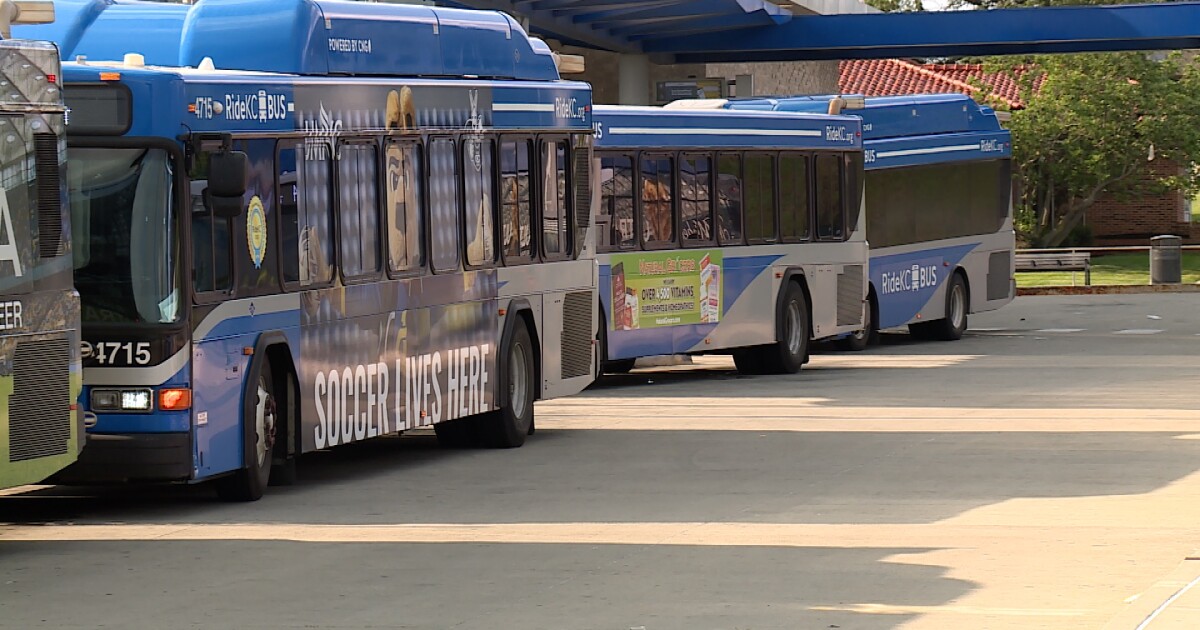
Kansas City to reduce bus transit frequency, extended hours after World Cup matches end


Public Health Student Hollie Hagan found her calling in rural Kentucky

