Boston, MA
Boston wants to revamp Chinatown zoning. Will it be enough to blunt gentrification? – The Boston Globe


The aspect of the city’s zoning plan that perhaps most strongly signals a break with the past would strike the rules that gave birth to the Combat Zone in the neighborhood. It would largely be a symbolic move, as the heyday of the notorious den of sleaze — once home to strip clubs, X-rated theaters, peep shows, and adult bookstores in the downtown core of Boston — is decades in the past.
Still, for those who advocate for Chinatown, removing a slice of the zoning that for years allowed for Boston’s only adult entertainment district in their neighborhood matters. It’s a modicum of recompense for a time when city authorities largely ignored the wants and needs of a place that has for generations offered a beachhead for immigrants.
“Chinatown suffered decades of increased crime and negative impacts on the community,” said Lydia Lowe, executive director of Chinatown Community Land Trust. “That issue is very important.”
The rezoning discussion — a comment period for the city’s proposed changes ends in mid-January — comes amid a time of transition for Chinatown, one of Boston’s smallest neighborhoods, an ethnic enclave with a rich history in the city’s urban core. Talk to seemingly anyone in Chinatown and they’ll say that displacement is their largest concern. And demographic data back up the notion that the effects of years-long gentrification continue to alter the fabric of the neighborhood.
The city’s planning department this fall released a draft of new zoning regulations and design guidelines that “seek to promote affordable housing, emphasize the significance of small businesses and cultural spaces, and highlight Chinatown’s unique character,” Brittany Comak, a department spokesperson, said in an email.
The next public meeting, focused on property owners, will be held in January, with final recommendations to come later, Comak said.
The proposal looks to better protect the neighborhood’s historic row houses — symbols of Chinatown’s working class, which now faces displacement — by capping how tall developments can be in part of the district. Residents have fought to preserve the affordability and character of those structures, saying they are integral to the area’s cultural fabric, one of the last untouched pockets of a neighborhood roiled by development.
Under the plan, the maximum height of projects would be 45 feet, down from the current 80 feet. (Chinatown’s row houses tend to be three to four stories in height.) Other restrictions, according to the city, would help ensure new buildings “would be of similar size and scale to the existing row houses” in a certain subdistrict of Chinatown.

“We find that to be a positive change,” said Müge Ündemir, director of real estate for Asian Community Development Corporation, of the city’s zoning approach to the row houses.
Other parts of the rezoning initiative are being met with questions or outright skepticism.
For instance, an affordable housing overlay district would allow developers in parts of Chinatown to build structures up to 350 feet tall, if they meet two thresholds: 60 percent of the gross floor area must be devoted to residential uses, and 60 percent of the residential units must be income-restricted and meet an affordability standard. While advocates support the idea of more affordable housing in Chinatown, 35 stories, they argue, is way too high for the neighborhood.
Karen Chen, executive director of the Chinese Progressive Association, worries that such towering buildings could exacerbate quality-of-life issues in a neighborhood where some blocks are already cast in shadow and wind tunnels are a reality thanks to past development.
“Chinatown is so small and congested already,” said Chen. “Up to 35 stories is just ridiculous.”
Through a spokesperson, the city’s planning department said the overlay “reflects heights of recent projects in the area, how other areas of downtown are being rezoned to increase allowable building height, and acknowledges the clear community priority to deliver affordable housing in Chinatown in an area of limited sites for development.”
Others are critical of the income ceiling for who would qualify for the affordable housing in such projects. Under the city’s plan, households making up to the area median income would qualify. For a one-person household, the cap would be about $114,000.
Advocates want the cap to be much lower, say 60 percent of area median income, which would be about $68,000 for a one-person household. That would more directly help the neighborhood’s working class and working poor, they argue.
“The affordability standard, it needs to match where the neighborhood is at,” said Chen, who also worries that a proposed “transition zone” would contribute to the further encroachment into Chinatown of downtown’s luxury residential towers.
Angie Liou, executive director of the Asian Community Development Corporation, concurs, saying the general idea of incentivizing more affordable housing in the neighborhood is a good one.
“The devil’s really in the details,” she said.

Officially, more than 4,200 residents live within about one-fifth of a square mile that makes up Chinatown. (Advocates have long challenged the population estimate there as severely undercounted.)
According to city figures, about 64 percent of the neighborhood’s population identifies as Asian or Pacific Islander. Half the population is foreign-born, with just under half of all Chinatown residents speaking Mandarin or Cantonese at home. There was a time when those numbers were much higher. An old master plan for the neighborhood estimated that in 1990, 91 percent of residents were Chinese.
Chinatown’s history is one of political marginalization. The Combat Zone, which is now occupied by luxury apartments and trendy restaurants, is a high–profile example of the city treating the neighborhood as an afterthought. Two strip clubs on LaGrange Street still stand in the city’s “adult entertainment district” as a reminder of what once was. They would remain part of an adult entertainment district under the proposed zoning changes, as they are located just outside of what the city considers to be Chinatown.
There is a history of development profoundly changing the neighborhood, which has never produced a Boston city councilor. Construction of the Central Artery and the Massachusetts Turnpike took sizable bites out of Chinatown decades ago, and the steady expansion of Tufts Medical Center also ate away at blocks.

Amid current gentrification and displacement challenges, many first-generation immigrants and working-class Chinese Americans still look to Chinatown for their day-to-day needs, as they have for more than a century. A plaque at Ping On Alley memorializes the city’s first Chinese immigrants, who pitched their tents there starting in 1875.
Advocates say new zoning alone won’t stop gentrification, but some hope it could have a “calming effect” on the neighborhood. Enforcement of the zoning rules also matters. Liou, of the Asian Community Development Corporation, said the city has historically given out variances to Chinatown projects on a regular basis, which has had a cumulative effect of largely rendering the existing zoning moot.
“If it’s on the books and no one follows it,” said Liou, “It’s pointless.”
Danny McDonald can be reached at daniel.mcdonald@globe.com. Follow him @Danny__McDonald.



Getty
CHARLOTTE, NORTH CAROLINA – NOVEMBER 01: Jayson Tatum #0 of the Boston Celtics reacts in the first quarter during their game against the Charlotte Hornets at Spectrum Center on November 01, 2024 in Charlotte, North Carolina. NOTE TO USER: User expressly acknowledges and agrees that, by downloading and or using this photograph, User is consenting to the terms and conditions of the Getty Images License Agreement. (Photo by Jacob Kupferman/Getty Images)
On Sunday night, the Boston Celtics played the Charlotte Hornets in North Carolina.
The Celtics won by a score of 114-99.
Boston Celtics Star Jayson Tatum Made History

GettyFOXBOROUGH, MASSACHUSETTS – MARCH 26: Jayson Tatum, player of Boston Celtics looks on prior to the international friendly match between Brazil and France at Gillette Stadium on March 26, 2026 in Foxborough, Massachusetts. (Photo by Michael Owens/Getty Images)
Jayson Tatum finished the win with 32 points, five rebounds, eight assists and one block while shooting 12/23 from the field and 5/10 from three-point range in 31 minutes of playing time.
Tatum also made history during the game.
Celtics Stats wrote: “Jayson Tatum scored his 14,000th career point tonight at Charlotte, becoming the ninth player in franchise history to reach that mark.”

GettyBOSTON, MASSACHUSETTS – MARCH 06: Jayson Tatum #0 of the Boston Celtics looks on during the second quarter at TD Garden on March 06, 2026 in Boston, Massachusetts. (Photo by Maddie Meyer/Getty Images)
Tatum is now averaging 20.9 points, 9.1 rebounds, 4.2 assists and 1.1 steals per contest while shooting 39.9% from the field and 32.3% from three-point range in 11 games this season.
Celtics Stats added: “Jayson Tatum recorded a season-high 32 points tonight at Charlotte. It marked his 16th career game with at least 30 points without committing a turnover – the most in franchise history.”

GettyCHARLOTTE, NORTH CAROLINA – NOVEMBER 02: Jayson Tatum #0 of the Boston Celtics dunks against the Charlotte Hornets during the second half of the game at Spectrum Center on November 02, 2024 in Charlotte, North Carolina. (Photo by Grant Halverson/Getty Images)
Celtics After Hornets Victory

GettyDETROIT, MICHIGAN – OCTOBER 26: Jayson Tatum #0 of the Boston Celtics looks on against the Detroit Pistons during the second quarter at Little Caesars Arena on October 26, 2025 in Detroit, Michigan. (Photo by Nic Antaya/Getty Images)
With their win over the Hornets, the Celtics improved to 50-24 in 74 games, which has them as the second seed in the Eastern Conference.
They are in the middle of a three-game winning streak (and have won seven out of their last ten).
On the road, the Celtics have gone 24-13.
Following the Hornets, they will play their next game on Monday night when they visit the Atlanta Hawks at State Farm Arena in Georgia.

GettyBOSTON, MASSACHUSETTS – MARCH 08: Jaylen Brown #7 of the Boston Celtics talks with head coach Joe Mazzulla during the second half against the Los Angeles Lakers at TD Garden on March 08, 2025 in Boston, Massachusetts. The Boston Celtics defeated the Los Angeles Lakers 111-101. (Photo by Elsa/Getty Images)
With Tatum playing like himself, the Celtics will have a real chance to win their second title in three years.
They are coming off a year where they lost to Jalen Brunson and the New York Knicks in the second round of the 2025 NBA playoffs.
Hornets After Boston Loss

GettyCHARLOTTE, NORTH CAROLINA – MARCH 26: (R-L) LaMelo Ball #1 talks with Moussa Diabate #14 of the Charlotte Hornets in the second half against the New York Knicks during their game at Spectrum Center on March 26, 2026 in Charlotte, North Carolina. (Photo by Jacob Kupferman/Getty Images)
The Hornets dropped to 39-36 in 75 games, which has them as the 10th seed in the Eastern Conference.
They are in the middle of a two-game losing skid (but have won seven out of ten).
Ben Stinar Ben Stinar has been covering the NBA for over seven years.
He has written for OnSI, Forbes, Amico Hoops, The Big Lead and had a podcast with former All-Star Jameer Nelson. More about Ben Stinar
More Heavy on Celtics
Loading more stories
Boston, MA
!$+∇√$[+[!LIVESTREAMs!]+] Minnesota Wild vs Boston Bruins Live Free Streams On Tv Channel 2026-03-29
![!$+∇√$[+[!LIVESTREAMs!]+] Minnesota Wild vs Boston Bruins Live Free Streams On Tv Channel 2026-03-29](https://i2.wp.com/encrypted-tbn0.gstatic.com/images?q=tbn%3AANd9GcReQZPBURuIIuh0fPF6YTAqOY-y1_BeWJWzPA&s&ssl=1 "!$+∇√$[+[!LIVESTREAMs!]+] Minnesota Wild vs Boston Bruins Live Free Streams On Tv Channel 2026-03-29")
Minnesota Wild vs Boston Bruins
HERE’S (*WAY TO WATCH*) Minnesota Wild VS Boston Bruins Free LIVE 2026-03-29 Rose Bowl Parade 2026 live: Rose Bowl Parade 2026 look to seize control of thrilling Rose Bowl Parade 2026. Every team in the Rose Bowl Parade 2026 has two wins apiece as we go into the final two game weeks. Rose Bowl Parade 2026 will host Rose Bowl Parade 2026 at Live NHL mAtch Durban’s Kings Park Stadium with the Rose Bowl Parade 2026 a single point ahead of Rose Bowl Parade 2026 in the standings and just one behind leaders Rose Bowl Parade 2026.

Boston Legacy FC vs Utah Royals
Boston Legacy FC vs Utah Royals LIVE GAME: Boston Legacy FC vs Utah Royals look to seize control of thrilling Boston Legacy FC vs Utah Royals. Every team in the Boston Legacy FC vs Utah Royals has two wins apiece as we go into the final two game weeks. Boston Legacy FC vs Utah Royals will host Boston Legacy FC vs Utah Royals at Boston Legacy FC vs Utah Royals Park Stadium with the Boston Legacy FC vs Utah Royals a single point ahead of Boston Legacy FC vs Utah Royals in the standings and just one behind leaders Boston Legacy FC vs Utah Royals.

UConn’s Braylon Mullins hits game-winning 3-pointer to shock Duke, advance to men’s Final Four

Are robots coming to a McDonald’s near you?

As oil prices rise, airfares are surging and some airlines might not survive

‘Fences’ and ‘Dog Man: The Musical’: Center Theatre Group pulls out all the stops in new season

L.A. Times Concierge: I live in O.C. My kids live in Santa Clarita. Looking for nice spots to meet halfway.

Florida High School Football Rankings: Top 25 teams – Oct. 21

How old is Bo Nix? What to know about Oregon quarterback ahead of 2024 NFL Draft

Cleary's 21 help Le Moyne down Central Connecticut State 69-64 in OT

99th annual Pony Swim held in Virginia

Indiana Members Credit Union announced as new anchor tenant at Bottleworks District

Newsletter: G7 ministers to hold talks on war’s economic fallout
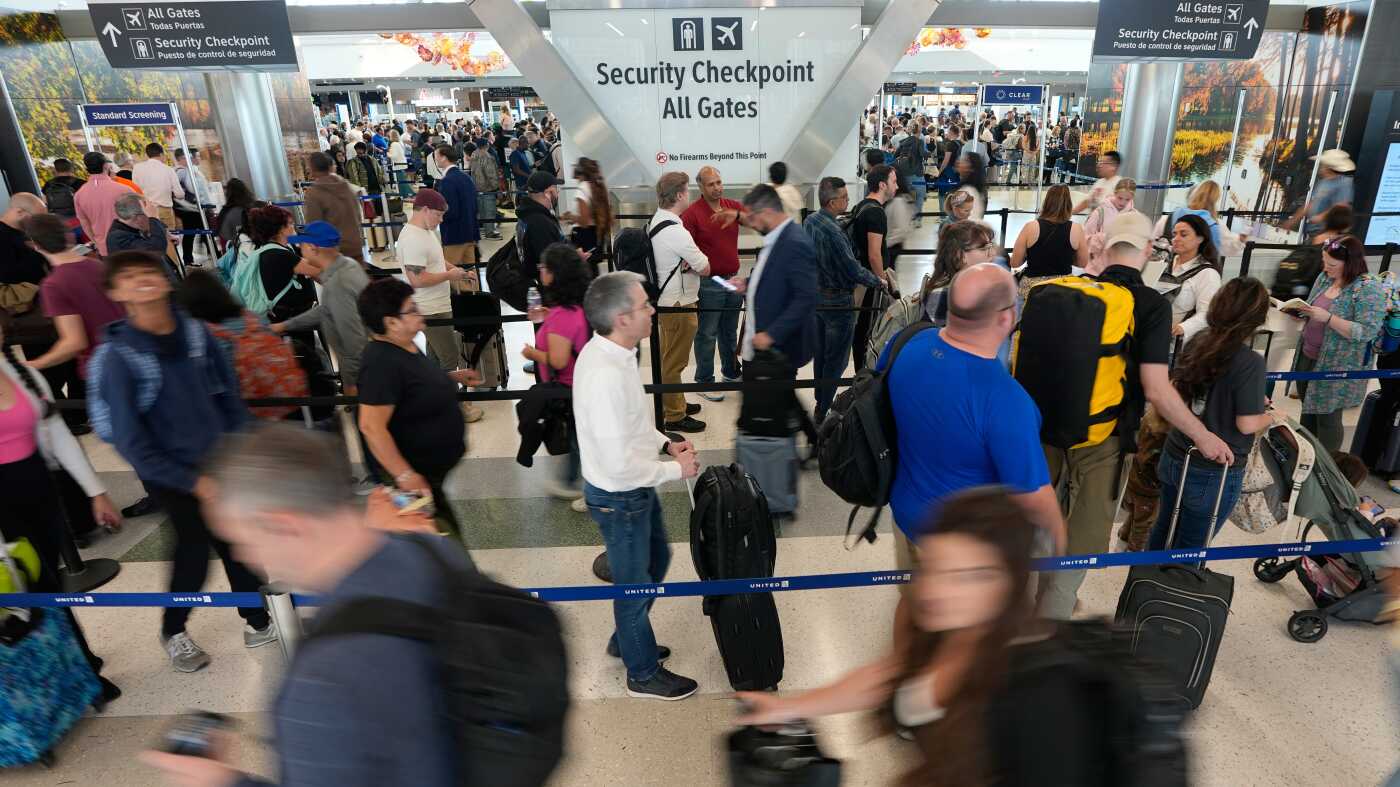
ICE officers could remain at airports after TSA workers are paid

Scathing report claims nation’s oldest labor union ‘betrayed’ MAGA members through ‘shocking’ spending

Republican US lawmaker demands Congress vote on any Iran troop deployment

So you went to a No Kings protest. Now what?
-

 Sports1 week ago
IOC addresses execution of 19-year-old Iranian wrestler Saleh Mohammadi
-

 New Mexico1 week ago
Clovis shooting leaves one dead, four injured
-

 Miami, FL4 days ago
Jannik Sinner’s Girlfriend Laila Hasanovic Stuns in Ab-Revealing Post Amid Miami Open
-

 Tennessee6 days ago
Tennessee Police Investigating Alleged Assault Involving ‘Reacher’ Star Alan Ritchson
-

 Minneapolis, MN4 days ago
Boy who shielded classmate during school shooting receives Medal of Honor
-

 Politics1 week ago
Schumer gambit fails as DHS shutdown hits 36 days and airport lines grow
-

 Science1 week ago
Record Heat Meets a Major Snow Drought Across the West
-

 Technology1 week ago
YouTube job scam text: How to spot it fast