Boston, MA
Boston Fleet fall to Montreal in overtime


The Boston Fleet will have to wait to clinch a playoff spot.
The team had a chance to clinch a spot in the PWHL playoffs with a win on Monday against the Montréal Victoire, but fell in overtime on the road, 3-2. The Victoire scored two of their three goals on the power play.
Klára Peslarová made 33 saves on 36 shots faced for Boston, while Ann-Renée Desbiens made 27 stops on 29 shots faced for Montréal.
Laura Stacey scored the winning goal in the first overtime period for Montréal on even strength.
Neither team scored in the first period. Jennifer Gardiner scored the first goal of the game, assisted by Abby Boreen and Catherine Dubois in the second period to put Montréal ahead.
The Victoire got on the board again early in the second period when Catherine Dubois scored her fifth goal of the season, assisted by Maureen Murphy and Anna Wilgren to make it 2-0.
Hannah Brandt and Hannah Bilka came through for Boston later in the period, each scoring a goal within a minute of each other to tie the game at 2-2 and force an overtime period, but Stacey’s goal made the difference in the extra period.
Boston will go again on Saturday, May 3 against the Minnesota Frost at home at 1 p.m.



Gray, acquired in a November trade from the St. Louis Cardinals, was one of Boston’s key rotation additions, along with Ranger Suarez, in the offseason. He was 14-8 with a 4.28 ERA in 2025.
“He’s very specific about his work. Every day has a purpose,” Red Sox manager Alex Cora said of Gray. “Two hundred strikeouts, that’s something that we were looking for. The competitor. Every five days, this guy is going to give you everything.”
In his five career appearances against the Reds, Gray is 1-3 with a 4.18 ERA.
“It’s pretty much one of the only things that is continuing to push me, is to get to a World Series, to win a World Series, to pitch in big games,” said Gray. “I love the moment, and I am chasing that moment.”
Here’s the preview:
RED SOX (1-0): TBA
Pitching: RHP Sonny Gray
REDS (0-1): TBA
Pitching: RHP Brady Singer
Time: 4:10 p.m.
TV, radio: NESN, WEEI-FM 93.7
Red Sox vs. Singer: Wilyer Abreu 2-5, Roman Anthony 1-2, Willson Contreras 2-7, Jarren Duran 3-10, Caleb Durbin 0-1, Isiah Kiner-Falefa 6-16, Marcelo Mayer 0-1, Andruw Monasterio 1-4, Carlos Narváez 1-1, Ceddanne Rafaela 1-5, Trevor Story 0-4, Connor Wong 2-8, Masataka Yoshida 2-7
Reds vs. Gray: Will Benson 0-5, Elly De La Cruz 5-11, TJ Friedl 1-8, Ke’Bryan Hayes 4-17, Nathaniel Lowe 2-10, Noelvi Marte 0-5, Matt McLain 2-2, Spencer Steer 4-9, Tyler Stephenson 0-8, Eugenio Suárez 7-13, Jose Trevino 0-2
Stat of the day: Sal Stewart become the first Cincinnati rookie since 1958 to record three hits on Opening Day.
Notes: Cincinnati sends righthander Brady Singer (14-12, 4.03 in 2025) to the mound … With Hunter Greene and Nick Lodolo already on the injured list to start the season, Singer is considered one of Cincinnati’s most durable pitchers, leading the Reds with 32 starts last season … Singer has made five career starts against Boston, posting a 2-2 record with a 4.88 ERA over 24 innings … His last appearance against the Red Sox, on July 1 in Boston, ended after just three innings when he allowed two earned runs on three hits.
Cam Kerry can be reached at cam.kerry@globe.com.

Nearly three months since assuming office as mayor of Everett, Massachusetts, Mayor Robert Van Campen isn’t wasting any time.
The former city councilor ousted 18-year incumbent Carlo DeMaria in decisive fashion last November, but even so, issues surrounding his predecessor still linger at City Hall.
A state-led salary audit of DeMaria found $180,000 in overpayment, a finding the former mayor disputes. Van Campen says the city is monitoring ongoing investigations.
“What I’ve conveyed to my partners in government here, locally, is to allow that state process to play itself out, and then we, as a community, will make a decision,” the mayor said. “In addition to that, I recently met with Inspector General Jeff Shapiro, who visited me at City Hall. We had a great conversation about transparency in government, best practices, putting in the right systems to ensure that that type of financial oversight doesn’t happen in the future.”
Beyond the audit, Van Campen is placing emphasis on school overcrowding.
“My objective is to try to implement solutions as quickly as I can,” he said. “Our high school today, which was built for I think 1,650 students, now houses around 2,200.”
The World Cup is creating buzz across Massachusetts, including in Everett, where the Kraft Group is looking to build a soccer stadium.
To alleviate that problem, the mayor is using federal ARPA funds to repair the old Everett High School and seeking out other spaces that could be used in the future.
“Would I like to build out new classroom space for the students of Everett in the next one to two years? Yes, that’s my ideal,” Van Campen said. “But I want to make sure that if we do it on a quick timeline, it’s done in a correct and proper fashion.”
Also in focus for the mayor is a new soccer stadium for the New England Revolution on the shores of the Mystic River.
The Kraft Group, Boston, Everett and the state Legislature have all taken steps to make the project a reality, but Van Campen says there’s still more work to do.
“It’s a transformative project, it’s a breathtaking project,” said Van Campen. “But I’ve been clear with all the stakeholders around that project, and the other larger developments going on down there, that we have to make sure that transit issues are comprehensively addressed, that pedestrian access issues are comprehensively addressed, that all those issues have to be addressed to perfection in order for these projects to succeed.”
Tune in on Sunday, March 29 at 9:30 a.m. for our extended @Issue Sit Down with Van Campen.

“No Kings” rallies are scheduled in Boston and across Massachusetts on Saturday and are expected to draw large crowds, organizers said.
Organized by the ACLU of Massachusetts, Indivisible Mass Coalition, and Mass 50501, the event is a mass mobilization in protest of the Trump administration.
The No Kings theme was created by the 50501 Movement, a national movement made up of Americans who stand for democracy and against what they call the authoritarian actions of the Trump administration. The name 50501 stands for 50 states, 50 protests, one movement.
“The Trump administration is trying to shred the Constitution; the No Kings movement is an unequivocal statement that we, the people, will not let that happen. This will be the third global No Kings Day, and it’s not just about protesting what’s wrong—it’s about building something better. We intend to show our power, build our power, and power a democracy that advances freedom, equality, justice, and dignity for all,” organizers wrote.
The rally, one of thousands scheduled across the country this weekend, is planned for the Boston Common from 2 to 4 p.m. More than 100,000 people are expected to attend Boston’s rally. Other events are scheduled in Pittsfield, Northampton, Lancaster, Worcester, Framingham, Methuen, Lexington, and towns in southeastern Massachusetts and the Cape. For a map of No Kings events near you, click here.
Speakers include elected officials Attorney General Andrea Campbell, Gov. Maura Healey, Sen. Ed Markey and Congresswoman Ayanna Pressley, and civic leaders Hessann Farooqi Marcelo Gomes Da Silva, Darlene Lombos, president of the Greater Boston Labor Council, Carol Rose, executive director of ACLU of Massachusetts, Jessica Tang, president of the American Federation of Teachers of Massachusetts, and others. It will be moderated by Rahsaan Hall, president and CEO of Urban League of Eastern Massachusetts.
There will also be performances by the Dropkick Murphys, Boston Area Brigade of Activist Musicians, BVOCAL Chorus, and Jimmy Tingle.
A previous No Kings rally in October drew massive crowds estimated in the tens of thousands.
NBC10 Boston NBC10 Boston An aerial view of the crowd at Boston’s “No Kings” rally on the Common on Saturday, Oct. 18, 2025.

2 students killed, 7 other people injured in Tennessee bus crash during school field trip

Three Detroit Pistons Players That Have Impressed Most Without Cade Cunningham

People We Meet: Ranjit Brar’s ‘horrible’ road led him back to San Francisco

Cowboys Showing Significant Interest in Son of Philadelphia Eagles Legend

Mock Draft Roundup: Miami Defensive End Is Popular Pick For Lions

Florida High School Football Rankings: Top 25 teams – Oct. 21

How old is Bo Nix? What to know about Oregon quarterback ahead of 2024 NFL Draft

Cleary's 21 help Le Moyne down Central Connecticut State 69-64 in OT

99th annual Pony Swim held in Virginia

Indiana Members Credit Union announced as new anchor tenant at Bottleworks District
2 students killed, 7 other people injured in Tennessee bus crash during school field trip

Dem senators dodge crucial question on illegal alien accused of killing Chicago college student

EU Parliament unblocks key political hurdle in digital euro talks
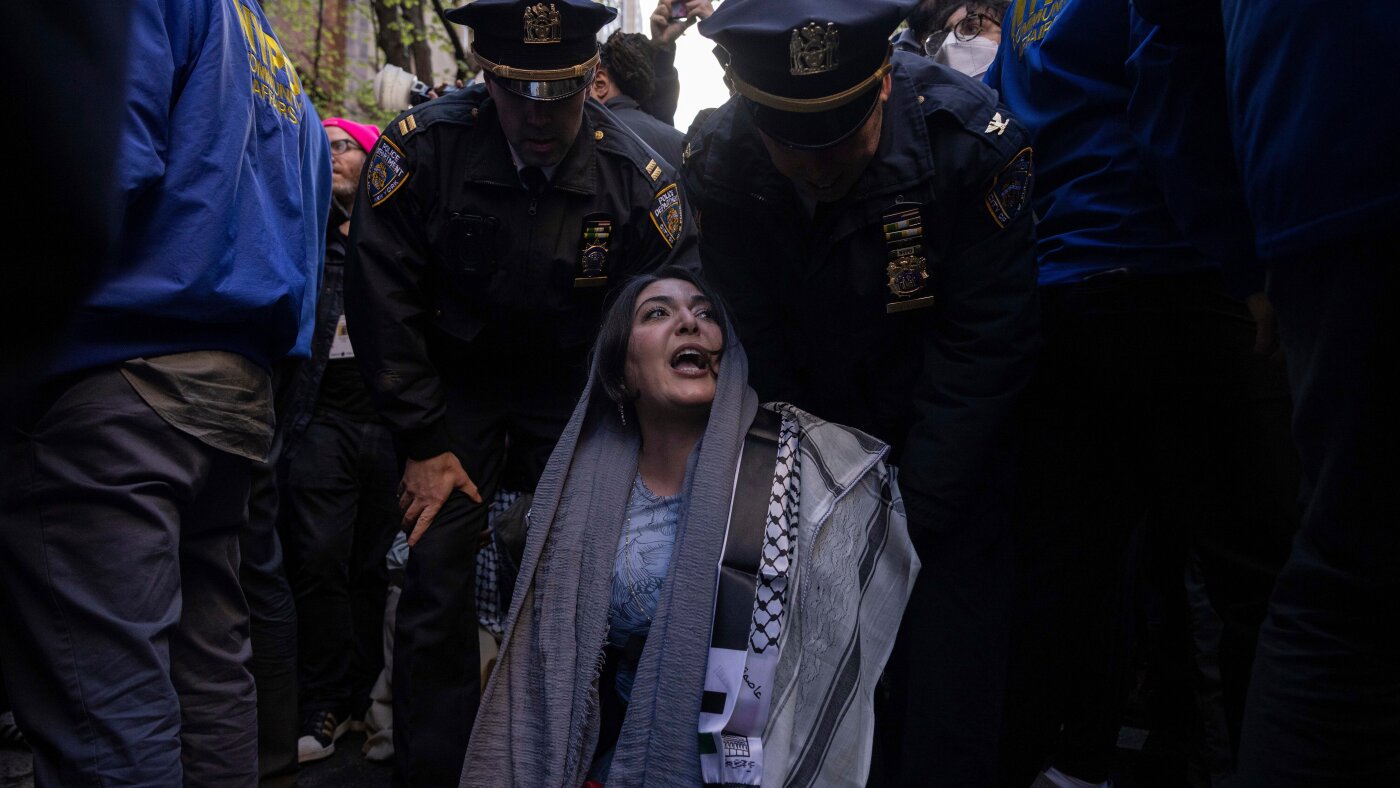
Man arrested in plot to firebomb Palestinian activist’s home after undercover op

WATCH: Senate hearing goes silent after Angel Father confronts top Dem over daughter’s death
-

 Detroit, MI1 week ago
Drummer Brian Pastoria, longtime Detroit music advocate, dies at 68
-

 Movie Reviews1 week ago
‘Youth’ Twitter review: Ken Karunaas impresses audiences; Suraj Venjaramoodu adds charm; music wins praise | – The Times of India
-

 Sports1 week ago
IOC addresses execution of 19-year-old Iranian wrestler Saleh Mohammadi
-

 New Mexico6 days ago
Clovis shooting leaves one dead, four injured
-
 Business1 week ago
Disney’s new CEO says his focus is on storytelling and creativity
-

 Tennessee5 days ago
Tennessee Police Investigating Alleged Assault Involving ‘Reacher’ Star Alan Ritchson
-

 Technology6 days ago
YouTube job scam text: How to spot it fast
-

 Texas1 week ago
How to buy Houston vs. Texas A&M 2026 March Madness tickets