Connect with us

Northeast

Blue-leaning state emerges as top GOP trouble spot as Senate campaign chief sounds midterm alarm

Published

on

Blue-leaning state emerges as top GOP trouble spot as Senate campaign chief sounds midterm alarm
NEWYou can now listen to Fox News articles!

The Senate Republican campaign chair has a stark warning for his party as the GOP defends its 53-47 majority in the chamber in this year’s midterm elections.

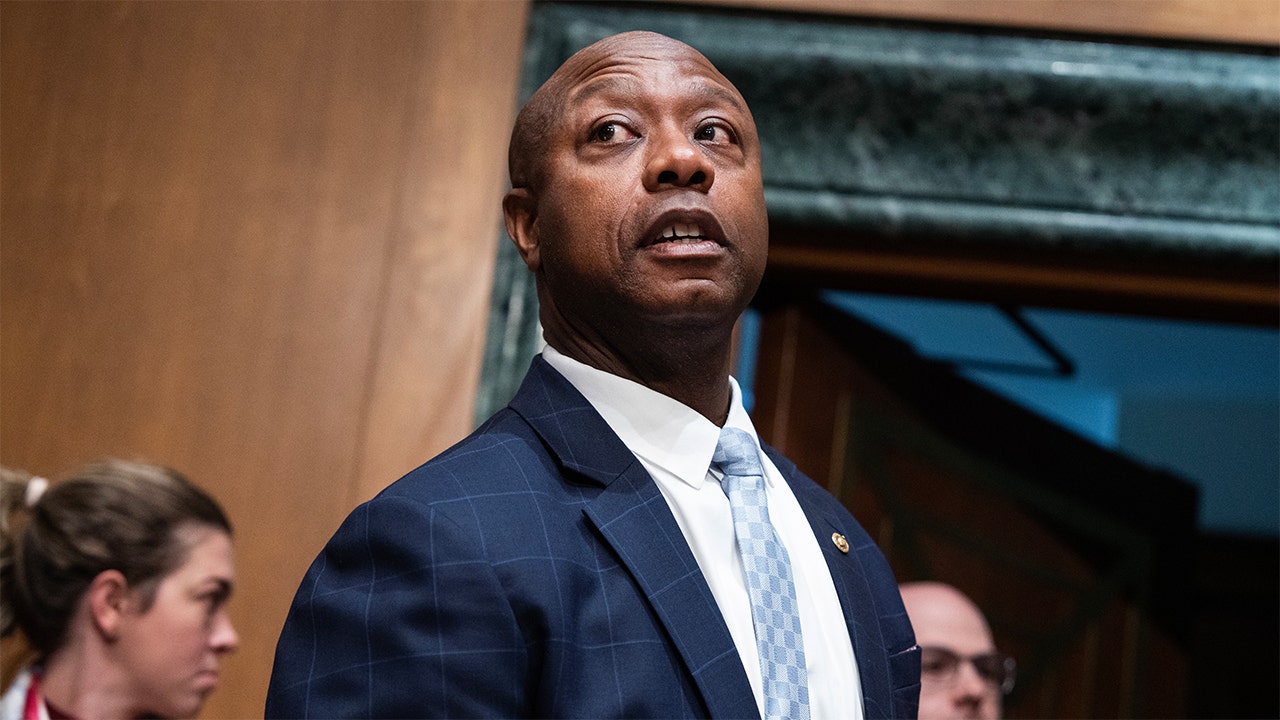
National Republican Senatorial Committee (NRSC) Chair Tim Scott pointed to a ballot box deficit the GOP’s facing in a new Fox News national poll, saying it could impact specific Senate races this year.

And Scott said the toughest challenge may be in Maine, where longtime GOP Sen. Susan Collins is running for re-election in the blue-leaning northern New England state.

The straight talk from Scott, which came at a closed-door meeting Tuesday with fellow GOP senators, comes as Republicans, as the party in power in the nation’s capital, face traditional political headwinds in the midterms. But the GOP is also facing a rough political climate, with President Donald Trump’s approval ratings remaining underwater while Democrats are energized as they work to win back the House majority and possibly recapture the Senate.

Advertisement

CHECK OUT THE LATEST FOX NEWS POLL IN THE 2026 MIDTERM ELECTIONS

An exterior view of the Senate side of the U.S. Capitol, on Jan. 12, 2026. (Paul Steinhauser/Fox News)

Scott, in his briefing, pointed to the Democrats’ six-point margin over Republicans on the generic ballot — which asks respondents whether they’d back the Democrat or Republican candidate in their congressional district without mentioning specific candidate names — in the latest Fox News national poll. Scott’s briefing was first reported by Axios and confirmed by Fox News Digital.

Maine, which Scott pointed to, and battleground North Carolina, where Republicans are defending an open seat in the race to succeed retiring GOP Sen. Thom Tillis, are the Democrats’ top two targets in the 2026 election cycle.

REPUBLICAN WAKE-UP CALL: SPECIAL ELECTION SHOCKER HIGHLIGHTS GOP TURNOUT ISSUES

Advertisement

“The Democrats are targeting a number of our incumbents. And so we’ve got some races that are going to be expensive and hard fought in places like Maine and North Carolina,” Senate Majority Leader John Thune, R-S.D., told reporters following the NRSC briefing.

But Thune added, “We feel really good about… where our Senate races are.” And he emphasized that “incumbents in our conference are seasoned veterans who will outwork any of their opponents.”

Senate Majority Leader John Thune arrives for a news conference after a policy luncheon on Capitol Hill, Tuesday, Feb. 3, 2026. (Mariam Zuhaib/AP Photo)

The Fox News poll was the latest national survey to give Republicans pause.

More than half (54%) surveyed in the poll, which was conducted Jan. 23–26, said the nation was worse off than it was a year ago, when Trump took office, with only 31% saying the U.S. was in a better position. And only three in 10 said the economy was in excellent or good shape.

Advertisement

The Democrats’ brand image remains in negative territory, according to the latest polls. But thanks in part to their laser focus on the issue of affordability amid persistent inflation, Democrats scored decisive victories in the 2025 elections, and have overperformed at the ballot box in other off-year and special elections since the start of Trump’s second administration.

That was vividly illustrated this past weekend, when Republicans suffered a stunning setback at the hands of Democrats: a double-digit shellacking in a special Texas state Senate election, in a Fort Worth area district that Trump won by 17 points in 2024 just 15 months ago.

GOP CALLS TRUMP ITS ‘SECRET WEAPON’ — BUT POLLS SHOW WARNING SIGNS HEADING INTO MIDTERMS

Thune said the special election results in Texas “remind us that we need to up our game and do a better job of not only putting up a record of accomplishment for the American people, but then, being able to deliver that message. And I think if you look at what we’ve accomplished in this last year, it’s a terrific record of accomplishment for our candidates to run on.”

Thune pointed to the GOP’s sweeping One Big Beautiful Bill Act, Trump’s signature second-term domestic achievement, which includes numerous tax cuts that many voters will feel this spring.

Advertisement

President Donald Trump signs the One Big Beautiful Bill Act, during a picnic with military families to mark Independence Day, at the White House on July 4, 2025. (Reuters/Ken Cedeno)

“I think what happened in Texas should capture our attention and remind us that we need to up our game and do a better job,” Thune said. “We’ve got to get out and tell that story. And I think over the course of the next several months, we’ll do that.”

Scott, in a Fox News Digital interview late last year, touted that “2026 is shaping up to be the year where Donald Trump’s activities, his actions, the legislation we’ve passed, shows up for the American voter. And consumers all across the country will see a more affordable economy because of President Trump and the Senate majority and the House majority in the hands of the Republican Party.”

Democrats are happy to have that fight.

“President Trump is creating a toxic agenda that’s harming people,” Democratic Senatorial Campaign Committee (DSCC) Chair Sen. Kirsten Gillibrand told Fox News Digital last month.

Advertisement

And she added she’s “optimistic that we have a shot to take back the majority.”

Gillibrand argued that Trump “is creating this massive backlash because of his bad and hurtful and harmful agenda,” which she said “adds more to the map.”

Besides Maine and North Carolina, Democrats are also trying to flip GOP-held Senate seats in Texas, Ohio, Alaska and Iowa, which are all red states.

But they’re playing defense as they defend open seats in battleground Michigan, swing state New Hampshire, and blue-leaning Minnesota. And the NRSC’s targeting battleground Georgia, where they consider first-term Democratic Sen. Jon Ossoff very vulnerable as he seeks re-election.

CLICK HERE TO DOWNLOAD THE FOX NEWS APP

Advertisement

While Scott offered a sobering presentation to his Senate GOP colleagues this week, he told Fox News Digital in December that in the battle for the majority, “54 is clearly within our grasp right now, but with a little bit of luck, 55 is on our side.”

Asked about Scott’s aspirations to pick up one or two seats, Gillibrand last month responded, “No chance.”

Fox News’ Kelly Phares and Tyler Olson contributed to this report

Read the full article from Here

New York

Gov. Sherrill Demands Access to ICE Facility as Hunger Strike Widens

Published

on

Gov. Sherrill Demands Access to ICE Facility as Hunger Strike Widens

Gov. Mikie Sherrill of New Jersey, a Democrat who has clashed with the Trump administration over immigration policies, joined protests outside a detention center in Newark on Monday in support of detainees participating in a hunger strike.

Ms. Sherrill heard from family members of detainees, who have complained about rotten and spoiled food and inadequate medical care at Delaney Hall. Dozens of protesters waved signs, banged on drums, and chanted “Free Them All!” The governor told the crowd she had requested access but was denied.

“No matter what your immigration status is, you shouldn’t be treated with anything less than dignity in this country,” said Ms. Sherrill, who was dressed in a T-shirt, jeans, and blue-gray jacket on the Memorial Day holiday. At one point, she rested her hand on the shoulder of a crying relative and smoothed the hair of an upset child.

After the governor left, the scene worsened outside the detention facility. A tense standoff erupted between Immigration and Customs Enforcement agents and protesters who blocked an entrance; the agents responded by firing pepper balls and spray at the protesters. Senator Andy Kim, who was trying to de-escalate the situation, was among those affected.

On Monday, the governor and other elected officials, including Mayor Ras J. Baraka of Newark, appeared outside Delaney Hall amid growing concerns over the hunger strike, which started on Friday inside the gray, cinder-block building enclosed by a high chain link fence topped with razor wire.

Advertisement

Immigration advocates have rallied outside Delaney Hall since Friday. Detainees said they would go on a hunger and labor strike while calling for an investigation of the detention center and its operations and for Ms. Sherrill to visit to discuss protections from ICE. Hundreds of detainees were participating, one protester told Ms. Sherrill.

The governor said in a statement on Sunday that she had contacted ICE to gain access to the detention center and was working to monitor the situation and “do what’s necessary to ensure humane conditions.”

At Monday’s protest, some protesters shouted in Ms. Sherrill’s face to criticize her for not showing up earlier in the weekend, like other elected officials had.

Representative Rob Menendez of New Jersey had arrived at 8 p.m. on Sunday and stayed all night until he was allowed into the center on Monday morning. Mr. Menendez said that he had spoken to some of the detainees inside Delaney Hall, including a young woman who just wanted to go to her high school graduation, a pregnant woman who was trying to get medical care, and a man who showed him a carton of milk that had gone rancid.

“I heard just desperation from so many people in there,” Mr. Menendez said afterward.

Advertisement

Angela Martinez told Ms. Sherrill that her cousin, Bolivar Bueno, 65, has diabetes and that she hasn’t been able to speak to him to make sure he is getting medication. “We don’t know what’s going on,” she told the governor.

Afterward, Ms. Martinez said, “I want for her to help me out.”

Ms. Sherrill left after about an hour, around 11:30 a.m., as some demonstrators jeered at her. Her security had to clear the road of a couple people who tried to stop her S.U.V. from leaving.

A few hours later, a convoy of ICE vehicles approached another entrance on the south side of Delaney Hall. Protesters, who had rallied at the north entrance in the morning, ran over to sit down in front of the vehicles. Many said they feared that the detainees on hunger strike inside would be transferred to other facilities.

ICE agents — most of whom were wearing face masks — pushed and shoved the protesters out of the way, even dragging one young man by a kaffiyeh around his neck. As the protesters chanted “Trump Has To Go,” they linked arms and faced the ICE agents.

Advertisement

The standoff prevented anyone from leaving through the south entrance. Soon after, a military-style vehicle moved toward that entrance, with a man on top holding a firearm pointed at demonstrators.

Senator Kim, Democrat of New Jersey, who had been allowed inside Delaney Hall, came out during the confrontation and walked over to support the protesters. Soon afterward, the ICE agents and military vehicles backed away from the entrance and slightly retreated toward to the detention center, but the standoff continued.

“They provoked it, they brought that tank over,” Mr. Kim said. “It’s getting worse and worse here.”

The senator said he was working to “de-escalate” the standoff through negotiations with federal officials and would push for families to be allowed to visit detainees as early as Tuesday. “I’m going to keep at it,” he said.

Not long after, the standoff escalated with ICE agents using pepper balls and mace on the crowd.

Advertisement

It’s not the first time Delaney Hall has faced protests. In June 2025, four men escaped from the detention center after days of unrest over meager and sporadic meals and overcrowding that forced some detainees to sleep on the floor. Detainees had smashed windows, doors and security cameras.

And Mr. Baraka, the Newark mayor, was arrested in May 2025 during a clash with federal agents outside its gates last year.

Dakota Santiago contributed reporting.

Continue Reading

Boston, MA

Boston EMS Superintendent-in-Chief dies after 40 years with the department

Published

on

Boston EMS Superintendent-in-Chief dies after 40 years with the department


Local News

The emergency response agency’s second-in-command dedicated four decades of service, including years of paramedic work.

John Gill (right) died Saturday after 40 years of service for Boston EMS. Boston EMS

The second-in-command officer of Boston Emergency Medical Services (EMS) has died, the agency announced.

John Gill, 61, of West Roxbury, died Saturday after 40 years of service for Boston EMS, according to his obituary. He was also a longtime member of Knights of Columbus.

Advertisement

“John faithfully served this department for nearly four decades, dedicating his entire career to the mission of providing the highest standard of prehospital care to the people of Boston,” Boston EMS said on Facebook. “His work earned numerous commendations, including two Unit Citations, reflecting a career defined by loyalty to the department and dedication to the City of Boston — the city where he was born and raised.”

Gill began at Boston EMS on June 25, 1986 and was eventually promoted to Paramedic in 1991, to Deputy Superintendent in 2003, and to Superintendent-in-Chief in 2020, the agency said. He was known for his “reliability, depth of knowledge, and dedication” but also his “quick wit and dry sense of humor.”

Beyond his daily duties, Gill helped found the Boston EMS Honor Guard and establish the Boston EMS Relief Association. He also served as Chief Steward of the Boston EMS union, representing his fellow members.

“John’s decades of service, leadership, and institutional knowledge leave an enduring mark on Boston EMS,” the agency said. “We extend our heartfelt condolences to his loved ones, friends, and colleagues as they remember his life and his longstanding dedication to the department.”

Gill’s wake will be held from 3 p.m. to 7 p.m. Thursday at Lawler & Crosby Funeral Home in West Roxbury, Boston EMS said on Facebook. His funeral Mass will be held at 11 a.m. Friday at Holy Name Parish, also in West Roxbury.

Advertisement

Sign up for the Today newsletter

Get everything you need to know to start your day, delivered right to your inbox every morning.


Source link

Advertisement
Continue Reading

Pittsburg, PA

Did the NFL draft in Pittsburgh live up to the hype? An analyst breaks down the numbers.

Published

on

Did the NFL draft in Pittsburgh live up to the hype? An analyst breaks down the numbers.


A month after the conclusion of the NFL draft in Pittsburgh, Visit Pittsburgh is out with new data that the organization says shows just how much of a historic success the draft was. However, a local analyst is casting doubt, saying the draft didn’t live up to the hype for some Pittsburghers. 

KDKA-TV spoke to Visit Pittsburgh’s CEO and the executive director of the Allegheny Institute for Public Policy to examine what aspects of the draft were successful, the challenges, and what could be done for future big events to avoid those challenges.

The new preliminary figures show 43% of attendees came from further than 50 miles from the city for the three-day event from April 23-25. The county-wide occupancy level for hotels averaged 75% throughout the event period. The figures drew different reactions.

Historic success

Showing why the draft was a success, Visit Pittsburgh points to the big attendance figures, relatively low emergency responses, big public transit ridership, and billions in public relations impressions.

Advertisement

“It certainly sets a new standard of what Pittsburgh can deliver,” Jerad Bachar, president and CEO of Visit Pittsburgh, told KDKA-TV. “It’s certainly the largest event that Pittsburgh’s ever hosted. And to our knowledge, it’s the largest sporting event that the Commonwealth has ever hosted.”

A key benefit the draft brought to Pittsburgh was exposure, Bachar said. Fifty-five million viewers tuned into the draft worldwide, according to Visit Pittsburgh. ESPN said that nationally, 13.2 million people tuned in on average to the draft’s first day, its most-watched day, across its broadcast and digital platforms. 

In-person, 105 countries were represented across NFL OnePass registrants, and 43% of attendees traveled from outside a 50-mile radius. 

“It tells us that this is very much not only just a regional event, but certainly a national event, and actually an international event,” Bachar told KDKA-TV. “Typically, for us and all of our research, anybody that’s coming from outside of a 50-mile radius is simply going to be an overnight guest.”

Sixty-five percent of attendees were Steelers fans, Visit Pittsburgh’s release said. 

Advertisement

While the number of unique visitors the draft brought to Pittsburgh is not yet available, the NFL’s officially tabulated attendance, which is a combination of the official attendance on each draft day, was 805,000, making it the largest event in NFL history. In that figure, people who attended the draft on all three days were counted three times. 

As KDKA-TV began reporting in the weeks ahead of the draft, the true number of fans who attended each day of the draft could be lower than the officially-released totals because of the way the NFL counts attendees at NFL drafts, which, according to multiple sources familiar with the city’s draft planning, counts an individual twice if they exit and reenter the draft footprint.

Digitally, the draft drew 14.8 billion PR impressions worldwide and became the most socially viewed draft on record, according to Visit Pittsburgh. 

Bachar also highlighted how the community benefited from the draft, including investments like the new Arts Landing and renovations to Market Square and Point State Park.

“The way that this entire community came together to deliver an experience for football fans and for the NFL was absolutely extraordinary,” Bachar said. 

Advertisement

Doubts cast

However, not everyone saw the draft as a smashing success. 

“When you look at the economics of it all, it was just a party,” said Dr. Frank Gamrat, the executive director of the Allegheny Institute for Public Policy.

He did not dispute that the city looked great and had been spruced up, but said those improvements had been confined to just parts of the city. 

“We got a nice one-time shot in the arm,” he said. 

He explained that the biggest problem the draft faced was the expectations. 

Advertisement

“Too many people put too much emphasis and expectations on what this could do for us as a region, growing jobs and benefits,” Gamrat said. 

While full economic data won’t be available for months, Visit Pittsburgh did say $17.7 million was spent directly with Pittsburgh-based businesses as part of the NFL Draft Source Program, supporting 164 businesses as local suppliers. 

Visit Pittsburgh also released preliminary hotel occupancy figures, calling it “substantial activity throughout draft week.” Downtown on peak nights, 92% of rooms were occupied. Hotel occupancy across the country peaked at 85%. County-wide across the “event period,” average occupancy was 75%.

In the weeks before the start of the draft, Visit Pittsburgh Board Chair Perry Ivery told KDKA-TV that as of April 1, nearly 60% of the county’s 19,000 rooms were booked for the three-day draft. 

“Historically, in NFL draft events, there’s a surge in reservations 30 days out, with 20% being the last week,” Ivery said in the weeks ahead of the draft. “We’re still optimistic within the next two weeks that there’s going to be a surge in bookings.” 

Advertisement

KDKA-TV asked Bachar if they saw the surge and, if not, what happened. 

“The hotel performance was exactly where we would have expected it to be,” Bachar said. “We got to 80% on our peak nights, so those occupancy levels and those rate levels were certainly very much on par with what we expected and forecasted, as well as what we’ve seen in all of the previous host cities, at least the last three.”

He added that rates increased dramatically for hotels and short-term rentals. He doesn’t believe the higher room prices played a significant factor in occupancy levels. 

Gamrat saw the hotel figures differently, saying hotel occupancy in Allegheny County usually sits around 65%.

“To say that 75% were full during the draft, that’s only an increase of 10%. That’s not a whole lot to get excited about,” Gamrat said. “The expectations were that you couldn’t get a hotel room within a two-hour drive of here, that hotels in Cranberry were going to be booked. But that just wasn’t going to be the case. So, 75% was a disappointing number.”

Advertisement

KDKA-TV asked Bachar why an event like the draft, and the hundreds of thousands of people it would bring to the city, wouldn’t automatically mean all hotels would be sold out.

“Well, when you have that many people coming in, you know they’re going to see various types of accommodation that are going to be used, Bachar said. 

He noted there wasn’t any other programming taking place in the Cultural District, and conventions, which often bring many people to Pittsburgh, took the weekend off. 

“The draft was really the only show in town, if you will, over that weekend, and it performed extraordinarily well,” Bachar said. “The hotel still did extraordinarily well, short-term rentals still did extraordinarily well.”

Chad Wise, whose company manages 150 short-term rentals in Pittsburgh, said that, according to Airbnb partner PriceLabs, occupancy on Day 1 was 78.4%, Day 2 was 75.6%, and Day 3 was 57.5%. Those same dates the previous year saw occupancies of 54%, 78%, and 83%, respectively. 

Advertisement

“Rates were significantly higher, occupancy was mixed,” Wise said of the figures.

The challenges

While Bachar said most people have had a positive view of the draft, he said they have heard concerns about how businesses outside of the draft footprint struggled. Some businesses told KDKA-TV they had stocked up on either draft-related merchandise or food, and have taken big losses because of the small amount of business they ended up getting. 

“We’re certainly very much aware of businesses in the Strip District and other parts of the city who were disappointed in the amount of people and foot traffic that they saw in their businesses,” Bachar said, “But that’s certainly very much expected for an event like this. People who are coming here, football fans and Pittsburghers alike, all want to be in and around the footprint itself.”

People expected to get rich off the event, Gamrat said. 

“People with Airbnb listings, people with restaurants, people with parking spaces thought they were going to do very, very well on this, and they were sadly mistaken,” Gamrat said.

Advertisement

Asked about where the source of the confusion over what to expect came from, Bachar said it can be boiled down to “excitement.”

“When you see the numbers that the NFL draft draws, that excitement gets even more amplified,” Bachar said. “So, businesses certainly want to be prepared. In some cases, they go a little bit too far in their preparation.”

Gamrat said Visit Pittsburgh, along with city and state leaders, helped build that excitement, set the expectations, cheered on the event, and sent the message that people are going to make a lot of money off of it. 

“Someone said to me, ‘Why would those politicians do that?’ Well, because they were spending public money. If you’re going to spend public money, you have to justify it, and you have to justify it by touting all the wonderful benefits,” Gamrat said. “People bought into it a little more than they should have.”

It’s for the same reason Gamrat said that context about draft attendance expectations was not front and center. 

Advertisement

“They just said we’re going to bring in [500,000-800,000] visitors,” Gamrat said. “They never said [that’s an] accumulation over three days. They [never projected] unique out-of-town visitors.”

He pointed to the preliminary figures Visit Pittsburgh released this past week, which 43% of people came from outside a 50-mile radius of Pittsburgh. 

“That means that 57% came in were locals, and so you have this notion of that’s displaced economic activity,” Gamrat said. “People didn’t go to Downtown, but maybe they went to Robinson, maybe they went to Wexford, maybe they went into Mount Lebanon, maybe they spent their money elsewhere.”

For example, he said that looking at casino data, Rivers Casino in Pittsburgh took “a beating” in April, while Meadows and Live! Casino went up.

KDKA-TV asked Bachar if, when looking toward future big events, there’s something that Visit Pittsburgh or the city can do related to messaging to help set expectations at a more realistic level. 

Advertisement

“Absolutely. I think that communication piece is critical,” Bachar said. “Leading up to this, we conducted close to 90 different civic organization presentations, or presentations to civic organizations and community groups throughout the entire area, making sure that we tried to set expectations from the beginning.”

He added that Visit Pittsburgh had ambassadors on the streets through the event, trying to guide people to the surrounding neighborhoods. 

“That’s a good value lesson not just for us as a local host, but also for the NFL, as they set expectations in a lot of their future cities,” Bachar said. “I think in the future it really is just about managing expectations in line with all of the hype and excitement that comes with an event of that size.”

Gamrat said a balance has to be struck between hyping up events like this and setting realistic expectations.

“They should have said, ‘Look, Pittsburgh’s put our best foot forward, but everything’s going to be centered around this north, North Side, North Shore,’” Gamrat said. 

Advertisement


Source link

Advertisement
Continue Reading
Advertisement

Trending
