Northeast
Blue city residents blast new 2,200-bed mega migrant shelter as 'dumping ground'

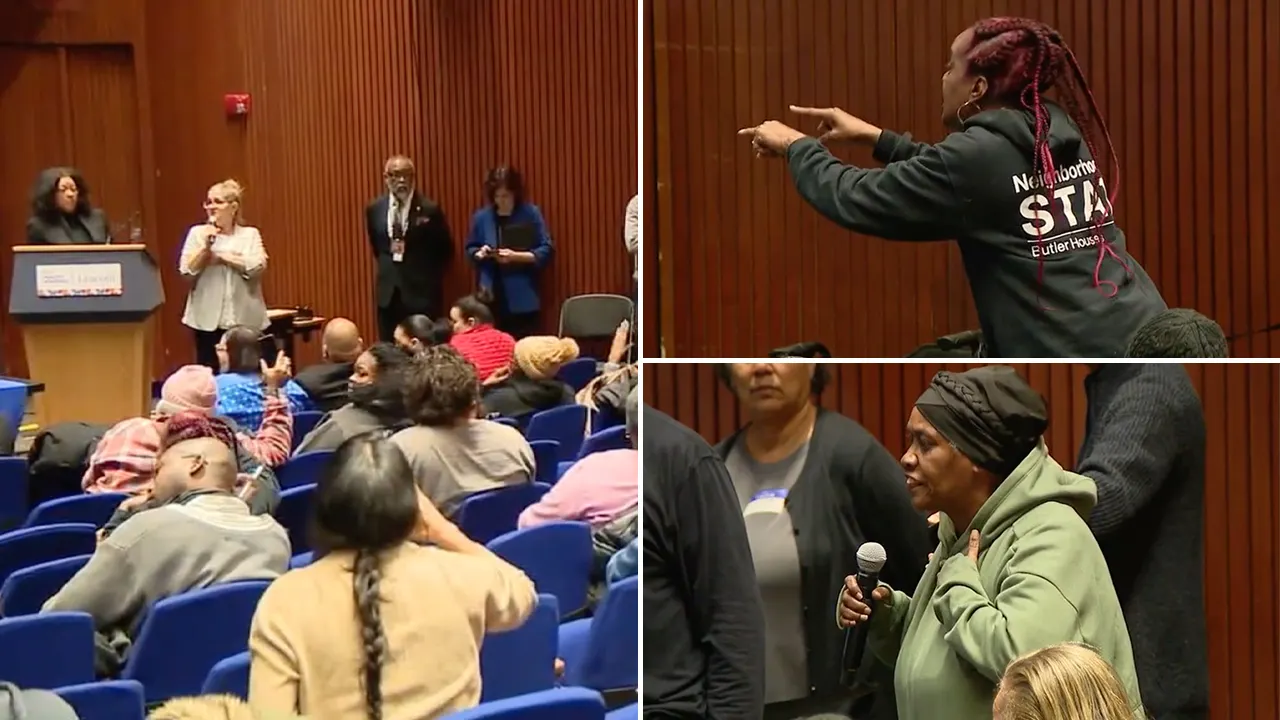
Furious New York City residents expressed their anger Monday after learning they were powerless to stop a massive 2,200 male-only migrant shelter from opening in their neighborhood, raising concerns that the new facility will make their community less safe, especially for women.
Animated residents vented their fury during a heated Bronx community board meeting, during which the mayor’s office told them the taxpayer-funded mega shelter will open next month at a 275,000-square-foot former warehouse, according to Fox 5.
The building will be retrofitted for between $250,000 and $340,000 in order to cater to the migrants, many of whom will be transferred from the sprawling migrant tent shelter on Randalls Island, according to the New York Post, citing city records.
Furious Bronx residents expressed their anger Monday after learning they were powerless to stop a massive 2,200 male-only migrant shelter from opening in their neighborhood. (Fox 5 NY)
NEW YORK TO OPEN MASSIVE NEW 2,200-BED MIGRANT SHELTER FOR SINGLE MEN IN THE BRONX
However, residents say they are frightened about the prospect of such a large influx of migrant men being housed in the community.
“I have young women who come to me to study. I have never been afraid in the South Bronx, I am now terrified,” Judy Kudlow, an artist who said she operates an art school directly across from the building said. “I’m terrified for me, for my students. I will have to move… You have made a terrible mistake.”
Another woman slammed the situation, saying that New Yorkers are living on the streets while migrants are being catered to in these types of facilities as well as hotels.
Community board member Audrey Dejesus said she empathized with the migrants but feels residents’ concerns are not being heard.
“I understand people need a place to be, and it’s getting cold and everything in the future, but we feel like it’s a dumping ground,” Dejesus told Fox 5. “We getting the jail right across the street, and now we’re going to get a 2,200 bed for homeless men. No. Think about women and families first.”
A building that will become a migrant shelter in the Bronx, New York City. (Google Maps)
The facility located at 825 E. 141st St. was renovated in 2017 and is currently owned by SoBro Local Development Corporation, a nonprofit organization that’s stated mission is to “enhance the quality of life in the South Bronx by strengthening businesses and creating and implementing innovative economic, housing, educational, and career development programs for youth and adults.”
The mayor’s office told Fox News Digital earlier this month that despite the new shelter being opened, they are planning to close 46 migrant shelters across the city and reduce the total shelter bed count by 10,000 by June. The city noted that the Hall Street shelter in Brooklyn, one of the largest shelters being closed, housed 3,500 migrants.
The mayor’s representatives at Monday’s meeting said many of the migrants have permits to work and will not be loitering around the facility.
TRUMP BORDER CZAR MEETING WITH NYC MAYOR ADAMS DESPITE SANCTUARY CITY STATUS
Bronx Borough President Vanessa Gibson, a Democrat, said she wanted the site repurposed into a manufacturing facility to create more than 2,000 jobs.
She blasted the city for greenlighting the project before the community could discuss it.
Democratic New York City Mayor Eric Adams approved the new facility. (Luiz C. Ribeiro/New York Daily News/Tribune News Service via Getty Images)
“The city hall administration owes us more than this meeting tonight and, as your borough president, I am firm in my opposition because this plan is misguided in the climate that we are working with today with a new administration in the White House. It is unacceptable that we would even consider moving forward in such a fashion,” Gibson said. “People often say, ‘If you build it, we will fill it,’ so don’t tell me that the population of single adult men in the migrant system is going down, and yet we are repurposing a building for 2,200.”
Diana Ayala, a Democratic councilwoman who represents parts of the Bronx and Manhattan, including where the shelter is set to open, said she recommended the new Bruckner Boulevard site, as well as other locations in the Bronx.
She said the migrants have a right to shelter and the city is legally obligated to house the migrants.
The Randalls Island shelter is closing, with migrants being transferred to the new Bronx shelter. (Jeenah Moon/Bloomberg via Getty Images)
CLICK TO GET THE FOX NEWS APP
“They can’t leave them out on the street, they can’t let them sleep on the street, unless they want to. They have to put them somewhere,” said Ayala, who praised the Adams administration’s handling of the crisis.
Meanwhile, Camille Joseph Varlack, the city’s deputy mayor of administration, said communication could have been better throughout the process.
“Clearly, communication could have been better before this shelter was sited, and we want to make sure that we work in partnership with you as we move forward,” Varlack said.
Read the full article from Here


GMC and their flagship Yukon brings all-around excellence with this week’s tester: the 2026 GMC Yukon Denali Ultimate
This cousin to the Chevrolet Tahoe provides all of the space, comfort, style and luxury anyone could want.
In 2026, the GM brand worked wonders on their existing fleet and added nice trim levels to keep the competition always thinking about what they’re doing next.
Our Glacier White Tricoat tester was flawless and completely destroys the competition in the American Luxury market.
Known for its high MSRP and resale values, the Yukon Denali Ultimate has a base price of $103K and is powered by a 6.2L ECOTEC3 V8 engine and 10-speed automatic transmission. With 420 horsepower and 460 lb-ft of torque, our weeklong tester had a 8,400 pound towing capacity.
The Yukon Denali Ultimate had a slew of standard features including a 16.8-inch premium infotainment system, 24-inch wheels and a 15-inch head-up display. Upgrades include second-row captains seats, BOSE performance sound system with 22-speakers and Night Vision – all totaling an additional $7,090. Boasting a Woodland Mahogany interior, the Yukon Denali Ultimate is certainly classy for all consumers and exemplifies the American Luxury that GMC provides.
In Grasso’s Garage, the Flagship GMC Yukon Denali Ultimate is the real deal. It looks stellar, rides good, and has good values. Although pricey for most consumers, the usage in this category is second to none. I was able to fit six adults on our way to dinner and heard a ton of compliments on its comfort and style, in addition to its spaciousness.
The GMC Yukon has a long-lasting history in the fleet, and in my opinion, having the Denali Ultimate package added is just the way it has to be to experience its full offerings.
Grasso’s Garage is here for you! Looking for more auto reviews or are you in the market for a new car? Head to https://www.bostonherald.com/tag/automotive/. Also, for honest input, reach out to me directly: marc.grasso@bostonherald.com.
2026 GMC Yukon 4WD Denali Ultimate
MSRP: $103,900
MPG: 14 city / 18 highway / 16.2 as tested
As Tested: $113,785


Police are investigating a double homicide in the Frog Hollow section of Hartford, officials said.
According to officials, police were notified by citizens of a large fight that happened on Madison Street near Zion Cemetery just after 7 p.m. When officers got to the scene, they found a man in his 30s unresponsive and suffering from a stab wound.
The man was rushed to a nearby hospital, where he was later pronounced dead.
While at the scene, investigators learned that two others were taken to an area hospital via private car.
One of them was another man in his 30s suffering from a gunshot wound and was in critical condition. He was later pronounced dead. A 17-year-old was the second one taken to the hospital via private car, but his injuries were non-life-threatening, officials said.
According to officials at the scene, investigators do not believe the public is in danger and are reviewing surveillance footage in the area as part of the investigation.
Neither man has been identified by officials at this time.
No arrests have been made at this time, police said.
-
 Sports5 minutes ago
Lakers announce summer league schedule, roster
-
World13 minutes ago
How the Entry-Exit System is becoming a nightmare for Europe's summer travellers
-

 News38 minutes ago
Newsom’s office responds to SCOTUS ruling on women’s sports as California faces ongoing trans athlete wave
-

 Los Angeles, Ca2 hours ago
Family of boy, 8, killed by falling tree branch at Calabasas park to get $14.6M
-

 Detroit, MI2 hours ago
The worst Detroit sports uniform from every pro team
-

 San Francisco, CA2 hours ago
Discovery Bay driver arrested for San Francisco fatal vehicle collision | Contra Costa Herald
-

 Dallas, TX3 hours ago
Erling Haaland’s Dallas Western wear purchase goes viral
-

 Miami, FL3 hours ago
Miami’s FIFA Fan Fest draws thousands to Bayfront Park to watch Team USA win World Cup match against Bosnia

