News
The U.S. Surgeon General wants cancer warnings on alcohol. Here's why


Bottles of alcohol sit on shelves at a bar in Houston on June 23, 2020.
David J. Phillip/AP
hide caption
toggle caption
David J. Phillip/AP
U.S. Surgeon General Vivek Murthy is calling on Congress to require health warning labels that inform consumers about the link between alcohol consumption and the risk of cancer.
Murthy released a new advisory detailing how drinking alcohol increases the risk of developing seven types of cancer.
“Alcohol is the third leading preventable cause of cancer behind tobacco and obesity,” Murthy, who will leave office later this month, told NPR. “Just to put this in perspective, alcohol is responsible for about 100,000 cases of cancer in the United States each year and 20,000 cancer deaths.”
He told Morning Edition‘s Steve Inskeep that the seven cancers linked to alcohol consumption are breast, colorectal, esophagus, liver, mouth, throat and voice box (larynx).
“Most people don’t know about this link. And that’s the key reason why I’m putting out this advisory today,” Murthy said.

Murthy spoke with Morning Edition about the risk of alcohol consumption and the incoming surgeon general, Dr. Janette Nesheiwat.
This interview has been lightly edited for length and clarity.
Inskeep: Is the science more definite than a few years ago? Do we know more about this link?
Murthy: We do. The science has been building for years, creating greater and greater certainty about more and more types of cancer. But what is clear is that while people know, for example, about the link between tobacco and cancer and other health risks and cancer, less than half of people in America know that alcohol is, in fact, connected to cancer risk.
Inskeep: Does it matter if you drink a lot or in moderation?
Murthy: It turns out it does. It turns out that more consumption of alcohol increases your risk of cancer. So we see significantly lower risk at lower levels of consumption.

Surgeon General Dr. Vivek Murthy speaks during an event on the White House in April. The nation’s top doctor has issued an advisory about the public health risks of widespread gun violence.
Susan Walsh/AP
hide caption
toggle caption
Susan Walsh/AP
Inskeep: I’m thinking about how to measure this risk. It sounds pretty bad, but there are so many risks with alcohol. In fact, there are already warnings about drinking during pregnancy, drinking while driving, obviously operating machinery, various other health problems. Is cancer even the main thing to worry about here?
Murthy: Well, it’s interesting that you mention those other risks, because on alcohol-containing bottles, there is, in fact, a surgeon general’s warning that mentions these two risks: drinking during pregnancy and drinking while operating a car or heavy machinery.
What I have called for in this advisory is that the surgeon general’s warning label be updated by Congress to include a third risk here, which is the risk of cancer. You know, we’ve seen in the first two cases that when people were warned about these risks, they became part of our common knowledge. They sort of just shape our behavior.
What I want people to know here is that, while we don’t have data to give a precise level at which every person can drink and minimize their risk of cancer, the exact level that’s right for each individual does depend on their own risk of cancer based on their genetics, their family history, environmental exposures.
The two critical things that the data does tell us are that, one, there is a significant increase in risk of cancer going from, you know, even at the current levels, that are within the guidelines. So that’s one drink a day for women, two drinks a day for men. But second, that the patterns we see suggest lower consumption is equated with lower risk.
So the bottom line is, if you drink regularly, keep in mind that less is better when it comes to reducing your cancer risk.
Inskeep: I want to note for people you’re heading out of office Jan. 20. President-elect Donald Trump has nominated a replacement, Dr. Janette Nesheiwat, who’s a Fox News contributor, also a doctor in urgent care. Have you had many conversations with her as she prepares to take over, assuming she’s confirmed?
Murthy: I have not, but I’m looking forward to connecting with her. And, you know, to her or to whomever is confirmed as the next surgeon general. I think something people may not know is that those of us who have served in this role have a strong fellowship. We are friends with each other across Republican and Democratic administrations. We help each other out and support each other. And if she is to serve as the next surgeon general, if she’s confirmed by the Senate, and certainly she’ll be a part of that group as well.

Inskeep: One other thing is on my mind, because you’ve issued a number of warnings during your time in office, I think sometimes about the famous 1964 surgeon general’s warning on smoking. My parents heard that and actually just quit smoking. They still had their old lighters when I was growing up, but they did not smoke at all. People listened to the surgeon general. Do you think people listen to the surgeon general the same way today?
Murthy: I think people still do listen to the office, but I’m certainly aware that there are many types of pathways to which people get their information these days. Many more than back in 1964 when the tobacco report came out from our office. But back then, when that report did come out, the very next year, Congress passed legislation for a warning label. And we started to see a big national effort come together where parents, community leaders, schools all came together to build campaigns to reduce tobacco use.
That, in my mind, has been the power of this office in history. – During this term as well, we’ve seen the issues we have raised around youth mental health, loneliness and isolation, social media, have driven national conversation and behavior change. My hope with this advisory on alcohol and cancer risk is that we can contribute to change as well, and help people ultimately be healthier.
This article was edited by Obed Manuel.


A Waymo robotaxi drives in San Francisco’s North Beach neighborhood this week.
Heather Diehl/Getty Images
hide caption
toggle caption
Heather Diehl/Getty Images
Police in San Mateo, Calif., posted Monday on social media that they had apprehended a pair of teenagers from a Waymo driverless robotaxi after the company alerted authorities to suspected criminal activity. It’s the latest incident involving video surveillance of passengers and others by autonomous vehicles — raising questions about the limits of privacy in such vehicles.
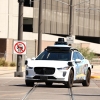
The Facebook post by the San Mateo County Police said: “Parents do you know where your teens are? @waymo does!”
The 15-year-olds were allegedly drinking alcohol and shooting toy guns from the car, according to the police. They said Waymo’s systems detected behavior that then triggered a safety response, after which the company disabled the vehicle and contacted police.
Waymo’s cars, equipped with an array of cameras, microphones and other sensors to monitor passengers and other nearby vehicles, are becoming more common in cities across the United States. Experts say the detention of the two teens in San Mateo highlights a potential — but not inevitable — trade-off between privacy and convenience. It also questions the extent to which companies similar to Waymo are required to hand over private data, including audio and video of passengers, in situations where a crime is suspected.
NPR reached out to Waymo, which is owned by Alphabet, the parent company of Google, for comment on the details of the San Mateo incident and how the company responded, but did not hear back. But on its website, the company says that as many as 29 cameras in its autonomous cars provide an all-around view and “are designed with high dynamic range and thermal stability, to see in both daylight and low-light conditions, and tackle more complex environments.”
“There already exist laws that govern duty to report or even duty to protect” for carriers such as Waymo, according to Alessandro Acquisti, a professor of information technology at the MIT Sloan School of Management. “The privacy problems arise when and if driverless carrier companies used such laws or ethical obligations as a pretext for blanket, indiscriminate accumulation of identifiable data for unspecified future purposes.”
That includes not just monitoring people inside the cars, but outside too. Take, for example, a hit-and-run investigation last year in Los Angeles. Media reported that the police inquiry was aided by video captured by a Waymo taxi that had a clear view of the crime. Critics suggested at the time that authorities were using the company’s vehicles as a mobile surveillance platform. And during 2025 protests in Los Angeles against Immigration and Customs Enforcement crackdowns, demonstrators vandalized Waymos, apparently angry that video recorded by the vehicles could be used by police, although there is no evidence that happened.
In a transparency report, Google says it received nearly 290,000 requests from governments worldwide in the first six months of 2025 for disclosure of user information across all its platforms, including Waymo. The company says that in more than 80% of the requests in those six months, some information was disclosed. “Google carefully reviews each request to make sure it satisfies applicable laws. If a request asks for too much information, we try to narrow it, and in some cases we object to producing any information at all,” the company says.
In an email to NPR, San Mateo Police Department spokesperson Jeanine Luna said that detaining the teens in the Waymo on Monday was “wholly appropriate” under the circumstances. “We received the call of a ‘firearm’ being shot from a moving vehicle,” she said. “Furthermore, the occupants were described as being possibly ‘intoxicated.’” she said.
“Being that the vehicle was disabled (the occupants had every right to exit the vehicle before police arrival, but they did not), a high-risk traffic stop was conducted to ensure the safety of all involved,” Luna added. “They were not arrested and were released to their parents, however, potential charges are still pending dependent on what the video from inside the vehicle shows.”
Autonomous taxis represent an ethical gray area
Robotaxis began to roll out across the U.S. in December 2018, when Waymo launched in Phoenix. These services have been used for less than a decade — so the norms surrounding them aren’t settled, experts agree.
The Facebook post may make Waymo passengers wonder what triggers a police intervention, says Irina Raicu, director of the Internet Ethics program at Santa Clara University. She has used Waymo’s driverless taxis and says ethically, the privacy issues surrounding them sit in a gray area. “There’s something about being in a car without another person that makes you think it’s private.”
“With all these recording devices, we don’t see them, [and] they’re not these obvious things being stuck in our faces,” Raicu adds.
That brings up a key issue: informed consent, Acquisti says.
“It is not clear the extent to which passengers … are reminded that when they step into the car, that they are being monitored, and most likely they are not told in its entirety how the data will be used,” he says.
Bruce Schneier, a cybersecurity and privacy expert and professor at the Munk School at the University of Toronto, believes that Waymo does have a compelling interest in protecting its vehicles. He compares monitoring a robotaxi via cameras to a human taxi driver keeping an eye on passengers in the rearview mirror.
“Maybe the driverless car comes back … and it has all of its cushions slashed, and it’s like, ‘Who the hell did that? Let’s go and look at the tape,’” Schneier suggests. “You can’t have sex in the back of a taxi, right? Someone would say, ‘Stop it.’”
He concludes that some supervision makes sense. In an Uber rideshare, he notes, “most of the time there’s a camera recording the back seat.” (Uber says on its website that it allows drivers to install such cameras for the purpose of “fulfilling transportation services.”)
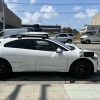
Waymo robotaxis, while a fairly common sight in the San Francisco Bay Area, are still a novelty in much of the country. And many people are hesitant to ride in one, according to a Pew Research Center poll published this month. The survey found that only 5% of Americans had ever ridden in a driverless car. Meanwhile, 71% of those polled said they would feel uncomfortable in one, with only 7% saying they would be “extremely or very comfortable” riding in one.
For that reason, experts who spoke with NPR said they were optimistic that it’s not too late to shift gears on privacy norms and policies surrounding these vehicles.
Acquisti doesn’t see why privacy measures can’t be built into driverless vehicles.
“I would immediately challenge the notion that people have to be monitored,” he says, noting that privacy-preserving technologies exist and can be installed.
“Driverless cars are coming, but they don’t have to come in this particular incarnation,” Raicu says. “They’re still being designed and redesigned. It’s early days.”

Donald Trump has terminated the remaining members of the independent, federal commission that assists election administration officials nationwide just a few months before the midterm elections, multiple outlets reported Thursday.
The remaining three commissioners of the four-member bipartisan commission were forced out on Thursday in different ways. The one Republican appointee resigned and the other two, Democratic appointees were notified of their terminations via email from the White House presidential personnel office.
“On behalf of President Donald J Trump, I am writing to inform you that your position as Commissioner of the Election Assistance Commission is terminated, effective immediately. Thank you for your service,” the email, seen by Reuters, said.
The White House did not immediately respond to a request for comment.
The Election Assistance Commission serves as a “national clearinghouse of information on election administration”, accredits testing laboratories and certifies voting systems, and maintains the national mail-voter registration form developed by the National Voter Registration Act of 1993, according to the commission’s website. The terminations follow Trump and top administration officials’ advocacy to change vote-by-mail requirements and investigations into the 2020 election outcome, which Trump lost to Democrat Joe Biden.
“It is irresponsible and dangerous that this Administration remains dead set on causing chaos for our election officials across this country,” Arizona secretary of state Adrian Fontes said in a Thursday statement. “This move undermines the integrity of nonpartisan election administration.”
The 2002 law that established the commission, the Help America Vote Act, states the president can appoint replacements to the commission.
It is unclear how Trump will move ahead with the commission.
Reuters contributed reporting

Former U.S. Olympian David Hearn (left) walks with his attorney Norman Eisen to speak to reporters and protesters gathered after his arraignment at the Superior Court of the District of Columbia in Washington, D.C. on Thursday.
Finn Gomez/Getty Images
hide caption
toggle caption
Finn Gomez/Getty Images
Former U.S. Olympic canoeist David Hearn pleaded not guilty to damaging the Lincoln Memorial Reflecting Pool in D.C. Superior Court Thursday morning.
Federal prosecutors charged Hearn with a single count of destruction of property causing more than $1,000 in damage to the pool.

Hearn has previously claimed, which his attorneys repeated during a short press conference outside the court, that he simply touched the water in the pool out of curiosity.
The Trump administration had just completed a $14 million renovation of the pool.
But shortly after the work finished, peeling paint and algae gathered in the water. The remodel has been largely criticized as a massive failure and waste of taxpayer dollars.

Superior Court Judge Carmen McLean released Hearn on his own recognizance. His next hearing is scheduled for Aug. 5.
Norm Eisen, one of Hearn’s attorneys, spoke to reporters outside of court following the hearing. He said the administration is using Hearn as a “scapegoat … for their own failures.”
“It is not a crime to touch the reflecting pool, to touch water in the United States of America,” he said.
Prosecutors say there is a host of evidence against Hearn.
This is a developing story.
-

 Rhode Island4 minutes ago
Our Favorite Write-Ins From the 2026 Best of Rhode Island Readers’ Poll – Rhode Island Monthly
-

 South-Carolina11 minutes ago
South Carolina National Guard lifts suspensions for pilots in July Fourth flyover
-

 South Dakota14 minutes ago
South Dakota T. rex could bring $30 million or more at auction
-

 Tennessee19 minutes ago
Rescue teams pull kayakers and dog from Red River in Tennessee
-

 Texas26 minutes ago
Fetus found deceased along Lewisville Lake shoreline was discarded intentionally, police say
-

 Utah29 minutes ago
Tyler Robinson preliminary hearing expected to wrap up Friday – KSLNewsRadio
-
Washington34 minutes ago
Bengals 2026 Opponent Preview: Washington Commanders
-

 Vermont34 minutes ago
Beau Welling’s Stowe Country Club Revamp Signals New Vermont Golf Era


