News
Soft medium, hard truths – National Endowment for the Arts recognizes a Navajo quilter


An image of Susan Hudson’s quilt, “Tears or our Children, Tears for our Children,” as displayed at the National Museum of the American Indian
National Museum of the American Indian, Smithsonian Institution (26/9331). Photo by NMAI Photo Services/NMAI-Natl. Museum of the America
hide caption
toggle caption
National Museum of the American Indian, Smithsonian Institution (26/9331). Photo by NMAI Photo Services/NMAI-Natl. Museum of the America
Susan Hudson’s studio near Ignacio, Colorado, is often a chaotic mess of brightly colored fabrics and half-finished projects.
“I’m disorganized/organized,” she said with a laugh. “I know where everything is. But I did clean up a little when I knew you were coming for a visit.”
At the time, Hudson was finishing work on her latest show quilt, “Standing Strong In The Face of Genocide.” Trimmed in black fabric, the four-paneled quilt showed a sequence of images focused on a single figure, like frames in a graphic novel.
In the first frame, a Native American boy in traditional clothing stands in front of what appears to be the whitewashed wooden siding of a building. The figure has black braids, leather and velvet clothing decorated in metal and bone, and oyster shell earrings. The light brown area of the figure’s face is blank, with no features.
In the second frame, Hudson has sewn pieces of red fabric on the figure’s pants, shaped like droplets of blood. In the third frame, the figure is slumped down, with a red smear on the wall behind him. The fourth panel has only Hudson’s trademark cursive writing, like lines in a ledger book, dedicating the quilt to the Native children who did not capitulate to the administrators and federal officials who carried out federal Indian boarding school policies.
These frames tell the story of an execution-style killing of a Native American boy.
Indian boarding schools operated for decades across the US, beginning in the late 19th century, as part of an ongoing federal effort to separate Native youth from their families, culture, traditions, and language. Children were forbidden to speak their native language, to wear traditional clothes, and to practice their religion. Their hair was cut, and they were given European names.

Susan Hudson
Kevin Black/Kevin Black
hide caption
toggle caption
Kevin Black/Kevin Black
In recent years, federal agencies in the US and Canada have begun investigating the tragic histories of boarding schools.
With “Standing Strong In The Face of Genocide,” Hudson wanted to honor the children who refused to comply with these practices.
“We all know what happened to these kids who went to the boarding schools,” Hudson said. “But what happened to the ones who said, ‘hell no, we’re not doing it’? When you have a defiant child, what do you do with them?”
The idea for this quilt came to Hudson in dreams and waking visions over the past few years.
“I would wake up crying,” she said. “I could smell the blood, the sweat. I could hear the screams.”
Initially, Hudson didn’t know how she would represent the story in fabric. Eventually, she settled on taking the perspective of the person holding the gun and inviting the viewer to imagine the moral difficulty of the decision at hand.
“So you’re standing here,” Hudson said, gesturing toward the quilt where it hung on the wall. “You’re looking at that kid who’s defiant. You’ve got the gun. Are you going to shoot him or not? There were some people who didn’t want to do it. But some said, ‘Yes, we’re killing a dirty Indian…How dare they buck the system!’”

Susan Hudson’s quilt “Standing Strong In The Face of Genocide”
Adam Burke/Adam Burke
hide caption
toggle caption
Adam Burke/Adam Burke
Hudson travels to Indian markets across the US. Her show quilts often receive ribbons and awards at some of these shows. And each year, Hudson’s show quilt finds a buyer.
“The quilts know where they’re going to go,” she said. “It’ll go where it’s supposed to go. Some of my quilts have gone to places I never thought they would go to.”
By the end of the summer, “Standing Strong in the Face of Genocide,” had found a buyer.
Hudson’s quilts have been acquired by the Smithsonian’s Museum of the American Indian in Washington, DC, by the Heard Museum in Phoenix, Arizona, and by a number of private collectors.
In September, Hudson was honored as one of 10 National Endowment for the Arts Heritage Fellows, at a ceremony at the Library of Congress.
A Long and Difficult Road
Long before they became tools of artistic liberation, needle and thread were sources of pain and suffering for Susan Hudson and her family, stretching back to her mother’s enrollment at an Indian boarding school in the 1940s.
“She didn’t learn to sew in the boarding schools. It was beaten into her,” Hudson said. “If she wiggled or anything, she got hit. If her stitches weren’t straight, tiny, and precise, she got hit.”
The experience was so traumatic, that Hudson’s mother never spoke of it to her daughter. But when Susan Hudson learned to sew from her mother as a 9-year-old girl, she felt the sharp edge of that trauma nonetheless.
“I got a taste of the brutality that she went through,” Hudson recalled. “I hated sewing. I hated it. When I was in my 20’s I finally asked her why and then she told me the story. She goes, ‘I’m going to tell you once, and I’m never going to tell you again.’”
Still, Hudson kept sewing. As an adult and a single mother, she made shawls and star quilts and sold them at powwows.
“When I started making star quilts, it was mostly to survive,” she said. “To buy food for my kids, to buy them shoes.”
Then, around 15 years ago, an artist friend told Hudson he thought her quilts were boring and challenged her to make more original work. That friend was former US Senator Ben Nighthorse Campbell, whom Hudson has known since she was a teenager. Campbell is a jeweler, and he was willing to share his knowledge of the art world with Hudson.
“I was pissed off at first,” Hudson said. “After I shared a few choice words and calmed down, I realized Ben was right. That was the kick in the butt I needed. Those puzzle pieces came together, and I knew that I was chosen for this.”
Hudson started to learn more about the artistic side of quilt-making. She realized, too, that her family history, as well as the visions from her most vivid dreams, were stories that could be told through her quilts.
Visions, dreams and history
Hudson’s human figures have no facial features. At first glance, they seem like paper dolls, but every material detail has a story. Beadwork, leather, yarn, and fabric are arranged into richly detailed narrative scenes depicting some of the most traumatic chapters in Native American history. From the legacy of Indian boarding schools to the Navajo Long Walk, when people were forcibly removed from their homeland in the 1860s.
“Every one of us Natives, we’re descendants from boarding school survivors,” said Hudson.
One quilt, “Tears of Our Children, Tears for Our Children,” depicts boarding school trauma. In one frame a row of children are dressed in colorful, traditional regalia. In another, their hair is cut, and they’re wearing drab, institutional clothing. In the bottom frame, children sitting in wagons are guarded by cavalry soldiers with guns.
“The mothers were trying to get their children,” Hudson said. “And the soldiers would shoot them if they tried to get their children. But this little girl represented my mother.”
Emil Her Many Horses was immediately drawn to this quilt, when he first laid eyes on it at the Heard Indian Fair and Market in Phoenix, Arizona. He’s a curator at the National Museum of the American Indian and a member of the Oglala Lakota nation.
“She was telling the story in a new medium–cotton fabric,” said Her Many Horses. “And there’s a lot of detail that she took the time to stitch into this quilt. And so I thought this would be something that would add to our permanent collection.”
In addition to Hudson’s family histories, Her Many Horses noticed the ledger art references in her work.
The Heard Museum in Phoenix, Arizona, has two of Hudson’s quilts in its collection, including “The Beginning of the End,” another quilt documenting Indian boarding school history.
“The details that Susan puts into these quilts are just amazing,” said Diana Pardue, chief curator at the Heard Museum. “There’s an incredible intricacy to the work. At first, your eye looks at the overall quilt, and then you start realizing there’s a very complex story embedded in the artwork, and as you look closer, you learn something more.”
Ironic award
Success with collectors and museums has led to more national recognition. When Hudson received word last Spring that she would be honored by the National Endowment for the Arts (NEA), the irony was not lost on her.
“Congress is giving me this award because I make quilts showing the atrocities that Congress did to our people,” Hudson said.
In September 2024, Susan Hudson stood on the stage of Coolidge Auditorium at the Library of Congress in Washington, D.C., to accept a medal from the NEA. In her speech that followed, Hudson’s words pierced the silence of the theater.
“I should not be standing here receiving this award,” she told the audience. “I should not be having to make these quilts to talk about the atrocities that happened to our people…. My descendants will remind your descendants of the things that happened to our people.”
After a long pause, Hudson released some of the tension with a touch of humor.
“But I appreciate the award,” she said with a smile. The audience roared with laughter and showered her with applause.
Through the soft medium of quiltmaking, Hudson has found a way to share hard truths–stories her family members would only speak of in whispers when she was growing up.
“You know everybody was talking about it quietly,” she said “But no, I don’t care, I’m going to talk about it because that’s my story. That’s my history. My family tree.”



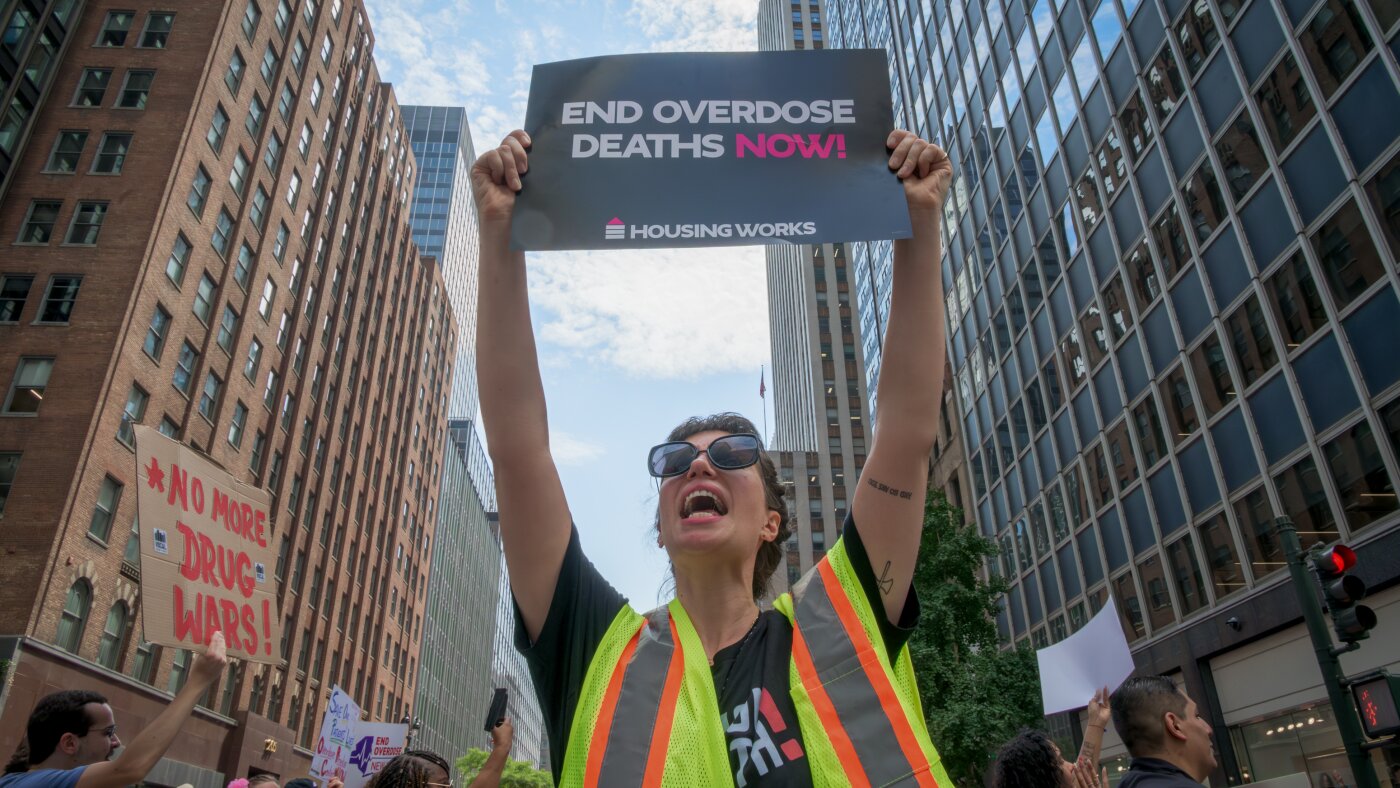
A demonstrator holds a sign during International Overdose Awareness Day on Aug. 28, 2024 in New York City.
Erik McGregor/LightRocket via Getty Images
hide caption
toggle caption
Erik McGregor/LightRocket via Getty Images
The Trump administration sent shockwaves through the U.S. mental health and drug addiction system late Tuesday, sending hundreds of termination letters, effective immediately, for federal grants supporting health services.

Three sources said they believe total cuts to nonprofit groups, many providing street-level care to people experiencing addiction, homelessness and mental illness, could reach roughly $2 billion. NPR wasn’t able to independently confirm the scale of the grant cancellation. The U.S. Substance Abuse and Mental Health Services Administration (SAMSHA) didn’t respond to a request for clarification.
“We are definitely looking at severe loss of front-line capacity,” said Andrew Kessler, head of Slingshot Solutions, a consultancy firm that works with mental health and addiction groups nationwide. “[Programs] may have to shut their doors tomorrow.”
Kessler said he has reviewed numerous grant termination letters from “Salt Lake City to El Paso to Detroit, all over the country.”
Ryan Hampton, the founder of Mobilize Recovery, a national advocacy nonprofit for people in and seeking recovery, told NPR his group lost roughly $500,000 “overnight.”
“Waking up to nearly $2 billion in grant cancellations means front-line providers are forced to cease overdose prevention, naloxone distribution, and peer recovery services immediately, leaving our communities defenseless against a raging crisis,” Hampton said. “This cruelty will be measured in lives lost, as recovery centers shutter and the safety net we built is slashed overnight. We are witnessing the dismantling of our recovery infrastructure in real-time, and the administration will have blood on its hands for every preventable death that follows.”
Copies of the letter sent to two different organizations and reviewed by NPR signal that SAMHSA officials no longer believe the defunded programs align with the Trump administration’s priorities.
The letter points to efforts to reshape the national health system in part by restructuring SAMHSA’s grant program, which “includes terminating some of its … awards.”
According to the letter, grants are terminated as of Jan.13, adding that “costs resulting from financial obligations incurred after termination are not allowable.”
The National Association of County Behavioral Health and Developmental Disability Directors sent a letter to members saying it believes “over 2,000 grants [nationwide] with a total of more than $2 billion” are affected. The group said it’s still working to understand the “full scope” of the cuts.
This move comes on top of deep Medicaid cuts, passed last year by the Republican-controlled Congress, which affect numerous mental health and addiction care providers.
Kessler told NPR he’s hearing alarm from care providers nationwide that the safety net for people experiencing an addiction or mental health crisis could unravel.
“In the short term, there’s going to be severe damage. We’re going to have to scramble,” he said.
Regina LaBelle, a Georgetown University professor who served as acting head of the Office of National Drug Control Policy during the Biden administration, said the SAMHSA grants pay for lifesaving services.
“From first responders to drug courts, continued federal funding quite literally save lives,” LaBelle said. “The overdose epidemic has been declared a public health emergency and overdose deaths are decreasing. This is no time to pull critical funding.”
Requests for comment from SAMHSA and the Department of Health and Human Services were not immediately returned.
This is a developing story.

new video loaded: Clashes With Federal Agents in Minneapolis Escalate
transcript
transcript
Clashes With Federal Agents in Minneapolis Escalate
Fear and frustration among residents in Minneapolis have mounted as ICE and Border Patrol agents have deployed aggressive tactics and conducted arrests after the killing of Renee Good by an immigration officer last week.
-
“Open it. Last warning.” “Do you have an ID on you, ma’am?” “I don’t need an ID to walk around in — In my city. This is my city.” “OK. Do you have some ID then, please?” “I don’t need it.” “If not, we’re going to put you in the vehicle and we’re going to ID you.” “I am a U.S. citizen.” “All right. Can we see an ID, please?” “I am a U.S. citizen.”

By Jamie Leventhal and Jiawei Wang
January 13, 2026

Top Justice Department officials defended Lindsey Halligan’s attempts to remain in her position as a U.S. attorney in court filings Tuesday, responding to a federal judge who demanded to know why she was continuing to do so after another judge had found that her appointment was invalid.
The filing, signed by Halligan, Attorney General Pam Bondi and Deputy Attorney General Todd Blanche, accused a Trump-appointed judge of “gross abuse of power,” and attempting to “coerce the Executive Branch into conformity.”
Last week, U.S. District Judge David Novak, who sits on the federal bench in Richmond, ordered Halligan to provide the basis for her repeated use of the title of U.S. attorney and explain why it “does not constitute a false or misleading statement.”
Novak gave Halligan seven days to respond to his order and brief on why he “should not strike Ms. Halligan’s identification as United States attorney” after she listed herself on an indictment returned in the Eastern District of Virginia in December as a “United States attorney and special attorney.”
U.S. District Judge Cameron Currie had ruled in November that Halligan’s appointment as interim U.S. attorney was invalid and violated the Constitution’s Appointments Clause, and she dismissed the cases Halligan had brought against former FBI Director James Comey and New York Attorney General Letitia James.
The statute invoked by the Trump administration to appoint Halligan allows an interim U.S. attorney to serve for 120 days. After that, the interim U.S. attorney may be extended by the U.S. district court judges for the region.
Currie found that the 120-day clock began when Halligan’s predecessor, Erik Siebert was initially appointed in January 2025. Currie concluded that when that timeframe expired, Bondi’s authority to appoint an interim U.S. attorney expired along with it.
The judge ruled that Halligan had been serving unlawfully since Sept. 22 and concluded that “all actions flowing from Ms. Halligan’s defective appointment” had to be set aside. That included the Comey and James indictments.
In their response, Bondi, Blanche and Halligan called Novak’s move an “inquisition,” “insult,” and a “cudgel” against the executive branch. The Justice Department argued that Currie’s ruling in November applied only to the Comey and James cases and did not bar Halligan from calling herself U.S. attorney in other cases that she oversees.
“Adding insult to error, [Novak’s order] posits that the United States’ continued assertion of its legal position that Ms. Halligan properly serves as the United States Attorney amounts to a factual misrepresentation that could trigger attorney discipline. The Court’s thinly veiled threat to use attorney discipline to cudgel the Executive Branch into conforming its legal position in all criminal prosecutions to the views of a single district judge is a gross abuse of power and an affront to the separation of powers,” the Justice Department wrote.
In his earlier order, Novak said that Currie’s decision “remains binding precedent in this district and is not subject to being ignored.”
The Justice Department called Currie’s ruling “erroneous”: and said that Halligan is entitled to maintain her position “notwithstanding a single district judge’s contrary view.”
On Monday, the second-highest ranking federal prosecutor in the Eastern District of Virginia, Robert McBride, was fired after he refused to help lead the Justice Department’s prosecution of Comey, a source familiar with the matter told CBS News. McBride is a former longtime federal prosecutor in Kentucky’s Eastern District and had only been on the job as first assistant U.S. attorney for a few months after joining the office in the fall.
Halligan is a former insurance lawyer who was a member of President Trump’s legal team, and joined Mr. Trump’s White House staff after he won a second term in 2024. In September, Halligan was selected to serve as interim U.S. attorney for the Eastern District of Virginia after her predecessor abruptly left the post amid concerns he would be forced out for failing to prosecute James.
Just days after she was appointed, Halligan sought and secured a two-count indictment against Comey alleging he lied to Congress during testimony in September 2020. James, the New York attorney general, was indicted on bank fraud charges in early October. Both pleaded not guilty and pursued several arguments to have their respective indictments dismissed, including the validity of Halligan’s appointment, and claims of vindictive prosecution.

Geospatial Study Ties Melanoma Hot Spots to Farming Practices in Pennsylvania | Managed Healthcare Executive

CRMC asks RI Superior Court to force Quidnessett Country Club to take down rock wall

South Carolina women’s basketball adds French prospect vs. Texas

Acquitted in beheading case, South Dakota man sues, claiming malicious prosecution
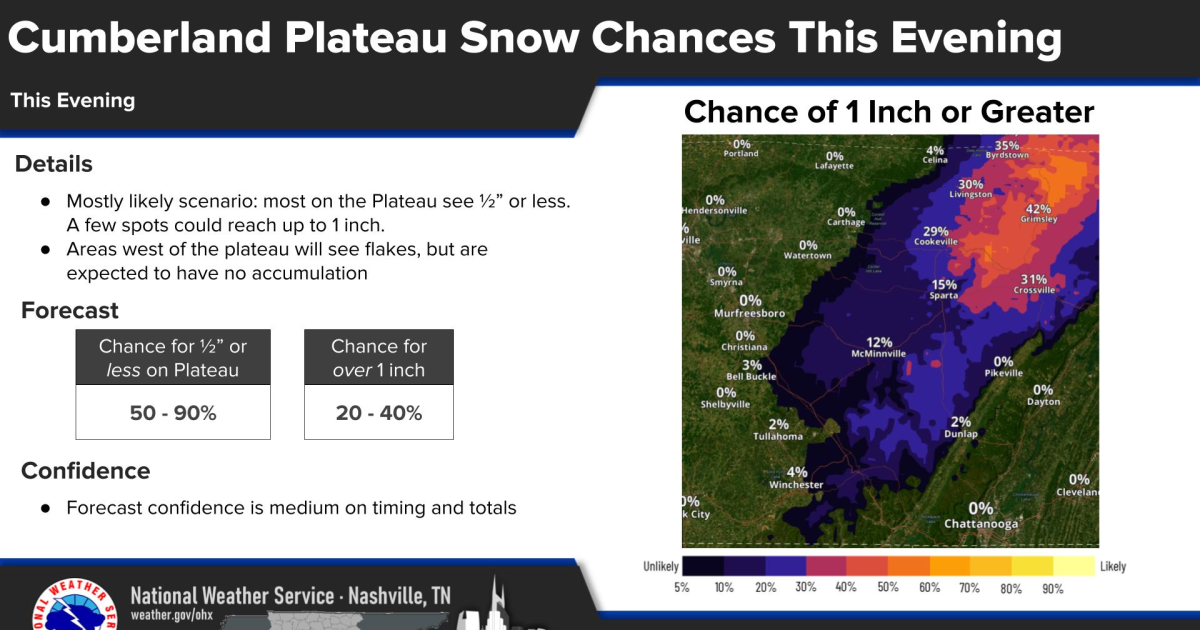
Cold patrols scheduled as dangerous cold moves into Middle Tennessee

Florida High School Football Rankings: Top 25 teams – Oct. 21

Cleary's 21 help Le Moyne down Central Connecticut State 69-64 in OT

How old is Bo Nix? What to know about Oregon quarterback ahead of 2024 NFL Draft

99th annual Pony Swim held in Virginia

Video: ‘It Didn’t Have to Happen This Way:’ U.Va. Faculty Call for Review of Police Response to Protests

Republicans light cigars, cigarettes on burning photos of Khamenei to show support for Iranian protesters

EU Parliament questions defence loan’s ‘€17 billion gift’ to Hungary
Trump administration sends letter wiping out addiction, mental health grants

Video: Clashes With Federal Agents in Minneapolis Escalate

Venezuela releases multiple American citizens from prison following military operation
-

 Montana4 days ago
Service door of Crans-Montana bar where 40 died in fire was locked from inside, owner says
-

 Technology1 week ago
Power bank feature creep is out of control
-

 Delaware5 days ago
MERR responds to dead humpback whale washed up near Bethany Beach
-

 Dallas, TX6 days ago
Anti-ICE protest outside Dallas City Hall follows deadly shooting in Minneapolis
-

 Dallas, TX1 week ago
Defensive coordinator candidates who could improve Cowboys’ brutal secondary in 2026
-

 Virginia4 days ago
Virginia Tech gains commitment from ACC transfer QB
-

 Education1 week ago
Video: This Organizer Reclaims Counter Space
-

 Iowa1 week ago
Pat McAfee praises Audi Crooks, plays hype song for Iowa State star