News
She grew up believing she was a U.S. citizen. Then she applied for a passport

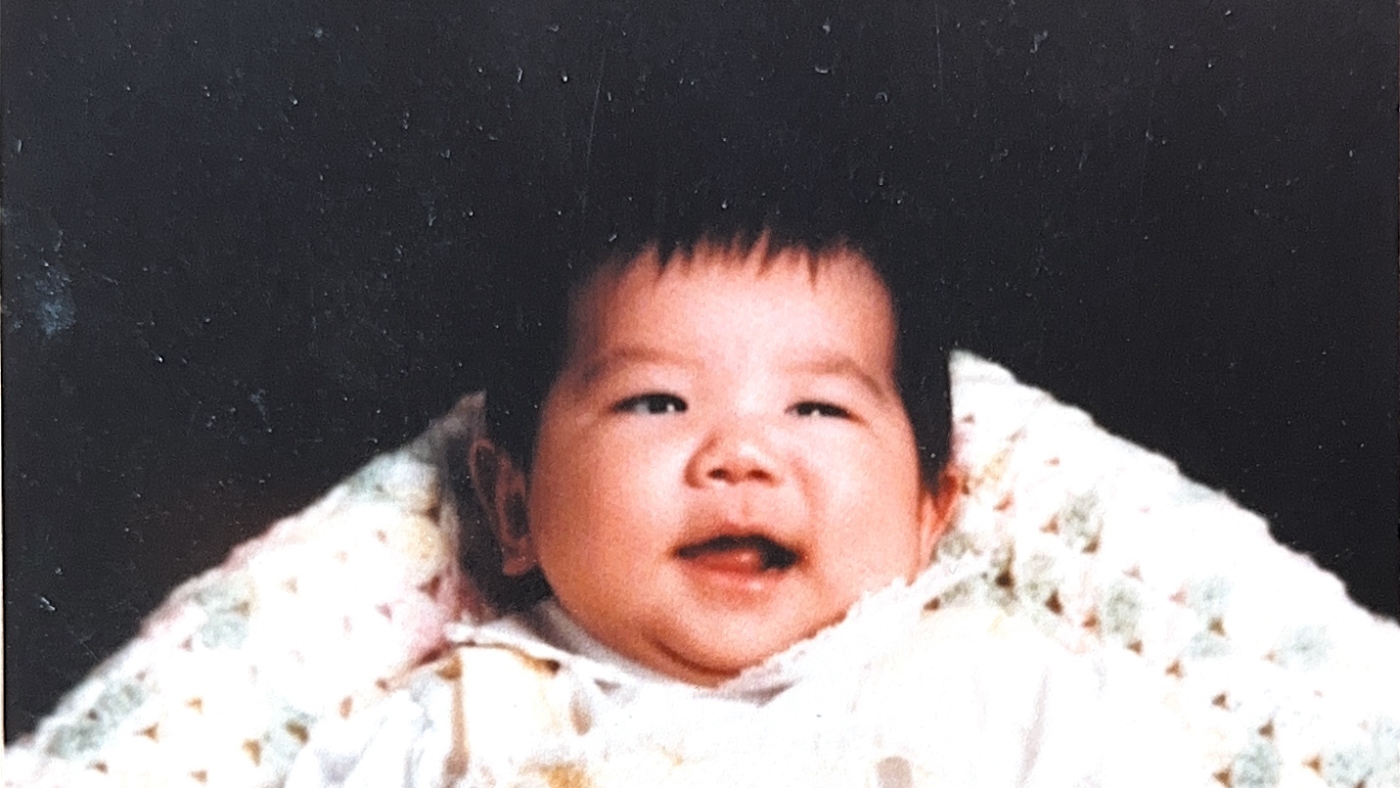
In her earliest memories, A sensed a difference between her and her white parents. Yet, she also remembers feeling special, chosen and cared for.
Family photo
hide caption
toggle caption
Family photo
For the better part of A’s life, she never suspected anything was wrong.
She breezed through getting her driver’s license. She applied to college and filed her taxes year after year without any hiccups. That is, until she applied for her passport.
Suddenly, the document she always relied on — a delayed registration of birth, which is fairly common among adoptees — was no longer enough. She realized the papers that would prove she was a citizen were not just missing — they had never existed in the first place.
“ I just sensed there was something wrong and it seemed frightening,” said A, who asked to be referred to by her last initial out of fear of deportation.
A later found out that her adoptive parents never completed her naturalization. It meant she was technically barred from accessing things that she took for granted all her life — like college financial aid. It also left A, who is now in her 40s, vulnerable to deportation to her native South Korea — a country she has never been to, where she doesn’t speak the language or know of any family.

Congress tried to address this issue by passing the Child Citizenship Act in 2000, which grants automatic citizenship to international adoptees. But the law only covered future adoptees and those under 18 at the time the law went into effect, or only those born after February 1983. It also did not apply to children who were brought to the U.S. on the wrong type of visa.
For the past 25 years, advocates have been pushing for Congress to remove the age cutoff and narrow the citizenship gap among adoptees. A bill was reintroduced several times, but it has yet to make it past the House.
Now, advocates say President Trump’s second term has ushered in a new era of fear for adoptees without citizenship. Trump has consistently vowed to carry out the largest deportation program that the country has ever seen. To do so, his administration is casting a far wider net on who to deport — making adoptees like A question if they will be next.
“I definitely didn’t think it was possible for any adoptee to be in my state of limbo. I know now that it’s not only possible but common,” A said.
How adoptees fell through the cracks
It’s difficult to determine how many adoptees lack citizenship in the U.S. Many are unaware of their circumstances until adulthood, when they attempt to apply for a passport, try to obtain a Real ID or, in the worst-case scenario, get convicted of a crime, which makes them a priority for removal.
Arissa Oh, a history professor at Boston College who has written extensively about the origins of international adoptions, said a host of factors contributed to the phenomenon of noncitizen adoptees. In some cases, the adoptive parents were to blame.
“Either the adoptive parents did not know that naturalization was a separate process from immigration and adoption, or they couldn’t get around to it for whatever reason,” Oh said.

Sometimes, the adoptions were never fully legal in the first place. Last month, the government of South Korea, where A is from, admitted that its adoption agencies engaged in fraud or malpractice to keep up with demand, including not properly vetting prospective parents.
The report, led by the country’s Truth and Reconciliation Commission, urged the Korean government to investigate citizenship issues among adoptees sent to the U.S. and take steps to support those without citizenship, the Associated Press reported.

Truth and Reconciliation Commission Chairperson Park Sun Young (right) comforts adoptee Yooree Kim during a press conference in Seoul, South Korea, on March 26. Before the 1990s, South Korea was the top country for international adoptions to the U.S. A 2000 U.S. law’s age cutoff makes the issue of adoptees without citizenship especially pertinent to those from South Korea.
Ahn Young-joon/AP
hide caption
toggle caption
Ahn Young-joon/AP
According to Oh, all of the systemic factors that kept adoptees from being naturalized underscore a long-standing discrepancy between federal and state roles in international adoptions. While U.S. citizenship is governed at the federal level, adoptions themselves are generally regarded as domestic matters, much like marriage, which is why they are processed through state courts, Oh said.
“That’s where you see a failure, in terms of the protection of the children,” she said. “Because they could fall through the gap between federal law and state law.”
“I didn’t know who to ask for help”
A was just 3 weeks old when she was brought to the West Coast from South Korea. Her adoptive parents had trouble conceiving, she was told. It never occurred to A to ask if she was indeed a U.S. citizen.
Then in her 20s, while working at a coffee shop, A opened a letter from the U.S. State Department asking for more proof of her citizenship. She had no idea who to turn to and couldn’t afford a lawyer.
“I think I just felt really alone and scared,” A said. “I didn’t know who to ask for help.”
So, she tucked the letter away and returned to the mountain of dishes she needed to wash. Although part of her was worried, A figured it was some misunderstanding and could be easily resolved.
Later, when she asked her parents about her citizenship, they told her: “You were adopted by a U.S. citizen. So you’re a U.S. citizen,” she recalled.
Years later, in a Facebook group for adoptees, she confided to another member about her situation, who then urged her to contact attorney Gregory Luce as soon as possible.
An adoptee himself, Luce specializes in this area. After he and A connected in 2019, Luce spent the next two years going back and forth with various government agencies to determine if A was a citizen. The drawn-out wait was typical, he said. The truth was nothing short of gut-wrenching.
“Greg said officially: ‘You’re not a U.S. citizen,’ ” A said. “It was hard to hear, but a lot of it was that I was scared.”
Some deported adoptees have faced homelessness and mental health crises
Adoptees are supposed to be granted the same rights as if they were the biological children of their adoptive parents. Yet adoptees who lack citizenship live in limbo almost as if they newly arrived.
It makes them ineligible for most college financial aid, federal benefits and certain government jobs. Soon, they’ll also lose the ability to fly domestically when enforcement of Real ID, a driver’s license or ID card with stricter standards, kicks off in May.
Joy Alessi, a Korean adoptee who’s with the Adoptee Rights Campaign, did not gain citizenship until she was 52 years old. She worries about how the years she spent working as a noncitizen will impact her future retirement benefits.
“As children, we didn’t broker our own adoptions, nor did we bring ourselves across the border without the proper documentation. Nor did we fail to apply for our own citizenship,” she said. “So why are we holding children responsible for their parents’ mistakes?”

For decades, attorneys often advised Alessi to simply “lay low” rather than try to take steps to correct her immigration status. But leaving the issue unresolved puts adoptees at another kind of risk: a criminal conviction, no matter how minor, can expose them to the full weight of immigration enforcement.
NPR previously reported of an adoptee and father of five who was convicted of marijuana possession in Texas. Because his adoption was filed improperly, he was sent to his birth country of Mexico after having served a few years in prison.
Amanda Cho, a spokesperson for Adoptees for Justice, said adoptees who are deported often receive little to no support to navigate life in an unfamiliar country, putting them at significant risk of unemployment, homelessness, and mental health crises.
“They’re kind of just left to struggle and survive on their own,” she said.
In one case, an adoptee named Phillip Clay killed himself after struggling to adjust to life in South Korea.
Thousands of adoptees could have relief with this bill
The State Department said in a statement that it works to ensure intercountry adoptions are “safe, ethical, legal and transparent” but “[its] role in issues regarding adoptee citizenship is generally limited to adjudicating applications for a U.S. passport.”
Adoptee advocates argue the solution lies in eliminating the age cutoff from the 2000 law. Legislative efforts to do just that have historically received bipartisan support. But progress has been slow because the issue had been tied to immigration, an area that has been persistently difficult to reform, according Rep. Adam Smith, D-Wash., who has previously sponsored the bill.
“So it’s really paralyzed our ability to right a very simple and straightforward wrong,” he added.
But Cho said at its core, the bill is about preventing family separation.
“Adoptees were adopted into a family as children,” she said. “It’s not fair that a biological child can commit a crime, do their time and continue on with their life. But an adopted child is treated [differently].”
Beyond the federal level, states can also better support adoptees by allowing them greater access to their adoption records, according to Luce, who is also the founder of the Adoptee Rights Law Center.
These documents are often considered the most secretive of all court files given their sensitive nature. In many states, including California, Kentucky and Virginia, adult adoptees must secure a court order or permission from their adoptive parents in order to gain access to certain adoption papers. The fee to obtain these files can also be far higher than the cost to retrieve a non-adoptee birth certificate.
The issue impacts both those who were adopted domestically and internationally. In A’s case, Luce said he requested documents essential to her immigration case in state court three times over two years. Had it been easier to get those papers, A would have obtained her green card by now, according to Luce.
“It’s incredibly frustrating if not insane and ultimately dangerous for intercountry adopted people like A when they cannot get basic documents to prove they are lawfully in the United States,” he said.
“It is an issue of human rights and individual dignity that we’ve been fighting for more than 50 years,” he added.
A tries to get a green card amid the new Trump administration
In 2022, A married a U.S. citizen — opening up a new viable pathway toward citizenship. It’s promising, but A won’t be able to get a green card until she has obtained adoption papers.
A said her husband is “more nervous now than ever before because of the current administration.”
Soon, A won’t be able to fly within the country because she’s not eligible for a Real ID. It means missing work trips and her best friend’s birthday in New York, breaking a 12-year tradition. “It’s a really big loss,” A said.
It also comes at a time when she feels the most grateful for the life that she has built — securing her dream two-bedroom apartment nestled between parks and hiking paths, working a job she loves and having a close-knit group of friends, many of whom are fellow adoptees.
“I am so in tune with how lucky I am and somehow it feels like a way to measure how long and hard I worked and how many times I moved trying to find my place,” she said.



Mojtaba Khamenei, the second son of the assassinated Ali Khamenei, is being heavily tipped to succeed his father as supreme leader of Iran, which would pitch a hardliner into the task of steering the Islamic republic through the most turbulent period in its 48-year history and offer a powerful signal that, for now, it has no intention of changing course.
No official confirmation has been given and the announcement may be delayed until after the funeral of Ali Khamenei, which was on Wednesday postponed.
His son is believed to have been the choice of the Islamic Revolutionary Guard Corps (IRGC), and the Israeli defence minister, Gideon Saar, has warned he will be assassinated.
Ayatollah Seyed Khatani, a member of the Assembly of Experts, the body that chooses the new supreme leader, said the assembly was close to selecting a leader.
Rigid in his anti-western views, Mojtaba Khamenei is not the candidate Donald Trump would have wanted. Marco Rubio, the US secretary of state, said on Tuesday that Iran was run by “religious fanatic lunatics” – and Khamenei’s appointment is hardly likely to dispel that opinion.
The choice of supreme leader is made by the 88-strong Assembly of Experts, who in this case are picking from a field of six possible candidates. His election would be a powerful if unsurprising symbol that the government is not looking to find an accommodation with America.
Trump has said the worst-case scenario would be if Khamenei’s successor was “as bad as the previous person”.
There has been speculation for more than a decade that he would be his father’s successor, which grew when Ebrahim Raisi, the elected president and favourite of Khamenei, was killed in a helicopter crash.
Mojtaba Khamenei was born in 1969 and studied theology after graduating from high school. At the age of 17, he went to serve in the Iran-Iraq war, but it was not until the late 1990s that he came to be recognised as a public figure in his own right.
After the landslide defeat of Khamenei’s preferred candidate, Ali Akbar Nategh Nuri, in the 1997 presidential election, where he won only 25% of the final vote, various conservative Iranian groups realised the need to make changes to their structures and Mojtaba Khamenei was central to that project.
He was also seen as instrumental by reformists in suppressing the protests in 2009 that came after allegations the presidential election had been rigged, with his name chanted in the streets as one of those responsible. Mostafa Tajzadeh, a senior member of Iran’s reformist parties who was imprisoned after the vote, alleged that his and his wife, Fakhr al-Sadat Mohtashamipour’s, legal case was under the direct supervision of Mojtaba Khamenei.
In 2022 he was given the title of ayatollah – essential to his promotion. By then he was a regular figure by his father’s side at political meetings, as well as playing an influential role in the Islamic Republic’s Broadcasting Corporation, the government’s official media outlet often criticised for churning out dull political propaganda that many Iranians reject in favour of overseas satellite channels. He has also played a central role in the administration of his father’s substantial financial empire.
His closest political allies are Ahmad Vahidi, the newly appointed IRGC commander; Hossein Taeb, a former head of the IRGC’s intelligence organisation; and Mohammad Bagher Ghalibaf, the current speaker of the parliament.
His rumoured appointment and its hereditary nature has long been resisted by reformists. The former prime minister Mir Hossein Mousavi, referring to the long history of rumours about Mojtaba Khamenei succeeding his father as leader, wrote in 2022: “News of this conspiracy have been heard for 13 years. If they are not truly pursuing it, why don’t they deny such an intention once and for all?”
The Assembly of Experts, in response, denounced “meaninglessness of doubts” and said the assembly would select only “the most qualified and the most suitable”.
Israel on Tuesday struck the building in the Iranian city of Qom, one of Shia Islam’s main seats of power, where the assembly was scheduled, but the building was empty, according to IRGC-affiliated media.

new video loaded: Senators Question Kristi Noem on ICE Immigration Tactics
transcript
transcript
Senators Question Kristi Noem on ICE Immigration Tactics
Homeland Security Secretary Kristi Noem repeatedly refused to apologize for suggesting that Alex Pretti and Renee Good, two U.S. citizens shot and killed by agents, were domestic terrorists.
-
What we’ve seen is a disaster under your leadership, Ms. Noem. A disaster. What we’ve seen is innocent people getting detained that turn out are American citizens. I could talk about the culture that’s been created here. After the killings of Renee Good and Alex Pretti, when I spoke to Alex’s parents, they told me that you calling him a domestic terrorist — this was directly from them — the day after he was killed, a nurse in our V.A., Alex — one of the most hurtful things they could ever imagine was said by you about their son. Do you have anything you want to say to Alex Pretti’s parents? Ma’am, I did not call him a domestic terrorist. I said It appeared to be an incident of — I think the parents saw it for what it was. In a hearing — recent hearing before the HSGAC committee, C.B.P. and ICE officials testified under oath that their agencies did not inform you that Pretti was a domestic terrorist — during that hearing, stated during that hearing, I was getting reports from the ground, from agents at the scene, and I would say that it was a chaotic scene. How did you think that calling them domestic terrorists at that scene was somehow going to calm the situation? The fact that you can’t admit to a mistake, which looks like under investigation, it’s going to prove that Ms. Good and Mr. Pretti probably should not have been shot in the face and in the back. Law enforcement needs to learn from that. You don’t protect them by not looking after the facts.

By Christina Kelso and Jackeline Luna
March 3, 2026

The Trump administration is sending pregnant unaccompanied minors to a South Texas shelter (above) flagged as medically inadequate by officials from the Office of Refugee Resettlement. The facility is run by a for-profit contractor called Urban Strategies.
Patricia Lim/KUT News
hide caption
toggle caption
Patricia Lim/KUT News
The Trump administration is sending all pregnant unaccompanied minors apprehended by immigration enforcement to a single group shelter in South Texas. The decision was made over urgent objections from some of the administration’s own health and child welfare officials, who say both the facility and the region lack the specialized care the girls need.
That’s according to seven officials who work at the Office of Refugee Resettlement within the U.S. Department of Health and Human Services, which takes custody of children who cross the border without a parent or legal guardian, or are separated from family by immigration authorities. The children remain in ORR’s care until they can be released to an adult or deported, or turn 18.
All of the officials asked not to be named for fear of retaliation.
Since late July, more than a dozen pregnant minors have been placed at the Texas facility, which is in the small border city of San Benito. Some were as young as 13, and at least half of those taken in so far became pregnant as a result of rape, the officials said. Their pregnancies are considered high risk by definition, particularly for the youngest girls.
“This group of kids is clearly recognized as our most vulnerable,” one of the officials said. Rank-and-file staff, the official said, are “losing sleep over it, wondering if kids are going to be placed in programs where they’re not going to have access to the care they need.”
The move marks a sharp departure from longstanding federal practice, which placed pregnant, unaccompanied migrant children in ORR shelters or foster homes around the country that are equipped to handle high-risk pregnancies.
The ORR officials said they were never told why the girls are being concentrated in a single location, let alone in this particular shelter in Texas. But they — along with more than a dozen former government officials, health care professionals, migrant advocates and civil rights attorneys — worry the Trump administration is knowingly putting the children at risk to advance an ideological goal: denying them access to abortion by placing them in a state where it’s virtually banned.
“This is 100% and exclusively about abortion,” said Jonathan White, a longtime federal health official who ran ORR’s unaccompanied children program for part of President Trump’s first term. White, who recently retired from the government, said the administration tried and failed to restrict abortion access for unaccompanied minors in 2017. “Now they casually roll out what they brutally fought to accomplish last time and didn’t.”
Asked if the administration is sending pregnant children to San Benito to restrict their access to abortion, HHS said in a statement that the allegation was “completely inaccurate.”
In an earlier statement, the department said that “ORR’s placement decisions are guided by child welfare best practices and are designed to ensure each child is housed in the safest, most developmentally appropriate setting, including for children who are pregnant or parenting.”
But several of the ORR officials took issue with the department’s statement. “ORR is supposed to be a child welfare organization,” one of them said. “Putting pregnant kids in San Benito is not a decision you make when you care about children’s safety.”
ORR’s acting director, Angie Salazar, instructed agency staff to send “any pregnant children” to San Benito beginning July 22, 2025, according to an internal email obtained as part of a six-month investigation by The California Newsroom and The Texas Newsroom, public media collaboratives that worked together to produce this story.

A copy of the July 22, 2025, email notifying ORR supervisors of the directive to send pregnant unaccompanied minors to a single shelter in San Benito, Texas. The move comes over objections from the government’s own health and child welfare officials.
hide caption
toggle caption
Several of the officials said a handful of pregnant girls have mistakenly been placed in other shelters because immigration authorities didn’t know they were pregnant when they were transferred to ORR custody.
Since the July order, none of the pregnant girls at the San Benito facility have experienced major medical problems, according to the ORR officials and Aimee Korolev, deputy director of ProBAR, an organization that provides legal services to children there. They said several of the girls have given birth and are detained with their infants.
But ORR officials interviewed for this story said they worry the shelter is only one high-risk pregnancy away from catastrophe.
“I feel like we’re just waiting for something terrible to happen,” one of the officials said.
‘Blown away by the level of risk’
There are dozens of ORR shelters or foster homes across the country that are designated to care for pregnant unaccompanied children, according to several of the ORR officials, with 12 in Texas alone. None of them could recall a time when all of the pregnant minors in the agency’s custody were concentrated in one shelter.
Detaining them in San Benito, Texas, doctors and public health experts said, is a dangerous gambit.
“It’s not good to be a pregnant person in Texas, no matter who you are,” said Annie Leone, a nurse midwife who recently spent five years caring for pregnant and postpartum migrant women and girls at a large family shelter not far from San Benito. “So, to put pregnant migrant kids in Texas, and then in one of the worst health care regions of Texas, is not good at all.”
The specialized obstetric care that exists in Texas is mostly available in its larger cities, hours from San Benito. And several factors, including the high number of uninsured patients, have eroded the availability of health care across the state.
Furthermore, Texas’ near-ban on abortion has been especially devastating to obstetric care. The law allows an exception in cases where the pregnant person’s life is in danger or one of her bodily functions is at risk, but doctors have been confused as to what that means.
Many doctors have left to practice elsewhere, and those who’ve stayed are often scared to perform procedures they worry could come with criminal charges. While Texas passed a law clarifying the exceptions last year, experts have said it may not be enough to assuage doctors’ fears.
Several maternal health experts listed the potential dangers for the girls at the San Benito shelter: If one of them develops an ectopic pregnancy (where the fertilized egg implants outside the uterus), if she miscarries or if her water breaks too early and she gets an infection, the emergency care she needs could be delayed or denied by doctors wary of the abortion ban.
Getting the care that is available could take too long to save her life or the baby’s, they added.
Adolescents are also more likely to give birth early, which can be life-threatening for both mother and baby. The youngest face complications during labor and delivery because their pelvises aren’t fully developed, said Dr. Anne-Marie Amies Oelschlager, an obstetrician in Washington state who specializes in adolescent pregnancy.
“These are young adolescents who are still going through puberty,” she said. “Their bodies are still changing.”
Pregnant girls who recently endured the often harrowing journey to the U.S. face even more risk, obstetrics experts said. Experts who work with migrant children say many are raped along the way and contract sexually transmitted infections that can be dangerous during pregnancy. Add to that little to no access to prenatal care or proper nourishment, and then the trauma of being detained.
“You couldn’t set up a worse scenario,” said Dr. Blair Cushing, who runs a women’s health clinic in McAllen, about 45 minutes from San Benito. “I’m kind of blown away by the level of risk that they’re concentrating in this facility.”
A history of problems
The San Benito shelter is owned and operated by Urban Strategies, a for-profit company that has contracted with the federal government to care for unaccompanied children for more than a decade, according to USAspending.gov.

Meliza Fonseca lives across the street from the San Benito shelter. She said she occasionally sees kids in the yard on weekends, “but for the most part, you don’t see them.”
Patricia Lim/KUT
hide caption
toggle caption
Patricia Lim/KUT
The main building, an old tan brick Baptist Church, occupies a city block in downtown San Benito, a quiet town of about 25,000. The church was converted to a migrant shelter in 2015 and was managed by two other contractors before Urban Strategies took it over in 2021.
On a fall day last year, there were no signs of activity at the facility, though children’s lawn toys and playground equipment were visible behind a wooden fence. A guard was stationed at one of the entrances.
“It’s pretty quiet, just like it is today,” said Meliza Fonseca, who lives nearby. “That’s the way it is every day.”
She said she occasionally sees kids playing in the yard on weekends, “but for the most part, you don’t see them.”
Reached by email, the founder and president of Urban Strategies, Lisa Cummins, wrote that the company is “deeply committed to the care and well-being of the children we serve,” and directed any questions about ORR-contracted shelters to the federal government.
When asked about the San Benito facility, HHS wrote that “Urban Strategies has a long-standing record of delivering high-quality care to pregnant unaccompanied minors, with a consistently low staff turnover.”
But the ORR officials who spoke with the newsrooms said that as recently as 2024, staff members at the shelter failed to arrange timely medical appointments for pregnant girls or immediately share critical health information with the federal agency and discharged some of them without arrangements to continue their medical care.
ORR barred the shelter from receiving pregnant girls from September to December of 2024 while Urban Strategies implemented a remediation plan, but the plan did not add staff or enhance their qualifications, the officials said.
Some of the officials said ORR’s leadership was provided with a list of shelters that are better prepared to handle children with high-risk pregnancies. All of those shelters are outside Texas, in regions where the full range of necessary medical care is available. Yet the directive to place them at San Benito remains in place.
“It’s cruel, it’s just cruel,” one of the officials said. “They don’t care about any of these kids. They’re playing politics with children’s health.”
‘A dress rehearsal’
Jonathan White, who ran ORR’s unaccompanied children program from January of 2017 to March of 2018, said he wasn’t surprised to learn that the new administration is moving pregnant unaccompanied children to Texas.
“I’ve been expecting this since Trump returned to office,” White said in an interview.
He said he views the San Benito order as a continuation of an anti-abortion policy shift that began in 2017, which “ultimately proved to be a dress rehearsal for the current administration.”
Scott Lloyd, the agency’s director at the time, denied girls in ORR custody permission to end their pregnancies, court records show. Lloyd also required the girls to get counseling about the benefits of motherhood and the harms of abortion and personally pleaded with some of them to reconsider.
“I worked to treat all of the children in ORR care with dignity, including the unborn children,” Lloyd told the newsrooms in an email.
In the fall of 2017, the American Civil Liberties Union filed a class action lawsuit against Lloyd and the Trump administration on behalf of pregnant girls in ORR custody. The ACLU argued that denying the girls abortions violated their constitutional rights, established by the Supreme Court in its 1973 Roe v. Wade decision.
Not long after the lawsuit was filed, White said, he received a late-night phone call from Lloyd, who had a request. He wanted White to transfer an unaccompanied pregnant girl who was seeking an abortion to a migrant shelter in Texas, where, under state law, it would have been too late for her to terminate her pregnancy. White said that he believed following the order would have been unlawful because it might have denied the girl access to legal relief under the lawsuit, so he refused. The girl was not transferred.
Lloyd, who has since left the government, acknowledged making the request but said he didn’t think it was illegal.
The lawsuit was settled in 2020; the first Trump administration agreed not to impede abortion access for migrant youth in federal custody going forward. Four years later, the Biden administration cemented the deal in official regulations: If a child who wanted to terminate her pregnancy was detained in a state where it was not legal, ORR had to move them to a state where it was.
That rule remains in place, and the agency appears to be following it: ORR has transferred two pregnant girls out of Texas since July, though the agency officials said one of the girls chose not to terminate her pregnancy.
But now that Trump is back in office, his administration is working to end the policy.
‘Elegant and simple’
Even before Trump won reelection, policymakers in his circle were planning a renewed attempt to restrict abortion rights for unaccompanied minors.
Project 2025, the Heritage Foundation’s blueprint for a politically conservative overhaul of the federal government, called for ORR to stop facilitating abortions for children in its care. The plan advised the government not to detain unaccompanied children in states where abortion is available.
Such a change is now possible, Project 2025 argued, because Roe v. Wade is no longer an obstacle. Since the Supreme Court overturned the landmark decision in 2022, there is no longer a federal right to abortion.
Upon returning to office, Trump signed an executive order “to end the forced use of Federal taxpayer dollars to fund or promote elective abortion.”
Then, in early July, the Department of Justice reconsidered a longstanding federal law, known as the Hyde Amendment, that governs the use of taxpayer money for abortion. The DOJ concluded that the government cannot pay to transport detainees from one state to another to facilitate abortion access, except in cases of rape or incest or to save the life of the mother.
And now, ORR is working to rescind the Biden-era requirement that pregnant girls requesting an abortion be moved to states where it’s available. On Jan. 23, the agency submitted the proposed change for government approval, though it has not yet published the details.
Several of the ORR officials who spoke with the newsrooms said it’s unclear whether children in the agency’s custody who have been raped or need emergency medical care will still be allowed to get abortions.
“HHS does not comment on pending or pre-decisional rulemaking,” the department wrote when asked for details of the regulatory change. “ORR will continue to comply with all applicable federal laws, including requirements for providing necessary medical care to children in ORR custody.”
The day the change was submitted, an unnamed Health and Human Services spokesperson told The Daily Signal, a conservative news site, “Our goal is to save lives both for these young children that are coming across the border, that are pregnant, and to save the lives of their unborn babies.”
Experts who spoke with the newsrooms said it’s unclear why the government would concentrate pregnant children in one Texas shelter, rather than disperse them at shelters throughout the state. But they said they’re convinced that the San Benito directive and the anti-abortion rule change are meant to work hand in hand: Once pregnant children are placed at the San Benito shelter, the new regulations could mean they cannot be moved out of Texas to get abortions — even if keeping them there puts them at risk.
“It’s so elegant and simple,” said White, the former head of the unaccompanied children program. “All they have to do is send them to Texas.”
Mark Betancourt is a freelance journalist and regular contributor to The California Newsroom.
Mose Buchele with The Texas Newsroom contributed reporting.
This story was produced by The California Newsroom and The Texas Newsroom. The California Newsroom is a collaboration of public media outlets that includes NPR, CalMatters, KQED (San Francisco), LAist and KCRW (Los Angeles), KPBS (San Diego) and other stations across the state. The Texas Newsroom is a public radio journalism collaboration that includes NPR, KERA (North Texas), Houston Public Media, KUT (Austin), Texas Public Radio (San Antonio) and other stations across the state.

Andretti family’s popular go karting and gaming facility opening first Illinois location. See inside

Indiana basketball vs. Minnesota score, updates tonight: Start time, where to watch

Man sentenced for killing 4 people appeals his sentence to the Iowa Supreme Court

Arkansas women’s basketball blown out by Kentucky in season-ending loss at SEC Tournament | Whole Hog Sports

State Treasurer John Fleming accuses Jeff Landry of interfering in Louisiana Senate race

Florida High School Football Rankings: Top 25 teams – Oct. 21

Cleary's 21 help Le Moyne down Central Connecticut State 69-64 in OT

How old is Bo Nix? What to know about Oregon quarterback ahead of 2024 NFL Draft

99th annual Pony Swim held in Virginia

Indiana Members Credit Union announced as new anchor tenant at Bottleworks District

US submarine sinks Iranian warship by torpedo in a first since World War II

Which oil and gas facilities in the Gulf have been attacked?

Mojtaba Khamenei, son of former supreme leader, tipped to become Iran’s next head of state

Video: Senators Question Kristi Noem on ICE Immigration Tactics

Combustible Republican Senate primary in Texas heading into overtime
-

 World7 days ago
Exclusive: DeepSeek withholds latest AI model from US chipmakers including Nvidia, sources say
-

 Massachusetts1 week ago
Mother and daughter injured in Taunton house explosion
-

 Denver, CO7 days ago
10 acres charred, 5 injured in Thornton grass fire, evacuation orders lifted
-

 Louisiana1 week ago
Wildfire near Gum Swamp Road in Livingston Parish now under control; more than 200 acres burned
-

 Florida4 days ago
Florida man rescued after being stuck in shoulder-deep mud for days
-

 Wisconsin3 days ago
Setting sail on iceboats across a frozen lake in Wisconsin
-

 Maryland4 days ago
AM showers Sunday in Maryland
-

 Oregon5 days ago
2026 OSAA Oregon Wrestling State Championship Results And Brackets – FloWrestling