Connect with us

News

Moldova’s wineries shift away from Russian gas

Published

on

Moldova’s wineries shift away from Russian gas

Unlock the Editor’s Digest for free

Wineries in the small eastern European country of Moldova are increasingly turning to renewable energy as part of the nation’s westward shift and efforts to curb its reliance on Russian gas.

Cricova, founded in 1952 by a Soviet decree that bears the signature of Joseph Stalin, is one of the vineyards that reduced its energy costs by 25 per cent after building solar parks and improving its insulation.

“All of the wine production process has been modernised . . . as we are adapting to today’s consumers and global trends”, said Cricova director Sorin Maslo.

Advertisement

After Russia’s full-scale invasion of neighbouring Ukraine, Moldova accelerated its westward shift, applying for EU membership and looking for alternative energy sources to the Russian state-owned giant Gazprom.

Winemakers — a significant sector of the country’s economy — followed suit and started installing solar panels and insulating their facilities to reduce energy consumption. Cricova also pulled from public display Vladimir Putin’s wine collection of 607 bottles which the Moldovan government gave the Russian leader when he visited in 2008.

Moldova’s energy ministry estimates that last year households and businesses tripled their renewable energy sources, particularly photovoltaics.

Smaller businesses such as the new vinery Luca have also benefited from state subsidies to go green.

The owner Ion Luca told the Financial Times he avoided gas from the outset, when construction started in 2018, by investing in insulation and an electricity-powered heat pump at his winery in the town of Cricova, near the eponymous state company.

Advertisement

“We were Gazprom’s hostages and I did not want to depend on them,” Luca said.

Luca, who is part of the fourth generation of winemakers in his family, said that when the Soviets annexed Moldova in 1944, his grandparents lost their house, their vineyards and all other properties. They were labelled “enemies of the people” and sent to Siberia in 1949 as part of one of Stalin’s mass deportations.

After Stalin’s death, his family returned to Moldova, and his father helped set up the wine production at the Soviet winery in Cricova the dictator had ordered, but the Lucas never got their land back. In 2018, Ion Luca purchased his new vineyard which aims to be “the most sustainable winery” in Moldova.

Winemakers, which are a significant sector of Moldova’s economy, started installing solar panels and insulating their facilities to reduce energy consumption after Russia invaded its neighbour Ukraine © Purcari winery/Dreamstime

Purcari, a Moldovan brand that has a strong presence on western markets after turning its back on Russia, is also going green.

Vasile Tofan, chair of the board of Purcari, said the shift was prompted by Russia’s repeated wine embargoes in the 2010s when Moscow sought to squeeze Moldova into cheaper deals.

Advertisement

“Fool me once, shame on thee, fool me twice, shame on me,” said Tofan. The Russian bans initially put Purcari “on our knees” but eventually proved “a blessing in disguise” as it accelerated the westward pivot.

In 2014, when Russia annexed Crimea, Purcari produced “a liquid manifesto”, Freedom Blend, a wine made from Crimean, Georgian and Moldovan grape varieties. Purcari has since become a staple at festivals in neighbouring Romania and is available in the UK, Germany, Poland, as well as online.

Since 2021, Purcari has managed to cover a third of its energy consumption using solar panels. Tofan told the FT that the shift was bound to happen because Russia had been throttling Moldova’s gas supply and imposing price rises long before invading Ukraine, with the war just the latest catalyst for this transition.

Cricova, Luca and Purcari are also trying to make their business more sustainable by investing in lighter bottles, given that the biggest share of the industry’s carbon footprint is generated by producing and transporting heavy glass bottles. Luca also exports bag-in-box wines to Scandinavian markets.

A focus on wine quality and the revival of local varieties, which were lost in the Soviet era, can also boost exports, said Diana Lazăr, senior wine director at the international development company Chemonics.

Advertisement

Russia’s squeeze on the Moldovan economy “galvanised the transition to a more sustainable business model which does not just use cheap resources and can become a competitive advantage in the long run”, said Lazăr. “This way, the Moldovan winemakers are aligning themselves to the global trend.”

News

Graham Platner makes it official in Maine, submitting paperwork to leave Senate race

Published

on

Graham Platner makes it official in Maine, submitting paperwork to leave Senate race

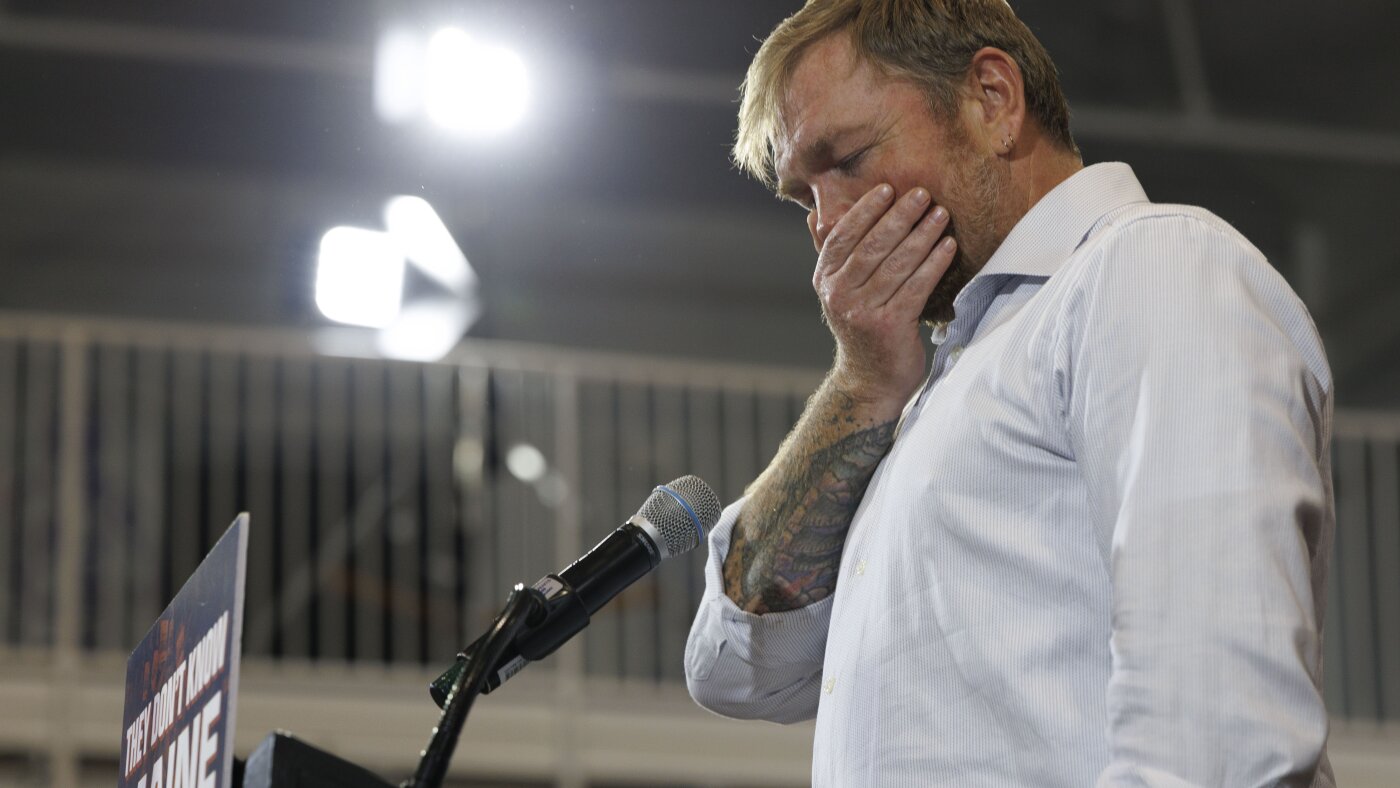
Now-former Democratic Senate candidate Graham Platner speaks at his primary election night event on June 9 in Blue Hill, Maine. Platner officially dropped out of the race July 10 following rape allegations from a former romantic partner that he denies.

CJ Gunther/Getty Images


hide caption


toggle caption

Advertisement

CJ Gunther/Getty Images

Graham Platner, Maine’s Democratic nominee for Senate, is officially out of the race.

The Maine Secretary of State said Platner filed the necessary paperwork to withdraw his candidacy two days after he announced he planned to do so following an accusation of rape by a former romantic partner. Platner denies the allegation.

The Maine Democratic Party has until July 27 to pick Platner’s replacement.

Advertisement

In his withdrawal notice, Platner said “people are desperate for change” and that’s why they voted “for a new kind of politics” by making him the Democratic nominee. He expressed gratitude for those who supported his campaign and said that he will continue to fight for “the movement we have built together and the future we believe in.”

He ended his notice with a strong statement aligned with the progressive platform.

“F*ck ICE. Free Palestine. Up the Hearts.”

Platner announced his plan to withdraw from the race in an 11-minute video he posted to social media on July 8. He said he had no choice but to suspend his campaign, citing it was no longer viable financially.

Advertisement

“We are going to lose our ability to fundraise. We are going to lose our ability to access voter data. We are going to lose all of the things that any campaign needs on the basic level simply to function,” he said.

Platner added that dropping out was not an admission of guilt. Rather, the decision, he said, is to keep the progressive movement in Maine alive to defeat Republican Sen. Susan Collins in November. Platner blamed the “political establishment” for his downfall and argued the goal was to force him out of the race.

“We built a campaign. We engaged in electoral politics. We motivated people. We banded together. We did it the way that we were told we are supposed to make change and we won. And now they are not going to let us have it. Not if it’s me,” he said.

Continue Reading

News

Waymo called the cops on teen riders, raising privacy concerns

Published

on

Waymo called the cops on teen riders, raising privacy concerns

A Waymo robotaxi drives in San Francisco’s North Beach neighborhood this week.

Heather Diehl/Getty Images


hide caption


toggle caption

Advertisement

Heather Diehl/Getty Images

Police in San Mateo, Calif., posted Monday on social media that they had apprehended a pair of teenagers from a Waymo driverless robotaxi after the company alerted authorities to suspected criminal activity. It’s the latest incident involving video surveillance of passengers and others by autonomous vehicles — raising questions about the limits of privacy in such vehicles.

The Facebook post by the San Mateo County Police said: “Parents do you know where your teens are? @waymo does!”

The 15-year-olds were allegedly drinking alcohol and shooting toy guns from the car, according to the police. They said Waymo’s systems detected behavior that then triggered a safety response, after which the company disabled the vehicle and contacted police.

Advertisement

Waymo’s cars, equipped with an array of cameras, microphones and other sensors to monitor passengers and other nearby vehicles, are becoming more common in cities across the United States. Experts say the detention of the two teens in San Mateo highlights a potential — but not inevitable — trade-off between privacy and convenience. It also questions the extent to which companies similar to Waymo are required to hand over private data, including audio and video of passengers, in situations where a crime is suspected.

NPR reached out to Waymo, which is owned by Alphabet, the parent company of Google, for comment on the details of the San Mateo incident and how the company responded, but did not hear back. But on its website, the company says that as many as 29 cameras in its autonomous cars provide an all-around view and “are designed with high dynamic range and thermal stability, to see in both daylight and low-light conditions, and tackle more complex environments.”

“There already exist laws that govern duty to report or even duty to protect” for carriers such as Waymo, according to Alessandro Acquisti, a professor of information technology at the MIT Sloan School of Management. “The privacy problems arise when and if driverless carrier companies used such laws or ethical obligations as a pretext for blanket, indiscriminate accumulation of identifiable data for unspecified future purposes.”

That includes not just monitoring people inside the cars, but outside too. Take, for example, a hit-and-run investigation last year in Los Angeles. Media reported that the police inquiry was aided by video captured by a Waymo taxi that had a clear view of the crime. Critics suggested at the time that authorities were using the company’s vehicles as a mobile surveillance platform. And during 2025 protests in Los Angeles against Immigration and Customs Enforcement crackdowns, demonstrators vandalized Waymos, apparently angry that video recorded by the vehicles could be used by police, although there is no evidence that happened.

Continue Reading

News

Trump fires last members of election commission, inciting fears of midterm ‘chaos’

Published

on

Trump fires last members of election commission, inciting fears of midterm ‘chaos’

Donald Trump has terminated the remaining members of the independent, federal commission that assists election administration officials nationwide just a few months before the midterm elections, multiple outlets reported Thursday.

The remaining three commissioners of the four-member bipartisan commission ⁠were forced out on Thursday in different ways. The one Republican appointee resigned and the other ⁠two, Democratic appointees were notified of their terminations via email from ​the White House presidential personnel office.

“On ‌behalf of President ‌Donald J Trump, I am writing to inform you that your position ‌as Commissioner of the Election Assistance Commission is terminated, effective immediately. Thank you for your service,” the email, seen by Reuters, said.

The White House did not immediately respond to a request for comment.

The Election Assistance Commission serves as a “national clearinghouse of information on election ‌administration”, accredits testing laboratories and certifies voting systems, and maintains the national mail-voter registration form developed by the National ​Voter Registration Act of 1993, according to the commission’s website. The terminations follow Trump and top administration officials’ advocacy to change vote-by-mail requirements and investigations into the 2020 election outcome, which Trump lost to Democrat Joe Biden.

Advertisement

“It is ⁠irresponsible and dangerous that this Administration remains dead set on ​causing chaos for ​our election officials across this ​country,” Arizona secretary of state Adrian Fontes said in a ​Thursday statement. “This ‌move undermines the integrity ​of nonpartisan ​election administration.”

The 2002 law that established the commission, the Help America Vote Act, states the president can appoint replacements to the commission.

It is unclear how Trump will move ahead with the commission.

Reuters contributed reporting

Advertisement
Continue Reading
Advertisement

Trending