Connect with us

News

Israel kills Hizbollah chief Hassan Nasrallah in massive strike on Beirut

Published

on

Israel kills Hizbollah chief Hassan Nasrallah in massive strike on Beirut

Israel has killed Hizbollah’s leader Hassan Nasrallah in a massive strike on Beirut, in the latest in a series of devastating blows to the Lebanese militant group.

The strike in a densely populated residential neighbourhood in southern Beirut was part of an intense bombardment carried out by Israeli forces on Friday and marked a dramatic escalation of Israel’s offensive against Hizbollah.

The Lebanese group confirmed Nasrallah’s death in a statement on Saturday, saying he had joined the group’s long list of “martyrs”. It said its leadership would continue to battle against Israel “in support of Gaza and Palestine, and in defence of Lebanon and its steadfast and honourable people”.

Speaking late on Saturday, Israeli Prime Minister Benjamin Netanyahu said that “Nasrallah’s killing was a necessary step toward achieving the goals we have set,” including “changing the balance of power in the region for years to come”.

He added that the “work is not yet done”, warning Israelis that they “will face significant challenges in the days ahead”.

Advertisement

He also issued a warning to Israel’s adversaries. “There is nowhere in Iran or the Middle East beyond the reach of the long arm of Israel, and today you know how true that is,” Netanyahu said.

Herzi Halevi, chief of the general staff of the Israel Defense Forces, said the strike did not mark the conclusion of Israel’s operations. “This is not the end of our toolbox,” he said. “The message is simple: anyone who threatens the citizens of Israel — we will know how to reach them.”

US President Joe Biden said Nasrallah’s death was “a measure of justice for his many victims”.

“The United States fully supports Israel’s right to defend itself against Hizbollah, Hamas, the Houthis, and any other Iranian-supported terrorist groups,” he said in a statement released on Saturday. “Ultimately, our aim is to de-escalate the ongoing conflicts in both Gaza and Lebanon through diplomatic means.”

It was time to conclude deals to end the conflict in both Gaza and Lebanon, Biden added.

Advertisement

Israel claimed the strike had also killed the head of Hizbollah’s southern front, Ali Karaki, and other senior commanders. It was the latest in a succession of debilitating Israeli attacks on Iranian-backed Hizbollah’s chain of command.

A senior commander of Iran’s elite Revolutionary Guards, Abbas Nilforoushan, who was in a meeting with Nasrallah was also killed, an Iranian official told the Financial Times. The death of the commander and Nasrallah, one of Iran’s closest allies, raised the risk of retaliation by the Islamic republic.

On Friday, Lebanese officials warned an Iranian cargo plane to leave the country’s airspace because of the risk Israel could target it, the Iranian official said. The Israeli military had said Israeli air force planes were “patrolling the area of Beirut airport” and would not allow “hostile flights with weapons to land” there.

Iran’s supreme leader Ayatollah Ali Khamenei said that the fate of the Middle East “will be determined by resistance forces, the foremost of which is Hizbollah”.

He added that the group’s “solid structure cannot be significantly damaged” by “Zionist criminals” who he said had demonstrated their “short-minded and stupid policies”.

Advertisement

He urged all Muslims to stand by Hizbollah in its fight against “an occupying and vicious regime”.

At least 11 people were killed and 108 injured in the strike that killed Nasrallah, Lebanon’s health ministry said. That figure was expected to rise as rescue workers continued searching for survivors.

On Saturday, explosions were heard in Beirut as Israel continued to strike Hizbollah targets and announced it had killed a top member of the group’s intelligence department responsible for selecting targets in Israel.

The Israeli military also posted warnings on social media telling Lebanese to evacuate the southern suburbs of Beirut, the Bekaa Valley and southern Lebanon.

The IDF said it had intercepted a missile fired from Yemen that set off air raid sirens across central Israel. Late on Saturday, sirens also sounded in parts of Jerusalem, as the IDF reported a rocket incoming from Lebanon.

Advertisement

Lebanese leaders from across the political spectrum called for unity, reflecting concerns that the fragile nation could slide into civil strife in the wake of Nasrallah’s assassination.

“We differed a great deal with the deceased and his party and we rarely found common ground, but Lebanon was a tent for all, and in this deeply difficult time our unity and solidarity is fundamental,” Saad Hariri, former prime minister, said in a statement.

Nasrallah’s death capped a disastrous two weeks for Hizbollah during which it has sustained the heaviest succession of blows in its four decades of existence.

Residents of Beirut said the Israeli bombing raids on Friday night and during the early hours of Saturday had been some of the most intense in the city since Israel and Hizbollah fought a 34-day war in 2006.

Explosions lit up the sky throughout the night and threw huge clouds of dust into the air. Hundreds of people fled the south of the city, where Hizbollah is entrenched, to seek shelter on beaches and in public squares.

Advertisement

Over the past two weeks, Israel has escalated its offensive against the militant group, killing a string of its senior commanders. This week it embarked on an intense bombardment of sites across Lebanon that killed more than 600 people and displaced more than 90,000.

On Wednesday, Israel called up two reserve brigades for “operational missions” in the north of the country, with Halevi telling troops to prepare for a possible ground offensive in Lebanon.

The Israeli military said it was continuing its bombardment on Saturday, carrying out “extensive” bombing raids in the Bekaa Valley in eastern Lebanon as well as striking more targets in Beirut, after warning civilians in some densely populated neighbourhoods to evacuate.

Additional reporting by Najmeh Bozorgmehr in Tehran and Andrew England in London

Advertisement

News

Graham Platner makes it official in Maine, submitting paperwork to leave Senate race

Published

on

Graham Platner makes it official in Maine, submitting paperwork to leave Senate race

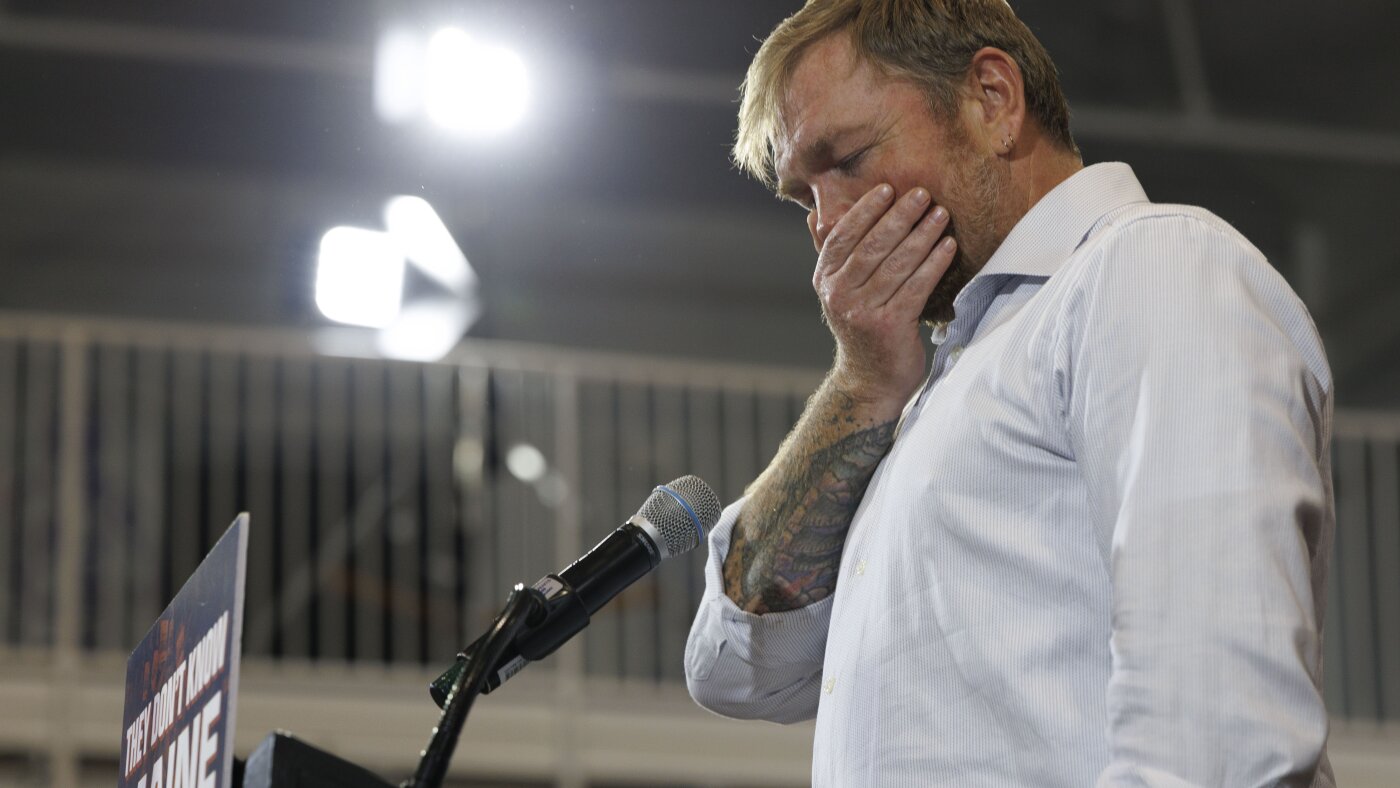
Now-former Democratic Senate candidate Graham Platner speaks at his primary election night event on June 9 in Blue Hill, Maine. Platner officially dropped out of the race July 10 following rape allegations from a former romantic partner that he denies.

CJ Gunther/Getty Images


hide caption


toggle caption

Advertisement

CJ Gunther/Getty Images

Graham Platner, Maine’s Democratic nominee for Senate, is officially out of the race.

The Maine Secretary of State said Platner filed the necessary paperwork to withdraw his candidacy two days after he announced he planned to do so following an accusation of rape by a former romantic partner. Platner denies the allegation.

The Maine Democratic Party has until July 27 to pick Platner’s replacement.

Advertisement

In his withdrawal notice, Platner said “people are desperate for change” and that’s why they voted “for a new kind of politics” by making him the Democratic nominee. He expressed gratitude for those who supported his campaign and said that he will continue to fight for “the movement we have built together and the future we believe in.”

He ended his notice with a strong statement aligned with the progressive platform.

“F*ck ICE. Free Palestine. Up the Hearts.”

Platner announced his plan to withdraw from the race in an 11-minute video he posted to social media on July 8. He said he had no choice but to suspend his campaign, citing it was no longer viable financially.

Advertisement

“We are going to lose our ability to fundraise. We are going to lose our ability to access voter data. We are going to lose all of the things that any campaign needs on the basic level simply to function,” he said.

Platner added that dropping out was not an admission of guilt. Rather, the decision, he said, is to keep the progressive movement in Maine alive to defeat Republican Sen. Susan Collins in November. Platner blamed the “political establishment” for his downfall and argued the goal was to force him out of the race.

“We built a campaign. We engaged in electoral politics. We motivated people. We banded together. We did it the way that we were told we are supposed to make change and we won. And now they are not going to let us have it. Not if it’s me,” he said.

Continue Reading

News

Waymo called the cops on teen riders, raising privacy concerns

Published

on

Waymo called the cops on teen riders, raising privacy concerns

A Waymo robotaxi drives in San Francisco’s North Beach neighborhood this week.

Heather Diehl/Getty Images


hide caption


toggle caption

Advertisement

Heather Diehl/Getty Images

Police in San Mateo, Calif., posted Monday on social media that they had apprehended a pair of teenagers from a Waymo driverless robotaxi after the company alerted authorities to suspected criminal activity. It’s the latest incident involving video surveillance of passengers and others by autonomous vehicles — raising questions about the limits of privacy in such vehicles.

The Facebook post by the San Mateo County Police said: “Parents do you know where your teens are? @waymo does!”

The 15-year-olds were allegedly drinking alcohol and shooting toy guns from the car, according to the police. They said Waymo’s systems detected behavior that then triggered a safety response, after which the company disabled the vehicle and contacted police.

Advertisement

Waymo’s cars, equipped with an array of cameras, microphones and other sensors to monitor passengers and other nearby vehicles, are becoming more common in cities across the United States. Experts say the detention of the two teens in San Mateo highlights a potential — but not inevitable — trade-off between privacy and convenience. It also questions the extent to which companies similar to Waymo are required to hand over private data, including audio and video of passengers, in situations where a crime is suspected.

NPR reached out to Waymo, which is owned by Alphabet, the parent company of Google, for comment on the details of the San Mateo incident and how the company responded, but did not hear back. But on its website, the company says that as many as 29 cameras in its autonomous cars provide an all-around view and “are designed with high dynamic range and thermal stability, to see in both daylight and low-light conditions, and tackle more complex environments.”

“There already exist laws that govern duty to report or even duty to protect” for carriers such as Waymo, according to Alessandro Acquisti, a professor of information technology at the MIT Sloan School of Management. “The privacy problems arise when and if driverless carrier companies used such laws or ethical obligations as a pretext for blanket, indiscriminate accumulation of identifiable data for unspecified future purposes.”

That includes not just monitoring people inside the cars, but outside too. Take, for example, a hit-and-run investigation last year in Los Angeles. Media reported that the police inquiry was aided by video captured by a Waymo taxi that had a clear view of the crime. Critics suggested at the time that authorities were using the company’s vehicles as a mobile surveillance platform. And during 2025 protests in Los Angeles against Immigration and Customs Enforcement crackdowns, demonstrators vandalized Waymos, apparently angry that video recorded by the vehicles could be used by police, although there is no evidence that happened.

Continue Reading

News

Trump fires last members of election commission, inciting fears of midterm ‘chaos’

Published

on

Trump fires last members of election commission, inciting fears of midterm ‘chaos’

Donald Trump has terminated the remaining members of the independent, federal commission that assists election administration officials nationwide just a few months before the midterm elections, multiple outlets reported Thursday.

The remaining three commissioners of the four-member bipartisan commission ⁠were forced out on Thursday in different ways. The one Republican appointee resigned and the other ⁠two, Democratic appointees were notified of their terminations via email from ​the White House presidential personnel office.

“On ‌behalf of President ‌Donald J Trump, I am writing to inform you that your position ‌as Commissioner of the Election Assistance Commission is terminated, effective immediately. Thank you for your service,” the email, seen by Reuters, said.

The White House did not immediately respond to a request for comment.

The Election Assistance Commission serves as a “national clearinghouse of information on election ‌administration”, accredits testing laboratories and certifies voting systems, and maintains the national mail-voter registration form developed by the National ​Voter Registration Act of 1993, according to the commission’s website. The terminations follow Trump and top administration officials’ advocacy to change vote-by-mail requirements and investigations into the 2020 election outcome, which Trump lost to Democrat Joe Biden.

Advertisement

“It is ⁠irresponsible and dangerous that this Administration remains dead set on ​causing chaos for ​our election officials across this ​country,” Arizona secretary of state Adrian Fontes said in a ​Thursday statement. “This ‌move undermines the integrity ​of nonpartisan ​election administration.”

The 2002 law that established the commission, the Help America Vote Act, states the president can appoint replacements to the commission.

It is unclear how Trump will move ahead with the commission.

Reuters contributed reporting

Advertisement
Continue Reading
Advertisement

Trending