News
Harvard president Claudine Gay resigns amid antisemitism, plagiarism controversies


Harvard president Claudine Gay announced her resignation Tuesday afternoon.
In a letter to members of the Harvard community, Gay said she was stepping down as president but will return to the Harvard faculty despite widespread plagiarism allegations against her.
“This is not a decision I came to easily. Indeed, it has been difficult beyond words because I have looked forward to working with so many of you to advance the commitment to academic excellence that has propelled this great university across centuries. But, after consultation with members of the Corporation, it has become clear that it is in the best interests of Harvard for me to resign so that our community can navigate this moment of extraordinary challenge with a focus on the institution rather than any individual,” Gay wrote.
The letter continued: “It is a singular honor to be a member of this university, which has been my home and my inspiration for most of my professional career. My deep sense of connection to Harvard and its people has made it all the more painful to witness the tensions and divisions that have riven our community in recent months, weakening the bonds of trust and reciprocity that should be our sources of strength and support in times of crisis. Amidst all of this, it has been distressing to have doubt cast on my commitments to confronting hate and to upholding scholarly rigor—two bedrock values that are fundamental to who I am—and frightening to be subjected to personal attacks and threats fueled by racial animus.”
“I believe in the people of Harvard because I see in you the possibility and the promise of a better future. These last weeks have helped make clear the work we need to do to build that future—to combat bias and hate in all its forms, to create a learning environment in which we respect each other’s dignity and treat one another with compassion, and to affirm our enduring commitment to open inquiry and free expression in the pursuit of truth,” Gay wrote. “I believe we have within us all that we need to heal from this period of tension and division and to emerge stronger. I had hoped with all my heart to lead us on that journey, in partnership with all of you. As I now return to the faculty, and to the scholarship and teaching that are the lifeblood of what we do, I pledge to continue working alongside you to build the community we all deserve.”
HARVARD PRESIDENT CLAUDINE GAY FACES SIX NEW PLAGIARISM CHARGES: REPORT
Harvard President Claudine Gay is reportedly to step down. (Kevin Dietsch/Getty Images)
In a statement first obtained by Fox News Digital, House Republican Conference Chair Rep. Elise Stefanik, R-N.Y., reacted to Gay’s resignation.
Stefanik had challenged Gay, as well as the presidents of MIT and UPenn, during a line of questioning at a House Education and the Workforce hearing last month whether calls for intifada or the genocide of Jews on campus violated their institutions’ codes of conduct or policies against bullying and harassment. All three faced harsh backlash for failing to clarify and insisted more context was needed.
“I will always deliver results. The resignation of Harvard’s antisemitic plagiarist president is long overdue,” Stefanik said. “Claudine Gay’s morally bankrupt answers to my questions made history as the most viewed Congressional testimony in the history of the U.S. Congress. Her answers were absolutely pathetic and devoid of the moral leadership and academic integrity required of the President of Harvard. This is just the beginning of what will be the greatest scandal of any college or university in history. Our robust Congressional investigation will continue to move forward to expose the rot in our most ‘prestigious’ higher education institutions and deliver accountability to the American people.”
According to the Ivy League school’s newspaper, the Harvard Crimson, Gay’s resignation will bring an end to the shortest Harvard presidency in the university’s history.
The Boston Globe reported that according to their sources, Harvard’s provost, Dr. Alan Garber, will become interim president.
HARVARD STUDENTS PEN EDITORIAL CALLING ON PRESIDENT GAY TO RESIGN, STATING SHE HAS ‘FAILED’
During the hearing on antisemitism, Magill, Gay, and Kornbluth all gave “evasive” answers when asked by Rep. Elise Stefanik if calls for the genocide of Jews would violate their institution’s policies on bullying and harassment. (Kevin Dietsch/Getty Images)
After her congressional testimony, Gay issued an apology and the university’s board ultimately decided to stick by her despite widespread calls from donors and members of Congress for her ouster. The hearing came in response to rising antisemitism at American universities following Hamas’ October 7 terrorist attacks in southern Israel.
Gay has also been at the center of a scandal in which she was accused of multiple instances of plagiarism in scholarly works.
“When I became president, I considered myself particularly blessed by the opportunity to serve people from around the world who saw in my presidency a vision of Harvard that affirmed their sense of belonging — their sense that Harvard welcomes people of talent and promise, from every background imaginable, to learn from and grow with one another,” Gay’s letter added Tuesday. “To all of you, please know that those doors remain open, and Harvard will be stronger and better because they do.”
Harvard President Claudine Gay attends a menorah lighting ceremony on the seventh night of Hanukkah. (Andrew Lichtenstein/Corbis via Getty Images)
Gay went on to say: “As we welcome a new year and a new semester, I hope we can all look forward to brighter days. Sad as I am to be sending this message, my hopes for Harvard remain undimmed. When my brief presidency is remembered, I hope it will be seen as a moment of reawakening to the importance of striving to find our common humanity—and of not allowing rancor and vituperation to undermine the vital process of education. I trust we will all find ways, in this time of intense challenge and controversy, to recommit ourselves to the excellence, the openness, and the independence that are crucial to what our university stands for—and to our capacity to serve the world.”
Charlie Covit, a Harvard University Jewish student leader, hopes the allegations of plagiarism against Gay don’t drown out calls to address antisemitism on campus.
CLICK TO GET THE FOX NEWS APP
“Once it became clear that the plagiarism in Gay’s work was part of a clear pattern, it was simply too damaging to the reputation of the University and its students for her to stay on,” Covit told Fox News Digital. “I hope that the plagiarism, while serious, will not overshadow what remains a serious issue on our campus: antisemitism and an obsessive hatred of Israel. The next president must address the concerns of the Jewish community on day one.”


![~!@[WATCHLIVE!TV]>> NOW Georgia vs Lithuania Match 𝐋𝐈𝐕𝐄 Free Streams ON Tv Channel](https://i2.wp.com/unicornriot.ninja/wp-content/uploads/2018/09/LiveChannel334x212v2.png?w=400&resize=400,240&ssl=1 "~!@[WATCHLIVE!TV]>> NOW Georgia vs Lithuania Match 𝐋𝐈𝐕𝐄 Free Streams ON Tv Channel")



In large cities and small towns across the country, millions took to the streets today in protest against the policies of President Trump and his administration.
Organized by “No Kings,” a network of progressive groups opposed to the administration’s agenda, the protests are the third wave of demonstrations since the President took office for a second term. Last year, millions attended protests in June and again in October.
Crowds assemble at the Embarcadero in San Francisco prior to the start of the protest.
Martin do Nascimento/KQED
hide caption
toggle caption
Martin do Nascimento/KQED
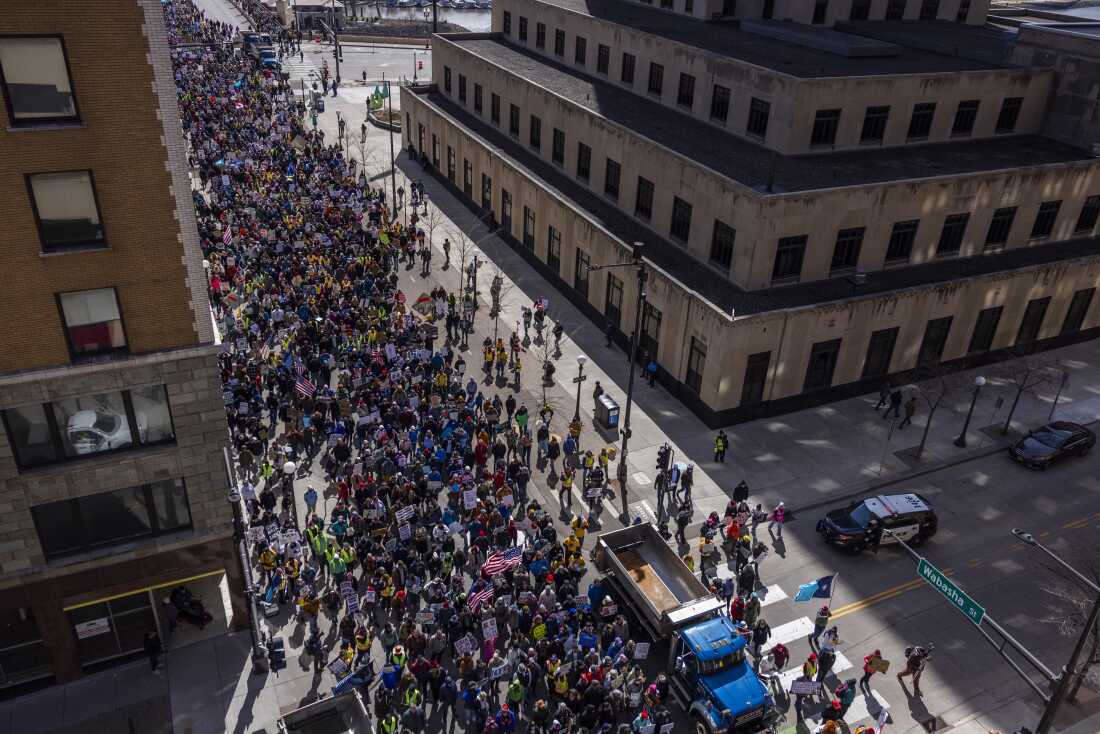
Thousands of community members marched in the flagship “No Kings” protest in St. Paul.
Jaida Grey Eagle/MPR News
hide caption
toggle caption
Jaida Grey Eagle/MPR News
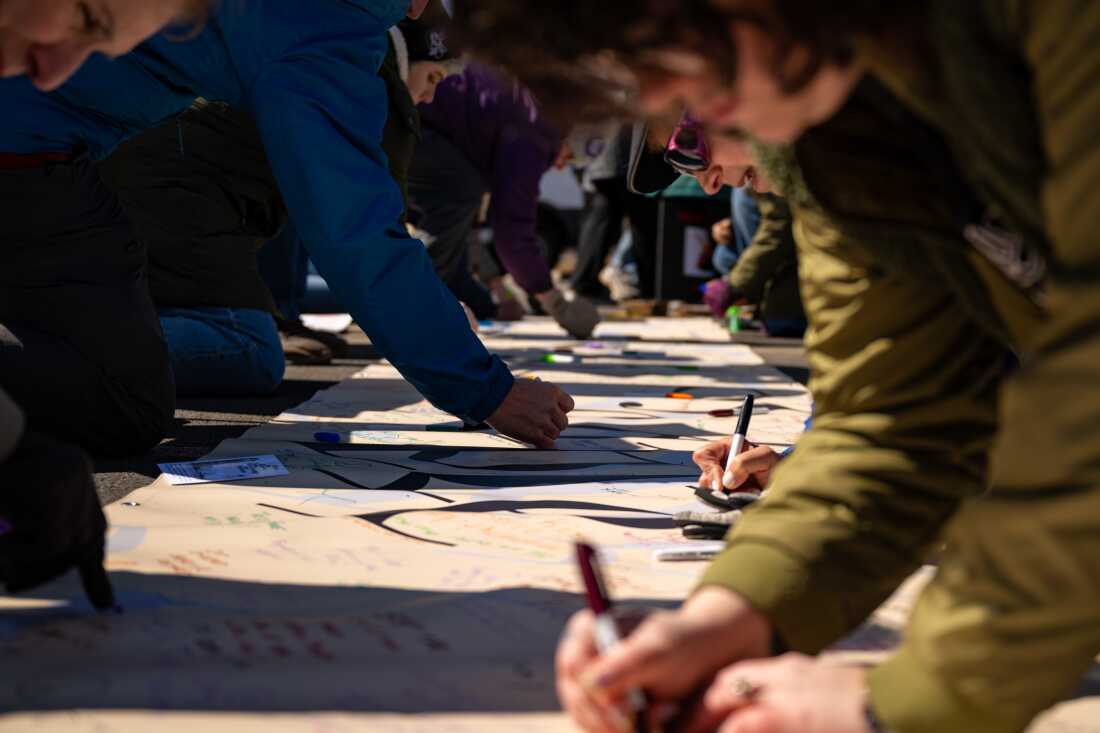
Thousands sign a banner in Hartford at the Capitol that says “We the People.”
Tyler Russell/Connecticut Public
hide caption
toggle caption
Tyler Russell/Connecticut Public
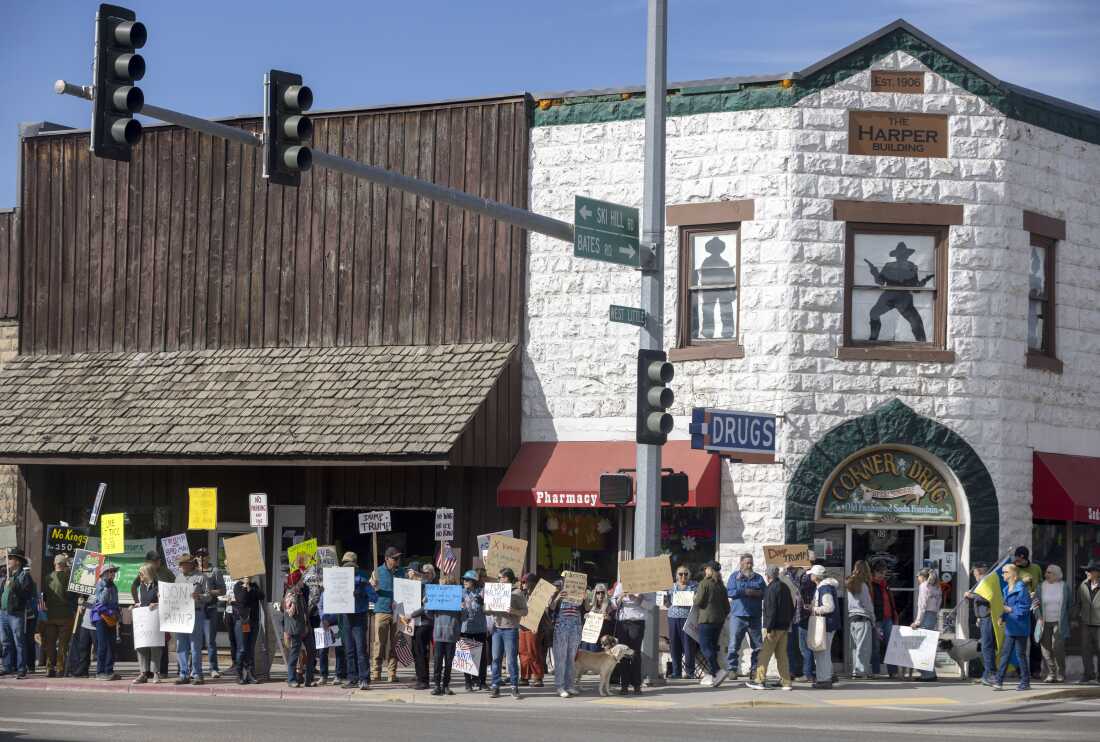
Protesters hold signs and chant slogans in Driggs, Idaho.
Natalie Behring/Getty Images
hide caption
toggle caption
Natalie Behring/Getty Images
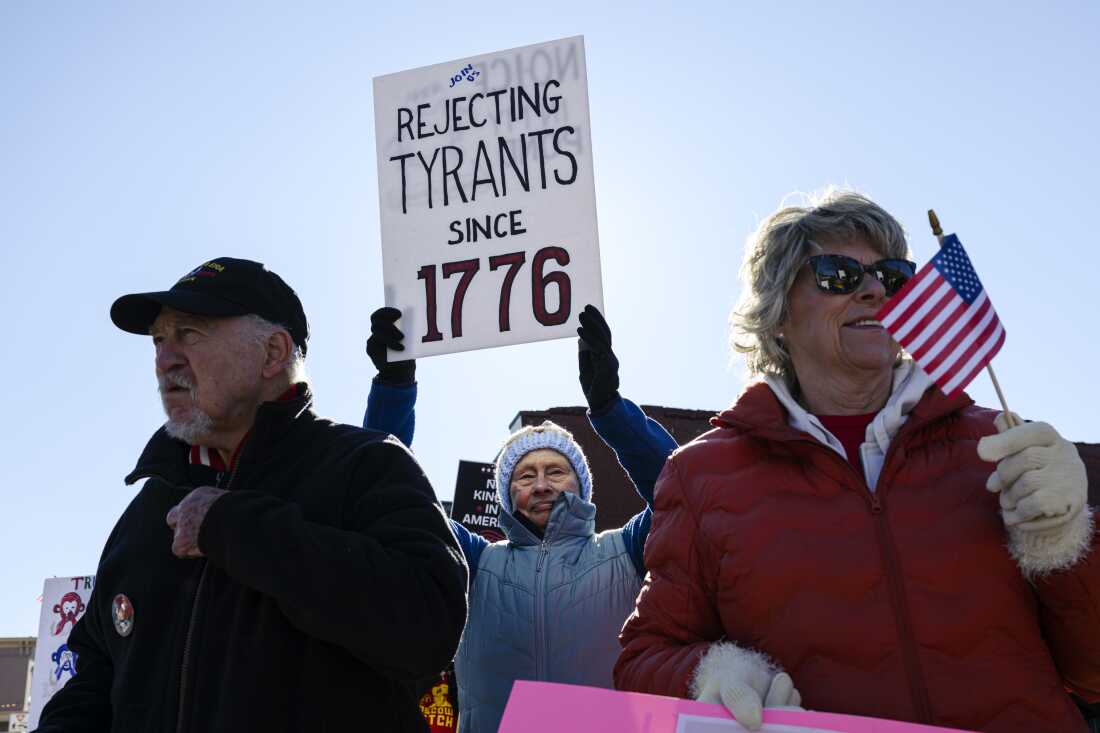
Demonstrators gather while holding signs near a roadside in Shelbyville, Kentucky.
Jon Cherry/Getty Images
hide caption
toggle caption
Jon Cherry/Getty Images
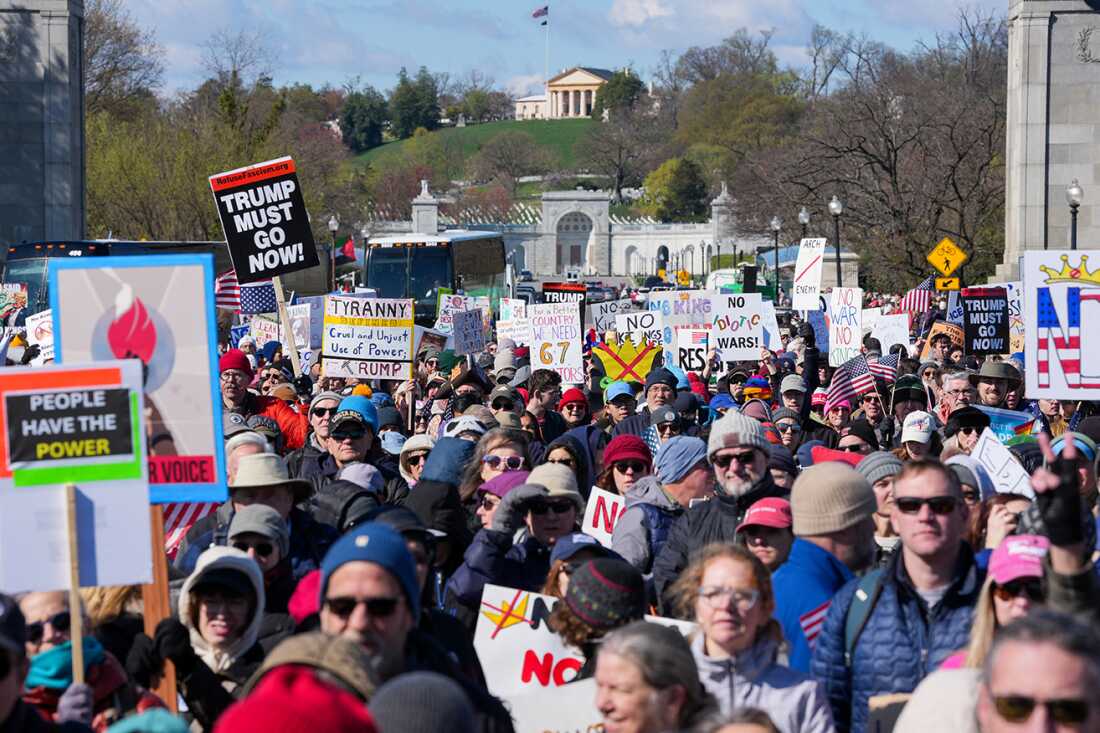
Demonstrators walk across the Memorial Bridge from Arlington, Virginia into Washington, DC.
Ken Cedeno/AFP
hide caption
toggle caption
Ken Cedeno/AFP
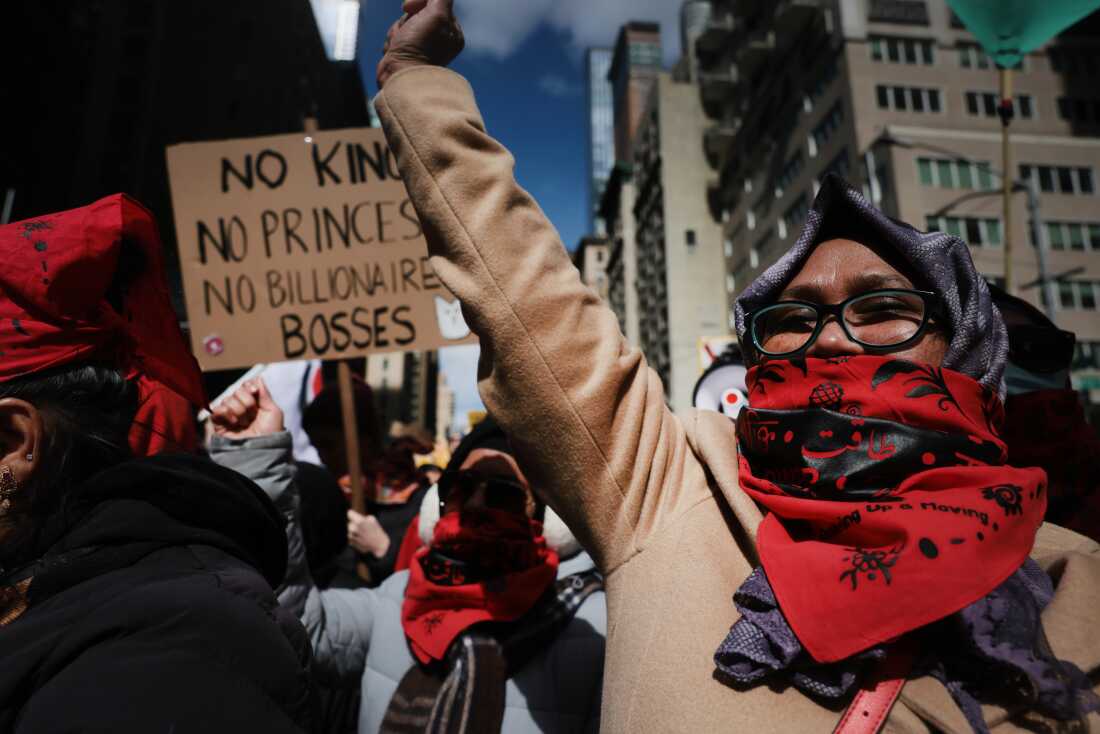
Demonstrators march down 7th Avenue and Broadway in Manhattan.
Spencer Platt/Getty Images
hide caption
toggle caption
Spencer Platt/Getty Images
![HARTFORD, CONNECTICUT, MARCH 28, 2026: Ken MacDonald tears up as he listens to a speech about the plight of his fellow veterans. “[Trump]’s playing with the lives of military people,” he said. Thousands rally at the “No Kings” protest at the capitol in Hartford on March 28, 2026. (Tyler Russell/Connecticut Public)](https://npr.brightspotcdn.com/dims3/default/strip/false/crop/6981x4654+0+0/resize/1100/quality/50/format/jpeg/?url=http%3A%2F%2Fnpr-brightspot.s3.amazonaws.com%2Feb%2F8b%2Fba7a9cb744baa343c85d45caf5ed%2F260328-nokingshartford-trb4371.jpg)
Ken MacDonald tears up in Hartford as he listens to a speech about the plight of his fellow veterans.
Tyler Russell/Connecticut Public
hide caption
toggle caption
Tyler Russell/Connecticut Public

A large crowd marches across the South First bridge toward a gathering at Auditorium Shores in Austin, Texas.
Patricia Lim/KUT News
hide caption
toggle caption
Patricia Lim/KUT News

Lindsay Holliday waves an American flag in Rosa Parks Square in Macon, Georgia.
Grant Blankenship/GPB News
hide caption
toggle caption
Grant Blankenship/GPB News
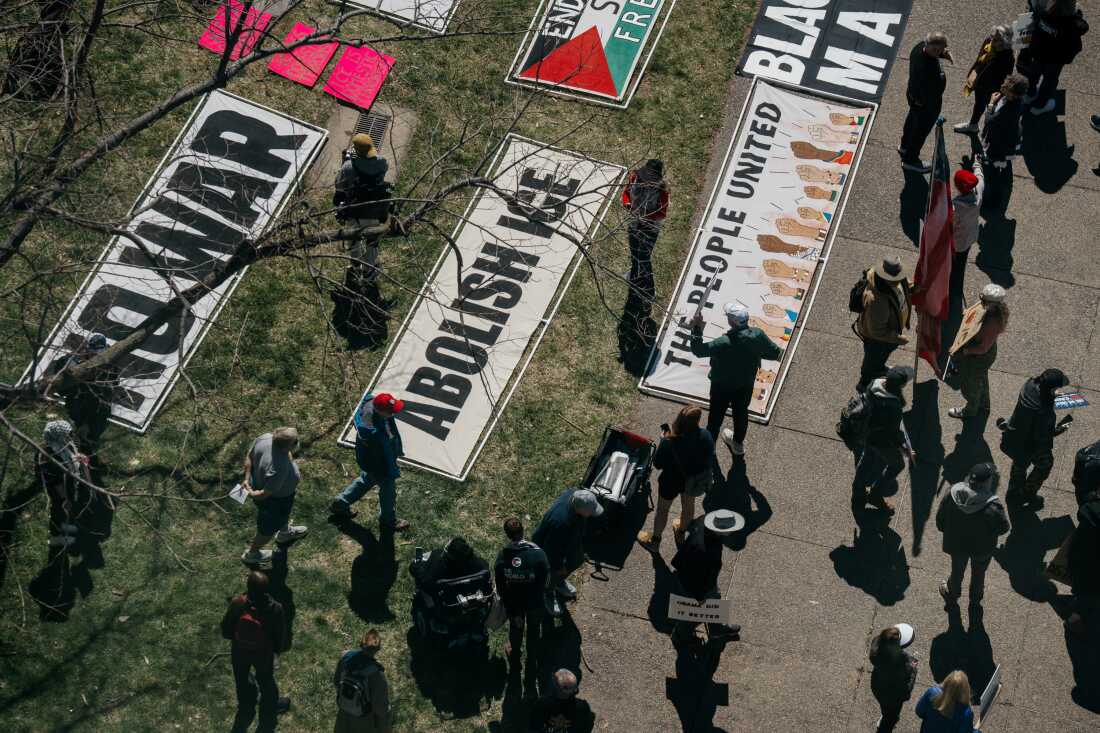
Demonstrators in downtown St. Louis walk by large banners decrying the U.S. conflict in Iran and U.S. Immigration and Customs Enforcement.
Brian Munoz/St. Louis Public Radio
hide caption
toggle caption
Brian Munoz/St. Louis Public Radio
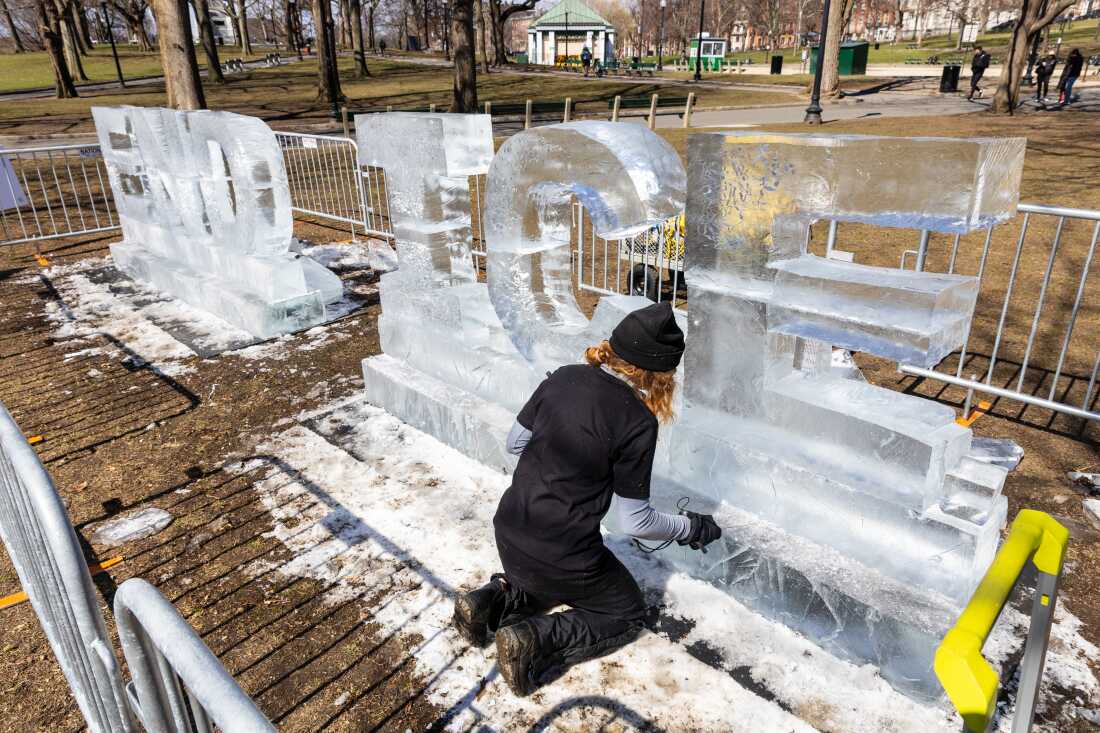
Kat Carves works on a ice sculpture that says ‘End Ice’ ahead of the rally on the Boston Common in Boston.
Arthur Mansavage/GBH News
hide caption
toggle caption
Arthur Mansavage/GBH News
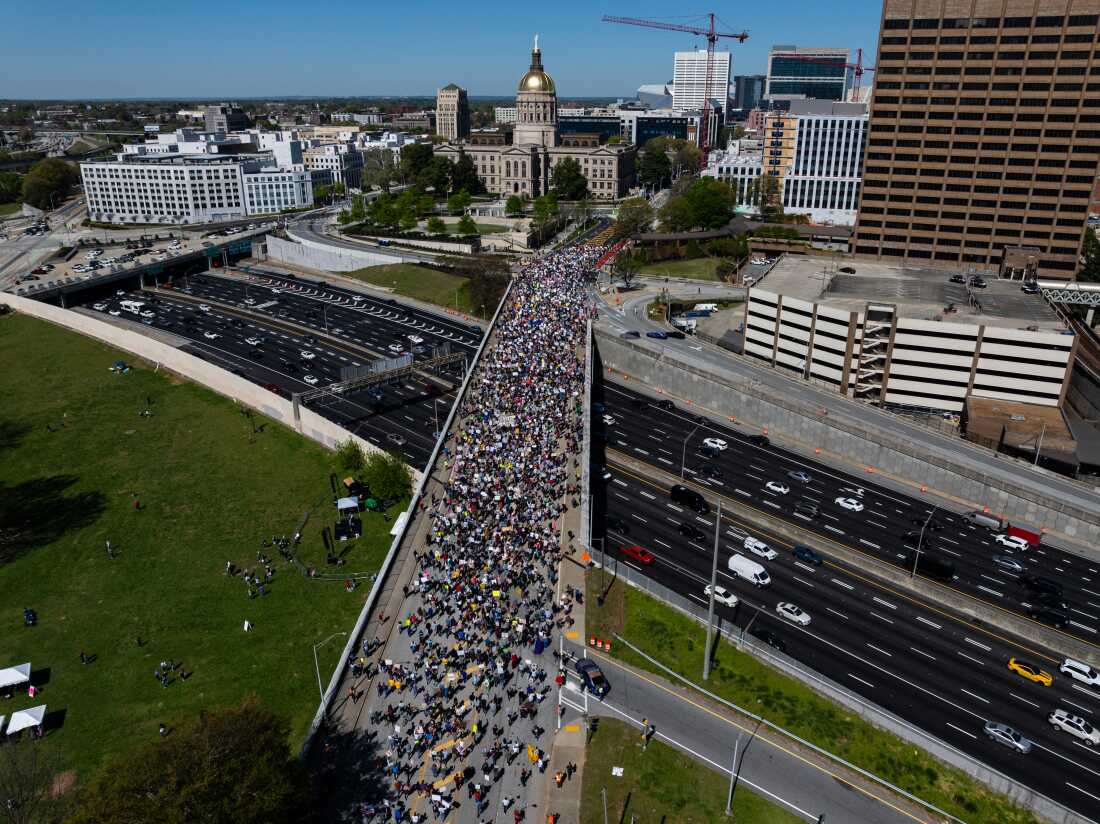
Protestors march across an overpass near the Georgia state Capitol building in Atlanta.
Elijah Nouvelage/AFP
hide caption
toggle caption
Elijah Nouvelage/AFP
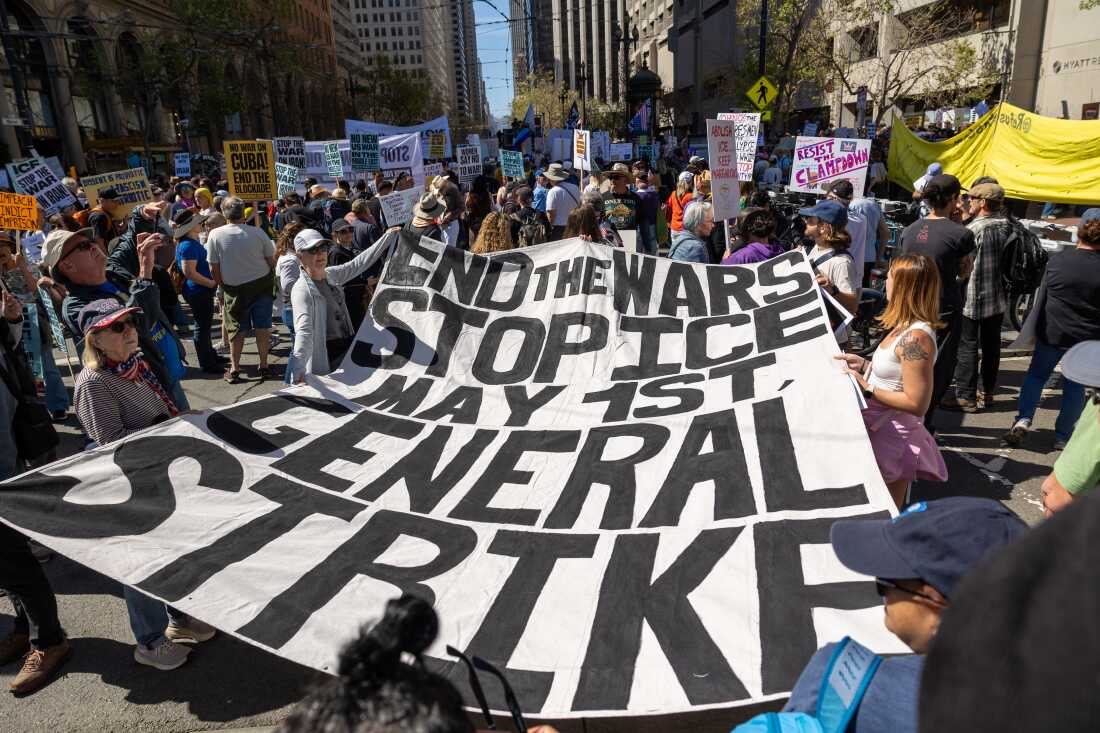
Protesters hold a banner reading “End the wars, stop ICE, general strike” at Embarcadero Plaza in San Francisco.
Gustavo Hernandez/KQED
hide caption
toggle caption
Gustavo Hernandez/KQED

Maria Perry, left, and John Stock, right, joined protesters gathering in Mill Creek Park in Kansas City, Missouri.
Julie Denesha/KCUR
hide caption
toggle caption
Julie Denesha/KCUR
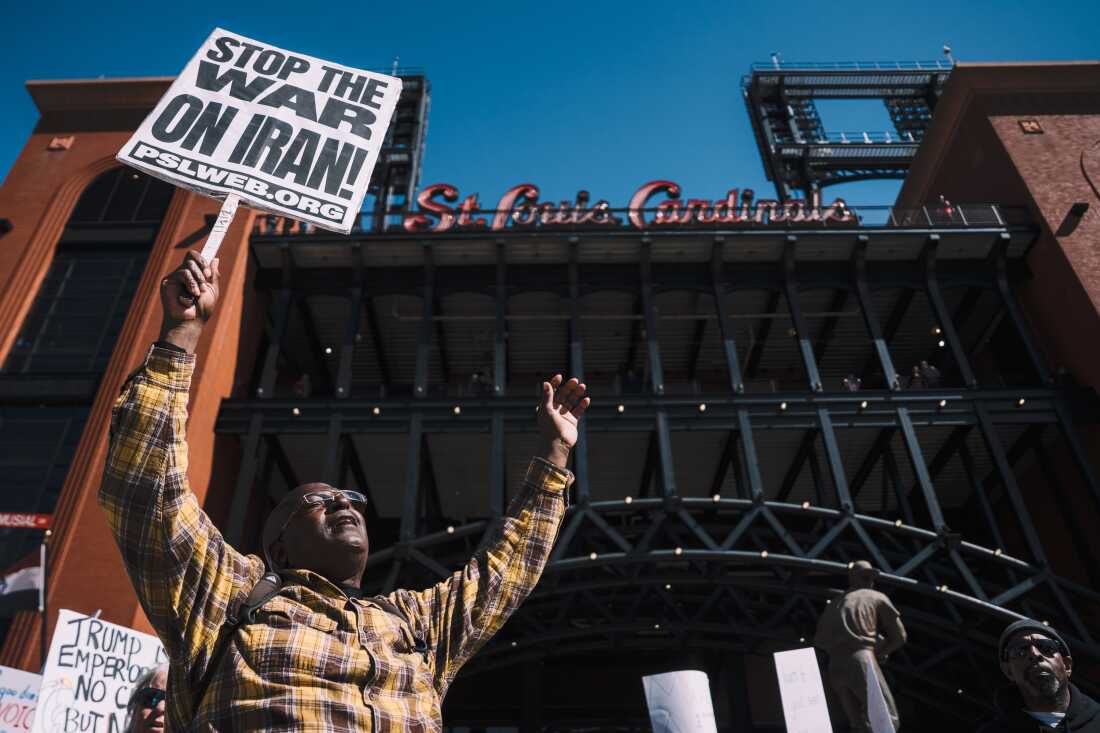
Duane Inge, a 63-year-old demonstrator, protests in front of Busch Stadium in downtown St. Louis.
Brian Munoz/St. Louis Public Radio
hide caption
toggle caption
Brian Munoz/St. Louis Public Radio

A protestor wears a “Let’s be brave” pin at a rally in Richmond, Virginia.
Shaban Athuman/VPM
hide caption
toggle caption
Shaban Athuman/VPM
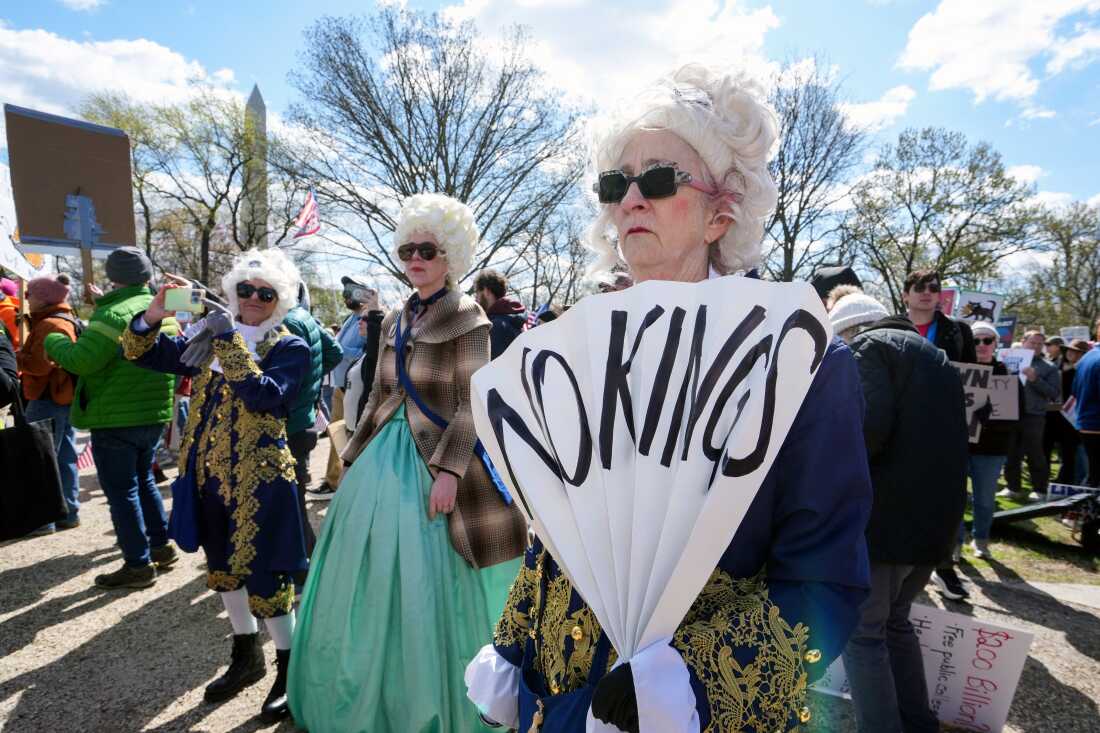
Demonstrators in costumes stand along the National Mall in Washington, DC.
Ken Cedeno/AFP
hide caption
toggle caption
Ken Cedeno/AFP
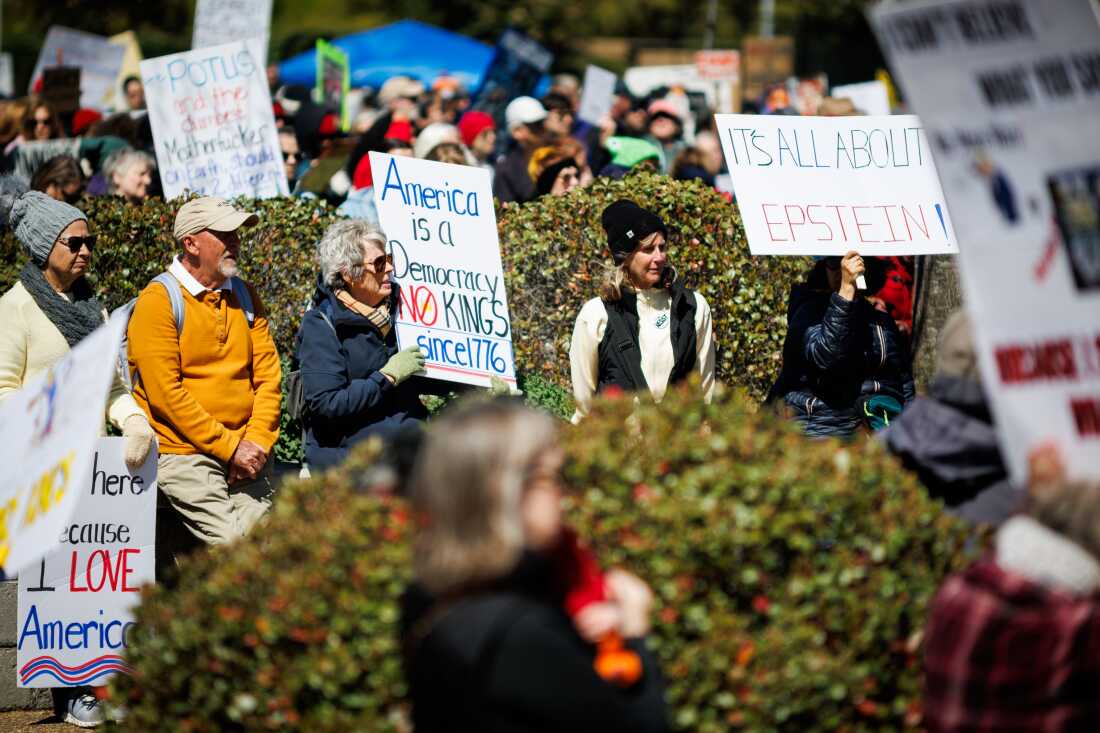
Protestors listens as speakers address the crowd gathered in Richmond, Virginia.
Shaban Athuman/VPM News
hide caption
toggle caption
Shaban Athuman/VPM News
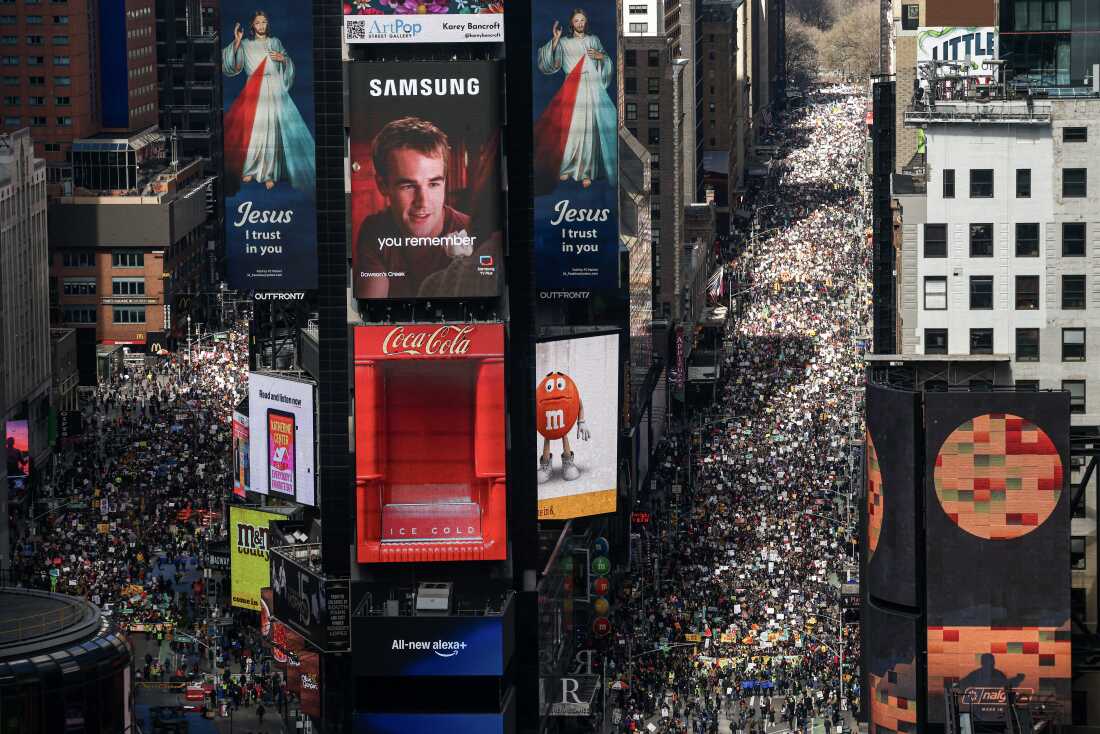
Protesters descend on Times Square in New York City.
Charly Triballeau/AFP
hide caption
toggle caption
Charly Triballeau/AFP
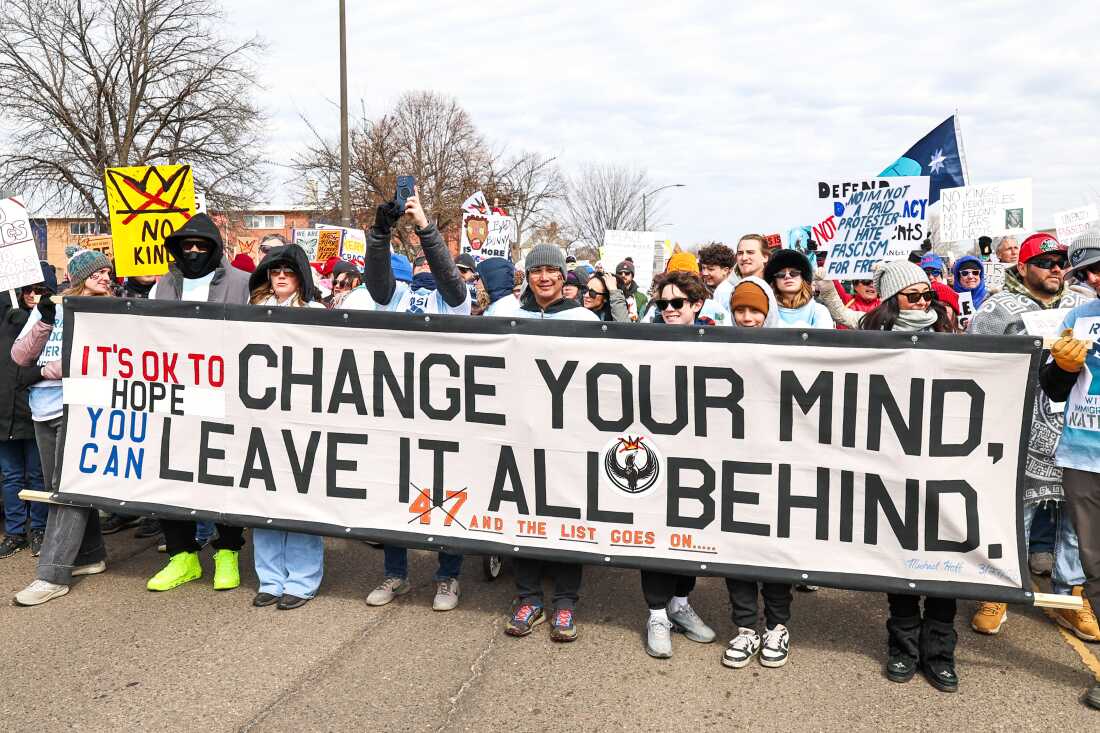
Demonstrators begin to march from the Western Sculpture Garden at the Minnesota State Capitol in St. Paul.
Steven Garcia/Minnesota Public Radio
hide caption
toggle caption
Steven Garcia/Minnesota Public Radio

Thousands march towards the Steel Bridge from the waterfront in Portland, Oregon.
Saskia Hatvany/OPB
hide caption
toggle caption
Saskia Hatvany/OPB

Two students were killed and at least seven other people were injured after a school bus crash in Tennessee on Friday, officials said.
The school bus was carrying 25 students and five adults from Kenwood Middle School in Clarksville for a field trip in Jackson, Tennessee, the school district said in a statement.
The crash, which remains under investigation, involved a Tennessee Department of Transportation dump truck, a Chevrolet Trailblazer and the school bus. It happened around noon on Highway 70 in Carroll County, said Maj. Travis Plotzer, a spokesperson for the Tennessee Highway Patrol.
Plotzer said there were two adults in the TDOT vehicle and one person in the Chevrolet Trailblazer. He said the crash is “a parent’s worst nightmare.”
The cause of the crash is under investigation.
At least seven people who were injured were taken by air ambulance to hospitals across Tennessee, including Memphis and Nashville, CBS affiliate WREG reported. The extent of their injuries was not immediately disclosed.
The school’s principal, Karen Miller, said counselors will be available starting Monday. In a written message to families shared on Facebook, she called the crash an unimaginable tragedy and encouraged parents to be attentive to their child’s emotional needs as they process the deaths of their classmates.
“Please continue to pray with us for our students, families, faculty, and staff,” Miller wrote. “I am grateful for the strength of our Kenwood community, and I trust we will all support each other during this difficult time.”
Four people were taken to Monroe Carell Jr. Children’s Hospital at Vanderbilt in Nashville and were in stable condition Friday, according to a Vanderbilt Health spokesperson.
Another 19 people were taken to Baptist Memorial Hospital-Carroll County, said Kim Alexander, a spokesperson for Baptist Memorial Health Care. All were evaluated and released, though it was unclear how many actually were injured, she said.
CBS affiliate WTVF reported the school bus was on the way to participate in the Toyota Hub City Grand Prix Greenpower USA race in Jackson. The Jackson-Madison County superintendent said in a statement that they were “completely devastated” by the crash and called the loss “immeasurable,” WTVF reported.
The school district was hosting the event.
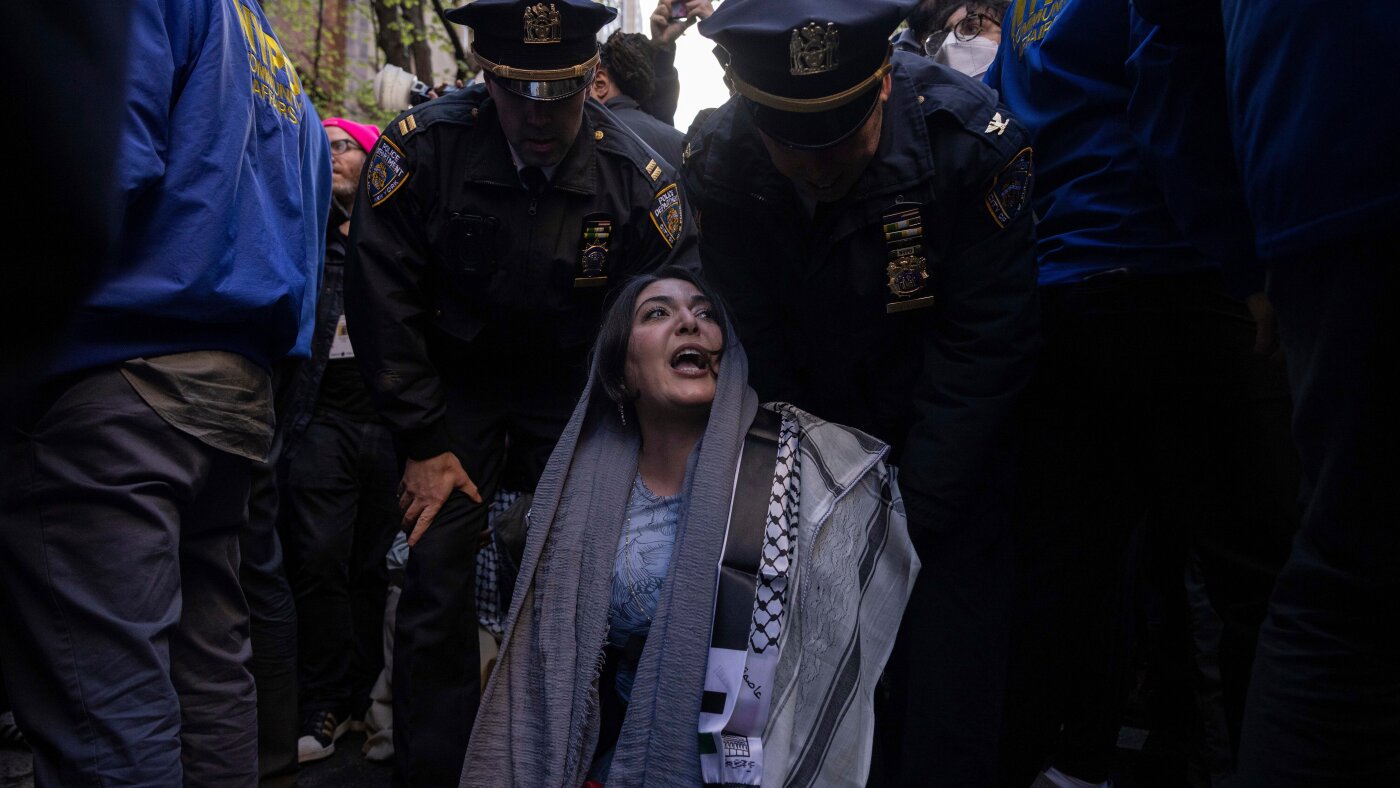
Police detain Nerdeen Kiswani, an organizer of pro-Palestinian demonstration group “Within Our Lifetime” during a protest on Friday, April 12, 2024, in New York.
Yuki Iwamura/AP
hide caption
toggle caption
Yuki Iwamura/AP
NEW YORK — A man accused of planning to firebomb the home of a prominent Palestinian activist has been arrested following a weekslong undercover operation led by the New York City Police Department, officials said Friday.
The target of the plot was Nerdeen Kiswani, who frequently leads protests in New York against Israel and the war in Gaza through the organization Within Our Lifetime.

Kiswani, 31, said law enforcement officials informed her late Thursday that they had disrupted “a threat on my life that was about to take place.”
Federal authorities said they arrested Alexander Heifler on Thursday at his home in Hoboken, New Jersey, as he was assembling Molotov cocktails that he planned to throw at Kiswani’s home. For weeks, he had discussed the plot with an undercover NYPD detective who had infiltrated a group chat used by Heifler, according to a police department spokesperson.
An official who was briefed on the investigation said Heifler, 26, identified as a member of the JDL 613 Brotherhood, a New Jersey-based group founded in 2024 that describes its membership as “Jewish warriors” fighting back against rising antisemitism.
A website for the group says they are inspired by the original Jewish Defense League, a group linked to numerous bombings and attempted assassinations of Arab American political activists in the 1970s and 1980s.
Heifler planned to flee to Israel following the attack, according to the official, who requested anonymity because they were not authorized to discuss the details of an ongoing investigation.
An email inquiry sent to the JDL 613 was not returned.
Kiswani, who lives in Brooklyn with her infant son and husband, said the plot would not deter her continued activism.
“I feel very blessed that they were able to thwart this, but it’s something that is a constant possibility for people who speak up on behalf of Palestine,” she said.
Heifler was charged in a criminal complaint with separate counts of making and possessing destructive devices, which each carry a maximum penalty of 10 years in prison. A message left with his attorney was not returned. He made an initial appearance in New Jersey federal court on Friday afternoon.
“Let me be clear: We will not tolerate violent extremism in our city,” New York City Mayor Zohran Mamdani said in a statement. “No one should face violence for their political beliefs or their advocacy. I am relieved that Nerdeen is safe.”

According to a court filing written by an FBI agent, Heifler spoke on a video call in February with a group that included an undercover detective about his interest in training for “self-defense” and wanting space where he could throw Molotov cocktails.
The next day, he met with the undercover detective in person and discussed his plan to use them against Kiswani and flee the country, according to the complaint. “We have (Kiswani’s) address,” Heifler allegedly told the undercover. “So it’s like that, that would be easier if you’d be more comfortable with that.”
Heifler and the undercover detective drove to Kiswani’s residence on March 4 to “conduct surveillance” and discussed making a dozen Molotov cocktails to throw at her home and two cars parked outside, complaint said.
On Thursday, the undercover detective and Heifler met at Heifler’s Hoboken residence, where he had assembled components to make the Molotov cocktails, including a large bottle of Everclear, a highly flammable alcohol, the complaint said. Law enforcement officers then executed a search warrant at the residence and recovered the eight Molotov cocktails, the complaint said.
Kiswani co-founded the group Within Our Lifetime, which frequently organizes protests against Israel that draw hundreds of participants and often end in arrests. The group’s calls to “abolish Zionism” and support for “all forms of struggle,” including violence, has drawn fierce criticism. Kiswani denies that her criticism of Israel amounts to antisemitism.
Kiswani has been a frequent target of online vitriol. Earlier this year, U.S. Rep. Randy Fine, a Florida Republican, sparked backlash after writing in a social media post that “the choice between dogs and Muslims is not a difficult one.” The post was a response to a message Kiswani shared about dog owners, which she said was a light joke.

“That hate against Palestinians has been bolstered by public officials, by Zionist organizations, who are never held accountable,” she said. “This is the inevitable result of that.”
The operation was carried out by the Racially and Ethnically Motivated Extremism unit within the NYPD’s counterterrorism bureau, a police spokesperson said.
“This is exactly how our intelligence and counterterrorism operation is designed to work — a sophisticated apparatus built to detect danger early and prevent violence before it reaches our streets,” Police Commissioner Jessica Tisch said.

Man killed in Florida train crash railroad crossing in Indian River
![~!@[WATCHLIVE!TV]>> NOW Georgia vs Lithuania Match 𝐋𝐈𝐕𝐄 Free Streams ON Tv Channel](https://i2.wp.com/unicornriot.ninja/wp-content/uploads/2018/09/LiveChannel334x212v2.png?w=80&resize=80,80&ssl=1 "~!@[WATCHLIVE!TV]>> NOW Georgia vs Lithuania Match 𝐋𝐈𝐕𝐄 Free Streams ON Tv Channel")
~!@[WATCHLIVE!TV]>> NOW Georgia vs Lithuania Match 𝐋𝐈𝐕𝐄 Free Streams ON Tv Channel

Big Island soldiers who died in Vietnam War are honored – West Hawaii Today

Decorated Illinois guard Josh Gesky met with Saints ahead of draft

Hundreds gather at Indiana State Capitol for ‘No Kings’ protest

Florida High School Football Rankings: Top 25 teams – Oct. 21

How old is Bo Nix? What to know about Oregon quarterback ahead of 2024 NFL Draft

Cleary's 21 help Le Moyne down Central Connecticut State 69-64 in OT

99th annual Pony Swim held in Virginia

Indiana Members Credit Union announced as new anchor tenant at Bottleworks District

JD Vance says he was ‘obsessed’ with UFOs, believes aliens are actually ‘demons’
The EU's recipe for trade deals : easy on beef, tough on wine
Photos: ‘No Kings’ protests across the country

Jeffries declines to break with indicted Democrat after ethics panel’s guilty verdict

Hundreds of thousands march through London in stand against the far right
-

 Sports1 week ago
IOC addresses execution of 19-year-old Iranian wrestler Saleh Mohammadi
-

 New Mexico7 days ago
Clovis shooting leaves one dead, four injured
-

 Tennessee6 days ago
Tennessee Police Investigating Alleged Assault Involving ‘Reacher’ Star Alan Ritchson
-

 Technology7 days ago
YouTube job scam text: How to spot it fast
-

 Minneapolis, MN3 days ago
Boy who shielded classmate during school shooting receives Medal of Honor
-

 Science1 week ago
Record Heat Meets a Major Snow Drought Across the West
-

 Politics1 week ago
Schumer gambit fails as DHS shutdown hits 36 days and airport lines grow
-

 Politics1 week ago
Trump gives Iran 48-hour ultimatum to reopen Strait of Hormuz or face strikes on power plants