Connect with us

News

German army struggles to get Gen Z recruits ‘ready for war’

Published

on

German army struggles to get Gen Z recruits ‘ready for war’

As a podcaster and freelance journalist, Ole Nymoen admits he enjoys freedom of expression and other democratic rights in his home country of Germany.

But he would not want to die for them.

In a book published this week, Why I Would Never Fight for My Country, the 27-year-old argues ordinary people should not be sent into battle on behalf of nation states and their rulers — even to fend off an invasion. Occupation by a foreign power might lead to a “shitty” life, he told the Financial Times. “But I’d rather be occupied than dead.”

Nymoen, a self-described Marxist, does not claim to be representative of Generation Z in Germany. But his stance — and his striking honesty about it — taps into a wider questions facing Europe as it re-arms on a scale not seen since the end of the cold war.

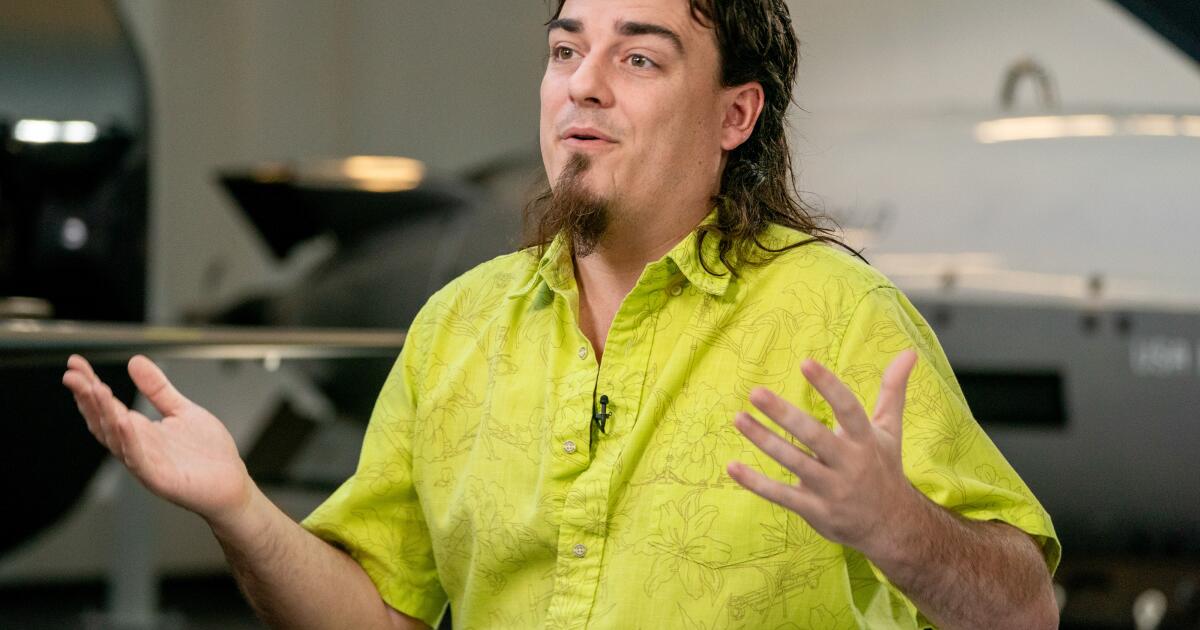
Ole Nymoen, 27, said he would ‘rather be occupied than dead’ © Laura Pitel/FT

Berlin has poured close to €100bn into new equipment for the Bundeswehr, the German armed forces, since Russia’s invasion of Ukraine in 2022. Chancellor-in-waiting Friedrich Merz has announced plans to allow unlimited borrowing to fund defence spending as he promised to do “whatever it takes” to protect freedom and peace in Europe.

Advertisement

But, while those funds are helping to plug gaps in arms and equipment, one of the biggest remaining issues is manpower.

Germany’s armed forces commissioner, Eva Högl, this week warned the country was not closer to its goal of having 203,000 active troops by 2031, as the overall size of the armed forces slightly declined last year, partly because of a high number of dropouts. A quarter of the 18,810 men and women who signed up in 2023 left the armed forces within six months.

“This development must be stopped and reversed as a matter of urgency,Högl said.

A Bundeswehr spokesperson told the FT the military had taken steps to try to stem the outflow of young recruits, including a notice period to avoid “last-minute, emotional” decisions.

But one senior army commander said members of Generation Z — renowned in the business world for their efforts to reshape corporate culture — were also going into the armed forces with different ideas and outlooks. “People are vulnerable, they cry easily,” he said. “They talk about work-life balance.”

Advertisement

“I understand that,” the commander added. “They grew up in a different time. It’s not a bad perspective. But it doesn’t match that well with a wartime situation.”

Germany’s armed forces commissioner, Eva Högl, and soldiers behind her
Germany’s armed forces commissioner, Eva Högl, has said the country was not closer to its goal of having 203,000 active troops by 2031 © David Hecker/Getty Images

As Europe has again reckoned with the fear of an aggressive Russia, the continent’s political and military leaders have dramatically stepped up their language about what they expect from the public.

A senior UK general, Sir Patrick Sanders, last year told the British people they were part of a “prewar generation” that may have to prepare itself to enter combat. In Germany, whose 1949 constitution includes a commitment to promoting global peace, defence minister Boris Pistorius last year caused shock by declaring the nation had to be “ready for war”.

The warnings have escalated since Donald Trump returned to the White House in January and began pushing Ukraine to agree to a ceasefire as well as threatening to withdraw long-standing US security guarantees for Europe. Donald Tusk, prime minister of Poland, last week said his country was preparing “large-scale military training for every adult male”.

Germany has not gone that far. Top officials from the Christian Democrats and the Social Democrats, the two parties likely to form the next government, have ruled out a revival of traditional conscription. Merz favours a year of national service that would offer military and non-military options.

People hold up a banner that says ‘Make peace without weapons’ during a demonstration against war and arming in Berlin at the Brandenburg Gate in 2023
People hold up a banner that says ‘Make peace without weapons’ during an anti-war demonstration in Berlin in 2023 © Paul-Louis Godier/AFP/Getty Images

Still, the question remains to what extent populations in Europe are willing to accept the calls to join up for the armed forces in much larger numbers.

Sophia Besch, senior fellow at the Washington-based Carnegie Endowment for International, said that although the threat perception among the European public was changing rapidly, “the next step [that governments are asking citizens to make] is a huge one — I want to fight for my country and I want my children to fight for my country.”

Advertisement

Besch said nations including Germany lacked that deep trust and the shared understanding of threat between citizens and government that had been forged in places such as Finland, which is famed for its decades-long focus on preparedness for an attack from Russia.

Moreover, she added, in the worst-case scenario, young Germans would most likely not be asked to fight for their own country but for Latvia or another frontline nation. “We have to ask ourselves what young Germans would be willing to fight for today. Is it Germany? Is it the European project?”

Since Russia’s full-scale Ukraine invasion, Germany has had a steep rise in the number of conscientious objectors (including both regular soldiers and part-time reservists). The figure reached 2,998 last year — up from 200 in 2021.

Klaus Pfisterer, of the German Peace Society — United War Resisters, a campaign group, said many of them did military service years ago, before conscription was abolished in 2011, and had then been assigned as reservists. In previous years that had not seemed like a difficult commitment. But today, against the current global backdrop, “they see this decision in a completely different light”, he said.

Column chart of Number of applications for conscientious objection to military service showing Germany has had a sharp rise in conscientious objections since Russia’s full-scale invasion of Ukraine

Christian Mölling, Europe director at the Bertelsmann Foundation, estimates that German troop numbers need to rise from 181,000 today to 270,000 in the years ahead in order to reach Nato targets — and fill gaps left if American forces stationed in Europe withdraw.

That excludes reserve forces, which currently stand at 60,000 but defence officials have said it must rise to 260,000.

Advertisement

Mölling said the Bundeswehr needed to drastically improve its recruitment campaigns to compete in a tight and competitive labour market, as well as doing more to modernise the military and make it an appealing employer.

“It can’t be mimicry, where you pretend you’re a modern army,” he said. “You have to do it.”

But many young Germans may simply be fundamentally opposed to the idea of signing up. Last month’s federal elections resulted in two parties that oppose arming Ukraine — the far-right Alternative for Germany and the far-left Die Linke — claimed almost half the votes of those aged 18 to 24.

While a recent survey by the pollster YouGov found 58 per cent of Germans would support a return to conscription, only a third of those aged between 18 and 29 felt the same way.

Nymoen, himself a Die Linke voter, is deeply suspicious of Europe’s race to re-arm. It was all very well for European leaders to sound belligerent, he said. “The thing is that, in the end, it’s going to be me in the trenches.”

Advertisement

Data visualisation by Keith Fray

News

What to know about Kilmar Abrego Garcia’s release from immigration custody

Published

on

What to know about Kilmar Abrego Garcia’s release from immigration custody

BALTIMORE — Kilmar Abrego Garcia, whose mistaken deportation helped galvanize opposition to President Donald Trump’s immigration policies, was released from immigration detention on Thursday, and a judge has temporarily blocked any further efforts to detain him.

Abrego Garcia currently can’t be deported to his home country of El Salvador thanks to a 2019 immigration court order that found he had a “well founded fear” of danger there. However, the Trump administration has said he cannot stay in the U.S. Over the past few months, government officials have said they would deport him to Uganda, Eswatini, Ghana and, most recently, Liberia.

Abrego Garcia is fighting his deportation in federal court in Maryland, where his attorneys claim the administration is manipulating the immigration system to punish him for successfully challenging his earlier deportation.

Here’s what to know about the latest developments in the case:

Abrego Garcia is a Salvadoran citizen with an American wife and child who has lived in Maryland for years. He immigrated to the U.S. illegally as a teenager to join his brother, who had become a U.S. citizen. In 2019, an immigration judge granted him protection from being deported back to his home country.

Advertisement

While he was allowed to live and work in the U.S. under Immigration and Customs Enforcement supervision, he was not given residency status. Earlier this year, he was mistakenly deported to El Salvador, despite the earlier court ruling.

When Abrego Garcia was deported in March, he was held in a notoriously brutal Salvadoran prison despite having no criminal record.

The Trump administration initially fought efforts to bring him back to the U.S. but eventually complied after the U.S. Supreme Court weighed in. He returned to the U.S. in June, only to face an arrest warrant on human smuggling charges in Tennessee. Abrego Garcia was held in a Tennessee jail for more than two months before he was released on Friday, Aug. 22, to await trial in Maryland under home detention.

His freedom lasted a weekend. On the following Monday, he reported to the Baltimore immigration office for a check-in and was immediately taken into immigration custody. Officials announced plans to deport him to a series of African countries, but they were blocked by an order from U.S. District Judge Paula Xinis in Maryland.

On Thursday, after months of legal filings and hearings, Xinis ruled that Abrego Garcia should be released immediately. Her ruling hinged on what was likely a procedural error by the immigration judge who heard his case in 2019.

Advertisement

Normally, in a case like this, an immigration judge will first issue an order of removal. Then the judge will essentially freeze that order by issuing a “withholding of removal” order, according to Memphis immigration attorney Andrew Rankin.

In Abrego Garcia’s case, the judge granted withholding of removal to El Salvador because he found Abrego Garcia’s life could be in danger there. However, the judge never took the first step of issuing the order of removal. The government argued in Xinis’ court that the order of removal could be inferred, but the judge disagreed.

Without a final order of removal, Abrego Garcia can’t be deported, Xinis ruled.

The only way to get an order of removal is to go back to immigration court and ask for one, Rankin said. But reopening the immigration case is a gamble because Abrego Garcia’s attorneys would likely seek protection from deportation in the form of asylum or some other type of relief.

One wrinkle is that immigration courts are officially part of the executive branch, and the judges there are not generally viewed as being as independent as federal judges.

Advertisement

“There might be independence in some areas, but if the administration wants a certain result, by all accounts it seems they’re going to exert the pressure on the individuals to get that result,” Rankin said. “I hope he gets a fair shake, and two lawyers make arguments — somebody wins, somebody loses — instead of giving it to an immigration judge with a 95% denial rate, where everybody in the world knows how it’s gonna go down.”

Alternatively, the government could appeal Xinis’ order to the 4th U.S. Circuit Court of Appeals and try to get her ruling overturned, Rankin said. If the appeals court agreed with the government that the final order of removal was implied, there could be no need to reopen the immigration case.

In compliance with Xinis’ order, Abrego Garcia was released from immigration detention in Pennsylvania on Thursday evening and allowed to return home for the first time in months. However, he was also told to report to an immigration officer in Baltimore early the next morning.

Fearing that he would be detained again, his attorneys asked Xinis for a temporary restraining order. Xinis filed that order early Friday morning. It prohibits immigration officials from taking Abrego Garcia back into custody, at least for the time being. A hearing on the issue could happen as early as next week.

Meanwhile, in Tennessee, Abrego Garcia has pleaded not guilty in the criminal case where he is charged with human smuggling and conspiracy to commit human smuggling.

Advertisement

Prosecutors claim he accepted money to transport, within the United States, people who were in the country illegally. The charges stem from a 2022 traffic stop in Tennessee for speeding. Body camera footage from a Tennessee Highway Patrol officer shows a calm exchange with Abrego Garcia. There were nine passengers in the car, and the officers discussed among themselves their suspicions of smuggling. However, Abrego Garcia was eventually allowed to continue driving with only a warning.

Abrego Garcia has asked U.S. District Court Judge Waverly Crenshaw to dismiss the smuggling charges on the grounds of “selective or vindictive prosecution.”

Crenshaw earlier found “some evidence that the prosecution against him may be vindictive” and said many statements by Trump administration officials “raise cause for concern.” Crenshaw specifically cited a statement by Deputy Attorney General Todd Blanche on a Fox News Channel program that seemed to suggest the Justice Department charged Abrego Garcia because he won his wrongful-deportation case.

The two sides have been sparring over whether senior Justice Department officials, including Blanche, can be required to testify in the case.

Advertisement
Continue Reading

News

Afghan CIA fighters face stark reality in the U.S. : Consider This from NPR

Published

on

Afghan CIA fighters face stark reality in the U.S. : Consider This from NPR

A makeshift memorial stands outside the Farragut West Metro station on December 01, 2025 in Washington, DC. Two West Virginia National Guard troops were shot blocks from the White House on November 26.

Heather Diehl/Getty Images


hide caption

toggle caption

Advertisement

Heather Diehl/Getty Images

They survived some of the Afghanistan War’s most grueling and treacherous missions. 

But once they evacuated to the U.S., many Afghan fighters who served in “Zero Units” found themselves spiraling. 

Among their ranks was Rahmanullah Lakanwal, the man charged with killing one National Guard member and seriously injuring a second after opening fire on them in Washington, D.C. on Thanksgiving Eve.

Advertisement

NPR’s Brian Mann spoke to people involved in Zero Units and learned some have struggled with mental health since coming to the U.S. At least four soldiers have died by suicide. 

For sponsor-free episodes of Consider This, sign up for Consider This+ via Apple Podcasts or at plus.npr.org. Email us at considerthis@npr.org.

This episode was produced by Erika Ryan and Karen Zamora. It was edited by Alina Hartounian and Courtney Dorning.

Our executive producer is Sami Yenigun.

Advertisement
Continue Reading

News

Video: Behind the Supreme Court’s Push to Expand Presidential Power

Published

on

Video: Behind the Supreme Court’s Push to Expand Presidential Power

new video loaded: Behind the Supreme Court’s Push to Expand Presidential Power

For more than a decade, the Supreme Court’s conservative majority has chipped away at Congress’s power to insulate independent agencies from politics. Now, the court has signaled its willingness to expand presidential power once again.

By Ann E. Marimow, Claire Hogan, Stephanie Swart and Pierre Kattar

December 12, 2025

Continue Reading

Trending