Connect with us

News

EU capitals demand crackdown on €14bn food pricing ploy

Published

on

EU capitals demand crackdown on €14bn food pricing ploy

Stay informed with free updates

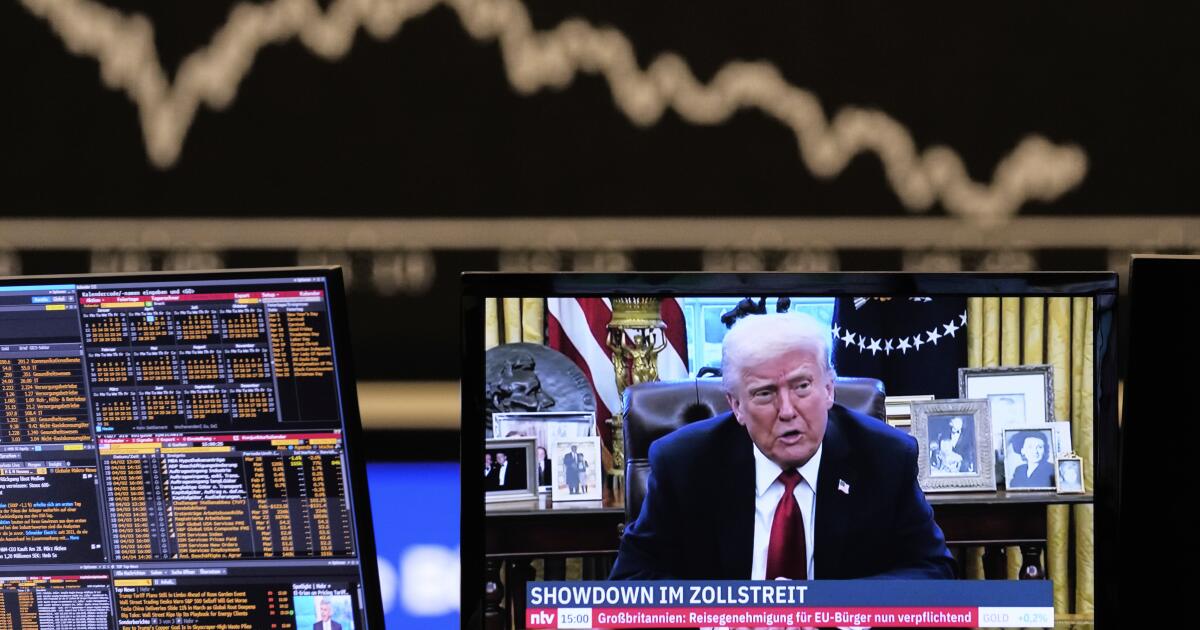
EU ministers will on Friday press Brussels to crack down on multinational companies that force retailers to pay sharply different prices for the same branded product, such as chocolate or biscuits, costing consumers an estimated €14bn a year.

Eight governments will present a paper to the European Commission asking it to toughen single-market rules to stop effective bans on so-called parallel trading, in which retailers purchase products more cheaply from another member state.

The commission on Thursday fined Mondelez, the maker of Toblerone and Philadelphia cheese, €337.5mn for restricting wholesalers from buying biscuits, chocolate and coffee in one member state, where prices may be low, to sell in another. “It’s illegal,” Margrethe Vestager, competition commissioner, said of the ban.

Advertisement

But governments and retailers say these practices are common across Europe’s single market, which is supposed to eradicate such barriers to trade within the union.

Smaller countries such as Belgium, Croatia, Denmark and Greece are among those backing a proposal from the Netherlands to end so-called “territorial supply constraints” (TSCs), what the proposal described as “different prices within the EU for identical products”.

The group wants an explicit ban on contracts containing such conditions and the abolition of a requirement to provide lengthy labels in a local language. This could be replaced by a QR code taking customers to a website in their language.

Competition investigations such as the probe into Mondelez are time-consuming and rely on evidence from wholesalers and retailers who are reluctant. 

“If you try to buy branded goods from another country the producer will cut off your supply. And some big brands you have to stock,” said a retail executive, who declined to be named.   

Advertisement

Dutch government research found TSCs applied to 1 in 25 products, with prices on average 10 per cent higher than in the cheapest markets.
A European Commission study of 16 member states in 2020 found that TSCs cost consumers €14.1bn annually.

Micky Adriaansens, economy minister of the Netherlands, said: “Removing trade barriers should be a key priority for the single market. This helps in keeping consumer retail prices for food and non-food products fair — something which is especially important in times of high consumer prices.

“The eight member states are proposing a concrete way forward towards an EU ban on TSCs by amending existing or new common EU rules or instruments,” she added.

Asked by reporters if new rules were needed, Vestager said: “It’s illegal to prevent traders to buy in one member state and to sell in another.”

“We hope this case will work as a deterrent . . . we have more cases in the pipeline,” she added.

Advertisement

Ursula von der Leyen, Commission president, has said improving the single market and business competitiveness would be a priority of her second term if she is reappointed after June elections.

Enrico Letta, the former Italian prime minister, highlighted the issue of buying restrictions in his recent report on the future of the single market.

Separately Kyriakos Mitsotakis, the Greek premier who is an important figure in Von der Leyen’s European people’s party, has written to her to urge action.

In a letter seen by the Financial Times he wrote that Greece and other member states suffer from “the unreasonably high prices” for branded essential consumer goods compared to some other EU countries.

He said it was crucial the bloc showed voters before the elections that it could “intervene decisively, swiftly and effectively in order to find solutions to these problems”.

Advertisement

He also called for a ban on companies selling the same product under a different brand name in different member states. 

News

Video: New Video Analysis Reveals Flawed and Fatal Decisions in Shooting of Pretti

Published

on

Video: New Video Analysis Reveals Flawed and Fatal Decisions in Shooting of Pretti

new video loaded: New Video Analysis Reveals Flawed and Fatal Decisions in Shooting of Pretti

A frame-by-frame assessment of actions by Alex Pretti and the two officers who fired 10 times shows how lethal force came to be used against a target who didn’t pose a threat.

By Devon Lum, Haley Willis, Alexander Cardia, Dmitriy Khavin and Ainara Tiefenthäler

January 26, 2026

Continue Reading

News

Tensions escalate in in Minnesota after another killing : Consider This from NPR

Published

on

Tensions escalate in in Minnesota after another killing : Consider This from NPR

An image of Alex Pretti is seen at a makeshift memorial in the area where Alex Pretti was shot dead by federal immigration agents in Minneapolis, Minnesota, on January 26, 2026. On January 24, federal agents shot and killed Alex Pretti, a 37-year-old ICU nurse, while scuffling with him on an icy roadway in Minneapolis, less than three weeks after an immigration officer fired on Renee Good, also 37, killing her in her car.

ROBERTO SCHMIDT/AFP via Getty Images


hide caption

toggle caption

Advertisement

ROBERTO SCHMIDT/AFP via Getty Images

Tensions escalate in Minneapolis after a second U.S. citizen is killed by immigration officers.

It was a deadly weekend in Minneapolis. 

On Saturday, federal immigration officers fatally shot a 37-year-old ICU nurse and U.S. citizen — Alex Pretti.

Advertisement

Multiple videos captured the moments before, during and after the shooting.

Federal officials claim Pretti “brandished” a weapon and tried to assault officers as they conducted an immigration enforcement operation.

There is no evidence in the videos, which NPR has verified, that Pretti was ever brandishing his handgun. 

For sponsor-free episodes of Consider This, sign up for Consider This+ via Apple Podcasts or at plus.npr.org. Email us at considerthis@npr.org.

This episode was produced by Henry Larson, Vincent Acovino and Karen Zamora, with audio engineering by Ted Mebane and Damian Herring.

Advertisement

It was edited by Justine Kenin, Rebekah Metzler, Patrick Jarenwattananon and Courtney Dorning.

Our executive producer is Sami Yenigun.

Continue Reading

News

Driving Restrictions for Delaware Downgraded Effective 10am – State of Delaware News

Published

on

Driving Restrictions for Delaware Downgraded Effective 10am – State of Delaware News

For Immediate Release:

January 26, 2026

Driving Restrictions For Delaware Downgraded Effective 10am

(SMYRNA, Del.) – Governor Matthew Meyer has announced the following changes to driving restrictions in the state of Delaware effective10:00 a.m.:

Kent and New Castle Counties downgraded from a Level 2 Driving Restriction to a Level 1 Driving Warning – Avoid traveling on roadways, unless there is a significant safety, health, or business reason to do so. All motorists are urged to drive with extreme caution.

Advertisement

Sussex County Level 1 Driving Warning has been lifted

All residents are urged to use good judgement and extreme caution when travel is unavoidable. As Winter Storm Fern transitions to sleet and freezing rain in some areas, Delawareans will encounter ice accumulation. The Delaware Department of Transportation (DelDOT) continues working to clear the roads; however, motorists should remain vigilant about dangerous road conditions including black ice.

Temperatures are expected to remain below freezing all week and, in some cases, will drop to single digits overnight to prolong dangerous travel conditions. Follow DelDOT’s traffic advisory radio stations, WTMC, for streaming updates from WTMC Radio 1380AM and 98.5 FM. Listen to WTMC through the DelDOT app which provides real-time updates on roadway and transit conditions. For disabled vehicles on Delaware roads, call 302-659-4600 or 800-324-8379 to reach the Delaware Department of Transportation (DELDOT) Transportation Management Center (TMC). For general information, call 302-760-2080 or 800-652-5600. Visit the National Weather Service’s NWS) Winter Weather Dashboard for winter weather conditions in the three-state region that includes Delaware.

Code Purple Shelters remain open, 24 hours statewide, to provide emergency safe, warm overnight refuge, meals, and resources. The shelters can be contacted as follows:

• New Castle County – 302-652-8033
• Kent County – 1-800-733-6816
• Sussex County – 302-519-0024
• Or call 211

Advertisement

Sign up for the Delaware Emergency Notification System (DENS) at de.gov/dens for updates on hazardous conditions. Visit PrepareDE.org for additional information on winterizing home and vehicles.

The Delaware Emergency Management Agency (DEMA) is the lead state agency for coordination of comprehensive emergency preparedness, training, response, recovery, and mitigation services to save lives, protect Delaware’s economic base and reduce the impact of emergencies. DEMA is a division within the Department of Safety and Homeland Security (DSHS) and authorized by Delaware Code.

Social Media: Delaware Emergency Management Agency on Facebook, X and Instagram

Contact: Rachel Hayes

O: (302) 884-2204 or (302) 443-4064

Advertisement

Email: rachel.hayes@delaware.gov


image_printPrint

Continue Reading
Advertisement

Trending