News
A former police chief who escaped from an Arkansas prison is captured


This combo of images released by the Arkansas Department of Corrections shows the recapture of escaped inmate Grant Hardin, an ex-police chief and convicted killer, by Arkansas law enforcement officers and the U.S. Border Patrol on Friday, near Moccasin Creek in Izard County, about 1.5 miles northwest of Calico Rock prison.
Arkansas Department of Corrections/AP
hide caption
toggle caption
Arkansas Department of Corrections/AP
A former police chief and convicted killer known as the “Devil in the Ozarks” was captured by law enforcement 1.5 miles northwest of the prison he escaped from following a massive, nearly two-week-long manhunt in the rugged mountains of northern Arkansas, authorities announced Friday.
Grant Hardin, a former police chief in the small town of Gateway near the Arkansas-Missouri border, was serving lengthy sentences for murder and rape. Eventually, his notoriety led to a TV documentary, “Devil in the Ozarks.”

Hardin briefly attempted to run from officers when he saw them approach Friday afternoon, but he was quickly tackled to the ground, said Rand Champion, a spokesperson for the Arkansas prison system.
“He’d been on the run for a week and a half and probably didn’t have any energy left in him,” he added.
Hardin’s identity was confirmed through fingerprinting, the Izard County Sheriff’s Office said in a Facebook post.
There’s no indication that Hardin was injured, though he will be checked for dehydration and other medical problems.
Now, investigators are “chomping at the bit and really ready to talk to him,” said Champion, who used his cellphone to capture an image of Hardin being led away by officers. Hardin said nothing during those moments.
The escape, search and eventual capture
Hardin had been held at the Calico Rock prison since 2017 after pleading guilty to first-degree murder in a fatal shooting. In order to escape, he impersonated a corrections officer “in dress and manner,” according to a court document. A prison officer in one of the guard towers opened a secure gate, allowing him to walk out of the facility.
Champion said that someone should have checked Hardin’s identity before he was allowed to leave, describing the lack of verification as a “lapse” that’s being investigated.
Searchers had been using bloodhounds, officers on horseback, drones and helicopters in their hunt for Hardin since he escaped on May 25.
Shortly after the escape, a bloodhound found — then quickly lost — Hardin’s scent when heavy rains blew through the area, Champion said. The bloodhound tracked Hardin’s path for less than a quarter of a mile, after which could have gone in any direction.

“That was one of the most frustrating things, that they were able to track him but then they lost him because of the rain,” Champion said.
An elite and highly trained U.S. Border Patrol team had recently joined the search, federal authorities announced this week. The Border Patrol Tactical Team provided “advanced search capabilities and operational support,” U.S. Customs and Border Protection said.
Its members are experienced in navigating complex terrain, the agency said earlier this week. The team tracked Hardin through the region known for its rocky and rugged landscape, thick forests and an extensive cave network.
U.S. Customs and Border Patrol shared photos on Facebook of Hardin shirtless and covered in mud, laying face down with his hands tied behind his back on Friday. The post said that Hardin was “turned over to Arkansas State Police unharmed” by the federal agency.
A spokesperson for the agency didn’t respond to a phone call and emailed request for comment regarding the post on Friday night.
Hardin’s criminal convictions
Hardin pleaded guilty in 2017 to first-degree murder for the killing of James Appleton, 59. Appleton worked for the Gateway water department when he was shot in the head Feb. 23, 2017, near Garfield. Police found Appleton’s body inside a car. Hardin was sentenced to 30 years in prison.
Hardin’s DNA was also matched to the 1997 rape of a teacher at an elementary school in Rogers, north of Fayetteville. He was sentenced to 50 years for that crime.

Cheryl Tillman, Appleton’s sister, was with her mother and sister at a flea market in Ozark, Missouri, when law enforcement called to tell her Hardin had been captured. Tillman is also the mayor of Gateway, the 450-person town where Hardin was briefly police chief.
Tillman told The Associated Press that Hardin’s capture was a “big sigh of relief” for her whole family.
“We don’t have to walk around, turning around all the time, thinking somebody’s on our back,” Tillman said, emphasizing her appreciation for the officers who helped capture Hardin.
A problematic past in law enforcement
Though Hardin was police chief in Gateway for just four months, he had served as an officer in multiple communities around northwest Arkansas, his police records show.
In his first job as a police officer 35 years ago in Fayetteville, Hardin struggled almost immediately, his supervisors said. He was dismissed by Fayetteville police, but kept getting hired for other law enforcement jobs in northwest Arkansas over the years.
Hardin worked about six months at the Huntsville Police Department before resigning, but records do not give a reason for his resignation.
He later worked at the Eureka Springs Police Department from 1993 to 1996. Former Chief Earl Hyatt said Hardin resigned because Hyatt was going to fire him over incidents that included the use of excessive force.
“He did not need to be a police officer at all,” Hyatt told television station KNWA.
By the time he was the police chief in Gateway in 2016, “he was out chasing cars for no reason,” Tillman recalled in the documentary “Devil in the Ozarks.”



new video loaded: What Our Photographer Saw in Minneapolis

By David Guttenfelder, Coleman Lowndes and Nikolay Nikolov
January 12, 2026

Good morning. You’re reading the Up First newsletter. Subscribe here to get it delivered to your inbox, and listen to the Up First podcast for all the news you need to start your day.
Today’s top stories
Homeland Security Secretary Kristi Noem is deploying more federal agents to Minnesota. The move comes as nationwide protests continued yesterday after an Immigration and Customs Enforcement agent fatally shot Renee Good in Minneapolis last week. Some elected officials, including U.S. Rep. Ilhan Omar, are pushing back against DHS actions to bring in more agents and demanding a full investigation into Good’s killing. U.S. representatives have typically been allowed to visit ICE detention facilities unannounced, but Homeland Security now requires elected officials to provide a seven-day notice to enter.
A person in an inflatable frog suit holds a sign during a protest in Los Angeles on Jan.10 against US Immigration and Customs Enforcement (ICE) after the fatal shooting of Renee Nicole Good in Minneapolis.
Etienne Laurent/AFP via Getty Images
hide caption
toggle caption
Etienne Laurent/AFP via Getty Images
- 🎧 Tensions are high in Minneapolis, NPR’s Jason DeRose tells Up First. The community can hear sirens and helicopters throughout the day and night, leaving people on edge. Though there is a lot of fear in the area, people are caring for their neighbors. Several hundred people gathered at a church near where the shooting took place last week and marched a mile loop to offer comfort. Along the route, they sang and held moments of silence at areas where ICE agents recently detained residents. DeRose says he will pay attention to what the additional agents are actually doing on the ground and how community members who oppose ICE’s presence will respond in the coming days.
President Trump says he is not ruling out strikes on Iran despite saying Tehran asked to negotiate with the U.S. Iran has seen significant protests for several weeks in the biggest challenge to the theocratic regime in years. In response, the Iranian government has cracked down hard. Around 500 protesters have been killed, according to the U.S.-based Human Rights Activists News Agency.
- 🎧 The regime’s knowledge of the U.S.’ capability to damage missile facilities and hit political targets may have led to the Iranians’ request for talks with the Trump administration, Nader Habibi, who focuses on Middle East economics, tells NPR’s Jackie Northam. Iran said it would consider U.S. military bases and ships as targets for preemptive strikes if the U.S. looked like it would strike. Currently, Iran’s regime is vulnerable because its 12-day war with Israel last summer resulted in the deaths of many of the government’s senior leadership and weakened its military capabilities
The Trump administration is escalating its pressure campaign on the Federal Reserve to lower interest rates. Fed Chairman Jerome Powell confirmed that the Justice Department subpoenaed the central bank last week, seeking information about testimony that Powell gave to the Senate Banking Committee in June 2025.
- 🎧 At that time, lawmakers grilled Powell over the Fed headquarters’ makeover costs, which ballooned from $1.9 billion to $2.5 billion. However, in an unusually combative video yesterday, Powell argued that the DOJ investigation is more than just about project spending. The president has said he wants lower interest rates and has threatened to fire Powell in the past, NPR’s Scott Horsley says. However, the Fed was designed to be insulated from political pressure so that policymakers can do what they think is best for the economy long term.
U.S. figure skating is poised to send what some in the sport are calling its most dominant team in years to the Winter Olympics. Sixteen skaters will represent Team USA across all four disciplines: men’s, women’s, pairs, and ice dance. Meet the world champions, seasoned veterans, and rising stars who secured their spots on the roster.
- 📷 NPR’s Brian Munoz attended the U.S. Figure Skating Championships. He left with a newfound love for the sport. See his photos of the athletes fiercely competing for a spot on the team.
Living better

Living Better is a special series about what it takes to stay healthy in America.
Conversations about women’s health, including topics like breast cancer and menopause, have become more mainstream. But the cultural shift comes with a catch: Information can be oversimplified and sometimes outright wrong. As people focus on their New Year’s health goals, doctors debunk some myths people should be aware of.
- 🩺 Annual mammograms are critical, but you need more to prevent breast cancer. Understand your lifetime risk to see if you need tailored screening.
- 🩺 Strength training doesn’t trump cardio, especially in midlife. Aerobic exercise is still critical.
- 🩺 Women cannot maximize workouts based on their menstrual cycle. No good data shows significant changes in strength, endurance, or recovery across the menstrual cycle phases.
Picture show

Ariana Grande arrives at the 83rd Golden Globes on Sunday, Jan. 11, 2026, at the Beverly Hilton in Beverly Hills, Calif. (Photo by Jordan Strauss/Invision/AP)
Jordan Strauss/Jordan Strauss/Invision/AP/AP
hide caption
toggle caption
Jordan Strauss/Jordan Strauss/Invision/AP/AP
Ariana Grande, Noah Wyle, Teyana Taylor and George Clooney were just some of the big names in TV and film who walked the red carpet last night before the 83rd annual Golden Globes in Beverly Hills, Calif. Among the stars were Morning Edition‘s own Michel Martin, Steve Inskeep, Leila Fadel and A Martínez. Take a look at all the dazzling looks.
➡️ Didn’t watch the award show? Don’t fret, these are all the winners of the Golden Globes.
3 things to know before you go

A photograph of President Trump and a short plaque next to it are on display at the Smithsonian’s National Portrait Gallery’s “American Presidents” exhibit on Sunday.
Rod Lamkey/AP
hide caption
toggle caption
Rod Lamkey/AP
- The Smithsonian’s National Portrait Gallery in Washington, D.C., removed mentions of Trump’s two impeachments and information about his presidency from the wall text next to his new portrait.
- The Washington National Opera is leaving the John F. Kennedy Center for the Performing Arts, its home since 1971, in response to new policies that strain its financial model.
- Bob Weir has died at 78. He was a founding member of the influential rock band the Grateful Dead.
This newsletter was edited by Suzanne Nuyen.

A fire damaged the Beth Israel Congregation in Jackson, Miss. The fire department said arson was the cause.
Hannah Orlansky/Beth Israel Congregation
hide caption
toggle caption
Hannah Orlansky/Beth Israel Congregation
Authorities have charged one person with arson in a fire that badly damaged Beth Israel Congregation in Jackson, Miss., early Saturday morning. The Jackson Fire Department, the Bureau of Alcohol, Tobacco, Firearms & Explosives, and the FBI are investigating.
Zach Shemper, Beth Israel Congregation president, said he’s stunned.
“Crazy things happen all over the world and nothing really hits home until it actually hits directly home,” he told Mississippi Public Broadcasting. “When it hits home, it’s just hard. Honestly, I’m still trying to wrap my own head around it.”
Shemper also released a statement saying the synagogue and its 150 families are resilient.
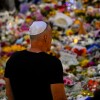
“As Jackson’s only synagogue, Beth Israel is a beloved institution, and it is the fellowship of our neighbors and extended community that will see us through,” he said.
The congregation was founded in 1860, according to Beth Israel’s website. In 1967, local Ku Klux Klan members bombed the place of worship and the home of the rabbi at the time, who had spoken out against racism and segregation. No one was hurt in the civil rights-era bombings or Saturday’s fire.
Charles Felton, Jackson Fire Department chief of fire investigations, told NPR in an interview on Sunday that flames and smoke caused extensive damage and destroyed Beth Israel’s library, where he says the fire was started. The fire was reported to 911 just after 3 a.m.
“All contents in that library are destroyed. There’s not much that can be retrieved from the library area. The other portions of the building do not have actual fire damage, but they have damage as far as smoke and soot,” he said.

Shemper said the fire destroyed two Torahs, the Jewish sacred texts, and damaged five others. A Torah that survived the Holocaust was protected by a glass display case and was not damaged. The synagogue’s Tree of Life plaque honoring congregants’ meaningful occasions was destroyed. Shemper said the library, administrative offices and the lobby suffered the most damage.
Surveillance video shows a man wearing a hoodie and a mask pouring liquid from a can inside the synagogue, according to Shemper. Felton said Jackson Fire investigators later received information from an area hospital that led them to the suspect, who was arrested Saturday evening.
“There was a suspect possibly burned at a local hospital,” he told NPR. “They did go to the hospital at which point they interviewed the person of interest and that person did confess to having involvement in the fire.”
The Jackson Fire Department’s powers include the authority to charge suspects, according to Felton, who said the department has filed arson charges against the suspect, who authorities have not publicly named. He said federal authorities will make a determination on whether to pursue hate crime charges.
The FBI’s office in Jackson said in a statement that it was aware of the incident and was working with other law enforcement on the investigation.
Jackson Mayor John Horhn said the city stands with Beth Israel and the Jewish community.
“Acts of antisemitism, racism, and religious hatred are attacks on Jackson as a whole and will be treated as acts of terror against residents’ safety and freedom to worship,” said a statement from the mayor’s office.
Beth Israel is planning to immediately move forward.
“With support from our community, we will rebuild. Beth Israel Congregation has been the Jewish spiritual home in Jackson, Mississippi, for over 160 years,” said Shemper’s statement. “We are devastated but ready to rebuild.”
He said several local churches have offered temporary space for Beth Israel to continue services.
The attack comes after investigators say a father and son opened fire on Jewish people celebrating Hanukkah on Bondi Beach in Sydney, Australia, last month. Fifteen people were killed and dozens were injured.

2025 tourism dip in ND reflects national trend

Michael McKee will be extradited to Ohio to face charges for grisly murder of dentist, wife

Oklahoma Highway Patrol seeks $25M for trooper training

5 things to know about Oregon’s newest reciever Iverson Hooks from UAB

Video of children in staged hockey fight in Pennsylvania prompts vow of disciplinary action

Florida High School Football Rankings: Top 25 teams – Oct. 21

Cleary's 21 help Le Moyne down Central Connecticut State 69-64 in OT

How old is Bo Nix? What to know about Oregon quarterback ahead of 2024 NFL Draft

99th annual Pony Swim held in Virginia

Video: ‘It Didn’t Have to Happen This Way:’ U.Va. Faculty Call for Review of Police Response to Protests

Video: What Our Photographer Saw in Minneapolis

Conservative legal group targets CFPB rule mandating race, sex data in home loans

EU auditors warn eased EU budget rules could undermine oversight
More federal agents head to Minnesota. And, U.S. Figure Skating announces Olympic team

San Antonio ends its abortion travel fund after new state law, legal action
-

 Detroit, MI1 week ago
2 hospitalized after shooting on Lodge Freeway in Detroit
-

 Technology6 days ago
Power bank feature creep is out of control
-

 Dallas, TX4 days ago
Anti-ICE protest outside Dallas City Hall follows deadly shooting in Minneapolis
-

 Delaware3 days ago
MERR responds to dead humpback whale washed up near Bethany Beach
-

 Dallas, TX1 week ago
Defensive coordinator candidates who could improve Cowboys’ brutal secondary in 2026
-

 Montana2 days ago
Service door of Crans-Montana bar where 40 died in fire was locked from inside, owner says
-

 Iowa6 days ago
Pat McAfee praises Audi Crooks, plays hype song for Iowa State star
-

 Health1 week ago
Viral New Year reset routine is helping people adopt healthier habits