Wisconsin
Wisconsin lawmakers look to join the ranks of states allowing online sports betting


MADISON (AP) — As sports fans wager billions of dollars on the NCAA basketball tournaments, Wisconsin lawmakers are taking a shot at an expanded sports betting plan that could bank big bucks for the state in the future.
A measure given final approval Tuesday would let the state’s tribal gambling sites start offering online sports betting to people anywhere in Wisconsin. But the bill is contingent on the signature of Democratic Gov. Tony Evers, which is no sure bet. And it wouldn’t take effect until after the state negotiates new deals with American Indian tribes who would run the sports betting — long after the current basketball tournaments wrap up.
Here’s how Wisconsin and other states are approaching sports betting:
Sports betting is booming in states
Legal sports betting has spread from one state — Nevada — to 39 states and Washington, D.C., since the U.S. Supreme Court opened the door in 2018. If Evers signs off on the expansion, Wisconsin would become the 32nd state to allow online sports wagering, which is how most people place bets.
Across the U.S., state-regulated sportsbooks handled nearly $167 billion of bets last year, generating revenues of nearly $17 billion after winnings were paid out to customers, according to the American Gaming Association. That marked an almost 23% increase over the previous year.
Gambling in Wisconsin goes through tribes
Gambling is legal in Wisconsin only on tribal lands under exclusive contracts between tribes and the state. Sports bets currently can be placed only at certain tribal casinos, and online sports betting is illegal.
Under the Wisconsin tribal compacts, a percentage of the money tribes earn through that gambling is returned to the state. In 2024, the tribes paid the state just over $66 million from revenue generated at casinos.
Wisconsin proposes to follow the Florida model
Under the Wisconsin legislation, online sports betting would be allowed only if the infrastructure to manage the bets, such as computer servers, is located on tribal lands in the state. That approach, known as the “hub-and-spoke” model, already is used in Florida.
Supporters of the measure include several Wisconsin tribes and the Milwaukee Brewers. They contend people currently are placing bets using offshore sportsbooks or prediction markets or crossing into other states where it’s legal, including neighboring Illinois.
Republican Wisconsin Assembly Speaker Robin Vos said he opposes online gambling, but people are already doing it and “I would rather make sure that Wisconsinites have some sort of control over that.”
The legislation has drawn opposition from the Sports Betting Alliance, which represents FanDuel, DraftKings, bet365, BetMGM and Fanatics. They argue it wouldn’t make financial sense for them to partner with Wisconsin tribes, because federal law requires 60% of gambling revenues must go back to the tribes. They would prefer a state constitutional amendment opening sports betting to all operators.
“It is simply not economically feasible for a commercial operator to hand over 60% or more of its revenue to an in-state gaming entity, just for the right to operate in the state,” Sports Betting Alliance representative Damon Stewart said in submitted testimony opposing the bill.
Governor’s support is unclear
Wisconsin’s measure has divided Republicans since it was introduced last year. It took 12 Democrats joining with nine Republicans to pass the bill in the Senate. The Assembly, also controlled by Republicans, passed it on a voice vote without debate last month.
It now heads to Evers, who initially said he would sign it as long as it was passed in consultation with — and the support of — the state’s tribes. Evers has since raised concerns, noting last month that not all of the state’s 11 tribes are registered as in support. Evers’ spokesperson Britt Cudaback did not return a message seeking comment Tuesday.
Revenues from sports bets can take a while to start flowing
If Evers signs the legislation, Wisconsin residents may still have to wait to place bets through smartphones and computers. It often takes months to launch new sports betting programs.
North Carolina’s governor signed legislation in June 2023 to expand sports betting from three tribal casinos to online platforms. But online betting did not begin until March 2024.
Missouri voters narrowly approved sports wagering in November 2024. But it didn’t launch until last December. And the state has yet to reap a big windfall. Through the first two months, Missouri sportsbooks handled $928 million of bets, but that resulted in just $659,000 in state taxes.
Some states look to squeeze more out of sports bets
Since adopting sports betting, some states already have revamped their laws to try to take a bigger share of the money. Taxes have been raised or restructured in Illinois, Louisiana, Maryland, New Jersey, Ohio, Tennessee and Washington, D.C. And Colorado and Virginia have pared back the tax deductions they originally allowed.
Illinois has taken multiple bites, most recently adding fees of 25-50 cents on every sports bet that gets placed. And Chicago began charging an additional 10.25% tax on sports betting revenues on Jan. 1.
Louisiana raised is sports betting taxes last year to help fund college athletics. The new law directs one-quarter of the tax revenue from online sports wagering to be split among public universities with Division I football programs and be used “for the benefit of student athletes.”
Collegiate prop bets face push back
Sports betting often involves more than just guessing which team will win. Some of the most popular bets focus on player performance, like how many points a particular athlete will score. Those proposition bets also have been at the center of recent scandals, with players alleged to have rigged their performance.
The NCAA in 2023 began encouraging states to adopt restrictions on bets involving college athletes. Since then, Louisiana, Maryland, Ohio and Vermont have joined the ranks of states banning individual prop bets on college athletes.
More than a dozen states place no limits on collegiate prop bets while nearly an equal number prohibit all such bets. Other states fall somewhere in between, including some that allow prop bets on collegiate athletes only for games that don’t involve their home-state schools.
___
Lieb reported from Jefferson City, Missouri.


Topline
The Wisconsin Elections Commission voted Friday to send two complaints to prosecutors alleging Elon Musk violated state election laws by writing checks to voters last year, the Milwaukee Journal Sentinel reported—after Musk invested tens of millions of dollars to support failed conservative candidate Brad Schimel.
Elon Musk gives a $1 million check to Nicholas Jacobs during a town hall in Green Bay, Wisconsin, on March 30, 2025. (Photo by ROBIN LEGRAND/AFP via Getty Images)
AFP via Getty Images
Key Facts
The commission voted 5-1 finding probable cause Musk violated the state’s election bribery statute when he offered money to people who voted in the 2025 election.
This is a developing story and will be updated.


Manuel Franco claims his $768 million Powerball jackpot
Manuel Franco, 24, of West Allis was revealed Tuesday as the winner of the $768.4 million Powerball jackpot.
Mark Hoffman, Milwaukee Journal Sentinel
The Wisconsin Lottery offers multiple draw games for those aiming to win big.
Here’s a look at July 13, 2026, results for each game:
Winning Powerball numbers from July 13 drawing
05-25-36-40-48, Powerball: 03, Power Play: 2
Check Powerball payouts and previous drawings here.
Winning Pick 3 numbers from July 13 drawing
Midday: 4-6-2
Evening: 4-1-8
Check Pick 3 payouts and previous drawings here.
Winning Pick 4 numbers from July 13 drawing
Midday: 0-6-6-8
Evening: 1-6-6-2
Check Pick 4 payouts and previous drawings here.
Winning All or Nothing numbers from July 13 drawing
Midday: 01-04-05-06-07-08-10-11-13-15-22
Evening: 05-06-07-09-12-14-16-19-20-21-22
Check All or Nothing payouts and previous drawings here.
Winning Badger 5 numbers from July 13 drawing
23-24-25-26-29
Check Badger 5 payouts and previous drawings here.
Winning SuperCash numbers from July 13 drawing
01-07-13-18-24-29, Doubler: N
Check SuperCash payouts and previous drawings here.
Feeling lucky? Explore the latest lottery news & results
Are you a winner? Here’s how to claim your lottery prize
- Prizes up to $599: Can be claimed at any Wisconsin Lottery retailer.
- Prizes from $600 to $199,999: Can be claimed in person at a Lottery Office. By mail, send the signed ticket and a completed claim form available on the Wisconsin Lottery claim page to: Prizes, PO Box 777 Madison, WI 53774.
- Prizes of $200,000 or more: Must be claimed in person at the Madison Lottery office. Call the Lottery office prior to your visit: 608-261-4916.
Can Wisconsin lottery winners remain anonymous?
No, according to the Wisconsin Lottery. Due to the state’s open records laws, the lottery must, upon request, release the name and city of the winner. Other information about the winner is released only with the winner’s consent.
When are the Wisconsin Lottery drawings held?
- Powerball: 9:59 p.m. CT on Monday, Wednesday, and Saturday.
- Mega Millions: 10:00 p.m. CT on Tuesday and Friday.
- Super Cash: 9:00 p.m. CT daily.
- Pick 3 (Day): 1:30 p.m. CT daily.
- Pick 3 (Evening): 9:00 p.m. CT daily.
- Pick 4 (Day): 1:30 p.m. CT daily.
- Pick 4 (Evening): 9:00 p.m. CT daily.
- All or Nothing (Day): 1:30 p.m. CT daily.
- All or Nothing (Evening): 9 p.m. CT daily.
- Megabucks: 9:00 p.m. CT on Wednesday and Saturday.
- Badger 5: 9:00 p.m. CT daily.
That lucky feeling: Peek at the past week’s winning numbers.
Feeling lucky? WI man wins $768 million Powerball jackpot **
WI Lottery history: Top 10 Powerball and Mega Million jackpots
This results page was generated automatically using information from TinBu and a template written and reviewed by a Wisconsin editor. You can send feedback using this form.

(WLUK) — The IRS is giving Wisconsin residents and business owners who were affected by severe weather in April, more time to file their taxes.
These taxpayers now have until Nov. 2, 2026, to file various federal individual and business tax returns and make tax payments.
Following the disaster declaration issued by the Federal Emergency Management Agency (FEMA), individuals and households that reside in Bayfield, Brown, Buffalo, Iowa, Jackson, Jefferson, Juneau, Kenosha, Kewaunee, Manitowoc, Marathon, Milwaukee, Outagamie, Racine, Rock, Sauk, Vernon, Washington, Waukesha, Waupaca, and Winnebago counties, as well as the Oneida Indian Reservation qualify for tax relief.
The declaration permits the IRS to postpone certain tax-filing and tax-payment deadlines for taxpayers who reside or have a business in the disaster area. For instance, certain deadlines falling on or after April 13, 2026, and before Nov. 2, 2026, are granted additional time to file.
Penalties on payroll and excise tax deposits due on or after April 13, 2026, and before April 28, 2026, will be abated as long as the tax deposits are made by April 28, 2026.
The Nov. 2, 2026, deadline also applies to affected quarterly payroll and certain excise tax returns normally due on April 30 and July 31, 2026.
If an affected taxpayer receives a late filing or late payment penalty notice from the IRS that has an original filing, payment or deposit due date that falls within the postponement period, the taxpayer should call the telephone number on the notice to have the IRS abate the penalty.
-
 Business2 minutes ago
Commentary: Trump greenlights California’s dumbest water project
-
 Entertainment8 minutes ago
‘Hail Satan? Not me.’ Charley Crockett fires satanic duo Twin Temple, so Jack White hires them
-
 Lifestyle14 minutes ago
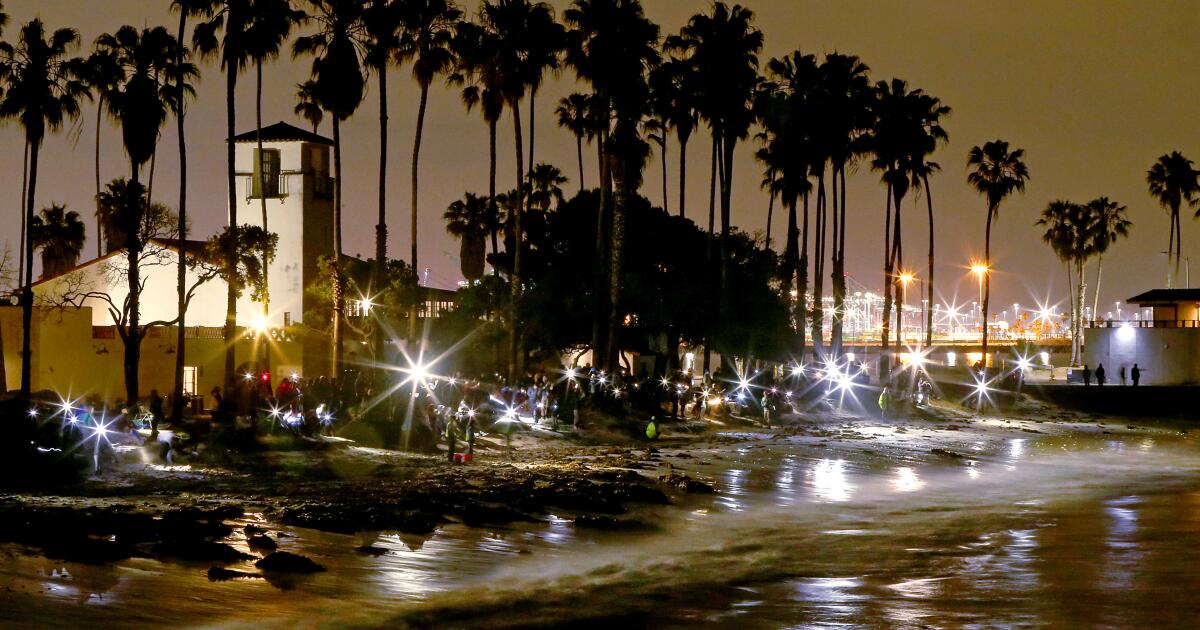
It’s time for the night trip to the beach — the grunion are running
-
 Politics20 minutes ago
After lawsuit, ICE pauses construction of Bay Area detention facility
-
 Science26 minutes ago
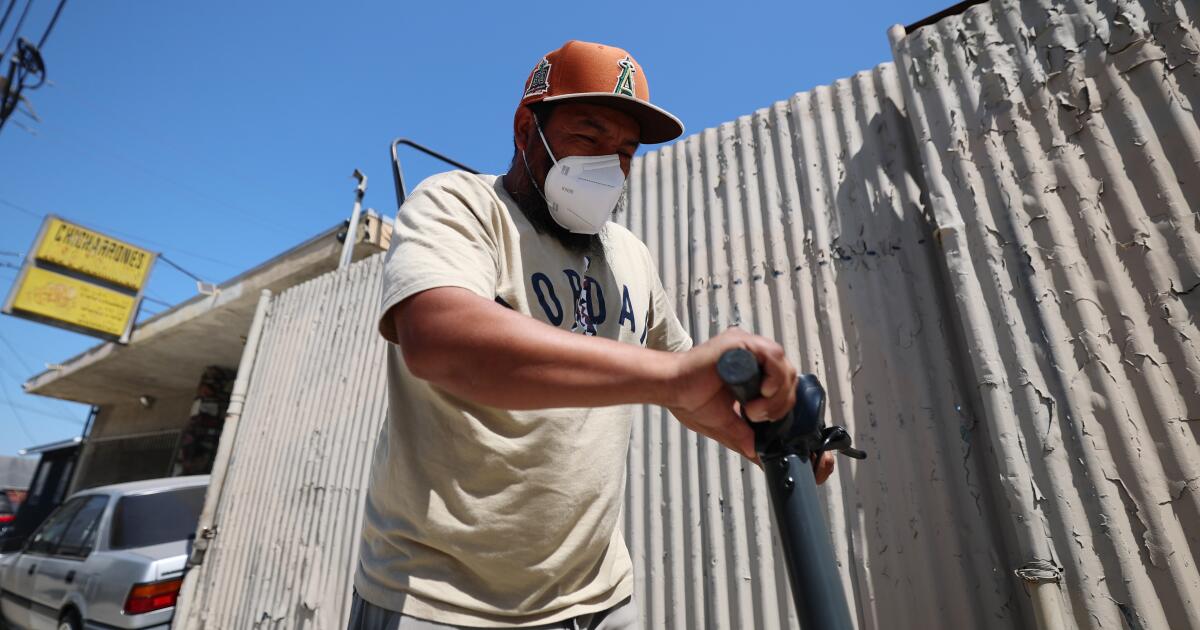
Anger grows in Boyle Heights as warehouse fire leaves stench, flies and vermin in its wake
-
 Sports32 minutes ago
Spain delivers surprise rout of France, clinches berth into World Cup final
-

 World44 minutes ago
US says latest Iran strike wave over, IRGC claims damage to US Naval HQ
-
 News1 hour ago
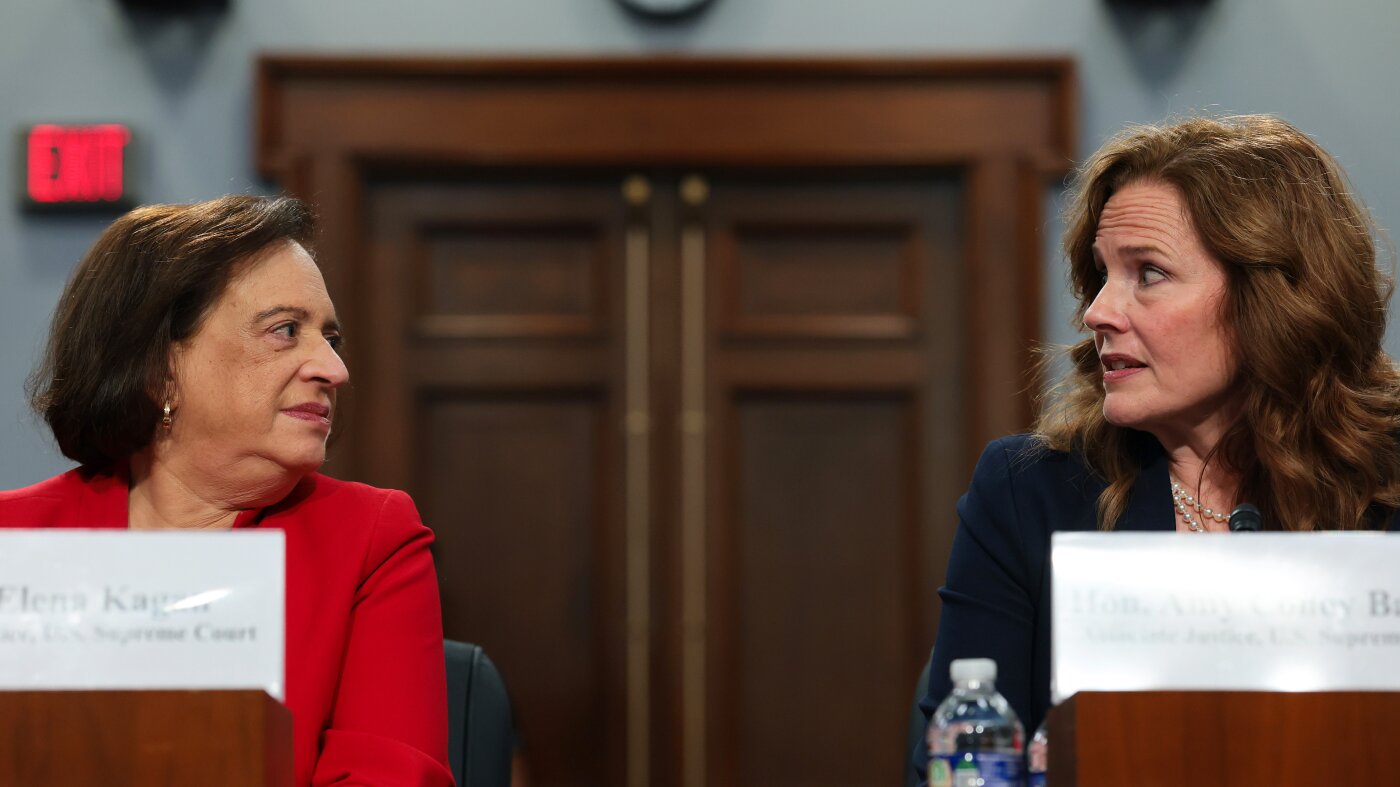
Supreme Court Justices give chilling accounts of threats to their safety

