Wisconsin
Voting in Harmony: A Wisconsin township sets itself apart and has a knack for picking winners


HARMONY, Wis. (AP) — It’s hard living in harmony during these politically divisive times.
But residents of a tiny Wisconsin town say they have the simple answer: actually live in Harmony.
Residents of Harmony Township — spread out on rich farmland and residential subdivisions on the outskirts of Janesville — tend to live up to the name of the 24-square-mile town near the Illinois state line. They also offer a reliable barometer of the political leanings of the swing state of Wisconsin.
Since 2000, Harmony voters have sided with the winner in all 13 presidential and gubernatorial races.
“I do believe that the country is quite divided,” said town board Chair Jeff Klenz, sporting a long white goatee and wearing a Harley-Davidson T-shirt. “I don’t believe that same thing in Harmony Township. You don’t get the feeling of people being against each other.”
Klenz repeats a saying heard frequently around the town of 2,500: “Everybody lives in harmony in Harmony Township.”
Demographically, Harmony has the same percentage of white people as the state — about 86%. Almost 12% identified of Harmony residents identified as multiracial, above the statewide average of 2.2%. But there’s no Black population to speak of, in a state that’s 6% Black, according to the U.S. Census Bureau’s American Community Survey.
Still, given Wisconsin’s recent political volatility, Harmony’s knack for picking winners is uncanny. Four of the past six presidential elections in the swing state of Wisconsin have been decided by less than a point. The only other of Wisconsin’s 1,800 towns, villages and cities that share the distinction is Merrimac, a village of about 500 people roughly 75 miles (121 kilometers) from Madison, according to research by Marquette University professor John D. Johnson.
What to know about the 2024 Election
Donald Trump carried the town of Harmony by just 36 votes in 2016 on his way to winning Wisconsin by 22,748 votes and becoming the first Republican since Ronald Reagan to take the state. Four years later, President Joe Biden won the town by 78 votes and carried Wisconsin by just under 20,682 votes.
Retired General Motors worker and 53-year Harmony resident Loren Hanson, 79, voted for Trump in both 2016 and 2020 but doesn’t know if he can stick with him a third time this November. He’s having a hard time coming to grips with Trump’s felony conviction.
“I think our politics are a mess, quite frankly,” Hanson said. “And really bad this year. I’ve never been a solid Republican or Democrat. And sometimes you vote for the lesser of two evils, and this year I don’t know which is which.”
Hanson said he’s hesitating on Trump because of his personal troubles, calling him an “outlaw.”
“It would be really hard for me to vote for Mr. Trump right now,” he said, referring to his hush money conviction.
But Hanson has reservations about Biden as well.
“I think he’s old,” Hanson said. “He’s got some problems this way or that. Personally, I’d like to see both of them booted out and I’m disappointed that the parties can’t come up with someone younger.”
Klenz, a 68-year-old retired police officer, said after voting for Trump twice before, he’s sticking with him despite the conviction.
“Being in law enforcement for over 30 years, I never had a problem with our judicial system, but as I’ve gotten older and maybe wiser, I’ve seen that we certainly do have some problems,” Klenz said. He said the Trump conviction showed that the judicial system “has been used really different than it should be used.”
Despite the deep divisions in Harmony, both Republicans and Democrats say they don’t let politics drive how they treat one another.
“There are roots here that go down very deeply and they are roots of acceptance, respect and cooperation,” said 85-year-old retired nurse and Biden voter Lucille Vickerman, seated next to Trump voter Klenz.
“We vote almost half and half,” Vickerman said. “But we don’t hate each other. We don’t get into massive to-dos.”
But why?
For starters, people talk to one another to understand where the other is coming from, Klenz said.
Politics isn’t a driving force in Harmony “because most of the people around here are used to taking care of themselves,” Klenz said.
And when people do talk, it doesn’t tend to be about national politics, Vickerman said.
“They talk about what’s going on in the school system or what’s going on with the road repair,” she said.
Town clerk Tim Tollefson, whose job is to run elections, said politics just doesn’t divide people in Harmony the way it seems to in much of the rest of the state and country.
“I don’t think people take that part of politics and put it into whether people can be friends or not,” Tollefson said. “The signs out in the yard? You don’t see that many in Harmony Township.”
Vickerman said she was struck last fall after seeing a plethora of signs, including some painted on the sides of barns, during a drive through northern Wisconsin.
“Coming from here it was a little unnerving, to be honest,” she said.
Hanson said he avoids talking politics in Harmony “because I have friends on both sides and some are pretty extreme.”
Harmony is in southeastern Wisconsin, about a 15-minute drive from the Illinois border. It consists of farms that the town boasts are on “some of the best farmland in the U.S.” and houses built by people who work in the adjacent city of Janesville.
That’s the home to former House Speaker Paul Ryan and also the former home of the country’s oldest General Motors plant, built in 1919.
But when the plant shut down during the Great Recession in 2008, the city and region went through an economic and social upheaval, forced to readjust without a longtime major employer.
Harmony was established in 1848, the same year Wisconsin became a state. It carries the distinction of being one of the first in the country to construct its own town hall building.
Built in 1876, the building was moved about 30 miles northeast and is now part of the living history museum Old World Wisconsin.
Coincidentally, the presidential election in 1876, the year Harmony residents set about building their town hall, was one of the most contentious in U.S. history. Taking place during post-Civil War reconstruction, there were widespread allegations of electoral fraud, violence and disenfranchisement of Black voters.
Rutherford B. Hayes won Wisconsin by 6,141 votes, or just over 2 percentage points, in 1876.
There are parallels between that period and the present day, including “intense polarization with a shrinking kind of middle ground and a high level of rhetorical violence,” said Stephen Kantrowitz, a history professor at the University of Wisconsin-Madison who specializes in the reconstruction era.
In this time of deep division, Kantrowitz said it was “wonderful” that both sides in a place as evenly divided as Harmony can get along.
But the larger question, he said, is what happens when communities like Harmony are presented with questions that cut to the heart of people’s sense of security, dignity and fairness.
“It sounds like Harmony is not in the middle of such a struggle,” he said. “It behooves the people who say politics aren’t top of mind to think about what they will do when suddenly an issue arises that is not so easily finesse-able.”
Vickerman, who moved to Harmony in 1960 when Dwight D. Eisenhower was president, didn’t vote in 2016. But she cast her ballot for Biden in 2020. This year she’s soured on him and Trump: “I wish neither of them was running.”
“I’m not a Biden fan but I can’t bring myself to be a Trump fan,” she said. “I’m fearful that Trump will refuse to leave office if elected. There’s a part of me that does worry about our democracy surviving.”
Klenz voted for Trump in both 2016 and 2020 and said he will vote for him again. He thinks the Republican is better on the economy than Biden.
And true to form for people from Harmony, Klenz adds, “I’m not too concerned with how other people are voting.”
Tollefson, who has lived in Harmony since 1998, said other communities can learn from how people there deal with political differences.
“Chill out,” he said. “Deal with the cards you were dealt and be happy. We’re only here a short time. Why waste your time being miserable?”
___
Associated Press writer Michael Schneider in Orlando, Florida, contributed to this report.



MILWAUKEE (WLUK) — Four Northeast Wisconsin garage bands took to the Aurora Pavilion Stage at Summerfest Friday in hopes of winning the 2026 edition of ‘Rockonsin.’
The bands include:
- “Mania” composed of students from East De Pere High School
- “The Danios” composed of students from Mayville High School
- “The Doorknobs” composed of students from Sheboygan North High School and Étude High School
- “Krusher” composed of students from Campbellsport High School
The local bands and six others were the finalists selected from 54 middle and high schools across across Wisconsin for the 2026 contest.
All of them performed 20 minute showcases for an audience, including a trio of music industry panel judges. The bands were judged on technique, rhythm and vocals, primary beats, and synergy among other aspects.
Rockonsin announced “Krusher” won the grand prize Saturday night. Winning the contest nets the band a 12 hour recording session at Blast House Studios in Madison. The runner up band is “Candy Cigarette” from Oconomowoc High School, which wins a shorter 8 hour recording session at Blast House Studios.
BE THE FIRST TO COMMENT
The contest is in its 22nd year.

LAKE MILLS, Wis. (WFRV) – The City of Lake Mills Police Department alerted the public that they are looking for a missing endangered person early Saturday morning.
Police say that 24-year-old Alfred, “Al,” Pellatt of Lake Mills was last seen at approximately 2:45 a.m. on Friday, June 19. It was detailed that Pellatt left a bar in the 100 block of N. Main Street in Lake Mills heading north on foot. At around 2:43 a.m., Pellatt was viewed on foot in the 500 block of N. Main Street.
It was noted that Pellatt has special needs and is on medication, but does not have it with him.
Police describe Pellatt as a 6’0″ white male, weighing 215 pounds. He was last seen wearing a floral dress.
Lake Mills is located west of Milwaukee in Jefferson County.
Any information pertaining to Pellatt’s whereabouts should be shared with the City of Lake Mills Police Department.


Manuel Franco claims his $768 million Powerball jackpot
Manuel Franco, 24, of West Allis was revealed Tuesday as the winner of the $768.4 million Powerball jackpot.
Mark Hoffman, Milwaukee Journal Sentinel
The Wisconsin Lottery offers multiple draw games for those aiming to win big.
Here’s a look at June 19, 2026, results for each game:
Winning Mega Millions numbers from June 19 drawing
13-16-21-26-50, Mega Ball: 12
Check Mega Millions payouts and previous drawings here.
Winning Pick 3 numbers from June 19 drawing
Midday: 0-2-5
Evening: 5-1-1
Check Pick 3 payouts and previous drawings here.
Winning Pick 4 numbers from June 19 drawing
Midday: 1-2-0-1
Evening: 5-6-2-6
Check Pick 4 payouts and previous drawings here.
Winning All or Nothing numbers from June 19 drawing
Midday: 01-05-07-11-13-14-15-17-18-21-22
Evening: 01-02-08-09-12-14-17-18-20-21-22
Check All or Nothing payouts and previous drawings here.
Winning Badger 5 numbers from June 19 drawing
09-13-14-30-31
Check Badger 5 payouts and previous drawings here.
Winning SuperCash numbers from June 19 drawing
04-05-13-14-16-27, Doubler: N
Check SuperCash payouts and previous drawings here.
Feeling lucky? Explore the latest lottery news & results
Are you a winner? Here’s how to claim your lottery prize
- Prizes up to $599: Can be claimed at any Wisconsin Lottery retailer.
- Prizes from $600 to $199,999: Can be claimed in person at a Lottery Office. By mail, send the signed ticket and a completed claim form available on the Wisconsin Lottery claim page to: Prizes, PO Box 777 Madison, WI 53774.
- Prizes of $200,000 or more: Must be claimed in person at the Madison Lottery office. Call the Lottery office prior to your visit: 608-261-4916.
Can Wisconsin lottery winners remain anonymous?
No, according to the Wisconsin Lottery. Due to the state’s open records laws, the lottery must, upon request, release the name and city of the winner. Other information about the winner is released only with the winner’s consent.
When are the Wisconsin Lottery drawings held?
- Powerball: 9:59 p.m. CT on Monday, Wednesday, and Saturday.
- Mega Millions: 10:00 p.m. CT on Tuesday and Friday.
- Super Cash: 9:00 p.m. CT daily.
- Pick 3 (Day): 1:30 p.m. CT daily.
- Pick 3 (Evening): 9:00 p.m. CT daily.
- Pick 4 (Day): 1:30 p.m. CT daily.
- Pick 4 (Evening): 9:00 p.m. CT daily.
- All or Nothing (Day): 1:30 p.m. CT daily.
- All or Nothing (Evening): 9 p.m. CT daily.
- Megabucks: 9:00 p.m. CT on Wednesday and Saturday.
- Badger 5: 9:00 p.m. CT daily.
That lucky feeling: Peek at the past week’s winning numbers.
Feeling lucky? WI man wins $768 million Powerball jackpot **
WI Lottery history: Top 10 Powerball and Mega Million jackpots
This results page was generated automatically using information from TinBu and a template written and reviewed by a Wisconsin editor. You can send feedback using this form.
-
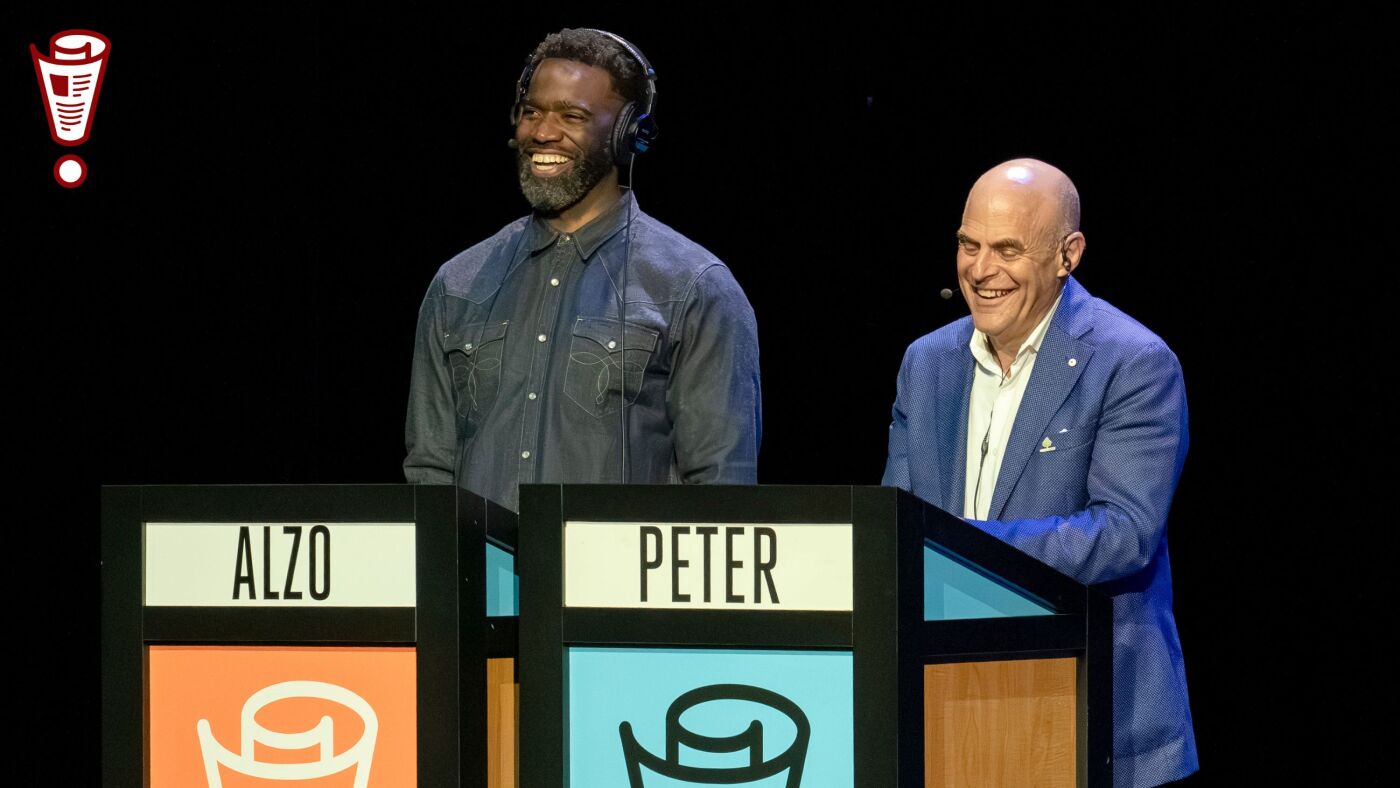 Lifestyle16 minutes ago
‘Wait Wait’ for June 20, 2026: With Not My Job guest Caro Claire Burke
-

 Technology24 minutes ago
Sony’s Xperia 1 VIII is still a phone for the fans
-

 World31 minutes ago
Trump-backed ‘El Tigre’ looks to crush cartels, end Colombia’s socialist era in pivotal election
-

 Politics34 minutes ago
Obama Center visitors say project symbolic of ‘Black excellence,’ claim scandal-free legacy while Trump ripped
-

 Health39 minutes ago
Poison centers link growing Benadryl abuse among teens to dangerous social media trends
-

 Sports46 minutes ago
Bryce Harper hits for cycle, Kyle Schwarber blasts three homers in Phillies blowout win over Mets
-

 Technology49 minutes ago
Meta offers paid training for AI data center jobs
-
 Business54 minutes ago
‘I got crushed’: AI giants are funding ad wars in races across the country

